In the End, It’s About How You Make Them Feel: Parenting Without Borders, Conclusion

Many, many moons ago, I started a series on the book Parenting Without Borders. Before I finished writing about the book, I took a bit of a hiatus. Since I saw a half-written post in my drafts section when I returned to the website, I thought I’d tidy it up and publish it. For those of you unfamiliar with the book, the first paragraph will be super-helpful in reviewing what you’ll find throughout the book, as I link back to each post in the series and provide a quick sentence that explains the gist.

In the Introduction, we broached the idea that the way other cultures parent might be more “right” than the way that the culture in North America parents, as discussed in the book Parenting Without Borders. In Part 1, we looked at some of the different cultural thoughts around sleep. There was also that stunning example of how it’s normal for babies in Scandinavia to be found taking a nap on the terrace in the dead of winter! In Part 2, we explored “stuff” and how having more of it might not be best for our children. In Part 3, we looked at how different cultures relate to food in the context of parenting. In Part 4, we looked at how saying “good job” to our little ones might not have the effect we think it does. In Part 5, we talked about the virtues of allowing our little ones the space to work through problems on their own. In Part 6, we examined the importance of unstructured “play.”In Part 7 and Part 8, we explored what education is like in East Asia and Finland. In Part 9, we looked at cultural notions of kindness in raising kids. In Part 10, we explored the possibility that parenting might be fostering a sense of helplessness in children today. And finally, today, we’ve reached the conclusion.

From the conclusion of the book, I’ve pulled out a few quotes that really stood out for me, so I thought I’d share them here with maybe a sentence or two from me following each.

In Kenya every child is a precious gift — not only to the mother, but to the whole society. People greet a new mom with the words, “Thank you. Thank you, and welcome to this guest that you’ve brought to us.”

What a lovely sentiment? Can you imagine if this was what was said to each new mother in the days that followed their bundle of joy’s entrance into the world?

In our zeal to make sure our own child has everything he needs (because if we don’t look out for him, who will?), caring for one another is inevitably low on our list of priorities. Instead of finding ways to help support and encourage parents, we give them space and stay out of their way (but all too often judge each other’s parenting choices, secretly believing that if someone else’s child is having problems, only his parents are to blame). As a result, in [the USA], parents are on their own.

Any new parents out there? Any new moms out there who feel completely alone staying at home with their new son/daughter? Yeah, I’ve heard this feeling expressed many times over for folks here in North America and it makes me sad. It makes me sad that we isolate new parents at precisely the time they need the “village” the most.

Immigrant families aren’t a threat to America’s moral culture. Rather, America is a threat to immigrant children’s moral development.

This was a quote that, when I came back to it, felt surprisingly powerful to read (especially in the context of some of the current state of affairs in the US).

Growing up in an environment that priorities care over competition and cooperation over judgment benefits all children and all families.

Can you imagine what it would be like to be reared (or to rear) in an environment that de-emphasized competition and promoted care. In an environment that promoted prosocial behaviour? An environment that held in the highest esteem behaviour that was helping? What might the world look like if that were true?

Good parenting is […] about how we’re involved and what we focus on cultivating.

In the end, as is the case with many things in life, it’s less about the “what” and more about the “how.” It’s less about what you’re doing and more about how you’re doing it. It’s not the act, it’s how you make them feel.


Outcomes vs. Outputs – The “How’s” of Decision-Making

71GiSvm+a0LRecently, I read (er, re-read?) Phil Tetlock’s Superforecasting: The Art and Science of Prediction. This book came out a couple of years ago (and was co-authored by Dan Gardner, whom I believe is a senior advisor to Prime Minister Trudeau – or was at one point, I’m not sure if he still is). Anyway, the book is excellent and I highly recommend it to anyone who wants expand their understanding of decision-making.

The reason I’m mentioning this book today is because of one of the chapters: The Leader’s Dilemma. The crux of the chapter is a juxtaposition between the central theme of the book – individual superforecasters and their ability to remain steadfast in the face of uncertainty and the fact that leaders need to take action. They can’t waffle in their decision-making – they have to choose. The chapter invokes a German General from the 1800’s, Helmuth von Moltke. To be frank, I haven’t read many books (or seen many documentaries/videos, for that matter) about military leadership and strategy, so this was new to me.

You: Jeremiah, why are you talking to us about German Generals from 200 years ago?

Me: I’m going somewhere with this, I promise, just hang with me for a bit.

So, Moltke. He had a particular way of leading that is often characterized by the German word Auftragstaktik. In English, we know this as mission command. Essentially, this style of leadership boils down to top-down intent, but bottom-up(ish) execution. For example, the leader of the military would say that we need to expand our defenses west, but the leader wouldn’t say how we’re going to do it. Instead, the order makes its way down the hierarchy – absent the how, every time! – until someone would then be executing on that order.

The key here is that there’s no prescription for how to do something when the order is given. The emphasis is on the outcome. Expand our defenses west. Invade that country. Secure that town. OK. So, why is this important? Moltke: “In war, everything is uncertain.” If a General were to give prescriptive orders about how to takeover a bridge, there will absolutely be things that occur on the ground that aren’t accounted for in the General’s orders. Maybe there’s heavy rainfall, which presents a problem for the troops who were told to stake out in the nearby field and wait for the cover of night to execute the plan. Maybe when they arrive, the enemy has three times (!) as many soldiers there to defend the bridge. What will they do? Well, they’ll have to callback to HQ, as everything’s being run through the General.

/It’s at this point that, if I were doing a video of this, I’d splice in a scene from Family Feud where Steve Harvey (or Ray Combs) points to the big board and says, “Show me… waiting for orders from HQ when you’re under heavy fire and have no place to go…”

/Stttttttttrrrrriiiikkkkkkeeee

Yeah, that strategy will not pan out – every time. OK, so we’ve established that in the military, they push decision-making down the hierarchy. How does that relate to us, you might be asking?

Well, how many things do you do at work where you have complete control over how you do them? We need to brief the Director, quick write a briefing note.

/Stttttttttrrrrriiiikkkkkkeeee

What if a briefing note isn’t the best way to brief the Director? What if the Director would rather a quick 2-minute meeting to explain what’s going on, rather than you spending the next 2+ hours crafting the ‘perfect’ briefing note, only to have your manager spend an hour after that re-writing the whole thing? And how does it make you feel after you’ve done all that work, had most of it invalidated by your manager, and then the Director calls you and your manager in anyway because he doesn’t want to read 300 words on the topic, but instead, wants to have a quick chat about it.

~

Or let’s say you’re working in operations – the front lines – where the proverbial ‘government meets the Canadian.’ You’re working with a Canadian who needs a new passport, but is having trouble getting it. Your performance metrics are clear – you’ve already spent 20+ minutes on the phone and if you stay on the phone longer, you know that you’re not going to be able to meet your performance objective because this call will inflate your average time on call.

/Stttttttttrrrrriiiikkkkkkeeee

Clearly, time on call isn’t the best metric to use to evaluate folks who answer calls from Canadians, but the order has already been given from down on high (we need to spend only x-amount of time on the phone with Canadians because it’s part of my performance agreement that our average call-time improves year-over-year).

~

Or how about this – the DM has decided that the department is short on funds so we’re going to reorg two branches – they’re now going to become one branch. *gasp* The ADMs filter the message down to the DGs that they want these directorates axed, the others merged, and some others expanded. The DGs filter that message down to the Directors about which divisions will be axed, merged, and expanded. The Directors filter that message down to the managers about whose role will be shifting, reassigned, or expanded. The managers filter that message down to their teams. And at the end of this exercise no one is happy.

There were no consultations, no engagements, and no empowerment. People were told what they were going to do and how they were going to do it. No one considered that the people they were managing might have ideas about how to do things better. The person filtering the message down was always assumed to be ‘right.’ That’s no way to run a firm and it’s certainly no way to manage change in an organization. Push the “how” of decision-making down the hierarchy. The people you hired are smart (otherwise you wouldn’t have hired them, right?). Let them prove your decision to hire them was a smart one. They can’t wait to do it.

This post originally appeared on GCconnex/GCcollab.

Mutual Trust or Mutual Bust

liane-metzler-B32qg6Ua34Y-unsplashWhen I’m walking on the sidewalk, I trust that the cars will drive on the road. When the cars are driving down the road, they trust that pedestrians will walk on the sidewalk. When I sit down at a restaurant to eat, I trust that the server will bring me the food as quickly as possible. When the meal is finished, the server trusts that I will pay my bill. When I board an airplane, I trust that the two people in the cockpit have completed the requisite training to pilot the aircraft safely to our destination. When the pilots sit in the cockpit, they trust that passengers will sit quietly in the cabin and not interfere with the pilots’ ability to fly the plane.

What’s the common denominator in all these circumstances? Trust. More specifically, mutual trust. Both parties trust each other. Now, you might be asking yourself – why?

Why is it that when I walk down the street that I trust cars to stay in the road? Why is it that when cars are driving on the road, they trust pedestrians to stay on the sidewalk? Well, you could argue that the trust is there because the rules (i.e. law) stipulate that that must be what happens, but that doesn’t explain the whole picture, nor does it explain most of the picture. The reason that pedestrians and cars alike trust each other is because there’s a body of evidence that suggests they should trust each other.

There’ve been numerous occasions for each where they’ve walked/driven down the road and the other has walked/driven down the road. After years and years of repetition, after years and years of reinforcement that this is how we do things, cars and pedestrians have grown to trust each other that each will continue to abide by the norms of sidewalks and roads.

So, what happens when there isn’t trust between the parties? What happens if the pedestrians and the cars didn’t trust each other to continue doing what they’ve always done? Well, there’s going to be elevated levels of stress for both the cars and the pedestrians. The people walking down the street will constantly be looking over their shoulder or gazing out into the road and wondering whether that car will swerve up onto the sidewalk. The cars driving down the road will wonder as they approach a pedestrian whether or not that pedestrian will lurch out into the road.

That doesn’t sound like a state of being in which anyone would want to exist.

Trust is foundational to this interaction. Trust is foundational to a lot of interactions. And when it comes to the workplace, trust is *it.* It is the be-all, end-all. If you want your people to do something, they need to trust you and you need to trust them. Nobody wants to work for someone they don’t trust and who could blame them. They’d never know when that “car” is going to swerve and hit them on the sidewalk.

I can respect that you might not be fully convinced – heck, I really backed into that change management tie-in, eh?

Well, here’s a better example. Life and death. Literally. Remember the Ebola outbreak from a few years ago? There was some excellent reporting on this and in fact, quite a wild story as to how the ‘world’ was able to get a handle on what was happening in West Africa. If you have the time, I highly encourage taking the time to listen to or read the story.

The key piece I wanted to highlight from the story is that there were people from the CDC (i.e. government) who were dealing with an emerging situation. A situation that could easily cost the lives of hundreds or thousands (!) of people. They were racing against time and against the norms/mores of the cultures of West Africa. There were people who were predisposed to mistrust anyone from outside their village, much less people from any sort of “government” agency. In order for the CDC to get to do what it needed to do, it had to gain trust extremely quickly. The one problem is “gaining trust” and “quickly” are usually antithetical. You usually aren’t able to gain trust quickly, but the CDC had no choice. This was life and death. In the end, the folks from the government saw a window into doing this (I won’t spoil it for you, as it’s worth it to listen or read it).

The point here is that trust is foundational. If you are trying to move people (and what is change management if it isn’t moving people?), you must – must, must, must – gain their trust – FIRST. If you haven’t done that, then anything you try and do will be twice as hard and take twice as long. Do yourself – and your people – a favour: first, earn trust.

This post originally appeared on GCconnex/GCcollab.

The More Things Change, The More They Stay The Same… Wait What?

Change management is the cornerstone of shepherding an organization through and to change. And since change is the only constant in life [side note: how many articles are there out there about change management where you think Heraclitus is not mentioned?], it seems pretty important that we understand the best ways to go about doing that.

When I think about the times that I’ve aided in an organization undergoing large-scale change, I think about the principles used to help bring that to fruition. Some lean on approaches like Kotter’s 8-step change model while others lean on approaches like ADKAR. For as long as I’ve been part of making change happen more smoothly (or teaching it to university students!), I don’t remember coming across this approach –

Emphasize What Will Stay the Same

Wait, what? We’re changing things here, why do we want to talk about what’s staying the same? We need to sell our people on this new vision and way of doing things. Won’t this torpedo our efforts?

Well, as it happens, no, it won’t. An excerpt [Emphasis Added]:

A root cause of resistance to change is that employees identify with and care for their organizations. People fear that after the change, the organization will no longer be the organization they value and identify with — and the higher the uncertainty surrounding the change, the more they anticipate such threats to the organizational identity they hold dear. Change leadership that emphasizes what is good about the envisioned change and bad about the current state of affairs typically fuels these fears because it signals that changes will be fundamental and far-reaching.

We announce that a change is coming and then people begin to fear the ramifications of losing what it is that they know. We then think that by emphasizing how things are going to be better (read: different) that this will then onboard people to this new vision, when instead, we’re giving them even more reason to dig in their heels against the change. Wow. It reminds me of those times in parenting when, as the parent, you want things not to go a certain way and by espousing that wish, you unintentionally expedite its occurrence.

What should we do, then? Well, how about:

In overcoming resistance to change and building support for change, leaders need to communicate an appealing vision of change in combination with a vision of continuity.

Let’s see if we can apply this knowledge:

  • We’re going to centralize all IT within the federal government. While this change will help us realize efficiencies upon efficiencies, our main goal is – and always will be – to continue to deliver exemplary service to Canadians.
  • We’re going to fundamentally improve the way that public servants apply for positions within the federal government. This change will allow us to better track the knowledge and experience of public servants and of the kinds of skills required of hiring managers across the government. While the interface for jobs.gc.ca will appear different, you’ll still be able to offer hiring managers the same information you did previously (more efficiently to boot!).
  • We’re going to Make America Kind Again increase the level of respect within the federal public service. You’ll still come to work and work on all the same cool things that you get to work today, but now we want to emphasize actions and behaviours that end harassment, curb negative behaviours, and multiply positive behaviours.

Can you think of other examples where you can apply this approach in your upcoming (ongoing) change management efforts?

This was cross-posted to GCconnex/GCcollab.

The Inevitability of Change Forces Faith in the Flexibility of the Flow

You awake on Monday morning ready to meet the day. You’re excited about work today because your new manager is finally ready to join the team. You feel pretty happy to prepare to change your signature from A/Manager back to Senior Analyst/Officer/etc. You get yourself ready to go and make your favourite breakfast because – why not – today’s a great day!


You catch the earlier bus into town because you wanted to make sure that you’ve crossed all the t’s and dotted all the i’s before the new manager arrives. The clock strikes 9 and it’s time for the weekly management meeting. You grab your notebook and head for the elevators – happy that this will be the last time you attend one of these meetings as the manager.

You exit the elevator and head to the boardroom. The DG and the Directors are already there. You take your seat as the remaining managers file into the room. The DG begins the meeting and you can hardly contain yourself. You’re already looking forward to this afternoon when you can begin working on that side-of-the-desk project you’ve been eyeing for weeks. Your reverie is cut short because you notice your Director is now speaking and they start talking about one of the files from your team. (Ha! Soon to be something that your new manager will be concerned with, not you, you think to yourself.) Your Director takes a beat and looks at you, so you add a bit more colour to what they were saying before the conversation changes gears.
The Director begins to speak again and you hear something, or at least you thought you heard something. The Director begins speaking about the new manager status except they’re not doing it in a jovial tone. And then you can feel the blood draining from your face as you quickly realize what the Director has just said. “The new manager we’d hired to fill the vacancy won’t be able to join us. So, you’re going to be filling in as the A/Manager… indefinitely.”

How could this happen?! The Director told me that it would be for just a short period of time. Just a stop-gap to fill-in, until they could bring in someone more permanent. I just want to be the person who does the stuff, I don’t want to be the person who manages the stuff. How could my Director do this to me?!

All kinds of thoughts rush through your head, all sorts of scenarios cascade in your head from the potential avenues you could take. Instead, you steel yourself in your chair, feign a smile and say, “Happy to help the team however I can.” The Director gives you a nod and moves onto other business.

————–

There’s a lot to unpack in the above narrative, but I want to draw your attention to the change management aspects (naturally).

Clearly, the “you” in this have lots of feelings about what’s happening (and not happening) in your work environment. You probably feel rather miffed to find out you’ll be continuing on in the manager’s role at the management meeting. Why didn’t the Director tell you before – that seems pretty disrespectful, doesn’t it?

Well, what if I told you that the incoming manager’s mother just had a heart attack and so your manager-to-be had to the cancel their plans for the assignment as your new manager from another government department because all their energy is now spent either at the hospital with their mom or at home with their kids? And what if I told you that the heart attack happened early this morning, so your Director only just found out about it and only just had time to tell the DG and the other Directors, but wasn’t able to squeeze in five minutes to warn you. And, what if I told you that the Director has also been dealing with a messy divorce, so they haven’t been in their usual tip-top shape, when it comes to being on top of some of the “human” elements to managing.

————–

We’re supposed to spend 37.5 hours a week working. Some spend more, some spend less. That’s only 33% of our waking hours (assuming that we each get 8 hours of sleep, which is probably laughable, given the statistics). That leaves 67% of our waking hours for non-work things. That is a lot of time to get into other kinds of activities. Some have hobbies like playing guitar or learning how to cook. Others volunteer at the local YMCA and others still, have all sorts of things going on in their lives from sick kids to sick parents to relationships beginning and relationships ending. The varieties of experience for the 250,000+ public servants are endless. The point I’m trying to make is that when we come to work – home office or shared office – we bring our whole selves.

In a perfect world, senior management would draw up an ideal change management strategy that fits into the broader departmental strategy. In an ideal world, you’re given plenty of notice about changes to the files you’re working on and the role you’ll play for the team. In an ideal world, people wouldn’t let that angry conversation they had with their spouse or stranger that morning interfere with how they interact with their colleagues the rest of the day. In an ideal world… an ideal world wouldn’t exist. The world is chaotic. Full stop.

Now, just because the world is chaotic doesn’t mean we shouldn’t still have expectations or goals. But, when it comes to those goals, we need to be more flexible and fluid. For those that prefer metaphors – think of yourselves as Niagara Falls, rather than the pond at the end of the lane. Niagara Falls almost never freezes, whereas the pond down the way freezes whenever the temperature drops below -10°C for a few days. Flexible vs. rigid.

So, how do you know if your goal is too rigid? Well, here’s two ideas (hat tip to Jon Acuff):

  1. You become angry when someone interrupts it.
  2. You beat yourself up if you miss it.

Think back to the narrative above. You were rather upset when you found out you wouldn’t be able to go back to “doing” stuff. Was your goal too rigid? Maybe. How do you think the Director felt when they found out that the manager-to-be’s mother was preventing the manager from coming in? I’d like to think the Director was sad to hear that, but maybe the Director was beating themselves up because they weren’t able to meet the goal. Was the goal too rigid? Maybe.

————–

Change management initiatives are happening all the time and they’re happening all-around us. What if, instead of thinking, wishing, and hoping that these initiatives were 100% successful based on the plan as written on the page, what if we recognized the rigidity in that and cut each other some slack. What if we, instead, expected some degree of rockiness. What if we built into our expectations that there is going to be some many things that occur unexpectedly and what if we made it our goal to respond to those happy accidents with grace and humility. I wonder what change management in the Government of Canada would look like if we all became ambassadors for flowing with the river.

This post originally appeared on GCconnex/GCcollab.

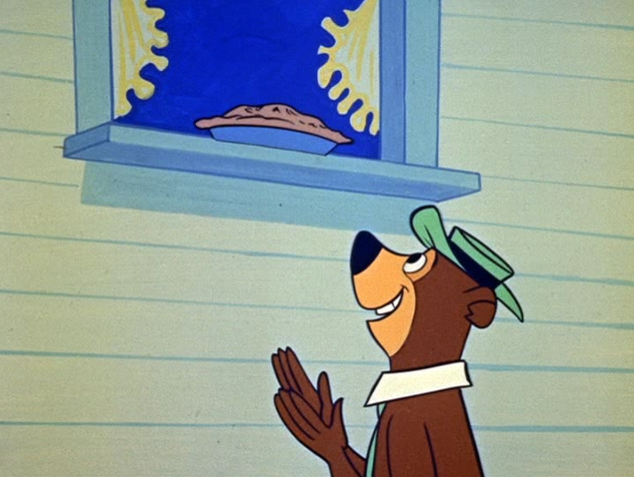
The Alluring Aroma of Freshly Baked Pie Cooling on the Windowsill

Remember back to when you were a kid (for some of you, that’s waay back, so I’m sorry for taxing your memory like that, but I appreciate all the wisdom you bring. Too much?). In some cartoons, there was the common TV trope of a pie resting on a windowsill to cool off. Naturally, one of the characters would walk past said pie and… well, they just couldn’t resist. Hilarity ensued.

In the cartoon, it’s imperative for there to be a pie there cooling off, otherwise, no “hilarity would ensue.” But what about in real life. What about in your life? What about in your organization’s life? Are there pies sitting on the windowsill that might be better to cool off – at a minimum – on a windowsill not within arm’s reach of the sidewalk?

Motivation and incentives are the wheels that move life. I’m thirsty, so I go to the kitchen to get a glass of water. My organization needs an IT expert, so we publish an open competition for an IT specialist. Even with this motivation to do things one way, often times, there’s something in the path that prevents us from getting there. Maybe on my way to the kitchen, I pass by a bottle of ‘cola’ next to an empty cup. Being as though that I’m thirsty, I decide to abort my mission to go to the kitchen for water and instead, drink the pop. (Pop is healthy, isn’t it?) Maybe as my company was looking for an IT expert, someone’s sister was an IT expert, so we just hired her instead. (Nepotism isn’t so bad, is it?)

These examples might seem overly simplistic, so let’s spice it up.

Managers in the federal government perform a yeoman’s task of balancing the needs of directors (i.e. newly minted EX’s who almost certainly want to show their new superiors that they didn’t make the wrong choice in selecting them out of the pool) and the needs of all the people below them (which, depending on the department, can be as few as a handful or as many as a baseball team). The director tells the manager that they need 25 products by the end of the week (because that’s what the client has been promised), so the manager then turns to the team and says, “I need 25 products by Thursday,” even if the team is still recovering from the 25 products from last week.

No matter how good intentioned that manager is, pressure will mount and cause the manager to push the team harder to get the 25 products completed (up to and including, rewriting some or all of the products to ensure that the director thinks the products satisfactory). The scent of the pie on the windowsill is just too strong – the manager needs the products completed, welfare of the team be darned.

How many of you can relate to this example?

I’ve only been in the government a few years, but I’ve come across more people than I’d like to admit who have recounted facsimiles of that very same story. So what can we do?

Well, for starters – MOVE THE DANG PIE!

Sorry about my yelling there. Incentives are a touchy subject for me.

In the cartoon example, it’s really easy to see what’s wrong. The baker/chef should have put the pie somewhere else to cool off. Things start to get a little more complicated when we think about the incentives (intended or unintended) of bureaucracy. I’m of the mind that despite something appearing as though it’s not working, there were probably honest reasons as to why it was made that way in the first place. At the same time, those reasons may have been overtaken by events, so let’s get to work on redesigning things.

So, managers have pressures from above and from below. The pressures from above are tangible (i.e. 25 products by Friday) and the pressures from below are intangible (i.e. my team is overworked and stressed). [NOTE: you could probably argue health as a tangible pressure, but let’s just go with it as intangible for now, shall we?] If we could wave our magic wand and relieve some of the pressures for the manager, I’m sure that would be just lovely. Maybe now, the manager only needs to spit out 10 products a week and they’re able to give their team a break every 3 weeks (i.e. no products due this week – you deserve it, team!). Great. Now we’ve solved this manager’s problems. But what about that newly minted director who still needs to impress his superiors? They’re still looking for 15 more products than what they’re getting. Who’s going to step up?

Anytime you start messing around with incentives at one level of a complex system, it’s going to have a cascading effect on the rest of the system. The bureaucracy that is the Government of Canada is the very definition of a complex system. If we change the incentives for one manager under one director in one team, how will that change affect the system? What if we wanted to alleviate pressure on the director’s boss? How will that have an effect on the boss’s boss? And what about the boss’s boss’s boss? And the Minister? And the Prime Minister? And maybe more importantly, Canadians!?

I got a little carried away there, but the point still stands. We need to do a better job at noticing the pies on the windowsills before we fall prey to them. The first step in any process of change is always awareness. What are some of the ‘pies on the windowsill’ in your area?

This post originally appeared on GCconnex/GCcollab.

Silence Isn’t Golden: Everyone Thinks You Should Speak

matthias-wagner-QrqeusbpFMM-unsplash.jpgYou’re sitting in the weekly management meeting and the senior person at the table is running through the agenda at a fevered pace. Decisions are being made, left, right, and center, and you can barely keep up with what’s going on. Wondering if you’re alone, you look around the table and it seems that most of your colleagues are following along splendidly. All of their body language indicates that they know what’s going on and are in agreement. As you didn’t have time to read the accompanying materials, you think that it’s probably just you.

How many times have you found yourself here? Watching something happen and assuming that you’re the only one that disagrees with the way things are going.

Hopefully, not too often, but my guess is that 100% of the people reading this have, either: a) found themselves in this scenario, or b) know someone who’s found themselves in this scenario. OK, OK – 99% of you.

As it happens, there’s a name for this – pluralistic ignorance. Huh? Yeah, it’s a bit heavy on the jargon – both in its name and often times, its description. In fact, there’s even disagreement from academics about how to describe it. That’s why it’s often best to explain the phenomenon through examples. There’s the one I shared in the opening, but let’s be honest, that was only a few sentences and you probably spaced out reading it [are you back?].

OK. Here’s a quick video example of one I’ve come across that usually helps crystalize the concept for folks.

https://vimeo.com/63062967

The video shows a few minutes of Prof. Dan Ariely’s class at Duke. It’s only about 4 minutes, so go ahead and give it a quick watch (I’ll wait).

Seriously, g’head and watch it. [Note: it’s a Vimeo link, so many apologies to any of you unable to watch it because of a firewall/blocked IT.]

~~~

Pretty cool, eh? Now, I bet some of you might be saying to yourself, “Yeah, but I would have spoken up and asked the professor what the heck he was talking about.” Sure, maybe you think you would have or maybe you actually would have. The point here is that most people don’t or won’t. This post is supposed to be about change management, after all, so let’s bring it home with something a bit more on-point for all of you.

If you’re reading this, you probably have some experience in change management. Whether you’re a seasoned executive who’s led through countless mergers and acquisitions or a student who’s recently joined the team and are finding yourself super-bored (i.e. you’re on GCconnex/GCcollab reading whatever you can get your hands on), you’ve come into contact with change management. Yes, you have. Depending upon where you are in your career, your examples might be more personal (hello Generation Z!) or professional (hello seasoned executives).

So how does this relate to pluralistic ignorance? Remember that example I shared in the beginning where you found yourself at the decision-making table, but you weren’t quite sure what the heck was going on? That’s exactly the kind of meeting that might happen before a major change. Everyone appears to be in agreement with what’s being said. However, what’s really happening is that most people aren’t in agreement with what’s going on, but think that everyone else is in agreement with what’s going on, so they bite their tongue. Then what happens? Well, then, your group becomes a statistic. And not a good one.

Do you want to become a statistic? Do you want to continue to perpetuate the terrible idea that any change in an organization is doomed to fail more than half the time? I sure as heck don’t. So what can we do? Well, we can speak up. We can       prove ‘pluralistic ignorance’ wrong by raising our hand in the management meeting. We can speak up when we don’t understand what’s happening or don’t believe we’re headed in the right direction or think that our decisions aren’t based on foundational data.

This post originally appeared on GCconnex/GCcollab.

Have You Ever Wanted to Talk to Yourself in the Past?

harli-marten-M9jrKDXOQoU-unsplash.jpgMost of what I’ve written about in the last few months has focused on change management from a macro-perspective, which is completely natural given my inclination to try and change the “whole” of the system, rather than one piece of it. However, today I’d like to focus on the micro-perspective of change management – the individual.

In 1959, a geologist put a message in a bottle and buried it in the Arctic. The note and a companion note nearby explained that they were buried a specific distance to the edge of a nearby glacier. The note(s) then asked the person who found them to measure the current distance to the glacier and then mail that information to researchers at Ohio State University.

The notes weren’t found until… 50+ years after written. [Spoiler, but not really a spoiler: the glacier had retreated over 200 feet in that timespan.]

There have been so many technological advances since 1959, so we don’t necessarily need to look to put our memories on paper and bury them in a time capsule to be opened 60 years from now. Instead, we have tools that have reduced the legwork (to essentially zero) allowing you to use the very same device on which you’re reading this to write yourself a letter and have it sent to you on a date of your choosing. Pardon?

Have you ever wanted to send yourself an email weeks or months into the future? Well, as it happens, you now can à https://www.futureme.org/

The interface is relatively simple. You begin writing yourself a letter and then you can choose when you want it to be sent to you. They prompt the user with 1 year, 3 years, or 5 years, but you can also choose the specific date (so if you want 2 weeks, 6 months, 18 months, etc.). Then, you decide whether you want to keep your letter private or release it to the public (anonymously). Lastly, you enter your email address, press send, and reap the benefits of knowing that you ‘put something out into the universe’ that you’ll be receiving at a later date.

There’s a lot of potential uses for this kind of a service, but I’m going to focus on the micro. As a person reading this, there’s a good chance that you have (at least one) goal for yourself. These goals probably involve some degree of change, most notably, within you. Maybe you want to learn how to code in Python. Maybe you want to learn how to be better with budgets. Maybe you want to expand your network.

Beyond the surefire way to make change (cue, reward, routine), it also helps to hold yourself accountable for that change. To aid in helping you make progress in this regard, you could send yourself a letter at some of the different times into the future. Maybe at the 4-week mark, your email to yourself details some of the reasons why you’re trying to make the change (and to maybe re-motivate you?). Maybe at the 6-month mark, the email talks about all the things you think you’ll be doing with this newfound skill/ability. When you see the 6-month email, you might have fallen short of where you thought you’d be, or maybe you’ll be on a different track altogether.

This exercise can be aspirational, but it can also be semi-reflective. Meaning, maybe you want to put your thoughts down “now,” but be able to review those thoughts 10 weeks from now. For instance, have you ever made a decision and then many weeks later, wondered what it was you were thinking when you made that decision? This tool gives you that opportunity to bare your soul (to yourself) and here’s the important part – without any confirmation or hindsight bias!

So, take a chance and give yourself the benefit of the doubt. Write your (future) self a letter.

This post originally appeared on GCconnex/GCcollab.

Ohh, You Betta Recognize!

mark-adriane-muS2RraYRuQ-unsplash.jpgThe other day I was feeling particularly spry. There was a jump in my step and I went about my day with great jubilance. You could argue for any number of things that contributed to this feeling, but in reflecting back on it, I’d argue strongly that there was a direct link to my being recognized. Recognized you say? Yes, recognized.

What does it mean to be recognized. Well, for one, it means that you’re doing good work (which is always a good thing). Two, it means that someone saw you doing the good work. And most importantly, three, that someone saw fit to tell you (or someone else) about the good work that they saw you doing.

It sounds so simple when I lay it out like that, but I know it won’t surprise any of you when I saw that following through on recognition is a lot harder than it seems. Reviewing the proverbial ‘tape’ shows that, according to public servants, there’s still a lot left to be desired when it comes to recognition for a job well done (since 2011, 2 out of every 5 public servants feel like they don’t receive meaningful recognition for a job well done).

So – what can we do to fix this (aside from the obvious, i.e. recognize them!)?

Well, it turns out that recognition isn’t as simple as all that. There’s more to it than simply “going through the motions.” I expect you probably already knew that, so let’s get right to it.

Frequency. How often do you think recognition should happen? Daily? Weekly? Monthly? Yearly? How about… bi-weekly! It might sound trite, but you might find it useful to keep a ‘scorecard’ of recognition (say, within an Excel file?), so that you can be sure that you’re making the proverbial rounds.

Organizational values. So, if you’re praising folks bi-weekly, what are you praising them for, exactly? Well, one school of thought would have the praise be directly tied into the organization’s values (i.e. culture). This is the perfect way to perpetuate the behaviours within the organization that one wants to see.

Matching. This is one of my pet peeves. Many years ago when I was a resident assistant, it was common for my resident director to hand out ‘recognition’ in the form of gift cards to a local restaurant – no matter what it was that we were doing in our jobs. We might have prevented one of our residents from committing dying by suicide or we could have made sure all of our residents had passed their “clean room check” – we still got that gift card. Ironically, this recognition sometimes had the opposite effect – it was demotivating. If you’re doling out recognition, make sure the recognition matches what’s being recognized.

Personalize. Maybe more importantly than matching is ensuring that recognition is personalized to the individual. Meaning, maybe some folks would eat up the gift cards for the local eatery (pun intended!). Maybe other folks just want to have a simple “thank you.” Other folks might thrive on being lauded for their achievements in a public setting. The point is that it’s incumbent upon you to figure out what it is your employees want when it comes to recognition, so that when it comes time to recognize them, you do so in a way that encourages them to continue doing things worthy of recognition.

EDIT: Big thank you to @Darlene.Marion for catching the language slip up re: “dying by suicide.”

This post originally appeared on GCconnex/GCcollab.

Making Decisions Under Pressure: Return to Equanimity

cynthia-magana-GMLNhaBkCiE-unsplashI spend quite a bit of time in the car commuting to and fro. As a way of maximizing my use of time, I’m almost always listening to a podcast. These podcasts are on my phone and I prefer to have my headphones in (one headphone, if you must know). Since I use my headphones with such regularity, I always put them in the same place (so I’ll know where to find them when I want them). They’re in a central location in the house, but not in a place where one of the kids can grab them and move them. [Can you guess where this is going yet?]

In getting ready to go this morning, thing were going right on cue. I slipped on my shoes, buckled in one of the kids in the back, and was about to start the engine, until I realized… my headphones!? They’re not in the car. Assuming I must have just overlooked them from their place this morning, I doubled-back and… they weren’t there! Great Scott! OK. Don’t panic, I thought.

I used them on the weekend. Maybe I must have taken them off somewhere and forgot to put them back. I checked the closet, the laundry room, my office, my wife’s office, but no matter where I looked, I couldn’t find them. My wife’s car, the closet again, my wife’s office again, inside drawers, in the pantry, the kitchen counter, the living room, one of the kid’s rooms, the bookshelf… I mowed the lawn this weekend! That must be where they are, near the riding mower. Nope, not near the riding mower. Checked the laundry room again, checked the office again, checked the kitchen again…

While all of this is going on, I’ve got one of the kids buckled into a carseat in the car. In the past, they’ve not been a fan of being in the car, buckled in, by themselves, so I’m starting to feel pretty stressed throughout this process. And doubling-back to the same spot and not finding the headphones isn’t doing anything positive for my stress, either. Where are they!?

Did I mention that I was on my way to drop off one of my kids at camp and I have a thing about being punctual (not to mention, it’ll give the kid more time to play with their friends!). Have you seen my headphones, please help!?

After a few more circuits of checking all the same places, (maybe magically, they’ll be in the spot I’ve already checked!?), I acquiesce. I give up. I’m not going to find them. They’re gone to eternity. No more head phones. Dejected, I return to the car and begin the drive into town.

As you might expect, my mind wasn’t ready to give up, or at least part of it wasn’t ready to give up. What the heck was I doing yesterday with my headphones? I replayed Friday and I replayed Saturday. All the images I could already come up with when I was racing around the house. I could see where I put the headphones in those scenarios. I began replaying Sunday (mowing the lawn), yup, I knew where the headphones were and checked. Errands in town. Yup, I checked those spots, too. And then…

Of course! I remembered. Sunday afternoon was a bit anomalous in that I had run errands and then picked up one of the kids to take them home for a nap. They were overdue for a nap. So, when we get home, I didn’t empty the car like I normally would. I took in the fridge/freezer stuff and then took the kid upstairs ASAP to get them to sleep. When I came back downstairs, I hurriedly emptied the car because I wanted to use the time during the nap to begin setting up my course for the Fall semester (it starts next week — eep!).

In my haste doing that (i.e. I took too much stuff in in one trip), I shoved my headphones into my pocket and when I finished putting stuff away in the kitchen, I hurriedly changed my clothes and headed for the office. Because my mind was so focused on getting a jumpstart on the course, I wasn’t thinking about emptying my pockets (as it happens, my debit card was in one of the pockets, too!).

So, why am I sharing this story that I’m sure everyone can relate to?

In that time where I was racing around the house, checking all the same locations, I had an ‘artificial’ deadline. I was meant to already be on my way driving. This time pressure was, no doubt, affecting my ability to be still for a few minutes, and properly recount my steps from the previous day. Remember, in the car on the way into town, my mind did just this. So, why didn’t I do it before?

Well, I was too focused on all the negative outcomes. I’m not gonna be able to listen to my podcasts. I’m not going to be able to insulate myself from sound at work or the coffee shop. I’m going to fall behind on my podcasts. I won’t be able to practice French. I’m going to have to buy new headphones! Negative, negative, negative. While all of those things might have been true. I didn’t give myself the space to use my faculties. I didn’t give myself the time to possibly be right. To find the positive outcome. I was so keyed in on all the bad things.

And that’s why the subtitle of today’s post is “return to equanimity.” When it’s time to make a decision, even a low-impact decision, if you don’t return to a state of balance, a state of neutrality, a state of equanimity — you run the risk of making poor decisions even if the right decision is right there under the surface!