On Judging a Book, er, Manager by its Cover

mona-eendra-NZNFY_g6ong-unsplashThere’s been some news recently regarding the Toronto Maple Leafs that’s, well, that’s frankly, the very opposite of heart-warming. And hearing this news, put some other news in a different light for me. Before we get to that, let’s back up to the 2014 Olympics in Russia.

Heading into the ’14 Olympics, Canada returned its head coach for the men’s hockey team that had led them to victory in the 2010 Olympics held in Canada. As a good Canadian boy, I was super-excited to see Canada defend its Olympic gold medal. In watching the games, I remember thinking that it was like Team Canada was playing with some kind of ‘cheat code.’ Their style of play made it very difficult for teams to score on them — they allowed three goals the entire tournament. One of those was on the penalty kill in their first game of the tournament. They also held their opponents in the semi-finals and the gold medal game scoreless. Very well done, eh?

Fast-forward a year and the Toronto Maple Leafs announced that the coach that led Canada to gold medals in 2010 and 2014, Mike Babcock, would now be the head coach of the Toronto Maple Leafs (he led the Detroit Red Wings to a Stanley Cup victory in 2008). I was overjoyed. Overjoyed! The Leafs won the draft lottery to select first overall at the end of Babcock’s first season and with it, the opportunity to get a generational talent — Auston Matthews. Things were looking pretty good.

Fast-forward to the current season — things haven’t been going swimmingly for Babcock and the Leafs. Expectations were high after resigning some of their stars to expensive contracts. However, the proof very much wasn’t in the pudding. In the first quarter of the season, the Leafs didn’t play well enough and ultimately, the team decided to part ways with Babcock. When I first read the news, I was stunned. I knew that there had been talk of it, but it didn’t seem like the right call. Babcock was a coach with a record that preceded himself and I still had in my mind the images of how much better Team Canada at the ’14 Olympics looked in comparison to other teams. Hoo boy, was I wrong.

That brings us to this week. Earlier this week, there was a story that came out in the middle of the night about some, oh, shall we say, “poor motivational techniques” employed by Babcock with the players. Now, before I should go on, I should say that I’ve never played professional or organized hockey. I don’t know what it’s like in the “locker room” or on the “practice ice.” I have, however, played organized baseball, so I am familiar with some of the groupthink and harsh conditions that can be employed by coaches/managers for any number of reasons. OK, back to it.

Right, Babcock and poor motivational techniques. When I first heard this story, and it wasn’t coming from a “major publication,” I didn’t want to believe it. Instead, I told myself that it was an unsourced claim and that someone was trying to vindictive or hurtful in dragging Babcock’s name through the mud. Flat wrong. The next day, the beat reporters interviewed the player subjected to the poor motivational techniques and… well, as it happens, it did happen. Colour me surprised. Very surprised.

I had this image in my head of this great coach, this coach who had it together, who could command the locker room and motivate the players to do great things. I mean, just look at what he did with Team Canada in 2010 and 2014 — how could the guy who brought so much joy to Canada in these times be the same guy who would subject a player to abject humiliation in front of his teammates? Major cognitive dissonance for me.

And as quickly as I was having those thoughts, it was a stark reminder that you can’t judge a book by its cover. You can’t judge a coach from what you see in the 2+ hours during the 80+ games they play during the season. There’s so much more than meets the eye in sports. The coaches are with the players as part of their frickin’ job (!). They seem the daily for many stretches at a time. As fans and viewers, we go to work all-day. We spend time with our kids. We have other hobbies. There is so much behind the scenes in sports that we don’t see. Yes, we see the players/coaches give interviews, but that’s a very small snippet of their personality and it might even be some kind of a “show” that they’re putting on. Some famous examples: Bill Belichick and Gregg Popovich. There’s more than meets the eye.

~

In trying to pull out a more applicable lesson, I can’t help but thinking about leaders, managers, or senior management, in our day-to-day work as public servants. Yes, we see pockets or snippets from people who come from these groups, but that doesn’t mean that what we see is a true representation. In this case, counter to my example from above (in that I was thinking the best of Babcock, while it turns out there were some unsightly things going on), it’s common to associate negative action with “management” (i.e. they’re not doing enough, they don’t see me, they’re not responsive, etc.). While all of that might be true, let’s consider for a moment that maybe there’s something else going on there. Maybe management is doing a lot to try and make sure that they’re meeting needs. Or, maybe that senior leader in the meeting who seems like they’re not taking an interest in you, that senior leader who’s not recognizing you for who you are — maybe there’s more to their story. Maybe they’ve got things going on in their personal life. Maybe they’re in the middle of a messy divorce. Maybe they just heard that one of their parents has Alzheimer’s. Maybe their dog is sick. Who knows!

The point here is that, in all the circumstances that bring people together, all the times where we’re greeted by the faces of people near our orbit, we can never really be sure of the events that immediately preceded the stranger to be sitting across from you. So, take a moment, take a breath, take a beat and remember, there’s more to this person’s story.
The Alluring Aroma of Freshly Baked Pie Cooling on the Windowsill

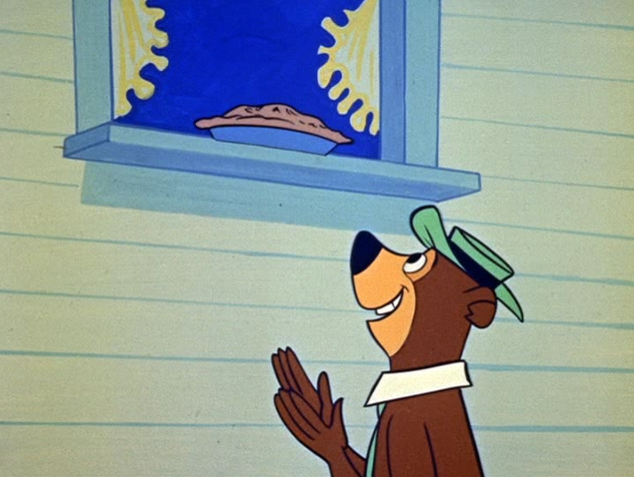
Remember back to when you were a kid (for some of you, that’s waay back, so I’m sorry for taxing your memory like that, but I appreciate all the wisdom you bring. Too much?). In some cartoons, there was the common TV trope of a pie resting on a windowsill to cool off. Naturally, one of the characters would walk past said pie and… well, they just couldn’t resist. Hilarity ensued.

In the cartoon, it’s imperative for there to be a pie there cooling off, otherwise, no “hilarity would ensue.” But what about in real life. What about in your life? What about in your organization’s life? Are there pies sitting on the windowsill that might be better to cool off – at a minimum – on a windowsill not within arm’s reach of the sidewalk?

Motivation and incentives are the wheels that move life. I’m thirsty, so I go to the kitchen to get a glass of water. My organization needs an IT expert, so we publish an open competition for an IT specialist. Even with this motivation to do things one way, often times, there’s something in the path that prevents us from getting there. Maybe on my way to the kitchen, I pass by a bottle of ‘cola’ next to an empty cup. Being as though that I’m thirsty, I decide to abort my mission to go to the kitchen for water and instead, drink the pop. (Pop is healthy, isn’t it?) Maybe as my company was looking for an IT expert, someone’s sister was an IT expert, so we just hired her instead. (Nepotism isn’t so bad, is it?)

These examples might seem overly simplistic, so let’s spice it up.

Managers in the federal government perform a yeoman’s task of balancing the needs of directors (i.e. newly minted EX’s who almost certainly want to show their new superiors that they didn’t make the wrong choice in selecting them out of the pool) and the needs of all the people below them (which, depending on the department, can be as few as a handful or as many as a baseball team). The director tells the manager that they need 25 products by the end of the week (because that’s what the client has been promised), so the manager then turns to the team and says, “I need 25 products by Thursday,” even if the team is still recovering from the 25 products from last week.

No matter how good intentioned that manager is, pressure will mount and cause the manager to push the team harder to get the 25 products completed (up to and including, rewriting some or all of the products to ensure that the director thinks the products satisfactory). The scent of the pie on the windowsill is just too strong – the manager needs the products completed, welfare of the team be darned.

How many of you can relate to this example?

I’ve only been in the government a few years, but I’ve come across more people than I’d like to admit who have recounted facsimiles of that very same story. So what can we do?

Well, for starters – MOVE THE DANG PIE!

Sorry about my yelling there. Incentives are a touchy subject for me.

In the cartoon example, it’s really easy to see what’s wrong. The baker/chef should have put the pie somewhere else to cool off. Things start to get a little more complicated when we think about the incentives (intended or unintended) of bureaucracy. I’m of the mind that despite something appearing as though it’s not working, there were probably honest reasons as to why it was made that way in the first place. At the same time, those reasons may have been overtaken by events, so let’s get to work on redesigning things.

So, managers have pressures from above and from below. The pressures from above are tangible (i.e. 25 products by Friday) and the pressures from below are intangible (i.e. my team is overworked and stressed). [NOTE: you could probably argue health as a tangible pressure, but let’s just go with it as intangible for now, shall we?] If we could wave our magic wand and relieve some of the pressures for the manager, I’m sure that would be just lovely. Maybe now, the manager only needs to spit out 10 products a week and they’re able to give their team a break every 3 weeks (i.e. no products due this week – you deserve it, team!). Great. Now we’ve solved this manager’s problems. But what about that newly minted director who still needs to impress his superiors? They’re still looking for 15 more products than what they’re getting. Who’s going to step up?

Anytime you start messing around with incentives at one level of a complex system, it’s going to have a cascading effect on the rest of the system. The bureaucracy that is the Government of Canada is the very definition of a complex system. If we change the incentives for one manager under one director in one team, how will that change affect the system? What if we wanted to alleviate pressure on the director’s boss? How will that have an effect on the boss’s boss? And what about the boss’s boss’s boss? And the Minister? And the Prime Minister? And maybe more importantly, Canadians!?

I got a little carried away there, but the point still stands. We need to do a better job at noticing the pies on the windowsills before we fall prey to them. The first step in any process of change is always awareness. What are some of the ‘pies on the windowsill’ in your area?

This post originally appeared on GCconnex/GCcollab.

Building Society on a Foundation of Kindness: Parenting Without Borders, Part 9

In the Introduction, we broached the idea that the way other cultures parent might be more “right” than the way that the culture in North America parents, as discussed in the book Parenting Without Borders. In Part 1, we looked at some of the different cultural thoughts around sleep. There was also that stunning example of how it’s normal for babies in Scandinavia to be found taking a nap on the terrace in the dead of winter! In Part 2, we explored “stuff” and how having more of it might not be best for our children. In Part 3, we looked at how different cultures relate to food in the context of parenting. In Part 4, we looked at how saying “good job” to our little ones might not have the effect we think it does. In Part 5, we talked about the virtues of allowing our little ones the space to work through problems on their own. In Part 6, we examined the importance of unstructured “play.” In Part 7 and Part 8, we explored what education is like in East Asia and Finland. In Part 9, we’ll look at cultural notions about rearing our children to be kind.

If you’ve been following this series, no doubt there may have been some things that have made the hairs on the back of your neck stand on end. And if that hasn’t been the case up to this point, it wouldn’t surprise me if this chapter is the one that finally does it.

One of the first anecdotes, while it shouldn’t be, is still a bit shocking [Emphasis Added]: “In 1970, the primary goal stated by most college freshmen was to develop a meaningful life philosophy; in 2005, it was to become comfortably rich.” It’s no wonder that the way we treat each other in today’s society may seem a bit different than the way we treated each other 50 years ago (“-isms” like racism and sexism aside, of course). As a quick aside — how different would society look like today if the goal of 90% of university students was to develop a meaningful life philosophy, rather than to get rich?

Near the beginning of this chapter, Gross-Loh recounts how some of the parents she knows are emphasizing (possibly unintentionally), individuality over community awareness. What does that mean? Well, for example, she retells the story of a mother of a three-year-old rushing to comfort her son after her son had thrown a wooden toy and hit Gross-Loh’s son in the head. The idea behind this is that the other parent was trying to get her son to understand the feelings he felt that precipitated the chucking of the wooden toy at the other kid.

Allowing children to behave as they want to until they feel like acting differently actually makes our kids more miserable and less compassionate. Children who have too few boundaries often flail around for a solid surface to ground them.

Consequently, it’s up to us — as parents — to set these boundaries and more importantly, enforce them. Building on this idea of boundaries…

Believe it or not, research shows that children are born with a sense of kindness, but that’s not enough. If this sense of kindness isn’t fostered and reinforced by parents, it can be “overwritten.” Similarly, research has shown that kids are happier when they’re giving something to someone else than when they receive it. That shouldn’t be too surprising (spending your bonus on your coworker will make you happier than spending it on yourself!). An important aspect of this is incentives. If we reward kids for sharing through incentives, we may unintentionally dissuade them from developing a sense of internalizing the virtue of sharing (thereby dissociating sharing from its innate spontaneity and instead, teaching our children to expect an external reward whenever they share).

Two more things I wanted to highlight from this chapter —

Parents who teach their children to speak with authenticity and honesty but do not simultaneously teach them the art of being considerate send their children the message that it is always better to be honest to your true self even if it means hurting someone.

And finally, a difference in orientation in American and Japanese cultures:

While American mothers often orient their babies to things apart from themselves, such as objects, Japanese mothers more often orient their babies to themselves, encouraging a constant awareness of relationships and the impact of one’s actions on other people.

[…]

In disagreements that warrant adult intervention, kids are asked what they think the other person felt that motivated him.

Can you imagine how different American society would be, if every kid is taught the value and importance of considering the underlying motivations of the actions of their friends and other people?

Women and Words: Women Who Read Objectifying Words More Likely to Seek Cosmetic Surgery

I’ve tried to write about this article on a few occasions and had to stop because I simply felt terrible with the implications of the research. In short, as the headline of this post suggests, when women read words that are objectifying, they’re more likely to seek cosmetic surgery. I’ve written about the importance of words and how they can have an effect on us in the past, but this is one of the first times I’ve written about it with such awful implications. Here’s a bit more from the researchers:

Our results provide the first evidence that intentions to pursue cosmetic surgery stem (in part) from being in a state of self-objectification— a state where women are focused on how their bodies look in the eyes of others as opposed to what their bodies can do. Compared to the non-self-objectifying conditions, women primed to self-objectify reported more body shame and a greater intent to pursue cosmetic surgery.

You might consider this finding to be intuitive, but it’s really important when research like this is published and we can say with more conviction that the words we use can have a catastrophic effect on some people. In particular, impressionable young women. I should clarify that I don’t mean for that to come across as paternalistic. The study focused on women (and didn’t include look at whether this effect holds in men, too).

While the headline from the article is mostly “Bad News Bears,” there’s still a ray of hope to be found [Emphasis Added]:

In addition, we found that body shame was significantly lower among women primed with the non-self-objectifying physicality words compared to the neutral words. This finding suggests that exposure to text that emphasizes body functionality and competence without a focus on observable physical attributes may be protective against selfobjectification and body shame.

As the researchers suggested, this should be subjected to further investigation. Regardless, these findings are very important for all of us who write for consumption in any form, but probably more so for folks who write for consumption by young women. Before I end this post, I wanted to include a few more passages from the article that I think are important, with some commentary [Emphasis Added]:

Our research has a number of implications for practitioners. First, knowledge of this link between self-objectification (stemming from a sexually objectifying environment) and intentions to have cosmetic surgery should be useful to practitioners who work with girls and women. In particular, it is necessary to move beyond the understanding that sexual objectification makes women feel bad per se to identify the potentially harmful actions against themselves that women might take in response to such encounters.

For those who are in any kind of counselling profession or role, this seems very important. Understanding the actions that a client/patient may take as a result of their state can be key to offering the right kind of counsel.

Second, community members who wish to advocate for girls and women—including activists, educators, counselors, and policymakers—must raise awareness of the harms of self-objectification more consistently, including the pressure to undergo risky elective surgery.

Raise awareness. That’s why, despite my difficulty in trying to complete this post, I persevered. Persevere is probably too strong of a word, but I felt it important to write this, so that when you read this, you may consider changing your behaviour and hopefully, educate those around you in the hopes that they may change their behaviour, too.

Third, more emphasis should be placed on expanding the self and identity of girls and women to provide other domains in which they can glean social rewards and secure esteem beyond a sexualized appearance.

Please, please, please, rent/buy Miss Representation and tell your friends about it. It’s one of the most succinct (and recent) documentaries exploring the issues with how women are portrayed in the media.

Fourth, it is necessary to provide girls and women with specific actions that can be taken in the face of sexual objectification that do not require modification of one’s body in order to arm them with a greater sense of control over these largely uncontrolled and uncontrollable situations.

This goes back to that first point about those in the helping professions — it’s so important that one is able to offer a different avenue of action for one who is seeking out something like cosmetic surgery as a result of self-objectification.

Fifth, to the extent that self-objectification might be a risk factor for repeated surgery and low satisfaction with surgical outcomes, engagement with cosmetic surgery professionals to at least think about the implications of these patterns is worthwhile.

Almost as a “last resort” kind of thing, as the researchers suggested, it would be important for folk who work in cosmetic surgery offices to have knowledge of this issue of self-objectification (through the words they’ve read). While it may not be “good for business,” I would hope that for folks who work in this industry, counselling their potential clients on research like this would come first. I should clarify that I don’t mean to imply that anyone working in the cosmetic surgery industry is simply in it for the money, it’s as noble as any other medical field (consider those who work in plastic surgery, which is the umbrella that cosmetic surgery falls under, that seek to help burn victims).

Finally, it is critical that practitioners take up the challenge of changing the system of sexual objectification that perpetuates self-objectification and the concomitant consequences in the first place (Calogero & Tylka, in press). In light of the potential risks of undergoing any surgery and anesthesia, the pursuit of elective cosmetic surgery may represent another harmful micro-level consequence of selfobjectification for women, which will require our attention on many fronts.

ResearchBlogging.orgCalogero, R., Pina, A., & Sutton, R. (2013). Cutting Words: Priming Self-Objectification Increases Women’s Intention to Pursue Cosmetic Surgery Psychology of Women Quarterly, 38 (2), 197-207 DOI: 10.1177/0361684313506881

What Do You Want to Hear First: Good News or Bad News?

As it turns out, our answer to this question is different depending on whether we’re the one delivering the news or we’re the one receiving the news. If we’re delivering the news, we’re more likely to want to lead with the good news and if we’re receiving the news, we’re more likely to want to hear the bad news before the good news. Research published in last month’s Personality and Social Psychology Bulletin indicates that the order the news is delivered has implications for both the deliverer and the recipient.

The deliverer, wanting to avoid the ‘pain’ of delivering bad news and acting on egocentric biases, prefers to lead with the good news. The receiver, wanting to allay their anxiety about the bad news, much prefer to receive it before the good news. There’s certainly a disconnect here between the giver and the receiver. The giver, wanting to delay the painful experience of delivering bad news, prefers to save it for the end of the conversation. Conversely, the receiver would rather get the bad news out of the way from the outset.

The researchers found that if deliverers were to take the perspective of news-recipients, they’d be more inclined to lead with the bad news. While not specifically labelled as such, in testing this hypothesis, the researchers have found another positive to empathy. If the deliverers were to empathize with the the news-recipients, that is, pretend as if they were the ones receiving the news, they’d much rather hear the bad news first.

As it happens, hearing the bad news first might not be what’s best for the recipient.

If there is behaviour that needs to be changed, hearing the good news after the bad news might leave the recipient on their preferred high note, but also might diminish any motivation they might have had to act on the bad news. In Study 3:

News-recipients who received bad news first were less likely to take an easy opportunity to improve, choosing instead to engage in a boring and personally unproductive task (i.e., stapling papers for the researcher).

While deliverers of bad news might be acting out of their own self-interest when they prefer to deliver the good news first, they might actually be doing what’s in the best interest of the receiver. So, what order should you deliver the news? Well, that seems to depend on whether you want to motivate the receiver to act on the bad news.

One other implication of the good then bad sequence is that sometimes people like to tack on another piece of good news after the bad news to soften the impact. This is often referred to as a sandwich. While this may make the deliverer feel better, it tends to quash the motivational effect of ending with the bad news.

ResearchBlogging.orgLegg, A. M., & Sweeny, K. (2014). Do You Want the Good News or the Bad News First? The Nature and Consequences of News Order Preferences Personality and Social Psychology Bulletin, 40 (3), 279-288 DOI: 10.1177/0146167213509113

What Do You Do When You’re THAT Much Better Than The Competition?

The Miami Heat have won the last two NBA championships and they’ve been to the finals for the last three years (losing in Game 7 of the finals before winning back-to-back championships). So far this year, they’re one of two teams in the Eastern Conference (as of this writing) to have a winning record. The other team being the Indiana Pacers, whom many think will challenge the Heat for the best team in the Eastern Conference this season. If we take a peek at the Western Conference, we see that there are quite a few more teams with winning records. In fact, there are five times as many winning teams in the West than in the East.

I’m not here to talk about the parity in the NBA conferences, even though it’s clear that there is, but instead, about the Heat and their competition. That is, they’ll play most of their games against the Eastern conference, of which there are only two teams with winning records. Given that the Heat have been an elite team for the last three years, it’s not surprising that a they’d have to resort to “games within games” to stay focused.

After reading that article on SB Nation, I thought to myself how difficult it must be for the Miami Heat coach (Erik Spoelstra) to keep his players focused, not only as each season wears on, but as each game wears on and each quarter wears on. The Heat have played 23 games so far this season and have won 17 of them. While they’re not in first place in the conference (that title belongs to the other winning team in the East, the Pacers), they’re well above the 3rd place team in the conference. For a team that plays that much better than its opponents on a nightly basis, one can see how it might be easy for the players to lose focus. Heck, it’s possible that a few of those six losses came as a result of the team losing focus after having outplayed the other team through the first few quarters of the game.

The reason I’ve raised this issue is because I was thinking about the success of a “games within games” strategy. For instance, let’s say that the “game inside the game” for today’s game is that we’re going to try to get the ball to the guy down low. That is, the strategy is to beat this team by using a certain player in a certain way. I wonder what happens when it gets down to near the end of the game and the score is close — do you abandon that strategy? And if you do, how do you get the players who hadn’t been as involved ready to go now that it’s the key time in the game?

A games within games strategy can be successful, but I worry at what cost.

This also reminds me of one of the chapters in Michael Sandel’s book that we reviewed about 6 months ago — the idea of fines and fees. In particular, the idea that parents pay their kids to read. By doing so, parents are incentivizing a certain behaviour. The worry, from some, is that by paying their kids to read, the kids will no longer derive the same joy out of reading if there’s no incentive involved. If we apply that to this situation, I wonder if the strategy of using the one player in that one game might pervert the incentives for the team. And not just in that game, but over the long haul. Maybe the players don’t then have the same incentives as before when there aren’t games within games.

Of course, I’m not an NBA basketball coach (or even a high school basketball coach), but I think it’s still an idea worth considering.

Motivational Redux: To Make the Obituary in The Economist

About a week ago, I wrote a post about what could be the modern day version of writing yourself a $10,000,000 post-dated check. A few days ago, I saw a tweet that made me reconsider another common motivational activity: writing your own obituary. This tweet came from @GSElevator, which purports to be “things heard in the Goldman Sachs elevators.” Having never worked at a company liked Goldman Sachs (or Goldman Sachs, for that matter), I have no idea whether this account is purely a parody or if these things are actually spoken (or could be spoken).

Anyway, the tweet:

This sounds like it was a question asked in an interview and it’s great on so many levels. To begin, it shows ambition. The people who have obituaries written for them in The Economist are certainly no slouches. These are people who have accomplished — a lot. Second, it shows that the candidate reads The Economist (or at least that the candidate wants to provide the illusion that they do). Working at a place like Goldman Sachs means that The Economist would be required reading. Third (and unrelated to the interview), it gives us another opportunity to talk about ways to motivate ourselves. If you’re having trouble committing to that project or you just can’t get started on that book, you’ve got a number of ways (write your own Wiki page, post-dating a check, writing your The Economist obituary, etc.) to try and get you going.

Take a few minutes this Monday morning and think about that To Do list you haven’t quite gotten to in a while. What grand idea have you been putting off that you just know is brilliant?