If All You Have is a Hammer…: List of Biases in Judgment and Decision-Making, Part 13

The popular ending to the title of this post is, “… everything looks like a nail.” I’m sure you’ve heard this phrase (or some variant thereof) before, right? I bet you didn’t know that this represents an important cognitive bias, though. In fact, didn’t know that this phrase was popularized by one of the giants of psychology — Abraham Maslow. It comes from a book that he published in 1966 — The Psychology of Science: A Reconnaissance. This sentiment behind this phrase is a concept that’s known as functional fixedness.

One of the easiest ways to explain this concept is with a different example — the candle problem. Dan Pink does an excellent job of explaining this in the opening of a TEDTalk he gave a few years ago. I’ve set the video to start just before he begins talking about the candle problem. At about the 3-minute mark, the explanation of functional fixedness ends, but he goes on to talk about an experiment with functional fixedness. Meaning, he couches the importance of functional fixedness in management theory. I’d urge you to come back and watch the remaining 15+ minutes after you’ve finished reading this post:

So, as we can see from the video, it’s hard for people to imagine the box as something other than a receptacle for the tacks. Similarly, when we’re holding the “proverbial hammer,” everything appears as if it’s a nail. One of the most important consequences of functional fixedness is how it contributes to a dearth of creativity. If you’re a manager in a company, maybe you’re not thinking about how you can position your employees to maximize their impact on realizing profits. It’s also possible that you’re not seeing a creative way to reassemble your raw materials (or resources) to design a product that will create a new market!

Ways for Avoiding Functional Fixedness

1) Practice, practice, practice

Probably the easiest and most effective way of overcoming functional fixedness is to practice. What does that mean? Well, take a box of miscellaneous things and see if you can design something fun/creative. The emphasis should be on using those things in a way that they weren’t designed. For instance, if you’re using a toolbox, you might think about how you can use something like wrenches to act as “legs” of a table or as a conductive agent for an electrical circuit.

2) Observant learning — Find examples

Another good way of overcoming functional fixedness is to look at other examples of people who have overcome functional fixedness. When I was giving a presentation on functional fixedness to a group (of college students) about a year ago, I showed the video below. About halfway through the video, one of them remarked: “So, basically, it’s how to be a college student 101.”

If you liked this post, you might like one of the other posts in this series:

How Do I Break a Habit? First, Notice

Last year, Charles Duhigg published a great book called, The Power of Habit: Why We Do What We Do in Life and Business. It has been really well-received garnering almost 900 five- and four-star ratings out of 1050+. I haven’t had the chance to read it, yet, but I have seen many interviews with Duhigg explaining the principles from the book and videos like the one I’ve embedded below with some animation.

A few days ago, I noticed the video embedded on Farnam Street and I thought it’d be a good idea to share it with all of you. It’s one of the best summaries I’ve seen Duhigg give on the principles from the book. In fact, it’s one of the best summaries I’ve seen on habits, in general. If you’re interested in habits, another good person to read (or listen to) is BJ Fogg. Without further adieu, here’s the clip from Duhigg:

There’s so much good information in there, but the piece I want to draw your attention to is near the very end:

Studies have shown that if you can diagnose your habits, you can change them in whichever way you want.

That’s really important because this thinking wasn’t always the case. Sometimes, folks will tell you that you need to focus on the cue, while others will say you need to focus on the reward. As Duhigg suggests, you can focus on whichever aspect you want, so long as you’ve diagnosed the habit. Happy habit-breaking!

Neither the Beginning nor the End — Remember the Middle: List of Biases in Judgment and Decision-Making, Part 12

It’s Monday, so you know what that means — another cognitive bias! This week, I thought I’d combine two because they’re essentially two sides of the same coin. They are: the primacy effect and the recency effect. Believe it or not, these biases are just what they sound like. The primacy effect is the idea that we overweight information we received ‘near the beginning,’ and the recency effect is the idea that we overweight information we received ‘more recently.’

These biases are usually studied in the context of memory and recall. That is, the primacy effect being that people tend to have a better likelihood of remembering information from the beginning and the recency effect being that people tend to have a better likelihood of remembering information they received more recently.

We can certainly see how this would affect our ability to make bias-free decisions. Let’s say that you’re shopping for a new television. You put in a few days worth of research. The biases we have just mentioned above tell us that we might be more likely to give undue weight to the information we found in the beginning (or the information we found most recently). While the purchase of a TV might not be an “important” decision, what if we were interviewing candidates for a job? We might be more likely to view the people in the beginning more favorably or the people towards the end more favorably. This is part of the reason companies use things like standardized questions during the interview as a way to institute some continuity from one interviewee to the next.

Ways for Avoiding the Primacy/Recency Effect(s)

How you avoid these two biases really depends on the context of the decision you’re making. For instance, if you want people to remember something, you probably don’t want to give them a long list (thereby invoking the possibility of one of these two biases to happen). There are some general ways to mitigate these biases, though.

1) Keep a record (write down the data)

One of the simplest ways that either of these biases can have an impact on a decision is when there isn’t a record of data. If you’re just making a decision based on what you remember, there will be an unnecessary weighting for the beginning or the end. As a result, keeping a record of the choices can make it easier to evaluate all choices objectively.

2) Standardized data

As I mentioned earlier in this post, it’s important that the data by which you’re evaluating a choice be standardized. As we looked at in number one, keeping data isn’t always enough. it’s important that the data be uniform across choices, so an evaluation can be made. In this way, it’s easier to look at earlier choices and later choices equally whereas if this weren’t instituted, there might be a slight bias towards the beginning or the end. This tip would work for situations similar to making a purchase (and gathering data), interviewing candidates, or something that can be analogized to either of these two.

If you liked this post, you might like one of the other posts in this series:

He’s Not as Bad as it Seems and She’s Not as Good as it Seems: List of Biases in Judgment and Decision-Making, Part 11

Hello Hello! It’s been a little more than three weeks since my last post. I’ve finished up the requirements for the MBA, so I should be back to writing posts with some regularity. Since today’s Monday, I thought I’d restart that series of posting about a cognitive bias on Mondays. Today’s cognitive bias: the halo effect.

The halo effect is essentially believing that someone is good at something because they were good at something else. For instance, celebrities are often cited when talking about the halo effect. Many regard celebrities as beautiful and as a result of the halo effect, surmise that these celebrities are also smart (when in fact, this is not always the case).

There’s a famous study about the halo effect from 40 years ago. Here’s an excerpt:

Two different videotaped interviews were staged with the same individual—a college instructor who spoke English with a European accent. In one of the interviews the instructor was warm and friendly, in the other, cold and distant. The subjects who saw the warm instructor rated his appearance, mannerisms, and accent as appealing, whereas those who saw the cold instructor rated these attributes as irritating. These results indicate that global evaluations of a person can induce altered evaluations of the person’s attributes, even when there is sufficient information to allow for independent assessments of them. Furthermore, the subjects were unaware of this influence of global evaluations on ratings of attributes. In fact, the subjects who saw the cold instructor actually believed that the direction of influence was opposite to the true direction. They reported that their dislike of the instructor had no effect on their ratings of his attributes but that their dislike of his attributes had lowered their global evaluations of him.

Ways for Avoiding the Halo Effect

1) Different strengths for different tasks

One of the easiest ways to avoid falling into the trap of the halo effect is to notice that there are different skills/strengths required for different tasks. As such, just because someone is good at climbing mountains doesn’t mean that they would make a good politician. The strengths/skills required for those two tasks are different. Put another way, think about the strengths/skills required for a particular tasks before evaluating whether someone would be good at that task.

2) Notice other strengths (or weaknesses)

It’s been said that, “nobody’s perfect.” When someone is good at one thing, there’s a good chance that they won’t be good at something else. Noticing that this person isn’t good at someone else may help to quell the urge to assume that this person is good at everything.

If you liked this post, you might like one of the other posts in this series:

WRAP — An Acronym from Decisive: List of Biases in Judgment and Decision-Making, Part 10

I recently came across a post from Farnam Street that seems like it would make a great addition to the series we’ve been exploring over the last 10 weeks (biases in judgment and decision-making). So, instead of going over another bias today, I thought I’d share the information I found and tie it back into our series. Check back next week for a new bias (it could be functional fixedness, the hindsight bias, the status quo bias, or maybe the recency/primacy effect(s)…)

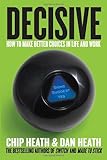
The author of the Farnam Street blog summarized some of the work in Chip and Dan Heath’s new book: Decisive: How to Make Better Choices in Life and Work. Given that our series is about decision-making, this book seems like it would be absolutely on-point, with regard to the closing of each post (How to avoid *blank*).

I haven’t yet read the book, but I did want to include a brief excerpt (courtesy of Farnam Street), along with a lead-in from Farnam Street:

The Heaths came up with a process to help us overcome these villains and make better choices. “We can’t deactivate our biases, but … we can counteract them with the right discipline.” The nature of each of the four decision-making villains suggests a strategy for how to defeat it.

1. You encounter a choice. But narrow framing makes you miss options. So … Widen Your Options. How can you expand your sent of choices? …

2. You analyze your options. But the confirmation bias leads you to gather self-serving information. So … Reality-Test Your Assumptions. How can you get outside your head and collect information you can trust? …

3. You make a choice. But short-term emotion will often tempt you to make the wrong one. So … Attain Distance Before Deciding. How can you overcome short-term emotion and conflicted feelings to make better choices? …

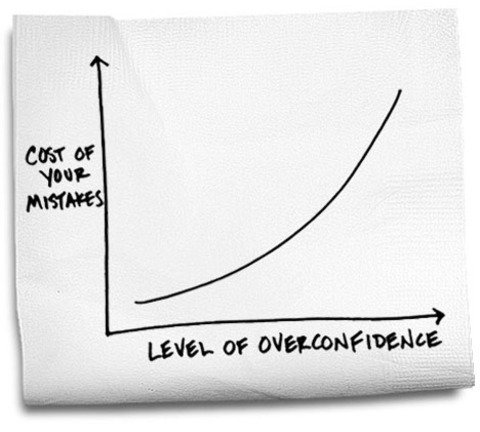
4. Then you live with it. But you’ll often be overconfident about how the future will unfold. So … Prepare to Be Wrong. How can we plan for an uncertain future so that we give our decisions the best chance to succeed? …

There’s also a handy picture that’s included (again, courtesy of Farnam Street):

As we can see, the Heaths have offered four universal ways for avoiding biases in judgment and decision-making. If we recall some of the different ways for avoiding biases that we’ve discussed over the last 9 weeks, many of them can be collapsed into one of the categories listed above. In case you’re a bit hazy, here are some of the biases that we’ve talked about before that have a “way for avoiding” that falls into one of the categories above:

So, if you’re having trouble remembering the different ways for avoiding the biases we’ve talked about, all you have to do is remember “W-R-A-P!”

When 99% Confident Leads to Wrongness 40% of the Time: List of Biases in Judgment and Decision-Making, Part 9

This week, we’re looking at one of my ‘favorite’ biases, in that it’s one that once you know, it can be quite comical to spot it in others (and yourself, if you still fall for it, from time to time). From Wikipedia: the overconfidence effect “is a well-established bias in which someone’s subjective confidence in their judgments is reliably greater than their objective accuracy, especially when confidence is relatively high.” That’s a bit jargon-y, so let me illustrate with a simple example.

In fact, this example comes from a lecture I heard about negotiation and talked about in one of my previous posts. In case you were wondering, the lecture comes from Professor Margaret Neale at Stanford. It was a brilliant! There was so much information packed into the lecture. I remember listening to it a few different times and still pulling out nuggets of wisdom. Anyway, I digress. The example that Prof. Neale uses is particularly on point for illustrating the overconfidence effect.

She has an empty pop bottle filled with paper clips (but not to the top). She says to the crowd that she wants them to guess how many paper clips are in the bottle. She walks up and down the aisles, so they can get a closer look, too. She instructs the crowd to write down their answer. Then, she asks them to write down a range where they could be 100% (she may say 99%, I don’t remember) sure that the number of paper clips fell in the range. Essentially, she was asking for a confidence interval. I think she also told them that she was sure there weren’t more than 1,000,000 paper clips in there. After some time, she then tells the audience how many were in there. She asks if anyone got it right (no one raises their hand). She then says something to the effect of, “For how many of you did the number of paper clips fall within the range?” There may have been about 35% of the room who raised their hand. 35%! She exclaims that this is terrible given that all of these people were 100% (or 99%) sure that the number would fall in the range. In fact, she said that in a room that size, there should have only been a handful of people who’s range wasn’t met (if the 99% figure was being used, rather than 100%). Prof. Neale then goes on to explain that this is the overconfidence effect. The audience was being asked to make an estimate of something about which they knew nothing, and then asked to rate their confidence. Knowing that they knew nothing about the topic, it would have been logical for the audience to have a large confidence interval (between 10 paper clips and 20,000 paper clips) — or even bigger!

This happens in more ways than just simply estimating the number of paper clips in a bottle. We also see this with investors. When asked, fund manager typically report having performed above-average service. In fact, 74% report having delivered above-average service, while the remaining 26% report having rendered average service.

Another place that we see the overconfidence effect show up is with the planning fallacy: “Oh yeah, I can finish that in two weeks…”

Ways for Avoiding the Overconfidence Effect

1) Know what you know (and don’t know)

The fastest way to slip into the trap of the overconfidence effect is to start making “confident” predictions about things that you don’t know about. Guessing the number of paper clips in a bottle is something that most of us have little to no expertise in. So, list a large confidence interval. If you have no experience in managing a project, it might be in your best interest not to make a prediction about how long it will take to complete the project (planning fallacy).

2) Is this person really an expert?

Sometimes, you’ll hear someone displaying a level of confidence in a given situation that makes you think they know what they’re talking about. As a result, it might bias you into believing what they are saying. It’s important to know if this person is an expert in this field, or if maybe they’re succumbing to the overconfidence effect.

From Scott Plous‘ book called The Psychology of Judgment and Decision Making: “Overconfidence has been called the most ‘pervasive and potentially catastrophic’ of all the cognitive biases to which human beings fall victim. It has been blamed for lawsuits, strikes, wars, and stock market bubbles and crashes.”

If you liked this post, you might like one of the other posts in this series:

Situations Dictate Behavior: List of Biases in Judgment and Decision-Making, Part 8

We’re into the 8th week of cognitive biases. A couple of weeks ago, I was trying to decide between the confirmation bias and the fundamental attribution error and decided on the confirmation bias. I’m not sure why I decided to go with the gambler’s fallacy last week (as opposed to the fundamental attribution error), so I thought I’d “circle back” and pick up the fundamental attribution error… in case you were really pining for it.

The fundamental attribution error may sound complicated (I mean, hey, there are three words!), but it’s actually quite simple once you get the hang of it. Normally, I explain the bias and then provide examples, but I think talking about an example will help to solidify the understanding of this bias. In a study done in 1967, researchers asked participants to assess whether a person was pro-/anti-Castro based on an essay the person had written. In one group, participants were told that the essayists were able to choose whether they wanted to write for the pro-side or the anti-side. Of course, when participants believed that essayists were able to choose which side they wanted to write for, they rated those essayists as having more positive (or negative) feelings towards Castro. In the second group, participants were told that the essayists would have their position determined by a coin flip. Meaning, the essayists had no control over whether they were going to be writing a positive/negative essay of Castro. It was all left up to chance (the situation!). Despite the participants’ knowledge of this, on average, they still rated the positive essays as a sign that those essayists had a positive view of Castro. Similarly for the negative essays as a sign that those essayists had a negative view of Castro. Participants were blind to the situation constraints

So that’s the fundamental attribution error — the idea that the situation dictates the behavior of the person, rather than the person’s personality. If you’re looking for some more examples:

  • You call up your friend and find out that they’ve done nothing all day. You assume that your friend is lazy. In fact, your friend was up all night caring for their sick grandmother.
  • You’re sitting a stop light when it turns to green. You advance out into the intersection only to nearly be smashed into by someone who runs the red light. You scoff at the person for running the red light. Little did you know that person was racing to get a pregnant wife to the hospital as she’d just gone into labor. (Ironically, you’d done something similar the week earlier.)
  • Mitt Romney’s declaration that 47% of the population who don’t pay income taxes will categorically support larger government “because those ‘who are dependent upon government, who believe that they are victims, who believe the government has a responsibility to care for them’ can never be persuaded to ‘take personal responsibility and care for their lives.'” In actuality, the 47% of the population who don’t pay income taxes are “…not some distinct parasite class, but rather ordinary, hard-working people who either already have paid or will soon be paying quite substantial taxes.”

Ways for Avoiding the Fundamental Attribution Error

1a) Empathy

As with many of the other biases, empathy is one of the quickest ways to thwart its power of you. If I put myself in the shoes of another, I’m more likely to understand that there might be more going on in the situation than I can see from my perspective. For instance, if we look at the red light example from above, by empathizing with the driver who runs the red light, I have a much higher chance of understanding that there running the red light is not a demonstration of their disregard for the world around them, but maybe that there’s something urgent to be taken care of.

1b) “Why Would a Rational Person Behave This Way?”

The above sentence is essentially a way to create a sense of empathy, but in case empathy is an ambiguous term, I’ve marked this ‘way’ 1b. Asking yourself this question will make it easier to consider the other factors at contributing to a situation.

Note: While the fundamental attribution error tells us that people make the mistake of devaluing the situational factors, it’s important not to sway too far the other way and totally discount the personality factors that might be contributing to a situation. For those folks that do sway too far to the situational factors affecting behavior, there’s a bias for it: actor-observer effect.

If you liked this post, you might like one of the other posts in this series:

Don’t Fall for the Gambler’s Fallacy: List of Biases in Judgment and Decision-Making, Part 7

A little later in the day than I would have liked, but today’s cognitive bias is the gambler’s fallacy. The bias gets its name from, as you’d expect, gambling. The easiest example to think of is when you’re flipping a coin. If you flip a coin 4 times and each of those 4 times the coin turned up heads, you’d expect the coin to turn up tails on the next (or at least have a higher chance of turning over tails), right? WRONG!

The odds are exactly the same on the 5th turn as the 6th turn as the 66th turn as the 11,024th turn. Why? Because the two instances of flipping the coin are independent events. (Note: we’re ignoring, for the time being, any effects that quantum reality might have on a given event in the past and the future.) So, every time you flip a coin, that’s an independent event — unaffected by earlier events.

Another important example is the reverse fallacy. That is, if we think that heads are “hot” because it’s been flipped a number of time, thinking that there’s a better chance that heads will be flipped is also a fallacy. Again, this is an independent event — unaffected by previous events.

This fallacy is so named because there’s a famous example of the gambler’s fallacy happening at the Monte Carlo Casino where, on roulette, black came up 26 times in a row. A number of gamblers reasoned that red would come up because there had been such an unlikely number of blacks that came up in a row. As the story goes, they lost millions.

Other examples of the gambler’s fallacy:

  • Childbirth: “we’ve had 3 boys, so we’re going to have a girl now…”
  • Lottery: “I’ve lost 3,000 times, so I’m due for a win…”
  • Sports: “Player X is playing really well, they’re bound to start playing bad…”
  • Stock market: “Stock X has had 7 straight down days, so it’s bound to go up on this next trading day…”

Ways for Avoiding the Gambler’s Fallacy

1) Independent Events vs. Dependent Events

The biggest way to avoid the gambler’s fallacy is to understand the difference between an independent event and a dependent event. In the classic example, the odds of a coin landing on heads or tails is — negligibly — 50/50 (I say negligibly because there are those who contend that the “heads side” weighs more and thus gives it a slight advantage). An example of a dependent event would be picking cards from a deck. There are 52 cards in a deck and if you pick one card without replacing it, your odds of picking one of the other 51 cards increases (ever so slightly).

If you liked this post, you might like one of the other posts in this series:

The Confirmation Bias — What Do You Really Know: List of Biases in Judgment and Decision-Making, Part 6

Well, here we are into the sixth week of biases in judgment and decision-making. Every Monday, I look at my list of cognitive biases and I see that we’ve still got quite a few weeks to go until I’ve exhausted the biases that I want to talk about. This week was a toss-up: I was trying to decide between the fundamental attribution error and the confirmation bias. After flipping a bottle cap (seriously, there wasn’t a coin close by), I’ve decided to talk about the confirmation bias.

Like last week, the confirmation bias is easy to understand in its definition: it’s the tendency to seek out information that confirms one’s previously held beliefs. In a journal article that’s been cited over 1000 times, Ray Nickerson stated:

If one were to attempt to identify a single problematic aspect of human reasoning that deserves attention above all others, the confirmation bias would have to be among the candidates for consideration. Many have written about this bias, and it appears to be sufficiently strong and pervasive that one is led to wonder whether the bias, by itself, might account for a significant fraction of the disputes, altercations, and misunderstandings that occur among individuals, groups, and nations.

Why is the confirmation bias so loathed? Well, as Nickerson points out, it may be the root cause of many disputes both on an individual and an international level. Let’s think about this for a second: let’s say that in the world of objectivity “out there,” there are any number of possibilities. In the world  of subjectivity “inside my head,” there are only the possibilities that I can imagine. Humans, on the whole, tend to fear change (there are over 600,000,000 results for that search on Google!). In order to allay those fears, I’m going to prefer information that already conforms to my previously held beliefs. As a result, when I look “out there,” I’m going to unconsciously be looking for things that are “inside my head.” Let’s take this discussion out of the abstract because there are plenty of examples of it.

If you’re still not convinced and think you’re “beyond” the confirmation bias, I would urge you to try and solve the problem on this site. If you give the problem its due respect, I bet that you’ll be surprised as to your solution vs. the actual solution.

Ways for Avoiding the Confirmation Bias

As with other cognitive biases, being aware that there is such a thing as the confirmation bias is really important. It can be hard to change something if you don’t know that there’s something to be changed.

1) Seek out contradictory ideas and opinions

This is something that I’ve written about before. If at all possible, you’ve got to be sure that you’re getting information that is counter to your beliefs from somewhere. If not, there’s little chance for growth and expansion. This can be difficult for some, so I’ve outlined ways to do this on the post I referenced above.

2) Seek out people with contradictory ideas and opinions

I answered a question on Quora last November where I placed these two ways for avoiding the confirmation bias one and two. Some folks might find it a little more difficult to seek out people with opposing views and that’s why I suggest starting with seeking out contradictory views in print (or some other form of media) to begin. However, in my experience, speaking with someone who has opposing views to mine (assuming that they are also altruistic in their endeavor to seek out opposing views) can be quite enriching. A real-life person can usually put up a better defense when your “confirmation bias” is activated. Similarly, you can do the same for them.

3) What do you really know?

My last suggestion for avoiding the confirmation bias is to always be questioning what it is that you know. This can sound tedious, but if you get into the habit of questioning “how” you know something or “why” you know something, you’d be surprised how ‘thin’ the argument is for something that you know. For instance, let’s say that you have a racial stereotype that ethnicity “x” is bad at driving. When you’re on the highway, you notice that someone from ethnicity “x” cuts you off. Instead of going into a tizzy about ethnicity “x,” you might stop and remember that, in fact, of all the times that you’ve been cut off, ethnicity “x” is the ethnicity that cuts you off the least. This is a curt example, but I think you get the idea. Just to emphasize my point: I would argue that questioning your deeply held beliefs would be a good way of countering the confirmation bias.

So, what do you really know?

If you liked this post, you might like one of the other posts in this series:

Perspective and the Framing Effect: List of Biases in Judgment and Decision-Making, Part 5

Since I was going to talk about the framing effect last week (and opted for the planning fallacy instead because of circumstances), I thought I’d get into the framing effect this week. The framing effect is a very easy bias to understand, in that it’s not as complicated in its description as some of the other biases are. In short, the framing effect is how people can react differently to choices depending on whether the circumstances are presented as gains or losses.

The famous example of the framing effect comes from a paper by Kahneman (who I’ve mentioned before) and Tversky in 1981:

Problem 1: Imagine that the U.S. is preparing for the outbreak of an unusual Asian disease, which is expected to kill 600 people. Two alternative programs to combat the disease have been proposed. Assume that the exact scientific estimate of the consequences of the programs are as follows: If Program A is adopted, 200 people will be saved. [72 percent]

If Program B is adopted, there is 1/3 probability that 600 people will be saved, and 2/3 probability that no people will be saved. [28 percent]

As you can see from the percentages in brackets, people opted for the sure thing. Now, let’s look at the second part of this study:

If Program C is adopted 400 people will die. [22 percent]

If Program D is adopted there is 1/3 probability that nobody will die, and 2/3 probability that 600 people will die. [78 percent]

Did you notice something? Program C is identical to Program A, and yet the percentage of people who were opting for Program C dropped tremendously! Similarly, notice that Program D’s percentage went way up — even though it’s the same thing as Program B. This is the framing effect in action. Is it frightening to you that we’re so susceptible to changing our mind based simply on how a choice is framed? If it’s not, it certainly should be.

Ways for Avoiding the Framing Effect

1) Reframe the question

It may seem obvious, but you’d be surprised how many people don’t consider “reframing” the frame with which they are looking at a situation. For instance, in the example from earlier, instead of looking at it as a choice between Program A and Program B, someone could reframe Program A so that it looks like Program C and do the same with Program B, so that it looks like Program D. As a result, one would then be getting a “fuller” picture of their choice.

2) Empathy — assume someone else’s perspective

Many choices implicate another in a situation. As a result, it might be worth it to put yourself in the shoes of that other person to see how they would view a given situation. This is similar to the reframe, but is more specific in that it might serve to help the person remove themselves a little bit from the decision. That is, when we’re faced with a choice, our personal biases can have a big impact on the decision we make. When we imagine how someone else might make this decision, we’re less likely to succumb to our personal biases.

3) Parse the question

Some questions present us with a dichotomous choice: are apples good or bad? Should we exercise in the morning or the evening? Are gap years helpful or harmful? When faced with a question like this, I would highly recommend parsing the question. That is, are we sure that apples can only be good or bad? Are we sure that exercising in the morning or the evening are our only options? Often times, answers to questions aren’t simply this or that. In fact, more times than not, there is a great deal of grey area. Unfortunately, when the question is framed in such a way, it makes it very difficult to see the possibility of the grey area.

If you liked this post, you might like one of the other posts in this series: