By now, you’ve probably seen some of the coverage of Coke’s “controversial” Super Bowl ad. To be honest, I’m with Coke’s Ad Director on this one, “I don’t see any controversy here.” Don’t get me wrong, I can understand where some of the detractors are coming from, but I tend to side with the Ad Director. In case you haven’t yet seen the ad, take a look:
In a word, I thought the ad was beautiful. Maybe it’s because I was born and raised in Canada and I am used to (and appreciate) multiculturalism a bit more than the average American, who knows. Knowing that the Super Bowl has become an event that transcends the borders of the USA, maybe Coke was, surreptitiously, also trying to reach potential customers beyond its borders. Now, that hypothesis seems kind of silly given that the song that’s being sung in many languages is “America the Beautiful,” so let’s revise it and say that maybe Coke is trying to reach current (or potential) immigrants to the US.
Regardless of it’s initial aim, the controversy has stirred up so much discussion that the ad is being shared across the internet many times over. The last time I checked, the video had been viewed almost 8,000,000 times in 3+ days. I can’t think of many companies that don’t wish they made a video like this that’s been viewed this many times on social media (not to mention all the discussion that’s happened in print, TV, and online).
Then, there’s also the copycat-esque videos that extend (or poke fun) at the ad. I came across this one the other day and couldn’t help, but chuckle:
I haven’t seen anyone from Coke comment on it, but I’m sure that, at least off the record, they’d probably laugh at it, too.
Circling back to the original ad, I wanted to draw attention to the internationalist flavour to it. It’s still a few years off now, but folks are projecting that in the next 25-30 years, the majority of people living in the USA won’t be the same as it is today. Instead, there will be a majority of minorities. Meaning, adding up the population of all the minorities will mean that there are more people who identify as a minority than identify as white.
Tying this to the advertisement by Coke and I can’t help but think about how strategic it was for Coke to try and, if this was their strategy, attract younger immigrants to the brand.
Last night was the 71st Golden Globes. They’re a little behind the Academy Awards who are on their 86th taking place in about a month. Anyhow, I usually like watching these awards shows, especially if I’ve seen some of the movies that are in contention. This year, I had the chance to see a few of the movies that had garnered a number of nominations: American Hustle, Her, 12 Years a Slave, Captain Phillips, Gravity, and Dallas Buyers Club.
I really liked American Hustle, but after watching Dallas Buyers Club and 12 Years a Slave, I was torn between who I thought deserved the awards in some categories. I thought that Jennifer Lawrence had a great performance in American Hustle, but I also thought that Lupita Nyong’o had an excellent performance in 12 Years a Slave. I think they’re both talented and terrific actresses, but with the underrepresentation…
I wish that this weren’t an issue in our society. I wish we could judge/award movies/performances on their merits and not worry about whether we’ve been fair in accounting for diversity. Don’t get me wrong, I absolutely know and understand that because of our history, white people have a decided advantage when it comes to events like this (and life, in general), but I wish I could just be happy for Jennifer Lawrence and not wonder about Lupita Nyong’o. Unfortunately…
A nom at the #GoldenGlobes increases the chances that similar movies/filmmakers will get funded. So lack of diversity matters. #NotBuyingIt
I was also torn when it came to the Best Actor in a Drama category. I’d seen three of the films for which actors were nominated in that category and in my opinion, it would be a toss up between Chiwetel Ejiofor (Choo-it-tell Edge–ee-o-for) and Matthew McConaughey. I thought they both gave excellent — excellent — performances. When Jessica Chastain announced Matthew McConaughey, I was happy, but as was the case for Jennifer Lawrence, I was a bit sad that Ejiofor didn’t win (or, for that matter Idris Elba, who I’ve read gave a great performance in Mandela).
~
I don’t have a solution to this dissonance I feel, but I wanted to express my desire for a time when feelings like these needn’t be had. Maybe it will come in 10 years, maybe it will come in 100 years. When it does, I will welcome it with open arms.
I’ve written before about my affinity for the documentary Miss Representation and its “brother” film that’s coming out in a few weeks The Mask You Live In. Well, a few weeks ago, the organization responsible for those movies put out a wonderful — well, in some ways — video detailing the ways in which the media has failed women in 2013. At first, it lists some of the great achievements that women have had this year and then… the video turns a bit sour.
We see a time lapse of a woman being airbrushed on the cover of a magazine, very sexist advertising (magazine and commercial), oversexed music videos, movies, tv shows, and then it turns to how the media cover some news events. There are — seemingly — ignorant men (mostly) patronizing women either in person or talking about women in patronizing ways. However, there are some really powerful moments. There’s a segment from Rachel Maddow where she’s discussing how women can have all of these ticks in the boxes and still get talked to in a negative way. There’s also — and this is my favourite — a video from this past summer when the Texas legislature was trying to ram a bill through that severely limited the rights of women regarding abortion.
I realize that for some, this can be an issue that incites a lot of passion in one direction or the other, but my preference for the video has nothing to do with that issue and everything to do with this woman, this strong and powerful woman, standing up for herself and for women to what is a room and a profession dominated by men. I remember when the now famous Wendy Davis filibuster was first starting to take shape in June and I remember turning on the stream sometime in the evening and having it running in the background. And then as they got closer to the end when things were really getting interesting. I remember trying to understand some of the wonky ways that procedure was being applied and then I remember Leticia Van de Putte…
It was one of the most powerful things I’d ever seen live. And if I recall correctly, I think these words were enough to motivate the gallery (the visitors sitting up above watching) to make noise until the clock ran out and the filibuster worked. Again, I want to make it clear that I’m not arguing in favour or against the merits of the filibuster, but just to draw your attention to that moment when Leticia Van de Putte said those words and the crowd erupted. I wish it weren’t, but it seems an apt metaphor for so much of how the world works today.
~
On a slightly happier (?) and stranger point, in an edition of The Economist from late last year, someone pointed out that Angela Merkel, the Chancellor (kind of like a President or Prime Minister) of Germany, appointed a female defence minister. And not only was this defense minster going to be a woman, but also that she is a gynecologist, entered politics at age 42, and has 7 children.
I think it’s great that Germany has appointed a female defence minister, but I wish that it weren’t news that Germany appointed a female defense minister. I look forward to the time in my life where the fact that someone’s been appointed to high political office or has been crowned the CEO of a big corporation and happens to also be a female is not newsworthy.
Note: You’ll notice that I made the title of this post about “our culture” and not “the media” and that’s because I don’t think it’s necessarily fair to pin the failure all on the media. There’s a feedback loop between our culture and the media. Yes, the media could certainly end that feedback loop, but so could the culture. In a way, everyone deserves a bit of the blame.
Earlier tonight, I received an email from someone who found a post I wrote this past summer about the official final jeopardy spelling rules. This person alerted me to a something that happened on tonight’s (January 2nd, 2014) final jeopardy. [As an aside, I tried to wait before posting this to see if there might be a YouTube video of what happened, but I haven’t seen one, yet.]
As it was retold to me through email, the “answer” (or question, as it were) to final jeopardy tonight was “Yul Brynner.” One of the contestants correctly spelled this and one of the other contestants answered incorrectly. However, the last contestant (there are usually three), spelled their answer, “Yule Brenner.” Note the “E” in the first name and the “E” replacing the “Y” in the last name. Most people would think that they answered incorrectly. While it’s true that they did spell their answer incorrectly, note that it doesn’t really change the pronunciation of the two names. That is, you can pronounce “Yul Brynner” effectively the same way that you pronounce, “Yule Brenner.”
Why am I focusing on the pronunciation and not the spelling? Because from what people have identified in watching the show, it’s the pronunciation that the judges emphasize in this game. That’s why there was quite an uproar this past summer when a young Jeopardy! contestant misspelled Emancipation Proclamation as “EmancipTation Proclamation.”
Here are a couple of excerpts from my post this summer that might help shed some light on this whole idea of spelling vs. pronunciation [Emphasis Added]:
I have no official source for this, but from what I’ve heard from various people over the years, there is no official written set of rules that the judges are required to abide by. It has been mentioned that this could be done for liability purposes, because if the judges were to make a ruling that went against their written rules, a player could potentially sue them, or something like that. I believe that in the contestant paperwork, all players must sign something agreeing that all judges’ decisions are final. There may be some general guidelines for acceptable responses in this paperwork, but they probably don’t cover all possible scenarios, and the judges’ decision will always be final.
There are a lot of little rules of thumb that longtime viewers of the show have been able to piece together over the years, and most times the show’s rulings seem pretty consistent with past precedents. It is generally accepted that leading articles can be omitted and still be ruled correct, as in “Grapes of Wrath” or “Midsummer Night’s Dream”. However, incorrect or missing articles within a title will lead to an incorrect ruling, such as “One Flew Over a Cuckoo’s Nest” or “Gone With Wind”. Those may be poor examples, but I can’t really think of any good ones at the moment.
As to the consonant/vowel distinction, the general rule is that when giving a response verbally, you don’t have to pronounce it correctly, but you must at least give something that could be a possible phonetic pronunciation of the correct spelling. Generally this means that you could change vowel sounds, but you need to use the correct consonants, otherwise what you’ve said does not appear to be the same word as the intended correct response. Without examples in front of me this is hard to explain. It often comes up in cases of foreign words, or names of famous people that someone has seen in writing many times, but rarely has heard spoken aloud.
In Final Jeopardy, the rules are similar, but the opposite is true.While your spelling can be incorrect, what you have spelled should be possible to pronounce in the same way as the intended correct response. Normally if you change a consonant, something is not going to be pronounced the same way, while changing vowels could still lead to similar pronunciation. One recent exception to this rule was when Franz Liszt was the correct FJ response, and one contestant responded with “Who is Lizt”. While she was missing a vowel, the “s” and “z” sounds in Liszt sort of blend together, so the judges likely decided that “Lizt” or “Lizst” would be accepted. I don’t know if they would have accepted “List”. They may also have accepted something like “Lieszt” or “Leeszt”, as there is probably a lot of wiggle room in dealing with vowel sounds of foreign names like this.
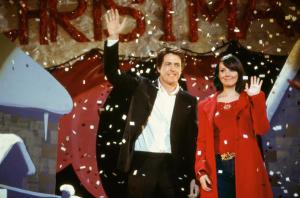
While Christmas happened a few days ago now, I wanted to write a quick note on Love Actually. You may or may not have heard of this Christmas movie. It was first released about a decade ago, but many people seem to want to watch it when Christmas rolls around. I didn’t realize just how popular this movie had become at Christmas time (my wife and I have watched it just about every Christmas since we’ve been married) until I started seeing notes about the movie in my twitter feed.
That is, there were some folks who were vehemently against Love Actually as a “good” romantic comedy. In fact, one person wrote:
The fundamental problem with Love Actually is that it presents romance as either absurdly easy—something that strikes you like a thunderclap and requires only a single grand gesture in order to be fulfilled—or all but impossible. Notably absent is the idea that love might ever be worth a little sustained effort: some mutual exploration and discovery, a bit of care and nurture, maybe even the overcoming of an obstacle or two. Indeed, it’s hard to shake the sense that what is “classic” about Love Actually is not that it shows us anything about how people fall in love, but that it so conspicuously declines even to try.
But there are also those folks who feel quite the opposite. That is, they think the film is actually quite good:
More than anything, Love Actually is a movie by people who get it. That get that the holidays are about love and loss and memories. It’s about new beginnings and it’s about endings. It’s about family and second chances, and sometimes it’s about the same old, same old. It’s love, in its many, many forms, lighting the way through the coldest season.
Then, there are those who are trying to figure out whether the movie should actually qualify as a classic (over 80% of voters on this CBC website think that it should be).
I can stipulate that Love Actually might not be promoting the “best” version of love, but I would say that with a level of maturity and understanding that some of what’s being portrayed is actually tongue-in-cheek (do all British men really think that their accent is enough to get American women to sleep with them?) the movie can be quite heartwarming. Putting that aside for a moment, one of the best aspects of the movie for me is the message of truth-telling. On a number of occasions we hear the characters saying something to the effect of, “It’s Christmas, so I wanted to tell the truth,” (or “tell you,” or “check with you,”).
To me, this is great. I enjoy that there’s this subtle albeit noticeable message that it’s important that we tell the truth with people we care about and/or are interested in spending time with on a regular basis. So, if you do decide to watch Love Actually at Christmas time or any time for that matter, maybe pay less attention to the “fake love” parts and pay more attention to the “truth” parts.
It’s the last weekend before Christmas, so there’s a good chance that a lot of you out there are out in the hustle and bustle trying to find last-minute gifts for friends and family. If the weather forecasts are to be believed, some of you might not be able to make it out into the madness that is last-minute shopping before Christmas. That’s great! Why? Well, that means that you’ll have to be a bit more creative with your gift ideas.
So, why don’t you make someone’s day (in addition to the person who you’re giving the gif to) by making a donation in their name to one of these projects on Kickstarter Canada. Also, you could just donate to them anyways — and not make the donation on behalf of someone else: it could be on behalf of you!
Note: I’ve only included projects that — at the time of writing this post — hadn’t reached their goal.
“You may have heard of Steve Nash, the NBA superstar and multiple MVP winner. You may also know that he’s Canadian. A Vancouver documentary crew secured unparalleled access to Nash, and they’re in the middle of raising money for production and editing costs for the final film. Unlike many film projects, tiers of this project include a physical and digital copy of the final product, which gives potential backers a tangible reward for their donation.” (Source)
“The concept is as simple as it is unprecedented; a titanium wristwatch with a face that you can choose. You can choose from dozens of patterns and colours from the manufacturer, or design your own and submit it to them. The watches exude a clean, straightforward charm, and even the lowest funding tier gifts you one of them.” (Source)
“In what could easily be the ruin of many a young soul, this is a shot glass that measures the amount of liquor consumed over a period of time; a potent mix of a stopwatch and a case of acute alcohol poisoning. The consequences of such a device are best left to the imagination, but if it meets its funding goals, the consequences may become very real, very quickly. Hooray for progress?” (Source)
“Exactly what it says on the tin; backers are funding the creation and shipping of various black-garlic-based condiments and seasonings. The majority of the project’s funding goal will go to securing a large batch of Canadian-grown garlic, and the rest will go into the blackening and production/packaging process. Is there anything more Canadian than authentic Northern delicacies?” (Source)
“Like the mirror universe version of the Shot Time, the SpecShot is a two-in-one system that scans your drinking water for contaminants and then posts the results online. This process could be equal parts fascinating and harrowing, depending on your results, but the ultimate goal is to spread awareness through hard data, and hopefully inspire some change to our water quality standards.” (Source)
She certainly makes a good point. If we’re regulating other words that are spoken on TV because of the effect they have on younger generations, why not the word fat? I can already begin to see the argument against: “if we start regulating words like ‘fat,’ does this become a slippery slope into regulating other words?” While I understand that practically, regulating criticisms like ‘fat’ on TV might be a bit difficult, I think it’s certainly something interesting to consider.
I originally saw this clip as part of a bit from Morning Joe, but that doesn’t embed so well here, so I found a clip of Walters’ interview with Lawrence on YouTube. The actual bit I saw had some commentary from some of the folks who make regular appearances on the morning television program on MSNBC. As I said, I can’t embed that video, so take a look.
Similar to how the opinion can be understood of the “slippery slope,” the first fellow that speaks on the video that’s telling Jennifer Lawrence (and other celebrities) to ‘shut up’ because they always blame the media for everything — I don’t buy that. It’s not that the media’s at fault for everything, but as has been demonstrated, they certainly do have a large impact on the way that people feel about themselves. In particular, young and impressionable people.
As a result, someone who outright denies the possibility that the media can have an opinion on the way that young people (and even not young people!) can feel about themselves, to me, seems out of touch. To reiterate, I can see where this fellow is coming from, but putting that aside for a second, Jennifer Lawrence absolutely has a point. There’s certainly a culture of highlighting flaws that is perpetuated (not just in the media), but in our culture — and in particular, with young women. I’ve said it before, but I’ll say it again: if you haven’t yet, take the time and watch Miss Representation. It’s an important documentary that I hope will shed some light on this issue.
To be clear, I’m not implying that people, the media, or our culture are necessarily perpetuating this attitude intentionally, but that doesn’t mean that there completely innocent, either.
I’ve written a fewtimes about TV, but a post from Mashable (with data!) convinced me even more that TV, or at least the viewers of it, are headed elsewhere. Take a look at the graphic below:
Pay close attention to the % of American adults who subscribe to Cable TV and Netflix. In particular, notice the 18-36 age category. For cable TV, 46% of this age group subscribes and for Netflix, 43% of this age group subscribes. The difference is negligible. We can also look at the subscription rates for satellite TV (16%) and then two other online sources: Amazon Prime (17%) and Hulu Plus (8%).
No doubt, some of the folks who subscribe to Cable TV may also subscribe to Netflix and other online sources, but it seems pretty clear where the trend is headed. In fact, if we look back at the Cable TV subscription rates across all age groups, we see a sloping line from the bottom left to the top right. If you’ll notice, there’s a decided decrease in Cable TV subscription rates from the older age groups to the lower age groups. Similarly, there’s the inverse relationship when we look at online places like Netflix and Amazon Prime. There’s a decided increase as you get into the lower age groups.
A couple of weeks ago, someone passed along an excellent video of a woman describing her experience with the pressures of body image. It’s an important video and I hope you take the time to watch it (whether you’re a female or a male). As I’ve talked about before, it’s important to understand just how the media is unintentionally reinforcing certain beliefs about the way we think, act, and feel, as a society.
There is one particular piece that’s not explicitly stated in the video that I wanted to highlight: the way of being in the world. Lily Myers talks about this sense that men were taught to “grow out” and women were taught to “grow in.” In a sense, it was okay for men to take up space and not okay for women to take up space. This is important and we should consider this in more contexts than body image. For instance, we often hear about how men are more likely to get promoted quicker or have better salaries. There are myriad reasons for this, but what if wrinkle to those debates are because women are taught to, from a very young age, that taking up space is ‘not okay.’
Of course, I’m not saying that women are actively being taught that their existence isn’t warranted, (though that’s the case in some parts of the world). It’s the subtleties that Myers speaks about in her video. This idea that she is watching her mother and understanding that ‘this is how I should behave, too.’
When I watch a video like this and hear the powerful message, I can’t help but hope that many people will see it. That many people will take this opinion in and consider that this is actually how someone else feels in the world. That this experience could be shared by many. If after watching this video, you’re wondering just how Lily Myers and our society came to be this way, I’d encourage you to check out Miss Representation, which came out a couple of years ago and, in February of 2014, The Mask You Live In.
Here’s the text from the poem:
Across from me at the kitchen table, my mother smiles over red wine that she drinks out of a measuring glass.
She says she doesn’t deprive herself,
but I’ve learned to find nuance in every movement of her fork.
In every crinkle in her brow as she offers me the uneaten pieces on her plate.
I’ve realized she only eats dinner when I suggest it.
I wonder what she does when I’m not there to do so.
Maybe this is why my house feels bigger each time I return; it’s proportional.
As she shrinks the space around her seems increasingly vast.
She wanes while my father waxes. His stomach has grown round with wine, late nights, oysters, poetry. A new girlfriend who was overweight as a teenager, but my dad reports that now she’s “crazy about fruit.”
It was the same with his parents;
as my grandmother became frail and angular her husband swelled to red round cheeks, rotund stomach
and I wonder if my lineage is one of women shrinking
making space for the entrance of men into their lives
not knowing how to fill it back up once they leave.
I have been taught accommodation.
My brother never thinks before he speaks.
I have been taught to filter.
“How can anyone have a relationship to food?” He asks, laughing, as I eat the black bean soup I chose for its lack of carbs.
I want to tell say: we come from difference, Jonas,
you have been taught to grow out
I have been taught to grow in
you learned from our father how to emit, how to produce, to roll each thought off your tongue with confidence, you used to lose your voice every other week from shouting so much
I learned to absorb
I took lessons from our mother in creating space around myself
I learned to read the knots in her forehead while the guys went out for oysters
and I never meant to replicate her, but
spend enough time sitting across from someone and you pick up their habits
that’s why women in my family have been shrinking for decades.
We all learned it from each other, the way each generation taught the next how to knit
weaving silence in between the threads
which I can still feel as I walk through this ever-growing house,
skin itching,
picking up all the habits my mother has unwittingly dropped like bits of crumpled paper from her pocket on her countless trips from bedroom to kitchen to bedroom again,
Nights I hear her creep down to eat plain yogurt in the dark, a fugitive stealing calories to which she does not feel entitled.
Deciding how many bites is too many
How much space she deserves to occupy.
Watching the struggle I either mimic or hate her,
And I don’t want to do either anymore
but the burden of this house has followed me across the country
I asked five questions in genetics class today and all of them started with the word “sorry”.
I don’t know the requirements for the sociology major because I spent the entire meeting deciding whether or not I could have another piece of pizza
a circular obsession I never wanted but
inheritance is accidental
still staring at me with wine-stained lips from across the kitchen table.
It’s been a little over a week since my last post as I’m still settling into Ottawa. As a result, I’ve accumulated some things to write about. I’ll try to get through them all in the next couple of days as I’m really excited to get back to writing posts that are appropriate for Research Blogging.
As you can see from the title of today’s post, I happened to watch To Rome With Love (thank you Netflix!) I had seen Midnight in Paris some time last year and folks recommended that I might enjoy Woody Allen’s next film (actually, it was his next next film, but who’s keeping track?) To Me, Rome seemed to be a lot different from Paris, but I won’t really talk about any of the differences in case you haven’t seen either and might want to. However, I do want to talk about one of the subplots of Rome — celebrity.
Leopoldo Pisanello, played by Roberto Benigni, is a clerk who lives an otherwise mundane life. However, one day, he wakes up to find himself a celebrity. Reporters and paparazzi swarm him at his front door asking questions and snapping pictures. He ends up on TV and the host asks him about what he ate for breakfast, whether he wears boxers or briefs, and if he thinks it’ll rain. He gets a promotion at the company he works at and the boss’s secretary sleeps with him. He goes to fancy movie premieres, but the attention wears on him. You start to see the character become fatigued from answering so many mundane questions about himself.
Towards the end of this subplot, the character has a bit of an outburst. During this outburst, the press spot another man who looks “more interesting,” so everyone floods over to that man as paparazzi snap pictures and reporters ask questions.
I’ve never been a celebrity, so I can’t speak personally to the experience, but I think that Woody Allen does a great job at poking fun at how we, as a society, have created this absurd culture of celebrity.
 By now, you’ve probably seen some of the coverage of Coke’s “controversial” Super Bowl ad. To be honest, I’m with Coke’s Ad Director on this one, “I don’t see any controversy here.” Don’t get me wrong, I can understand where some of the detractors are coming from, but I tend to side with the Ad Director. In case you haven’t yet seen the ad, take a look:


 While Christmas happened a few days ago now, I wanted to write a quick note on



 Jeremiah Stanghini