Twitter: Who I’m Following, Part 7

Finally, finally, finally. I have caught up my “”Who I’’m Following”” series to the actual people I am following on Twitter. You’ll notice a decided conservative-flavor to these Twitter accounts because I noticed I was following a number of “liberal” folks. As a result, I wanted to make sure I was getting the viewpoint from the conservative side, too. If you missed any of the earlier posts in this series, here they are:


So, without further adieu, here are the people I have followed since my last post.

: Jonah writes on psychology, neuroscience, and the relationship between the humanities and science. You can find his columns/posts on the and .

: Scientific American has been covering science news for the last 165+ years. A reputable source of science news for certain.

: “The best of the alternative press — are digests of independent ideas and culture. Not right, not left, but forward thinking”

: “…the world’s fastest growing platforms for social change, empowering millions to start and join campaigns for social change in their communities.”

: “Counterparties is a curated snapshot of the best finance news and commentary. It combines what we [ and ] find interesting, overlooked, and important.”

: Jonas is one of my childhood friends (!) and he covers the Toronto Maple Leafs for TSN Radio 1050.

: Rob Lowe played one of my favorite TV characters, , and often tweets about an assortment of things including politics and .

: I went to high school with Melissa — she’’s one of the smartest people I know. She’s just finishing up her MBA at  and who knows what wonderful things she’ll contribute to the world.

: Richard Branson is probably one of the most successful — ever.

: A hilarious stand-up comedian. One of my favorites from him was “.”

: One of the most important documentaries — bar none. If you haven’t seen it, go see it — right now.

: Brian Burke is the current GM for the Toronto Maple Leafs and he’s got a reputation for .

: “An international magazine for Intelligent Optimists about the people, passion, & possibilities changing our world for the better.”

: Meghan McCain is the daughter of former Republican Presidential Nominee, John McCain.

: He is a very reputable economist and has a at universities and think-tanks.

: “Politics, election news and other jokes. From your friends at Comedy Central.”

: Seth Godin is one of the most influential people in business today, especially with regard to marketing.

: “Information graphics and data from The Wall Street Journal.” I’ve previously written about my affinity for data (in visual form).

: Jen is the writer/director/producer of the documentary I mentioned earlier, .

:  This is the Twitter account for the Nelson Mandela Foundation… “contributing to a just society by promoting the values, vision, and work of our founder.”

: I went to university with Shane and he currently works in the non-profit industry. He’s sure to do great things!

: This Twitter account provides proverbs and quotes. I do enjoy a good .

: He is… “a political and cultural commentator who considers himself a moderate and writes for the NYT.”

: “I write in the hope and expectation that people read people with whom they disagree to challenge their settled views. Suffice it to say, this isn’t generally the case, but I’m happy to continue behaving as though it is, as it is true of enough people to justify the effort.” ()

: , a modern-day philosopher in his own right, has said that Rove has read .

: “Ramesh Ponnuru is a senior editor for National Review, where he has covered national politics for 15 years.”

: I have Paul Krugman before. Seems like I unfollowed him and refollowed him.

: “Gallup news and tracking data on politics, business, wellbeing, and the world.”

: Do I really need to tell you who Deepak Chopra is? Just in case I do, go .

: A sports network of over 300 blogs maintained by part-time writers who love their team.

: Joe Scarborough is the co-host of  and is a former Congressman from Florida.

: This is the official Twitter account for  not to be confused with .

: Erin Andrews, (one of my sisters-in-law), is affectionately known as .

: Christina Bellantoni is the Politics Editor for . She was also a fellow at the this past fall.

: Michael is a Politics Editor for  and is a noted conservative voice.

: Frum is a former economic speechwriter for George W. Bush and clearly, is a noted conservative.

: “ALL the news from TED: TEDTalks, TED Conferences, the TED Prize and more.”

: “The business journal of McKinsey & Company. Our goal is to offer new ways of thinking about management in the private, public, & nonproft sector.”

: “The latest Harvard Business Review blog posts, Management Tips of the Day, Daily Stats, and more.”

~

And there you have it. You’re all caught up on the the accounts I’m current following on Twitter. As always, if you have any recommendations (based on the flavor of the people I follow in Parts 1 through 7), feel free to leave me a note in the comment section of tweet .

Twitter: Who I’m Following, Part 6

It’s been just about two months since I last updated the list of people I’m following on Twitter. I thought today might be a good day to give a brief update. Over the next couple of weeks, I’ll try to catch “all the way” up to who I’m following. In case you missed the earlier posts:


So, without further adieu, here are the people I have followed since my last post.

: Louise Hay is the author of one of the most the most famous self-help books of all time – . It lends credence to the idea that your thoughts can affect your biology.

: “A collection of quotes that will challenge, motivate and inspire you to be the best you can be.” Curated by , Personal Development Trainer & Coach.

: He is a former Governor & Congressman and is currently . He has bee notoriously held out of , but has some intriguing ideas.

: CNBC is a cable television business news channel. They are dedicated to covering business headlines and financial markets.

: LeVar Burton played the lovable character from . He’s also a big proponent of literacy.

: Justin Trudeau is the son of the famous . Justin has gone on to become a politician in his own right.

: Since the passing of Jack Layton, Turmel has filled in as the interim leader of the NDP. Shortly, the NDP will pick their leader.

: Dahlia is a Canadian (eh?) and mostly tweets about issues regarding law and the court system.

: This is the account of the current Prime Minister of the United Kingdom, David Cameron. I’m not sure, but I think the account will stay with the Prime Minister’s office, regardless of party.

: Melinda Gates is the co-founder and co-chair of the , which is the largest .

: Jim Carrey was born in (I lived there when I was younger!) and is one of the funnier comedians of today.

: Lewis Black is a stand-up comedian and is a regular on . His tweets are often funny.

: “Word Spy is devoted to ‘lexpionage,’ the sleuthing of new words and phrases.”

: Michael Steele is a former RNC Chairman. He is a contributor to MSNBC (often representing the conservative viewpoint).

: She is currently a Washington correspondent for GQ and often has interesting commentary on the political debates.

: Julie is one of my friends from SVSU. She currently works for the American Red Cross.

: The Dalai Lama is the most influential figure in Tibetan Buddhism. His “reign” has lasted over 60 years!

: This twitter account is aimed at iPad users, but during “The Rachel Maddow Show,” it often tweets links to articles of which Maddow is referring.

: Stiglitz won the Nobel Prize in Economics in 2001 and is a very well respected academic.

: I used to watch Ali back when he was on . I always found him to be very intelligent.

: From the Twitter account: “We work to help all people lead healthy, productive lives, focused on health, poverty, and opportunity.”

: I listened to a lecture of Prof. Aaker (look for it in my upcoming post in the series “, Part 6.”)

: The : Informing and inspiring leaders of social change.

: Bill Gates doesn’t tweet very often, but when he does, he often, “shares cool things he’s learning.”

: Jack Welch is one of the preeminent businessmen of our time. It’s great to be able to follow his commentary via Twitter.

: Tweets to articles in that have to do with news or insights for business education.

: I like to view information by way of charts, so it’s great that has an account dedicated solely to charts.

: Tweets from this account are from and have to do with business, finance, or economics.

: This is the Twitter account for a blog and there are often tweets about the economy, business, and finance.

: This account retweets Humblebrags. As is made clear on their about statement, “Humblebrags are different from brags.”

: Paul La Monica tweets — often — about stocks (what’s up, what’s down) and the economy. He’s quite a barometer for the market.

: Richard writes about social and economic theory. He’s current a at the University of Toronto.

: Roubini is a rather famous economist. In fact, he predicted the collapse of the US housing market and the worldwide recession.

: Felix Salmon is a noted finance blogger for Reuters. He’s won for his scientific reporting.

: “GOOD is the global association of individuals, businesses, and nonprofits powering what works.”

~

As I said earlier in this post, I’ll do my best to catch up to the updated list of who I’m following in the next couple of weeks. As always, if there’s someone you think I might like to follow, leave me a comment, send me an email, or me.

Top 7 Articles from Genuine Thriving for 2011

[Editor’s Note: I’ve changed all of the links in this article to the same article, but here on “www.JeremiahStanghini.com.” Although, the information/statistics all come from 2011 over on Genuine Thriving.]

As I’m sure you’ve realized by now, 2011 has come to a close. If you read newspapers, magazines, or follow sites online, you’ve likely come across some type of list that sums up the best articles, pictures, or things of 2011. I’m not one for conformity, but I thought that I would look at some of the statistics for this site and see what were the posts that attracted the most traffic in 2011. So, without further adieu, here’s the list!

Advancing America’s Public Transportation System: High-Speed Rail in the USA

I grew up near Toronto and became accustomed to having excellent public transportation. In some of the places I’ve lived in the United States, the public transportation has been less than acceptable. When the announcement came out that the US was going to work on high-speed rail over the next few years, I was very excited!

Would You Take a Pill to Make You Smarter?

I wrote this a few days after I saw the movie “Limitless,” starring Bradley Cooper and Robert De Niro. I really like movies like this (so if you know any like it, leave me a note in the comment section).

The “Real” Purpose of Television: Entertainment, Escapism, and Employment

Over the years, the purpose of television has evolved. While I may be perceived as having chastising voice, this is not the case. As I wrote, “While I can’t say that I know the ‘real purpose of television,’ I think it’s worth debating the effects of TV on society.”

Cell Phone Etiquette: Necessary Evil vs. “Old-Fashioned” Manners

An important discussion, to say the least. This was mainly geared towards cell phone etiquette in the context of others around you, but as I drive around the Metro DC area, I’m quite concerned at the number of times I peer across at the car I’m passing only to see someone with a cell phone up to the ear.

The Scientific Evidence for Psychokinesis: Psi Phenomena, Part 4

Of the 5 parts to the Psi Phenomena series, I’m a bit surprised that this is the most read post. I would have thought telepathy would have been more interesting or maybe precognition. Regardless, I highly recommend reading through this series.

Spirituality From an Unlikely Source: Will Smith

I’ve always liked Will Smith movies, but I didn’t know what kind of person he was (outside of his profession). When I came across the video of him talking about “your words and thoughts have physical power,” I was a bit taken aback. I think it’s wonderful that people with so much celebrity promote such an important message.

StrengthsFinder 2.0: Are You Using Your Talents Effectively?

I love to learn (some may point to my 2+ degrees as evidence), but more importantly, I think it is imperative that we learn about ourselves. Self-awareness is one of the quickest ways to maturity. Some of the management literature advocates the strengthening of strengths rather than the improvement of weaknesses.

Well, there you have it. These were the top 7 posts from 2011 for Genuine Thriving. I was able to write approximately 100 posts in 2011. I don’t know if that number will be higher or lower this year — only time will tell. I do think that my posts this year will tend to be shorter (I aimed for about 1000 words last year), but we’ll see.

Overconfidence: Know Thyself

On the way to the grocery store this afternoon, I passed through a construction zone. As I was driving by, I glanced over at the work they were doing and remarked, “Oh, it looks like they’re almost finished. They’ll probably be done by the end of the month.” I kept on driving and then laughed out loud. I know nothing about construction and certainly don’t know enough to look at the progress of the job site regarding road reconstruction to be as “confident” as I was in saying they’ll be finished in a month.

Earlier this year, I wrote about lectures I listened to on my trip from . One of those lectures was by Maggie Neale on the subject of negotiation (I highly recommend listening to it!) One of the things she spoke about in this lecture is exemplified by my story about the construction site.

She had a pop bottle full of paperclips and asked the audience to guess how many paperclips were in the bottle. She told them there wasn’t some sort of trick to it and asked them to think up a number. Then, she asked them to come up with a 95% . Meaning, she wanted the people to come up with a range of the number of paperclips that could be in the bottle, such that they could be 95% confident that the number of actual paperclips in the bottle fell within the range. If I recall correctly, she even said something about being certain that there were less than 1,000,000 paperclips in the bottle.

After they were all done, she told them how many paperclips were in the bottle and then polled the audience to find how many people had the actual number of paperclips within their range.About half of the audience raised their hands. Neale went on to say that statistically speaking, only 5% of the audience should have not guessed a range wherein the actual number of paperclips lay. That is, 95% of the audience should have had the actual number of paperclips fall within their range. As only 50% of the audience raised their hands, she went on to explain why.

The explanation for the paperclips is the same explanation as to why I made a guess about the construction site. Humans have a tendency to be confident — nay — overconfident about their judgments (regardless of their accuracy). This is known in some circle as the .

I knew about this particular bias and I still fell into the trap (albeit shortly) of making an overconfident assessment about the construction site. I wonder what judgments you (or maybe your compatriots) are being overconfident about? Now that you know about this particular bias, I hope that you’ll be a bit more mindful when making estimations and the like.

Do You Know Your Biases?

“You will learn from others around you being skeptical more than you will learn by becoming skeptical.” –

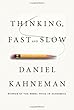
This past October, a world-renowned psychologist () published his latest book, . I’ve read a lot of reviews of the book and seen many of the interviews of him about this book and one of my favorite quotes (above) comes from the video (below). Take a few minutes and watch:

Kahneman, along with have done so much for the fields of psychology and economics. Some say that this book is the culmination of their work. I have enjoyed reading Kahneman and Tversky’s work through the years and think that their contribution on the subject of is monumental.

The quote I started this post with (…learn more from others around you being skeptical…) is worth talking about for a little bit. When I first heard him say that, I must have replayed it at least a dozen times. I heard the words he was saying, but it took some time for the wisdom to sink in. So what is it that Kahneman was saying?

Have you ever heard of an ? It’s the idea that your ideas and beliefs are reinforced (or amplified) because those that you tell them to share said beliefs. There’s nothing wrong with that, but if you’re familiar with and some of the , you know how hard it is to break from the group’s opinion on a topic. I don’t think that Kahneman was referring to this phenomenon in particular, but if you think about how hard it is to break from the group’s dominant viewpoint, it would make some sense that being “skeptical” yourself is not as easy as it sounds. However, if those around you are skeptical, it will be easier to learn from their skepticism about a given topic.

So, as you think about assembling your next business team or you’re just talking with your friends, remember how important and valuable the dissenting voice can be. Remember that having a  might not be the best idea. Remember how hard it is to be the singular dissenting voice. Remember to encourage healthy disagreement and an analysis from all sides. You’ll be much better off.

The Most Unifying Global Event: New Year’s Eve & Day

Is there a more unifying global event than New Year’s Eve & Day?

There have been some rather unifying global events in recent memory, but they usually involve some sort of catastrophe (think: tsunamis). In the US, series finales used to be watched by whole lots of people, but with the further development of individual niche markets, even that has tailed off. There likely won’t ever be a TV show that comes close to touching of over 100 million viewers and close to 80% of households watching.

was a pretty well-liked show, (so I’m told), and its series finale only came in at 54th on the same list. TV is ‘nice,’ but it’s not that I would want unifying the globe. Of course, there are exceptions. If everyone were watching a TV that was commemorating world peace or the end of world hunger, then sure, I’m in.

~

As I sat and thought about the various global events that have happened, I wondered if there were a night/day more filled with hope and love than New Year’s Eve/Day. Some may cite holidays like Christmas, Thanksgiving, or Easter, but those kinds of holidays can be seen as country-specific or denominational. While there are probably lots of people who celebrate these days regardless of their country and/or religion, I was looking for something with a wider scope.

We could go back in time to the , but again, that was country-specific. Of course, the Soviet Union was interested in the event, but I don’t know that it’s fair to say every country was as enveloped with the event. There’s nothing quite like a ‘new year,’ though, is there? All the potential, the hope, the possibility, the dreams.

I think that New Year’s Eve & Day will be, for quite some time, the most unifying global event. Why? Because this event can be completely different things for everyone. Some people can see it as the end of the “old year,” and some people can focus on the beginning of the “new year.” Some folks can use it as a way to springboard to a motivational state that allows them to achieve their goals/dreams, while others just see it as another day. New Year’s is, in a sense, the perfect event to whatever we want onto it.

Expect Great Things

Sunrise, sunset, beautiful picture, beauty, sky, It’s New Year’s Eve (2011), so I won’t write a very long post. But there are a few things I wanted to say before we ceremonially say goodbye to 2011 and hello to 2012. So, without further adieu…

Most people in North America will likely be ringing in this evening with some kind of a party. A celebration of the year that was and an eye full of hope to the possibility of the year that can be. I’m sure you’ve read or will read a litany of articles about the “best” things of 2011 or the “worst” things of 2011. A number of “top 10” lists, or “top 5” lists, or top (fill in the blank with an odd number) list. Don’t get me wrong, I enjoy reading some of these and think it is important to reflect on the past.

However, I would hazard a guess that the majority of what is retold at the end of the year are not necessarily the “best” things of the year. They are usually the kinds of things that will attract the most readers. And I understand, there are people whose livelihoods depend on their publishing columns and articles that keep readers coming back. I don’t mean to sound cynical, but I wonder how many lists there are out there where a story like would make the top 5.

While there are so many things that happened in the year 2011 that were tragic or catastrophic, I’d like to think that there is an innumerable amount of stories that could just as easily warm our hearts. For every Tsunami that leads to a potential nuclear disaster, there are 20 instances of people doing the ‘right’ thing (like the money in the bag story from above).

It’s stories like these that give me hope for the future of our civilization and in particular, the western world. We mostly hear about the shortcomings of each other and that can lead to a predisposition of expecting the worst in each other. I don’t expect the worst out of you and neither should you. I expect great things.

Expect great things from each other and you just might be surprised at the outcome.

Twitter: Who I’m Following, Part 5

It’s been almost 3 months since I last updated the list of people I’m following on Twitter. I thought today might be a good time to begin to update that list. In case you missed the earlier posts:


So, without further adieu, here are the people I have followed since my last post.

: Rogin covers national security and foreign policy for . He often tweets his column and other things that come up in the news that have to do with national security or foreign policy.

: Melissa Harris-Perry is a professor of political science at . She guest hosts for and from time-to-time. She’s also writes for .

: Dylan Ratigan is the host of . He also, somewhat famously, about the political system in the US.

: has high praise for Milne. In her book , she said that Milne turned ‘s comment section into a “truly global debating forum.”

: He hosts a progressive radio show that has nearly 3 million listeners a week. Interesting to me, before being a nationally syndicated radio host, he was a psychotherapist.

: He served in the and as the in the . Currently, he’s a professor at .

: In 2000, Donna Brazile became the first African-American woman to lead a presidential campaign (Gore). She’s currently a professor at .

: Politifact is a project , “fact-check statements by members of Congress, the White House, lobbyists, and interest groups.” This is very helpful in judging the validity (or truth) of some of the things said by people involved in politics.

: “The National Debt Clock ran out of digits so start following the debt daily on Twitter. (+) or (-) means up or down from previous day’s debt total.”

: This is the Twitter feed for the popular TV series, The Big Bang Theory. I rather enjoy the characters and so too, does .

: I’m currently (2011-2013) a graduate student at George Mason University in the School of Management (). This is the twitter feed for Mason’s school of management.

: Nick Kristof is a two-time Pulitzer Prize winning columnist for the New York Times. He’s “bringing to light human rights abuses in Asia and Africa.”

: Wolf Blitzer is CNN’s lead political anchor and is often seen as the host of CNN’s , which, , airs from 4pm to 6pm weeknights on CNN.

: Scahill is the national security correspondent for . He also wrote

: Gergen is a Senior Political Analyst for CNN. He’s also the Director for Public Leadership and a Professor of Public Service at the Harvard Kennedy School.

: Revkin writes the blog for the New York Times. “Dot Earth tracks relevant developments from suburbia to Siberia.

: Robinson is a Pulitzer Prize winning columnist for the Washington Post. He’s also an MSNBC analyst and author.

: David Axelrod was the chief strategist for Barack Obama’s 2008 presidential campaign. Afterwards, he remained a senior advisor to President Obama.

: “The Charter for Compassion is the result of Karen Armstrong’s 2008 TED Prize wish.” Check out the video of the .

: I’m sure you recognize the name (Lady Gaga). I decided to follow (and subsequently look into her message) when I first clicked onto her twitter profile and found that she was quoting .

: President Bartlet is the from the television series: . Whomever tweets from this account captures the essence of how President Bartlet would tweet, in my opinion.

: Nassim Haramein is one of the smartest people I’ve ever met. I highly recommend checking out his work. You can start with his , but if you can, I’d get a copy of “.”

: Chris Cillizza writes for and is a contributor to MSNBC. He often live-tweets the debates or other important political events.

: Chris Rock is one of my favorite comedians, especially when he does bits like that speak to the dysfunctional nature of some of the things in this world.

: I was first introduced to John Legend’s music during my undergraduate degree. I can be quite particular about the music I listen to, but for the most part, I like Legend.

: Neil deGrasse Tyson is one of the more accessible scientists of today. He has made many appearances on talk shows () and even a guest spot on “.”

: My first introduction to Billy Crystal was in the movie A great movie, indeed. Interesting fact: Billy Crystal has hosted the (currently 8, soon to be 9, which is well behind Bob Hope with 18).

: The have made some hilarious movies through the years (written and/or directed). I wonder if  (movie) will prove to be as successful.

: This twitter account focuses on tweeting infographics, particularly those from their , which is a collection of the best infographics from around the web.

: Hill Harper is best known for playing a , but I initially followed him because of his inclination to empowering tweets.

~

I’m nearing my self-imposed word limit of (1000 words), so I’ll end this post for now. It’s worth noting that I’ve gone through and “purged” some of the accounts I’ve followed in the past (including some of the accounts in this post) and subsequently, added a slew of new accounts. Look for some of them in Part 6 of this series. And as always, if you have suggestions, leave a comment, send me an email, or tweet me.

Want an Idea of What Really Happened During the Financial Crisis: Watch “Margin Call”

At the , an independent film by the name of made its debut. It was released in theatres a couple of weeks ago, while simultaneously being released on and . Meaning, instead of having to drive out to the theatre, you could watch the movie from the comfort of your comfortable couch. I had seen a few bits about the movie in the news that piqued my curiosity, so I took the time to watch it. I was pleasantly (or maybe unpleasantly?) surprised.

The film covers the actions of an investment bank over a 24-hour period. It focuses on the events leading up the . In essence, the movie is one possibility for some of the events that precipitated the crisis. I want to make it clear that I am not saying that the events from Margin Call are what happened, but I think it presents a perspective that hadn’t been adequately articulated in any of the other articles, books, or movies that I’d seen on the subject.

I’ve written about economics here before (most notably in the series), but after nearing completion of a course through business school, I have a different perspective on the economy. Maybe more importantly, I have a more nuanced understanding of why things happen the way they do in the economy. Pairing that with some of the things I’ve read/heard outside of business school make for an interesting take on the state of the global economy.

There are a couple of lines from the movie that I think are worth noting. This first bit of lines is between two of the firm’s employees. One of them is relatively low in the firm and one is somewhere near the middle to top. The conversation takes place (towards the end of the film) as the two of them are headed back to the office a couple of hours before they are about to sell as much of the firm’s holdings as they possibly can:

“If you really wanna do this with your life, you have to believe you’re necessary, and you are. People wanna live like this in their cars and their big houses that they can’t even pay for — then you’re necessary. The only reason that they all get to continue living like kings is because we’ve got our fingers on the scales in their favor. I take my hand  off, and then the whole world gets really fair really quickly and nobody actually wants that. They say they do but they don’t. They want what we have to give them, but they also wanna, ya know, play innocent and pretend like they have no idea where it came from. Well that’s more hypocrisy than I’m willing to swallow.”

The next scene I wanted to highlight is right near the end of the film. The CEO is having a bite to eat in the restaurant on one of the . The Director of Trading walks in and a conversation ensues. In particular, there’s a monologue by the CEO:

“When did you start feeling so sorry for yourself? It’s unbearable. What, so you think we might’ve put a few people out of business today? That it’s all for nought? You’ve been doing this everyday for almost 40 years, Sam. And if this is all for nought, so is everything out there.

It’s just money. It’s made up. Pieces of paper with pictures on it so we don’t have to kill each other just to get something to eat. It’s not wrong. And it’s certainly no different today than it’s ever been. 1637, 1797, 1819, 37, 57, 84, 1901, 07, 29, 1937, 1974, 1987, 92, 97, 2000 and whatever we want to call this. It’s all just the same thing over and over. We can’t help ourselves. And you and I can’t, control it or, stop it, or even slow it. Or even ever so slightly alter it. We just react.

We make a lot of money if we get it right. We get left by the side of the road if we get it wrong.  And there’ve always been and there always will be the same percentage of winners and losers. Happy farts and sad sacks.  Fat cats and starving dogs in this world. Yeah. There may be more of us today than there’ve ever been, but the percentages, they stay exactly the same.”

As I said, this is only one perspective on what happened, but I found it quite interesting to see a depiction of what it might have been like to be on the inside of a firm grappling with what to do prior to the financial collapse. I hope you take the time to check out this movie.

Do You Know The Difference Between Left and Right?

This past weekend, someone for a YouTube video (of a ) that I was surprised I hadn’t seen. It was a rather interesting video that claims to isolate the differences between and . Based on research, the presenter related . This was different from the way , but similar.

The presenter, , spoke about 5 different channels for moralism: Harm, Fairness, Authority, In-Group, and Purity. The idea is that depending on one’s political leaning, they will rate these 5 different pieces of morality differently. Specifically, those with a liberal-leaning will rate harm and fairness much higher than authority, in-group, or purity. While conservative-leaning folks will rate all five pieces about the same. To differentiate liberals from conservatives then, Haidt distinguishes Liberals as having 2 channels of morality (harm and fairness), while Conservatives have 5.

This is not saying that conservatives are more moral than liberals, no. It is just saying that these two ideologies are channeling their morality to different areas. In fact, when you watch the video, you’ll see that there are even slight difference between nations. The graph that Hadit shows stays relatively the same, except the slope (from liberal to conservative) is slightly steeper (than the US) for different countries.

In giving this presentation to TED, one of Haidt’s main arguments was that we often tend to be around those who think like us. So, if you’re a conservative, you probably have more conservative friends than you do liberal friends (if any at all). Likewise if you’re a liberal. The problem with this is that we could learn so much from each other, especially those that think different from us. It is monumentally important that we have people in our workgroups that can see things differently from us (with some exceptions, of course).

It might not seem easy, but it can really expand your awareness. If your a conservative, I challenge you to have a conversation with your friend who is a liberal about something happening in the world (that you’re pretty sure that your point of view is the “right” one). Likewise, if you’re a liberal, I challenge you to seek out someone who has a conservative ideology and talk to them about something in the news (that you’re pretty sure your point of view is the “right” one). Before you begin your conversation, I’d encourage you to set aside your beliefs about the “other” ideology, but maybe more importantly, suspend your opinion about the topic you’re about to discuss.

If you go in assuming that your answer is the right one, you should know that there’s research that suggests you won’t even hear what the other person has to say. Meaning, when the other person starts talking about things that are contrary to your beliefs, your brain won’t take in what they are saying. Our beliefs can be very powerful and unfortunately, can restrict us from taking in new ideas. Knowing this, I would encourage you to suspend your beliefs. Consider your beliefs, loosely, ideas. It’s much easier to change an idea than it is a belief.