Whose Thinking Is It, Anyway?

juan-rumimpunu-nLXOatvTaLo-unsplashConsciousness has always been a topic that’s fascinated me. How do we know that we’re aware? How do we know that other people are aware? Where is consciousness? Who’s voice is that in my head? Do other people have voices in their heads? Fascinating.

There are a couple of things I’ve come across recently that, if this area is of interest to you, too, I suspect you’ll find compelling. The first comes from Seth Godin’s podcast, Akimbo. In particular, the episode from a couple of weeks ago. At the end of this episode, a listener asked Seth a question about consciousness. That is, “what do you think consciousness actually is.” Seth’s answered reminded me of some of the stuff I’ve come across, but the example he cites is on-point. In the context, he’s talking about the idea that the voice in our head might be a vestige of history:

Let’s think about a football game. Let’s think about the idea that there’s instant replay and there’s play-by-play and there’s the colour commentator. Now, let’s imagine that a play has just unfolded before our eyes. What happens is, the QB drops back to pass, he fakes a hand-off, he throws a long bomb, it’s going, it’s going, it’s a TD. Now, you just heard what the play-by-play announcer was saying.

“2nd and 13, Pickett under pressure, puts it up deep, and oh, what a play by Brandon Llyod. An incredible catch. A one-handed leaping catch by Brandon Lloyd.”

“This is one of the best catches you’ll ever see. Ever.”

You heard it after you saw the play on the field. Of course you did. Because the announcer also saw the play as you saw the play and after the fact, the announcer made up all of this story about what you just saw. For a moment, imagine what it would be like if it was in the reverse order. Imagine what it would be like if when you were watching a football game, the announcer, sped up by 10 seconds on the track, said what was about to happen and moments later, it did happen. How weird would that be?

Well, we have come to be comfortable with the idea that we say stuff in our narrative brain, in our conscious brain, and then we do it. But it’s probably true that it’s the opposite case. That at a base chemical level, much quicker than we come up with a narrative, we’ve already decided to do something. We’re already doing something. And then, only then, only after that fact do we come up with a narrative. It’s possible using fMRI and some thoughtful mind experiments to prove that this happens all the time. That really what we’ve got in our head is a play-by-play announcer. It’s possible that this evolved over time. That human beings talked to themselves. And that that was the version we had first of what we now call consciousness. But then, our brains evolved to the point where we could talk to ourselves without talking out loud. That language leads to this notion that we have a little man or a little woman in our head who’s telling us what to do. But, we don’t.

~

Another example that comes to mind comes from another love of mine — baseball. When a pitcher throws the ball, it reaches home plate really fast. It’s so fast, in fact, that the batter doesn’t have time to think about the pitch and then decide to swing. There technically isn’t time to make a decision to swing (or not swing). So what’s happening there:

(With pitch velocities ranging between 80 to over 100 miles per hour, it takes approximately 380 to 460 milliseconds for the ball to reach the plate. Minimum reaction time between the image of the ball reaching the batter’s retina and the initiation of the swing is approximately 200 milliseconds; the swing takes another 160 to 190 milliseconds.) And yet, from the batter’s perspective, it feels as though he sees the ball approach the plate and then he decides to swing. (This discrepancy in the timing of our perceptions, though ill-understood, is referred to as the subjective backward projection of time.) One of the all-time great hitters, Ted Williams, once said that he looked for one pitch in one area about the size of a silver dollar. Not to be outdone, Barry Bonds has said that he reduced the strike zone to a tiny hitting area the size of a quarter.

Even though players know that their experience of waiting until they see the pitch approach the plate before making a decision is physiologically impossible, they do not experience their swing as a robotic gesture beyond their control or as purely accidental. Further, their explanations for why they swung/didn’t swing will incorporate perceptions that occurred after they had already initiated the swing.

We spectators are equally affected by the discrepancy between what we see and what we know. Take a group of diehard anti-free-will determinists to the deciding World Series game and have them watch their home team’s batter lose the Series by not swinging at a pitch that, to the onlookers, was clearly in the strike zone. How many do you think would be able to shrug off any sense of blame or disappointment in the batter? Indeed, how many would bother to attend the game if they accepted that the decision whether or not to swing occurred entirely at a subliminal level?

Worse, we think that we see what the batter sees, but we don’t. Not needing to make a split-second decision, we can watch the entire pitch and have a much better idea of its trajectory and whether it is a fastball, curveball, or knuckleball. And we judge accordingly. How could he have been a sucker for a change-up, we collectively moan and boo, unable to viscerally reconcile the difference in our perceptions. (Keep this discrepancy in mind the next time you watch a presidential debate from the comfort of your armchair. What the candidates experience isn’t what we onlookers see and hear when not pressured for a quick response.)

 

Dumb Luck, Predestined Fate, or Neither

austin-chan-ukzHlkoz1IE-unsplash.jpgThere’s lots that could be said on today’s anniversary, but the one piece that stood out to me is in The AtlanticOn 9/11, Luck Meant Everything: When the terrorist attacks happened, trivial decisions spared people’s lives—or sealed their fate. I don’t want to copy/paste the whole article here, so I’ll just include the paragraphs that hammer the point home:

In researching my new book, The Only Plane in the Sky: An Oral History of 9/11, I’ve spent the past three years reading and listening to thousands of personal stories from that Tuesday—stories from Americans all across the country and people far beyond our shores. In all those published accounts and audio clips, and in the interviews I conducted, one theme never ceases to amaze me: the sheer randomness of how the day unfolded, who lived, who died, who was touched, and who escaped. One thousand times a day, we all make arbitrary decisions—which flight to book, which elevator to board, whether to run an errand or stop for coffee before work—never realizing the possibilities that an alternate choice might have meant. In the 18 years since 9/11, each of us must have made literally 1 million such decisions, creating a multitude of alternate outcomes we’ll never know.

Randomness giveth and randomness taketh away. Some folks have a hard time believing in fate, believing that life is predestined. And to their credit, what fun would that be, if every decision you were going to make were already made for you. That you were just following some preordained plan. To others, this brings comfort. They like the idea that there’s someone or something watching over them and the rest of the world. I remember being asked the question many years ago, “Do you believe in free will or fate?” With a wry grin, I responded something to the effect of, “Hmmm, I believe that we have free will to choose to believe in fate.”

In both the Pentagon and New York, fate played a key role in the escapes. Army Lieutenant Colonel Rob Grunewald was sitting in a conference room with his colleagues when American Airlines Flight 77 hit. “The plane came into the building and went underneath our feet, literally, by a floor,” he said later. “Where everybody went and how they get out of the room is very unique, because those are where decisions are made that are fatal, or cause injury, or cause mental fatigue, or great consternation. A bunch of my officemates that were in that meeting went in one direction and unfortunately didn’t make it. The person that sat to my right, the person that sat to my left apparently went out the door and took a right, and they went into the E-Ring, where they apparently perished. A decision to go in one direction or another was very important.” For his part, Grunewald paused for a minute to rescue a colleague, Martha Cardin, and thus was just a few steps behind the others leaving the damaged conference room. In the smoke, he and Cardin turned left instead of right—a decision that saved their lives.

It is darn near impossible to know when things like this will happen and more importantly, to know when a seemingly innocuous decision to return to your hotel room to change your shirt can save your life (and change the course of your fated history or keep you on the path of your fated history). So, how can we live in a world like this? How do we reconcile? How do we make peace with making decisions in our day-to-day? How do we know when to go left and when to go right?

There are any number of ways to answer that question. The answer that’s most congruent for me — and the answer that I wish more of us chose — requires an internal alignment with ourselves. It requires knowing ourselves and trusting ourselves.

~

There’s a new podcast that’s come out recently called, “Meditative Story.” It shares compelling first-person stories from people talking about a time in their life when everything changed for them. There’s one episode in particular I want to highlight here and it comes from Arianna Huffington (yes, that Arianna Huffington).

In it, she’s talking about growing up in Greece. She was thumbing through a magazine and she saw a picture of Cambridge. The moment she saw it, she knew — that was where she was meant to go. There was something inside of her, something that knew, that’s where she was supposed to be next. This, from a young woman who didn’t speak a lick of English, knowing that she’s supposed to go to a university on the other side of Europe. Details, small details.

Of course, she would go on to do the work to get herself there, but the part I want to focus on here is the alignment. When she saw the picture, something inside of her recognized a part of what her future could be — Cambridge. There was something about seeing that picture that sparked something inside of her. While it’s probably a bit much to ask for us to operate on this level on a day-to-day basis all the time (but maybe not?), part of me wishes that we could, at a minimum, increase the frequency with which we all tap into this part of ourselves to make decisions.

Uncertainty: Accounting for Known and Unknown Outcomes

jayakody-anthanas-m1wFkw-Iyt8-unsplash.jpgNote: for the last few posts, I’ve been exhausting the store-house of prewritten pieces from other websites that I hadn’t yet transferred to this website. I believe all have been posted here now, so let’s return to our regularly scheduled programming.

I’ve had an article saved on Pocket for a few months now with a section highlighted. I don’t often highlight sections of articles because I don’t often keep articles on Pocket — once I’ve read it, I delete it (so the highlighting is superfluous). However, there was an article I came across a few months ago with a passage that stopped me in my tracks. It was in a rather weeds-y article about the Twitter war strongly worded discussion (?) between Nate Silver and Nassim Nicholas Taleb. I won’t get into the details of it, because it’s not really necessary for the passage that popped, though I did want to set the context, in case anyone clicked through to the link and was confused.

About halfway through the article, the author begins a discussion on uncertainty. In particular, he’s talking about two kinds of uncertainty — aleatory and epistemic. [NOTE: You’re not alone if you had to look up aleatory — I don’t recall every coming across that word.] Anyway, here’s the key bit:

Aleatory uncertainty is concerned with the fundamental system (probability of rolling a six on a standard die). Epistemic uncertainty is concerned with the uncertainty of the system (how many sides does a die have? And what is the probability of rolling a six?).

How many times have you come across a model that purports to be able to predict the outcome of something — without there being a way to “look under the hood” of the model and see how it came to its conclusions? OK, maybe looking under the hood doesn’t suit your fancy, but I bet you partake in the cultural phenomenon that is following who’s “up or down” in the election forecast for 2020? Will POTUS be re-elected? Will the other party win? Or what about our friends on the other side of the pond — Brexit!? Will there be a hard Brexit, a soft Brexit, are they going to hold another election?!

All things, all events where the author of the piece or the creator of the model might not be adequately representing (or disclosing) the amount of epistemic risk inherent in answering the underlying question.

~

So let’s bring this closer to home for something that might be more applicable. You make decisions — everyday. Some of you might make decisions that have an impact on a larger number of people, but regardless of the people impacted, the decisions you make have effects. When you take in information to make that decision, when you run it through your internal circuitry, the internal model you have for how your decision will have an effect, are you accounting for the right kind of uncertainty? Do you think that you know all possible outcomes (aleatory) and so the probabilities are “elementary, my dear Watson,” or is it possible that the answer to whether you should have cereal for breakfast is actually, “elephants in the sky,” (epistemic). OK, maybe a bit dramatic and off-beat in the example there, but you never know when you’re going to see elephants in the sky when you ponder what kind of breakfast cereal to pull down off the top of the fridge.

Outcomes vs. Outputs – The “How’s” of Decision-Making

71GiSvm+a0LRecently, I read (er, re-read?) Phil Tetlock’s Superforecasting: The Art and Science of Prediction. This book came out a couple of years ago (and was co-authored by Dan Gardner, whom I believe is a senior advisor to Prime Minister Trudeau – or was at one point, I’m not sure if he still is). Anyway, the book is excellent and I highly recommend it to anyone who wants expand their understanding of decision-making.

The reason I’m mentioning this book today is because of one of the chapters: The Leader’s Dilemma. The crux of the chapter is a juxtaposition between the central theme of the book – individual superforecasters and their ability to remain steadfast in the face of uncertainty and the fact that leaders need to take action. They can’t waffle in their decision-making – they have to choose. The chapter invokes a German General from the 1800’s, Helmuth von Moltke. To be frank, I haven’t read many books (or seen many documentaries/videos, for that matter) about military leadership and strategy, so this was new to me.

You: Jeremiah, why are you talking to us about German Generals from 200 years ago?

Me: I’m going somewhere with this, I promise, just hang with me for a bit.

So, Moltke. He had a particular way of leading that is often characterized by the German word Auftragstaktik. In English, we know this as mission command. Essentially, this style of leadership boils down to top-down intent, but bottom-up(ish) execution. For example, the leader of the military would say that we need to expand our defenses west, but the leader wouldn’t say how we’re going to do it. Instead, the order makes its way down the hierarchy – absent the how, every time! – until someone would then be executing on that order.

The key here is that there’s no prescription for how to do something when the order is given. The emphasis is on the outcome. Expand our defenses west. Invade that country. Secure that town. OK. So, why is this important? Moltke: “In war, everything is uncertain.” If a General were to give prescriptive orders about how to takeover a bridge, there will absolutely be things that occur on the ground that aren’t accounted for in the General’s orders. Maybe there’s heavy rainfall, which presents a problem for the troops who were told to stake out in the nearby field and wait for the cover of night to execute the plan. Maybe when they arrive, the enemy has three times (!) as many soldiers there to defend the bridge. What will they do? Well, they’ll have to callback to HQ, as everything’s being run through the General.

/It’s at this point that, if I were doing a video of this, I’d splice in a scene from Family Feud where Steve Harvey (or Ray Combs) points to the big board and says, “Show me… waiting for orders from HQ when you’re under heavy fire and have no place to go…”

/Stttttttttrrrrriiiikkkkkkeeee

Yeah, that strategy will not pan out – every time. OK, so we’ve established that in the military, they push decision-making down the hierarchy. How does that relate to us, you might be asking?

Well, how many things do you do at work where you have complete control over how you do them? We need to brief the Director, quick write a briefing note.

/Stttttttttrrrrriiiikkkkkkeeee

What if a briefing note isn’t the best way to brief the Director? What if the Director would rather a quick 2-minute meeting to explain what’s going on, rather than you spending the next 2+ hours crafting the ‘perfect’ briefing note, only to have your manager spend an hour after that re-writing the whole thing? And how does it make you feel after you’ve done all that work, had most of it invalidated by your manager, and then the Director calls you and your manager in anyway because he doesn’t want to read 300 words on the topic, but instead, wants to have a quick chat about it.

~

Or let’s say you’re working in operations – the front lines – where the proverbial ‘government meets the Canadian.’ You’re working with a Canadian who needs a new passport, but is having trouble getting it. Your performance metrics are clear – you’ve already spent 20+ minutes on the phone and if you stay on the phone longer, you know that you’re not going to be able to meet your performance objective because this call will inflate your average time on call.

/Stttttttttrrrrriiiikkkkkkeeee

Clearly, time on call isn’t the best metric to use to evaluate folks who answer calls from Canadians, but the order has already been given from down on high (we need to spend only x-amount of time on the phone with Canadians because it’s part of my performance agreement that our average call-time improves year-over-year).

~

Or how about this – the DM has decided that the department is short on funds so we’re going to reorg two branches – they’re now going to become one branch. *gasp* The ADMs filter the message down to the DGs that they want these directorates axed, the others merged, and some others expanded. The DGs filter that message down to the Directors about which divisions will be axed, merged, and expanded. The Directors filter that message down to the managers about whose role will be shifting, reassigned, or expanded. The managers filter that message down to their teams. And at the end of this exercise no one is happy.

There were no consultations, no engagements, and no empowerment. People were told what they were going to do and how they were going to do it. No one considered that the people they were managing might have ideas about how to do things better. The person filtering the message down was always assumed to be ‘right.’ That’s no way to run a firm and it’s certainly no way to manage change in an organization. Push the “how” of decision-making down the hierarchy. The people you hired are smart (otherwise you wouldn’t have hired them, right?). Let them prove your decision to hire them was a smart one. They can’t wait to do it.

This post originally appeared on GCconnex/GCcollab.

Making Decisions Under Pressure: Return to Equanimity

cynthia-magana-GMLNhaBkCiE-unsplashI spend quite a bit of time in the car commuting to and fro. As a way of maximizing my use of time, I’m almost always listening to a podcast. These podcasts are on my phone and I prefer to have my headphones in (one headphone, if you must know). Since I use my headphones with such regularity, I always put them in the same place (so I’ll know where to find them when I want them). They’re in a central location in the house, but not in a place where one of the kids can grab them and move them. [Can you guess where this is going yet?]

In getting ready to go this morning, thing were going right on cue. I slipped on my shoes, buckled in one of the kids in the back, and was about to start the engine, until I realized… my headphones!? They’re not in the car. Assuming I must have just overlooked them from their place this morning, I doubled-back and… they weren’t there! Great Scott! OK. Don’t panic, I thought.

I used them on the weekend. Maybe I must have taken them off somewhere and forgot to put them back. I checked the closet, the laundry room, my office, my wife’s office, but no matter where I looked, I couldn’t find them. My wife’s car, the closet again, my wife’s office again, inside drawers, in the pantry, the kitchen counter, the living room, one of the kid’s rooms, the bookshelf… I mowed the lawn this weekend! That must be where they are, near the riding mower. Nope, not near the riding mower. Checked the laundry room again, checked the office again, checked the kitchen again…

While all of this is going on, I’ve got one of the kids buckled into a carseat in the car. In the past, they’ve not been a fan of being in the car, buckled in, by themselves, so I’m starting to feel pretty stressed throughout this process. And doubling-back to the same spot and not finding the headphones isn’t doing anything positive for my stress, either. Where are they!?

Did I mention that I was on my way to drop off one of my kids at camp and I have a thing about being punctual (not to mention, it’ll give the kid more time to play with their friends!). Have you seen my headphones, please help!?

After a few more circuits of checking all the same places, (maybe magically, they’ll be in the spot I’ve already checked!?), I acquiesce. I give up. I’m not going to find them. They’re gone to eternity. No more head phones. Dejected, I return to the car and begin the drive into town.

As you might expect, my mind wasn’t ready to give up, or at least part of it wasn’t ready to give up. What the heck was I doing yesterday with my headphones? I replayed Friday and I replayed Saturday. All the images I could already come up with when I was racing around the house. I could see where I put the headphones in those scenarios. I began replaying Sunday (mowing the lawn), yup, I knew where the headphones were and checked. Errands in town. Yup, I checked those spots, too. And then…

Of course! I remembered. Sunday afternoon was a bit anomalous in that I had run errands and then picked up one of the kids to take them home for a nap. They were overdue for a nap. So, when we get home, I didn’t empty the car like I normally would. I took in the fridge/freezer stuff and then took the kid upstairs ASAP to get them to sleep. When I came back downstairs, I hurriedly emptied the car because I wanted to use the time during the nap to begin setting up my course for the Fall semester (it starts next week — eep!).

In my haste doing that (i.e. I took too much stuff in in one trip), I shoved my headphones into my pocket and when I finished putting stuff away in the kitchen, I hurriedly changed my clothes and headed for the office. Because my mind was so focused on getting a jumpstart on the course, I wasn’t thinking about emptying my pockets (as it happens, my debit card was in one of the pockets, too!).

So, why am I sharing this story that I’m sure everyone can relate to?

In that time where I was racing around the house, checking all the same locations, I had an ‘artificial’ deadline. I was meant to already be on my way driving. This time pressure was, no doubt, affecting my ability to be still for a few minutes, and properly recount my steps from the previous day. Remember, in the car on the way into town, my mind did just this. So, why didn’t I do it before?

Well, I was too focused on all the negative outcomes. I’m not gonna be able to listen to my podcasts. I’m not going to be able to insulate myself from sound at work or the coffee shop. I’m going to fall behind on my podcasts. I won’t be able to practice French. I’m going to have to buy new headphones! Negative, negative, negative. While all of those things might have been true. I didn’t give myself the space to use my faculties. I didn’t give myself the time to possibly be right. To find the positive outcome. I was so keyed in on all the bad things.

And that’s why the subtitle of today’s post is “return to equanimity.” When it’s time to make a decision, even a low-impact decision, if you don’t return to a state of balance, a state of neutrality, a state of equanimity — you run the risk of making poor decisions even if the right decision is right there under the surface!

Is “A” Really the Best Option or is it Just that It’s Better Than “B”: List of Biases in Judgment and Decision-Making, Part 18

The other day, someone was talking to me about my series on biases in judgment and decision-making and it made me realize that I was missing a rather important bias — the contrast effect! I’m not sure how this one slipped through the cracks, but I’m glad to be able to write about it for you today.

It’s been almost a year and a half since I wrote something for this series, so let me refresh your memory. Each week, I took a cognitive bias and explained it. I provided an example and then I offered some ways for mitigating that cognitive bias in your own life. So, without further adieu, the contrast effect.

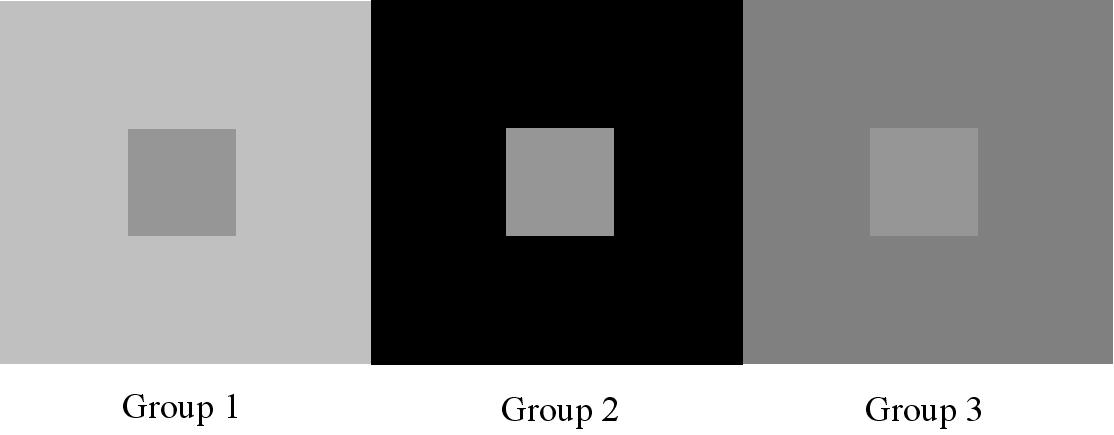
What’s the contrast effect? Well, as with many of the biases, it’s exactly what it sounds like: an effect that occurs because of a comparison. That is, people are more likely to perceive differences that are bigger or smaller because of something they’ve seen first. This is something that is used in sales — all — the — time. If you’re shopping for a new car, the salesperson may show a series of cars that are way out of your price range and then show you one that’s just a little out of your price range. After having seen so many cars that are way out of your price range, the one that’s just a little out of your price range won’t seem that far out of your price range. The contrast effect.

That’s not to pick on folks who sell cars, it can even happen with smaller purchases, shoes, for instances. Let’s say you’re looking for a particular kind of footwear. The salesperson may show you a bunch of shoes that don’t quite fit your needs and happen to be priced rather cheaply. Then, the salesperson shows you a shoe that does fit your needs, but is quite a bit more expensive. As you’ve seen all these shoes that aren’t what you need and now you’ve finally come to one that meets you’re needs, you may ignore the price and buy the shoes.

One of my favourite examples of the contrast effect comes from Dan Ariely‘s book, Predictably Irrational:

One day while browsing the World Wide Web (obviously for work-not just wasting time), I stumbled on the following ad, on the Web site of a magazine, the Economist.

excerpt.gif

I read these offers one at a time. The first offer-the Internet subscription for $59 seemed reasonable. The second option-the $125 print subscription-seemed a bit expensive, but still reasonable.

But then I read the third option: a print and Internet subscription for $125. I read it twice before my eye ran back to the previous options. Who would want to buy the print option alone, I wondered, when both the Internet and the print subscriptions were offered for the same price? Now, the print- only option may have been a typographical error, but I suspect that the clever people at the Economist‘s London offices (and they are clever-and quite mischievous in a British sort of way) were actually manipulating me. I am pretty certain that they wanted me to skip the Internet- only option (which they assumed would be my choice, since I was reading the advertisement on the Web) and jump to the more expensive option: Internet and print.

But how could they manipulate me? I suspect it’s because the Economist‘s marketing wizards (and I could just picture them in their school ties and blazers) knew something important about human behavior: humans rarely choose things in absolute terms. We don’t have an internal value meter that tells us how much things are worth. Rather, we focus on the relative advantage of one thing over another, and estimate value accordingly. (For instance, we don’t know how much a six- cylinder car is worth, but we can assume it’s more expensive than the four- cylinder model.)

In the case of the Economist, I may not have known whether the Internet- only subscription at $59 was a better deal than the print- only option at $125. But I certainly knew that the print and-Internet option for $125 was better than the print- only option at $125. In fact, you could reasonably deduce that in the combination package, the Internet subscription is free! “It’s a bloody steal-go for it, governor!” I could almost hear them shout from the riverbanks of the Thames. And I have to admit; if I had been inclined to subscribe I probably would have taken the package deal myself. (Later, when I tested the offer on a large number of participants, the vast majority preferred the Internet- and- print deal.)

Before we movie into some of the ways for avoiding the Contrast Effect, I wanted to make it clear that sales isn’t the only place where this bias can creep up on us. Another good example is in evaluations (be they interviewing job candidates or marking term papers). If one doesn’t have a rubric by which one is scoring candidates (or papers), it can be easy to slip into the contrast effect: “Well, that candidate was much better than the last candidate, let’s put them through to the next round.” It could be that the latter candidate, while better than the first, still doesn’t meet your criteria to make it the next round, so putting them through would be wasting valuable resources — both yours and theirs.

Ways for Avoiding the Contrast Effect

1) Standardized Evaluation

In our most recent case involving interview candidates or term papers, creating a rubric or standardized method of evaluation prior to examining candidates/papers will go a long way to help one avoid falling into the trap of the contrast effect. This method could also be applied when it comes to shopping (i.e. sales). For instance, let’s say you’re looking for a car. Prior to arriving at the dealership, you could create a table for how you’re going to evaluate the cars you view while at the dealership. In this way, you can guard against the salesperson knowingly (or unknowingly) showing you cars at either end of the spectrum before showing you the cars you might actually purchase.

2) Are There Other Options?

Often times, when we’re succumbing to the contrast effect, we’re looking at option A versus option B. This is why it’s so important to have some sort of standardized evaluation (see #1), but short of a standardized evaluation, it’s important to remember that almost never are those two options your only two options. “Should I get this car or that car?” Well actually, you have another option — neither of those cars. And another option, you could consider buying a bike or maybe taking public transportation. Whenever you find yourself faced with a decision between two options, it can be useful to consider other options, just in case you’ve fallen into the trap of the contrast effect.

Note: the images in this post are all examples of the contrast effect.

If you liked this post, you might like one of the other posts in this series:

The Confirmation Bias in Action: “When I Looked Closer, It’s Obvious I’m Right”

Decision-making biases are challenging, to say the least. Often times, we don’t know that they’re affecting our ability to make logical and rational decisions. The first step in combating these biases is knowing what they are. The next step would then be identifying when we use these biases. On that note, I came across a funny comic that perfectly illustrated the confirmation bias in action.

The confirmation bias is just dripping from this comic. It might not always be easy to see when we’re operating under the confirmation bias, but “luckily,” we might have an easier time of seeing it in someone else.

A couple of years ago, I offered some other ways for combating the confirmation bias (once you know that it’s a thing). One of these ways is a two-pronged approach: seeking out contradictory information. It may sound easy to go out and look for information that doesn’t conform to your opinion, but it can actually be quite difficult. The difficulty is amplified by the fact that much of our social media sites are doing their best to show us content that conforms to our beliefs and opinions (in part because that’s what they think we want). As a result, it *might* be easier to seek out people with contradictory opinions.

When you’re trying to combat the confirmation bias by being exposed to different information, seeking out a person with a contradictory opinion is usually superior to seeking out contradictory information. Why? Because the person can engage with you and refute the things you might mutter under your breath as you’re reading the contradictory information. Essentially, you’d be engaging in the Socratic method.

If seeking out someone with a contradictory opinion sounds interesting to you, I’d encourage you to find someone who’s aware that you’re trying to combat your own confirmation bias. That is, you don’t want your first experience in this regard to be with someone who’s going to screech at you that your ideas are crazy.

Why Not Saying “No” Might Get You Into More Trouble Than You Think

A quick Google Search will tell you that we have a hard time saying no — almost 70,000,000 results for the exact phrase of “how to say no.” A study published this last fall showed that our proclivity for not saying no might actually lead us into unethical behaviour.

The researchers begin by establishing that studies have shown how we tend not to say no when someone asks us to do something for them (i.e. engage in prosocial behaviour) and use this as the basis for testing whether this might also lead us to comply with unethical requests. To test this hypothesis, the researchers conducted four studies.

In the first study, students had to get another student to tell a “white lie.” The ‘recruiter’ was also instructed to predict how many people they’d have to ask before they’d find someone willing to tell this white lie. Results show that students had to ask approximately half as many people as they expected (8.5 vs. 4.4).

The researchers thought that telling a white lie might not have been “unethical” enough, so in the second study, they had students recruit other students to vandalize. As one would expect, students predicted that they would have to ask more people (10.7) before finding someone willing to help them out. However, as was the case with the white lie, it only took asking 4.7 people before they found someone to help them out.

In studies three and four, the researchers were trying to determine whether or not the people who were asking others do take part in unethical behavior were aware of their influence and whether the people partaking in the unethical behavior actually had a harder time “doing the right thing” if they were asked to partake in unethical behavior. In both cases, they found evidence for their hypotheses. That is, when we try to convince someone to partake in unethical behavior, we underestimate our influence and as the person doing the unethical behavior, we find it harder to “do the right thing” when someone suggests unethical behavior.

The key finding, according to the researchers:

The truly startling finding is the lack of awareness people appear to have of this tendency when they are in a position to influence someone else’s ethical behavior. Overall, the current research suggests that we may not recognize the extent which our words and actions affect others’ ethical behavior and decisions.

I’ve certainly written about the importance of our words. Although, it was in a different context. The finding from this study is, as the researchers’ say, startling.

Prior to reading the study, I wouldn’t have predicted that we would so easily be susceptible to partaking in unethical behaviour. In fact, one of my potential critiques was cross-cultural. That is, would results like these hold in different cultures? According to the researchers, yes. With that being said, I do wonder if conducting this study with a different population — Americans, rather than Canadians — might provide different results.

ResearchBlogging.orgBohns, V., Roghanizad, M., & Xu, A. (2013). Underestimating Our Influence Over Others’ Unethical Behavior and Decisions Personality and Social Psychology Bulletin, 40 (3), 348-362 DOI: 10.1177/0146167213511825

Meditation Mitigates Effects of Cognitive Biases

There have been thousands of scholarly articles written about the myriad benefits of meditation, but the one I came across recently was one of the first that confirmed one of my previously held beliefs: meditation helps you make better decisions.

The thing that struck me most about this study were the similarities to an experiment I conducted (on intuition and decision-making) as a research assistant. I had a condition where students would meditate for a short time and then use their intuition to make decisions. The results weren’t as I, (the research assistant I was working nor the professor), had hoped. I wrote it off as the the reluctance of undergraduates to meditate, but in this study, in particular, studies 2a and 2b, the researchers used undergraduates (approximately 200 combined) and they meditated!

In the second study, the researchers had the undergraduates listen to a 15-minute audio track, which was was specifically designed for this study. In one condition, students listened to a mindfulness meditation created by a professional mindfulness-meditation instructor and in the other, the students listened to a track, again, by a professional mindfulness-meditation instructor, that continuously instructed students to think about whatever came to mind. This second condition was called the “mind-wandering” condition and previous research used a similar method as a control for mindfulness experiments.

As I already mentioned in the opening paragraph, the researchers found that increasing mindfulness (i.e. meditation) reduced the effects of cognitive biases (i.e. the sunk cost fallacy). My favourite part of this study [Emphasis added]:

It is particularly notable in this set of studies that increased resistance to the sunk-cost bias occurred after only a brief recorded mindfulness-meditation induction. Many prior mindfulness-meditation interventions have involved 8 weeks of face-to-face training (Brown & Ryan, 2003); by comparison, our 15-min recorded manipulation is substantially more practical.

Many people have gotten it into their heads that the positive effects of meditation takes weeks to manifest. Here is tangible proof that — today — meditation can help you make better decisions. Also:

We also encourage research investigating how mindfulness practice might improve other decision-making processes and outcomes.

Absolutely! I would suspect that meditation would help guard against a whole host of other cognitive biases, but it would be fantastic if there were scientific evidence to back this up. For instance, years ago when I was the president of the student body, I once tried to begin a general assembly meeting with a quick 1-minute meditation, but the maturity level just wasn’t there. Even after 10 seconds, some of the representatives couldn’t handle the silence. I take the blame for that as I probably didn’t do the method justice by properly introducing it with the research. Can you imagine, if, before every semi-major decision, you took 10, 5, 2, or even 1 minute just to sit still and clear your mind of the previous discussion. I wonder how much lost revenue there is from not taking a moment to pause and reflect before a decision is made.

I should say, I’m sure that there is certainly time between major decisions (i.e. mergers & acquisitions, although, there is fascinating research on how big of a failure those can be), but I’m thinking about the mid-level manager who makes many decisions in a day that can affect the bottomline of a company. The managers that make quick decisions about whether to go with this contract or that contract, whether to make this purchase or that purchase. Maybe that’s a good place to start with more research.

ResearchBlogging.orgA. C. Hafenbrack, Z. Kinias, & S. G. Barsade (2013). Debiasing the Mind Through Meditation: Mindfulness and the Sunk-Cost Bias Psychological Science DOI: 10.1177/0956797613503853

Best Posts of Jeremiah Stanghini’s Blog in 2013

Last year when I did a best posts series, I ended up doing three different posts. This year, since all of the posts that appear on this website originated on this website, I wouldn’t need to include any posts about Genuine Thriving. My first inclination was to do a best of 2013 and a best of all-time, but after looking at the statistics, the best of 2013 and the best of all-time are essentially — identical. As a result, I decided to just do the one post of the best posts of 2013.

Before revealing the top 6 posts along with an excerpt, there is one thing to keep in mind. On the old site, there used to be only an excerpt shown with the post. So, if someone wanted to read the whole post, they had to click the link (this was just how the theme worked). On this site, however, I specifically chose a theme where folks wouldn’t have to click a link to view the whole post (only to share or comment because those links are on the post’s page). As a result, the statistics for the most popular posts are sure to be skewed because people may have read a certain post more than another, but without them clicking the link for the post, there’s no way (that I know of) for me to know. On top of that, the theme I’ve chosen here allows the viewer to scroll (all the way to the first post!) What does that mean? When you’re on the homepage, you can continue to scroll down and more posts will load… all the way ’til you get to the first post. And in looking at the statistics of the top posts, it’s clear that “scrolling down” is far and away the most popular “post” on this site (this was true last year, too). With that in mind, here they are with an excerpt for each:

The Official Final Jeopardy Spelling Rules [UPDATED]

If you know me, you know that I’m really good at finding things on the Internet. After doing a couple of cursory google searches (Final Jeopardy RulesOfficial Final Jeopardy RulesOfficial Jeopardy Rules), I was surprised that I couldn’t find them. Sometimes, the site that hosts a document like this doesn’t do a good job of using keywords. So, I thought I’d poke around the official Jeopardy site — nothing.

After some more derivations of “Rules of Jeopardy,” I was beginning to think that maybe the rules aren’t online. I thought that maybe the contestants were handed a paper copy that they signed before going on the show and that document wasn’t online. Having never been a contestant on Jeopardy (though I’d like to be some time!) I couldn’t confirm whether this was true. However, given that it’s a game show, I’m sure they signed something before going on the show. Regardless, I didn’t have access to that document.

In The End, Everything Will Be OK – If It’s Not OK, It’s Not Yet The End

It’s no secret that I like quotes. Since converting my Facebook profile to a Facebook page, I’ve gotten into the habit of sharing a “quote of the day.” If my calculations are correct, I’ve been sharing quotes of the day for over 80 days now. As you’ll notice that I also have a quotes category, I’ve shared a number of quotes here on this site, too. And if I think back to the days of AIM (AOL Instant Manager), I often had quotes as my “away” message. And even before then, I remember really liking quotes in high school and in elementary (or grade) school. So, like I said, it’s no secret that I like quotes.

If You Want to Be Happy, Spend Your Bonus On Your Coworkers

That bonus you were looking forward to at the end of the year is “yours” and you should get to spend it on you and your family. Except, research shows that’s not the case. In fact, the research indicates that spending the money on someone other than yourself actually leads to greater happiness. More than that, it can lead to your improved performance at work.

The Confirmation Bias — What Do You Really Know: List of Biases in Judgment and Decision-Making, Part 6

Why is the confirmation bias so loathed? Well, as Nickerson points out, it may be the root cause of many disputes both on an individual and an international level. Let’s think about this for a second: let’s say that in the world of objectivity “out there,” there are any number of possibilities. In the world  of subjectivity “inside my head,” there are only the possibilities that I can imagine. Humans, on the whole, tend to fear change (there are over 600,000,000 results for that search on Google!). In order to allay those fears, I’m going to prefer information that already conforms to my previously held beliefs. As a result, when I look “out there,” I’m going to unconsciously be looking for things that are “inside my head.”

Advancing America’s Public Transportation System: High-Speed Rail in the USA

When it was first announced that the US was going to work on , I was very excited! Growing up in the , I am very familiar with the value of public transportation. I often rode a bus to and from school. As I matured and wanted to explore downtown with my friends, we’d ride the  to get there from the suburban area we lived. Beyond that, when I needed to make trips between Detroit and Toronto, I would ride the  between Toronto and Windsor instead of taking the 45 minute flight. Public transportation is a great way, in my opinion, to feel better about reducing one’s .

Three Lessons from The Hobbit: On Doing What You Can, Having Faith, and Demonstrating Leadership

Anyway, as I was watching, there were a few instances I noticed that could serve as quintessential lessons. Given that The Hobbit is a good example of the hero’s journey, it’s not surprising that there’d be great lessons to be found in the story.