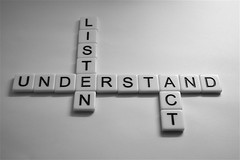
Listen — Let It Swirl Around Your Head, Then Form Your Opinion

In the past two weeks, I’ve seen a lot of people make a lot of different arguments about why they support/oppose intervening in Syria. Of all the arguments I’ve heard, the ones that irritate me the most: “I’m a Democrat/liberal and Pres. Obama thinks we should go to Syria, so I think we have to intervene.” OR “I’m a Republican/conservative and we can’t give Pres. Obama what he wants, so we shouldn’t intervene.” Both of these arguments (and the many derivatives thereof) are quite frankly, awful. They’re just awful.

Basing your opinion on a label like Democrat or a label like Republican is so near-sighted. A couple of years ago, I wrote a post about labels for political ideologies and parties. In that post, I linked to a video from Chris Rock talking about political ideologies and parties. The video has since been taken down, but I did find a few other versions of it (here, here, and here). My purpose in sharing this clip is not because I want you to change your mind and support intervening or change your mind and not support intervening, no. It’s because I want you to make up your mind for yourself.

As I said a few days ago, it’s difficult to know when being in the minority is the right thing to do. It’s even harder to know if that’s right when you’re blindly following the opinion of someone else. So, take a minute (that’s the length of the clip!) and watch Chris Rock.

Warning: NSFW language!

Note: The title of this post is a line from the video.

If You Must Give a Presentation, Please Make it Worthwhile

Few things in life are as annoying as a poorly prepared presentation. Twenty years ago, many folks relied on things like Toastmasters (do people still do that?) to help make them better speakers. Based on the presentations I’ve had to sit through in the last ten years, my guess is that Toastmasters numbers are probably declining. Of course, there’s probably a sampling bias here, but let’s look past it.

What’s happened in the last twenty years that may have worsened presentations? Note: In 1993, I wasn’t listening to many presentations, so it’s possible that the presentations haven’t gotten worse just that I’m seeing more of them. Computers. These convenient devices are far more ubiquitous than they used to be. More than that though, powerpoint (or some sort of presentation software) is even more readily available.

“I’ll just plug my notes into a PPT and I’ll be all set to give this presentation.”

No.

Or, let’s have a guest better express my feelings to just plugging your notes into a presentation:

Simply plugging your notes into a presentation is not the answer for a presentation. No. If you’re going to simply plug your notes into a PPT, then why don’t you just send me a paper? Most people can read something faster than if a person tries to tell it to them. So, make your case in ink and I’ll read it — it’ll save us both time. In fact, this is something that is done at one of the biggest companies in the world: Amazon.

Last year in an interview with Charlie Rose, Jeff Bezos, the CEO of Amazon, revealed that there are no PPTs when he and the other senior executives meet. Instead of a presentation, the “presenter” has to write a 6-page memo. Upon beginning the meeting, everyone sits around the table and spends the first little while reading the paper. Then (and only then), do they begin discussing the issues raised in the “presentation.”

I realize that this method probably won’t work for everyone, so I thought I’d include a wonderful presentation (ha!) on giving presentations. There’s a lot of great information in there and while I’m not crazy about the “death imagery” at the beginning, the points contained within are important.

~

To be fair, I should say that not all of the presentations I’ve given are ‘stellar’ nor do they follow some of these simple rules. Just like you, my first excuse would be, “I’m too busy to properly prepare, etc.” The question that follows that line should be something to the effect of, “then why am I giving this presentation?” If you don’t have the time to properly prepare, then maybe the presentation isn’t as important to you as it should be. Maybe you should pitch your boss (or your team) Bezos’ idea of sending a 6-page memo instead. Regardless, if we’re going to be presenting to each other, then I think we should do each other the courtesy of delivering an effective presentation.

Note: Why do I get the feeling that someone — at some point — is going to dig up this post I wrote and make me want to eat my words? I guess I’ll have to send them to the disclaimer.

Are You Not Entertained: The Amazing Feats of Human Potential

Yesterday, I was watching Diana Nyad’s press conference and it got me thinking about human potential. Not just human potential, but demonstrated human potential.

Over 50 years ago, Sir Roger Bannister busted all previously held illusions about human potential by running one mile in less than 4 minutes. Today, the world record sits at almost 20 seconds better than what Bannister ran on that fateful day in May. The day before yesterday, Diana Nyad swam — yes, swam — from Cuba to Florida without a shark cage, (which from the way she describes it, is a really big deal). A little over a year ago, James Cameron went deeper in the ocean than any other human has ever been. This past October, Felix Baumgartner reached the top of the sky when he jumped out of a capsule almost 40km up (into the stratosphere)! How about William Trubridge who, in 2011, set the world record for “free immersion” diving, [underwater without the use of propulsion], by going to a depth of 121 meters. Or maybe Dashrath Manjhi, commonly referred to as “Mountain Man,” who didn’t want anyone else in his village to die because a doctor was too far away, so he carved a path through a mountain. It took him 22 years.

I think at times — especially like these — it’s important to reflect on the amazing feats that humans can achieve when we put our minds to it.

These are just a few “recent” examples (and one not so recent). We could also pull up other examples from history. A common one is JFK exclaiming that he wanted to put a man on the moon before the end of the 60s — check. At the time, that was an unbelievable goal. It certainly helped that there were political implications to this goal, but nonetheless, humans did it. If we want to go back a little bit into history, we can think about Joshua Slocum who was the first person to single-handedly sail around the world.

~

Is there something you’ve always dreamed of doing, but were too afraid to really get into it? People like Felix Baumgartner, Diana Nyad, James Cameron, and Sir Roger Bannister, I hope, can give you the motivation and the confidence you need to venture out to pursue that audacious goal. If there’s something that you dream of, believe that you can do it. Believe that you have the willpower and you will find a way to make it.

If you’re looking for a good place to start on your dreams, I highly recommend the idea of macro goals and micro quotas. It certainly seems to work for some folks who are achieving their dreams. Maybe it can work for you, too.

Thirty-Five Years Later… A Dream is Realized

In 1978, a young woman stood on the shores of Havana, Cuba, and set out to fulfill her dream of swimming from Cuba to Florida — a 110-mile journey that includes sharks and plenty of jellyfish. The young woman wouldn’t succeed in her attempt that day. Nor would she succeed on the 2nd, 3rd, or 4th tries. In 1978, there’s no way that she could have known that she wouldn’t have succeeded that day or that she wouldn’t have succeeded on three subsequent tries. Yesterday, however, on her 5th try, Diana Nyad successfully swam from Havana to Key West.

By now, no doubt, you would have heard of this incredible story. A triumph of perseverance and dedication. She had a goal and she wasn’t going to let anything keep her from it. It’s absolutely incredible that she first began this goal over 35 (!) years ago. Many of you out there probably can’t remember the goals you set 10 years ago, much less 35!

One of the most striking things I found about this story was how much has changed. For instance, when Nyad first stepped into the water in Havana to achieve her goal, she probably wouldn’t have guessed that the ‘achievement’ wouldn’t have happened for 35 years. Nor would I imagine that she would have guessed that her name and her story would have been trending on Twitter (what’s that, by the way?) or something called the internet. 1978. In 1978, there wasn’t even a Commodore 64, yet!

~

You’ve probably got some lofty goals. You probably hope to achieve them soon — great! Nyad’s story is a perfect example of why you needn’t give up on your dreams. If you’re looking for some inspiration, she’s certainly got a bucket full.

If you enjoyed this story, you’re probably also going to want to hear Nyad speak after she completes this 110-mile journey. You can see what she said on the last video at this link (Sorry, couldn’t embed it!)

Note: I thought I had embedded a video from ABC, but it turns out that the embedded code didn’t agree with WordPress. You can view the video that I tried to embed at the link above.

Macro Goals and Micro Quotas: How to Beat Procrastination

A few months ago, I saw a YouTube video from Tim Ferriss answering a question on a Reddit AMA (Ask Me Anything). If you’re unfamiliar with AMA’s, they’ve become a rather common way for famous (and sometimes anonymous because of where they work or what they do for a living) people to answer questions from fans. Even Barack Obama did one.

Anyway, Ferriss did one of these a while back and for at least one of the questions, he did a video response. The question boiled down to procrastination. People look at Tim Ferriss and think that he mustn’t have to fight procrastination given that he’s just turned 36, but he’s published 3 best-sellers, is a polyglot, has travelled the world, and is an angel investor or advisor to Facebook, Twitter, Evernote, Uber, etc. Apparently, these people would be wrong. Tim Ferriss has to battle with procrastination just the same as you or I. In the video below, he offers some really important tips for dealing with procrastination.

A couple things I want to highlight: he’s just like you or I, as I’m sure many people you’d think were “other-worldly.” As the saying goes, he puts his pants on one leg at a time.

The second is the idea of macro goals and micro quotas. He absolutely hits the nail on the head that many people are paralyzed with anxiety in the face of an extraordinary goal (write a bestseller, climb Mount Everest, play professional sports, etc.). The key to hitting these macro goals is to set micro quotas. Ferriss shares the anecdote from a friend of his who has ghost written 60 (!) books:

“Two crappy pages. That is my quota. Everyday, I have to write two crappy pages. That’s it. If I write two crappy work pages, that day is a win.”

You can make your dreams come true. You’ve just got to know the mechanism, first.

How Do You Know When You’re “Right” to be in the Minority?

For about a month, I’ve had a note on my list of things to write about as “Majority vs. Minority: Hard to Oppose the Majority.” I don’t remember which event sparked this thought, but it was rekindled a few days ago with the anniversary of the March on Washington. I’ve read different takes on what it was like during the Civil Rights movement, but I can never *truly* know because I wasn’t there. I can’t imagine how difficult it was to oppose such an oppressive majority opinion at the time. This isn’t the only time in history that the majority opinion has been — eventually — overturned, or at least, subdued. You can point to most revolutions throughout history as definite examples.

My question: how do you know when you’re on the right side?

I suppose there can’t be a universal fact-based answer to knowing you’re on the right side because every situation will be different. More than that, every person will have to decide for themselves what’s the “right” side and the “wrong” side. But maybe it’s too narrowing to think in terms of right and wrong. It certainly makes life easier when things are boxed into right and wrong, but that’s not always the case. As we know from theories of moral development, what was once immoral at one stage, becomes justifiably moral at another.

The more I think about this issue, the more I think there’s probably a good book in here. There’s a lot to explore from sociological, anthropological, and psychological perspectives. It’s certainly not easy to oppose the majority. There’s a strong urge to conform.

I think if I had to provide a thesis, it might be something to the effect of: the only person who can decide whether to support the majority opinion or the minority opinion is you. Sure, taking in opinions/facts from others is important in making your decision, but ultimately, you’ve got to decide for yourself whether this is something you want to support (or oppose). We’ve each got our own moral compass (or conscience). This little voice inside is how you can know and if you choose to go against that voice, it is only you who will have to deal with it.

Knowledge Speaks, but Wisdom Listens: Quotes on New Beginnings and Meeting New People

Regardless of whether you count my series on quotes from religious/spiritual traditions, it’s been some time since I last did a post that was dedicated to quotes. As August draws to a close and September creeps closer, many students will be heading back to school (or are already back at school). Not only that, many who have been on summer vacations are returning to work. As a result, I thought I’d share some quotes that folks might find inspiring as they reembark (or embark, for some!) on their [new] journey. Enjoy!

“It is never to late to be what you might have been.” – George Elliot

“When I let go of what I am, I become what I might be.” – Lao Tzu

“It takes courage to grow up and become who you really are.” – E. E. Cummings

“To succeed, jump as quickly at opportunities as you do at conclusions.” – Benjamin Franklin

And a few on interacting/meeting new people…

“Everything that irritates us about others can lead us to an understanding of ourselves.” – Carl Jung

“Whenever you’re in conflict with someone, there is one factor that can make the difference between damaging your relationship and deepening it. That factor is attitude.” – William James

“Let us be grateful to people who make us happy; they are the charming gardeners who make our souls blossom.” Marcel Proust

“Knowledge speaks, but wisdom listens.” – Jimi Hendrix

[Note: The title of this post comes from a quote that is often attributed to Jimi Hendrix. However, as I’ve done in the past, a little bit of internet sleuthing tells me that he might not have actually said this.]

If You Want to Succeed, You Must Heed

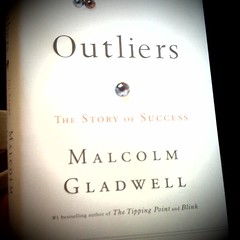
I’ve been thinking about Malcolm Gladwell and the 10,000-hour rule. This is a concept that comes from one of his books, Outliers. Recently, this idea came under fire after an article in Time earlier this year in May. After some time, Gladwell wrote a response (a few days ago) that seems to adequately account for the critiques in the Time article. Nonetheless, it got me thinking about the idea of 10,000 hours and what it represents.

In case you’re not familiar, the 10,000-hour rule is the idea that in order to be “great” at something, one has to put in 10,000 hours of deliberate practice. After the 10,000 hours (approximately), one will likely be at the pinnacle or very near to, of the field. Ten thousand hours.

That’s 20 hours a week for 10 years.

You have to really like something — a lot — or really want to do well at something, in order to remain committed to the goal of becoming an expert. Twenty hours a week. Ten years. Nowadays, people might not even spend that much time at the same job (if we compress it to 40 hours a week and 5 years)!

~

Then I got to thinking about Daniel Day-Lewis. Certainly one of the premier actors of our time. Since 1989, Day-Lewis has appeared in 11 movies. Of those 11 movies, he’s won the Academy Award for Best Actorthree times — making him the only male actor to win the award three times. He was also nominated for Best Actor two other times. So, of the 11 movies he’s been in during the last 20+ years, he’s been up for the award for Best Actor five times. From what I understand, most people are pretty happy to simply have been nominated once, much less 5 times — and then win three times!

Daniel Day-Lewis is certainly someone who is at the top of his field. He has put in the hours and done the work to become one of the best actors.

And then there’s Meryl Streep. She’s received more nominations for Academy Awards (17) and more nominations for Golden Globes (27) than anyone in the history. She’s also won 3 Academy Awards and 8 Golden Globes. Clearly, someone else who is at the top of their field.

But why have I highlighted both performers?

They continue to win awards. Daniel Day-Lewis won his first Academy Award for Best Actor back in 1989. And then again in 2007. Do you think he ‘rested on his laurels?’ No, how else would he have been able to pull off such a convincing Abraham Lincoln in Steven Spielberg’s flick last year. And Meryl Streep won her first Academy Award in 1979. Again, in 1982. She wouldn’t win again until 2011 for her portrayal of Margaret Thatcher in The Iron Lady. Between 1982 and 2011, she was nominated 12 other times. 12!

Both of these performers are stunning examples of the idea that even though you’ve won, even though you’ve made it to the top of your field, that doesn’t mean you can’t still keep working. That doesn’t mean you can’t still keep getting better. Practicing. Perfecting.

If you want to be good at something, really good at something, you’ve got to put in the work even if you think you’ve already made it. If Daniel Day-Lewis and Meryl Streep don’t rest on their laurels, what makes you think you can?

Leonardo da Vinci Thinks You Need a Fresh Perspective

A couple of weeks ago, I shared a photo of a real estate listing in Korea and the story of the blind men and the elephant. These were both meant to emphasize the point that perspective is really important. A few days ago I came across an article from Inc. that continues to strengthen my opinion that being able to assume different perspectives is extremely beneficial.

This particular article had to do with Leonardo da Vinci — a famous polymath from the 15th and 16th centuries. The article was illustrating the different ways that da Vinci could teach the reader about creativity. The lede for this article:

The Italian master had skill and great ideas, but he also had something else: the ability to look at the world around him differently.

Perspective.

Here’s the two “things” that I think highlight this point:

Independent Thinking

Diversity is critical for creativity and innovation, which is why it’s important to seek out points of view different from your own.

“The problem is the more senior someone becomes the more likely they’re going to believe their own publicity and surround themselves with people who always agree with them. So the more senior you become, the more concerted effort you must make to seek out different opinions. Then you have a chance to think independently,” Gelb says.

Make New Connections

Logical and linear-thinking types–engineers, analysts, and scientists, for example–can have a hard time looking for patterns and new connections, but doing so is the key to creativity.

Again, Gelb likes to use mind mapping, although it take a while to train these kinds of folks since they’re used to doing things in a formal order.

“At first it feels very messy… thinking through association and letting the mind go free and generating lots of key words and other images in different directions,” he says.

So, if you won’t take my word that seeing things from a new perspective is important, will you take da Vinci’s word?


Your Beliefs Matter for Others, Too

In reflecting on yesterday’s post, I remembered another anecdote that you may find quite powerful. This comes from a story that a friend of mine who taught high school (not sure if she still does). And the more that I think about yesterday’s post and the post I’m about to write now, yesterday’s matches really well with the the first post I wrote about words being important and today’s matches really well with the second post I wrote about words being important to others.

The story begins with the teacher, let’s call her Laura to make this easier, asking the class to stand in a circle. After the class is standing in the circle, she asks for one volunteer to step into the center of the circle with her. Someone enters the center of the circle — let’s call him John. Now, before I go on, I should say that John was one of the taller people in the class (taller than Laura). These were high school students and some of them had surpassed Laura’s height, which is natural because Laura wasn’t very tall. Alright, so Laura pushes down on John’s arm and nothing happens — obviously. He’s much stronger than her.

Then, Laura asks John to go out into the hallway for a few minutes. After the door is closed, Laura then tells the class what she’s about to do. She also explains that she wants everyone to send/think negative thoughts to John. Thoughts like, “I hate you,” and “You suck,” and lots of other negative things that they can probably imagine because they’re in high school. They’re not to say any of these out loud, though. Once she’s certain everyone gets it, she goes out into the hall to get John.

After John’s back in the circle, she explains to everyone (and John, this time) that she’s going to have John extend his right arm out in front of him. Next, she’s going to ask him to hold it steady (i.e. resist) as she begins to push down on it. What John doesn’t know is that when his arm is extended, the rest of the class will be sending/thinking negative thoughts.

John extends his right arm. The class starts sending negative thoughts. Laura pushes down on John’s arm… it falls like limp spaghetti. The look on John’s face, Laura tells me, is remarkable. He’s astounded that Laura can simply push his arm down with ease. He asks her to do it again — and he tries harder to hold his arm up. The same thing happens.

She thanks John and asks him to go out into the hallway one more time. When he gets there, she then tells the class that she wants everyone to do the opposite this time. She’s going to have John repeat the process, but she wants the class to send/think positive thoughts of John. Things like, “I love you,” and “You’re awesome.”

When John comes back into the circle this time, he’s expecting that Laura will, again, be able to easily push down on his arm. However, when she pushes down — nothing happens. So, Laura then tries using both of her hands to push down. Nothing. John’s arm wouldn’t budge. Again, Laura tells me, John’s reaction is priceless. She thanks John and explains to the class what’s just happened, who by the way, are also pretty shocked to see John’s arm collapse for negative thoughts and hold steady for positive thoughts.

~

The thoughts we think are powerful. This used to be something that was “fringe,” and relegated to certain aisles in the bookstores. When you see publications like Scientific American reviewing studies that confirm things like this, you know that it’s striking a mainstream cord.

If you’re looking for more information about topics like this, I suggest looking for academic studies on the Placebo Effect. It’s quite amazing the kinds of effects that can occur that are attributable simply to the person believing that they’re going to be better.