Who Are The Good Guys? Does It Matter?

Who are the good guys? Who are the bad guys? Do you know? I often don’t. The attribution of good and bad is directly related to the narrative in which you consume. If you consume the narrative of X, then X will be the good guys and Y will be the bad guys. If you consume the narrative of Y, then Y will be the good guys and X will be the bad guys. Some may argue that it’s not as simple as all that, but isn’t it? Isn’t it as simple as someone (friend, parent, or media outlet), telling you that something is happening and how it affects you, enough to shape your opinion even without your knowing?

In doing a quick search of “” on Google, it returns nearly 7,000,000 hits — and that’s with the quotations! This question of “who are the good guys” is not something new. Some search for more ‘trivial’ good guys as in the . Others are looking for more historical accounts of . There are even searches for the (and this was back in 1998)! More recently, it’s been inquiry into the and the . Although, there are still people curious about .

A , infinitely quotable, once said: “” And isn’t that the truth? Once the victors move on from the dispute, don’t they then get to write the “textbooks”? In the past, it would have been the stories they told around the fire, but as humans have grown and evolved to include the written word, what often is passed on from generation to generation is the story as told from the “good guys” perspective. That is, the “good guys” being the ones who won. And isn’t that how it always eventually happens? The “good guys” always seem to win, no matter what.

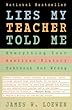
In reading a few history textbooks, I doubt you’ll find stories of the “bad guys” winning. In fact, I doubt you’ll even find many textbooks that offer the perspective of the “bad guys” in much detail, least of all, objectively. The “bad guys” will be painted as “bad guys” who wanted something from the “good guys.” The good guys, being the good guys, of course, triumph! And more history is written where the good guys succeed. There’s a very interesting read on this subject by called: “” I’m not saying that what Loewen has written is the “right” view of history, but it provides a perspective that you may not have otherwise considered.
I wanted to close this post with a couple more quotes. The first, from “:

The history of some is not the history of others. It will be discovered, or at least asserted, that the history of the Saxons after their defeat at the Battle of Hastings is not the same history as the history of the Normans who were the victors in the same battle. It will be learned that one man’s victory is another man’s defeat. . . What looks like right, law, or obligation from the point of view of power looks like the abuse of power, violence, and exaction when it is seen from the viewpoint of the new discourse, just as it does when we go over to the other side. . . the triumph of some means the submission of others.

And finally, a from : “He who controls the present, controls the past. He who controls the past, controls the future.

~

Friggatriskaidekaphobia and Other Quirky Calendar Events

Given the , I thought it would be a good time to do a post on the ‘silliness’ of Friday the 13th. The absurdity of Friday the 13th has always puzzled me. It really is just a day and the only reason that it garners “power” over anything is because of Friday the 13th by perpetuating the myth. The title of this post includes the phobia: friggatriskaidekaphobia. One can ‘learn’ from Wikipedia that this is a compound of , the name of the Norse goddess who gave us the name “Friday,” and , fear of the number 13. I happen to like words, but a word like friggatriskaidekaphobia — when, outside of days like today, would you use that? Maybe more importantly, who would use that word? Maybe psychiatrists or psychologists?

Some people like to say that Friday the 13th doesn’t occur very often, so that’s what makes it special. Really? Over the next three years (up to and including 2015), there will be 9 Friday the 13th’s. In fact, of the days of the week that could happen to be the 13th, . Meaning, Friday the 13th happens more than (Monday the 13th, Tuesday the 13th, Wednesday the 13th, etc.)

There is no clear evidence as to exactly where the myth of Friday the 13th started. Some say it started with the (which happened on Friday the 13th).  Others of a Norse myth of a 13th dinner party guest arriving and causing havoc and a similar event occurring as cited in the Bible. The fact that this myth has no definite traceable history further convinces me that “” in it causes it to continue.

One more note about the 13th comes to us from Spanish-speaking countries who believe that it is that needs to be feared. This all stems from the fact that Martes is the Spanish word for Tuesday and the word Martes is derived from Mars, the Roman God of war.

And war, accordingly, signifies death.

Other Calendar Quirks

In July of 2011, there will be 5 Fridays, 5 Saturdays, and 5 Sundays? Bring on the parties during those weekends, right? More importantly, ! Buyer beware, huh?

Did you know that this (2011) December, there will be 5 Thursdays, 5 Fridays, and 5 Saturdays?

Or, how about in 2012, there will be 3 Friday the 13th’s?

This coming Monday (the 16th), is !

and *gasp* the Roman numerals signifying the year will be MMXX.

, Canadians [if they’re still called that] in Toronto [if it’s still called that] will open a time capsule that was buried in 1997.

, unless there is to the religious calendar, Easter will be on March 22 for the first time since 1818. This is also the earliest possible day that Easter can occur.

And my personal favorite: the aptly named Longplayer, that started on January 1st, 2000 and will end on December 31st, 2999. From :

“Longplayer” is based on an existing piece of music, 20 minutes and 20 seconds in length, which is processed by computer using a simple algorithm. This gives a large number of variations, which, when played consecutively, gives a total runtime of 1000 years. It uses Tibetan singing bowls and gongs, , which are able to create a range of sounds by either striking or rolling pieces of wood around the rims. This source music was recorded in December 1999.

To Boldly Go Where No One Has Gone Before…

spaceship, space shuttle, discovery, hubble telescope, outer space, planet, satellite, Every so often, there will be an old episode of Star Trek (The Next Generation) on and I can’t help, but sit and watch. The show, in my opinion, was one of the better shows of its time and even to this day, lives on. There’s something about the show that isn’t really dated. Well, if you ignore the “graphics,” the show could just have easily run in the mid-2000’s (while it actually ran from the late-80’s through the early-90’s.

Let’s take a step back into history (but not so far back as to invoke a debate of evolution and creationism). Humans on the planet started somewhere. Let’s call this somewhere land F. From land F, these humans began to explore outward. They began to explore the lands of neighboring E and G. So, where there were humans in only land F, now there were humans in E, F, and G. This continued until humans had explored all the land that they could by foot. Then, being an infinitely curious species by nature, humans built vessels by which to explore the seas. Soon, humans had explored every piece of land and every inch of sea on the planet.

Cave man, cave men, scientific american, rhino, hunter, gatherer, forage, food, earth, walk, What was next? Well, obviously, the sky. Humans sent probes out into the sky. Once they figured out a way to get a human up into the sky, they did that, too. Humans have been exploring the limits of their existence for as long as there have been humans. Something I find a little strange — how come we haven’t “conquered” space, yet? Or do we think that we already have?

It would seem that we have grown, exponentially, in our ability to explore. With the whole walking across the land-thing, that took awhile. Then, the boats. Then, the planes. If you look at the dates for which these sorts of things have been discovered/invented, it would seem that we’d be due to figure out how to pilot a plane across the galaxy. And then I take a step back and read some of the headlines…

And then it makes sense.

Instead of using our abilities to create, instead of peacefully cooperating with each other, we, where we is us as a species, would rather get into various brouhahas. This is troubling. Open any newspaper and I challenge you to not find something about political unrest somewhere in the world. How the heck are we supposed to come together as a species, come together and represent the Earth, when we can’t get a long?

Some people believe (and some people don’t believe) that there are other species on other planets. Forget for a second which side of this debate you fall on and just consider that there are. astral connections: In the year 2424 man has no need for bodies nor gasoline stations but energy will still be needed for travel amongst the stars. Here the energy nozzles at an astral enery station await the space orbs to energize them.Consider that there are a species of intelligent beings out there who can look in on what’s happening in our world and see what we’re doing. Given that they are able to see what we are doing, there’s a good chance that their technology is far superior to ours. Do you think… as they watch us fight with each other constantly… do you think that they would want to help us out? Meaning, do you think that that they would willingly give us superior technology to help us send our people out beyond the galaxy? The answer is no. No, they wouldn’t. Because if they did, they know that our planet, or at least the majority of our species, would disappear in about 3 days. Humans with superior technology is not safe. Humans need to learn compassion. Humans need to learn empathy. Humans need to learn that killing each other is not a sanctionable act.

I hope that in my lifetime, if there are intelligent beings on other planets, we get to meet them.

What Will They Think Of Us?

I don’t really remember much of the history I was taught in grade school or high school for that matter. Having been raised in the , I was taught a lot about the history of Canada. From what I remember, there was something about and , and that’s about all I can remember. Oh, one more thing. I remember one of my 8th grade teachers being really passionate about . Some may think less of me for not knowing the history of one of the countries I am a citizen in (and more importantly, grew up in), and to some degree they may be right.

During my undergrad, I took one in history that was called, “.” So, for 16 weeks, 3 hours a week, we covered everything that happened in the world up to the year 1500. Needless to say, I’m sure some things were brushed over. I do, however, remember talking about , , and . I remember covering the , the various kings, and even the . As a class, we really went through the material quite quickly and out of necessity. I wonder what future generations, say, 9 or 10 generations from now, will be studying when they look back on our time?

Will the scold us for being too concerned with our technology? Will they look back and laugh because we killed each other because we wanted money? How about if we killed because we looked different from each other? Will they wonder how we ever lasted so long working 40+ hour work weeks? Will they laugh at the idea of a “work week”? Will they be confused as to why we didn’t treat each other as equals? Will they be confused at how we live with nature? Will they look at our relationship to nature and wonder how we were ever able to get nutritious food from the Earth? Will they read with terror about how we didn’t treat the Earth (read: ) with more care? Will they wonder if we really knew what we were doing this whole time? Will they think we were “that” generation?

I didn’t realize the value of a survey course until long after I had taken it. The very definition of a survey course is that you’re getting a brief overview of a lot of material. I think it is important to have this overview of information to be able to make better decisions about things. Having an overview affords one the ability to better recognize how things interact with each other. For instance, one example from this could be the drive to make more money causes the 40+ hour workweek to be not only pushed from bosses, but welcomed by employees (as they can make more money).

As I remember back to these times I’ve had thinking about history, I wonder what future generations will think of us. How will we fit into the bigger picture of history? Will we be viewed favorably? Will we look foolish? Will we be commended as the generation that ended hunger? What about as the generation that ended war? How about the generation that in one felt swoop, lifted every man, woman, or child, out of poverty, and into a state of abundance? I believe that we can do this. I believe that we have the power and we have the technology.

Given that we have the ability to solve so many of the world’s problems — I wonder what they will think of us… if we don’t.

Earth Day is Every Day

Forty some odd years ago, United States Senator from Wisconsin, called for an environmental to be held on April 22nd, 1970. During that year, over 20 million people participated. Many great things happen each year on Earth Day, most of which all have to do with the Earth in some way. It is estimated that over . I think it’s great that we have a ‘day’ dedicated to the Earth, but shouldn’t everyday be Earth Day?

In doing some research for this post, I found something rather interesting that speaks to humans being . When Earth Day was first organized in 1970, it coincided with the centenary of , who established the world’s first officially socialist state. In some of the news reports after the event, Time has a quote from a delegate from Mississippi of the Daughters of the American Revolution: “” How off-the-wall is that? “…Live in an environment that is good for them…” Oh, the humanity, right? It just goes to show that people searching for a conspiracy will always find a conspiracy.

Given that it was Earth Day, I decided to go and take the to see what my carbon footprint was like. I remember doing this several years ago in a globalization class I took during my time as an undergraduate. I was a little disappointed to see that the number of Earths it takes to live my lifestyle has gone up (even slightly) and I would rate myself on the low-end of most Americans, in part, because I live in Hawaii.

When was the last time you ? I haven’t planted a tree since I was in grade school and that’s a little embarrassing coming from someone who prides himself on “loving” the Earth. If you haven’t planted a tree, have you done something else for the Earth today? When I used to live in a city, I would often pick up trash that I saw circling the streets. I know, it’s not much, but it was my way of contributing to the health of the planet. More than that, if I saw something that was recyclable on the top of the garbage pile, I would pick it up and place it into the proper bin, (which was usually a few steps away). I’m reminded of a scene in the movie Independence Day near the beginning of the film where one of the protagonists is an environmental buff who keeps finding one of his co-worker’s coke cans in the garbage when the recycling bin was a few steps away.

Today’s post has been a bit of a potpourri of thoughts about Earth Day. I wanted to end this post with a “hat tip” of sorts to a quote that I always remember when someone tells me that “today is Earth Day.” To my knowledge, every day is Earth Day. We just happen to celebrate it this one day out of the year. I think it’s great that there is a whole day dedicated to the Earth, (there’s also , and a whole , too), but I really think we need to remember that we should “celebrate” Earth Day every day. Buy the product that has “greener” packaging; pick-up a product that is healthier for the environment; hang dry your clothes; take the bus; walk; use the dishwasher; recycle; reuse! There are so many things we can do, every day, to ‘befriend’ the earth.

Revolution, Revolution, Everywhere!

I recently was lucky enough to bear witness to what is likely to win a number of awards at this year’s Oscars — . While the writers of the film did their best to maintain , of course, some dramatic liberties were taken. Nonetheless, I thought it was a rather smart movie and really allowed the audience to peer behind the curtains of what it was like for King George VI in the earlier part of the 1900s.

One of the things that surprised me in the film was when one of the character’s pointed out that if England were to go to war with Germany, it would mark the second world war that some of the citizens of the country would have witnessed. I can’t imagine being alive at a time such that I would have been able to see not just one world war, but two! Regardless, it reminded me that the state of our world is still not quite where I’d like it to be — peacefully — that is.

I suppose that with each passing day, something is learned, or at least I hope that’s the case. Why else would we be seeing the that we are seeing in Egypt and Tunisia? And now, countries like Bahrain and Libya are seeing what happened in nearby countries and want to stand up and be heard. I think it’s great that we are living in a time where the actions of one group in one country can affect the actions of another group in another country — instantaneously!

Without the internet and the speed at which news can travel in our modern time, I doubt that Egypt (or even Tunisia?) has the success that it did in the peaceful demonstrations. The miracle that is the internet is allowing to succeed without literal “close contact” and instead, it is close contact through social media. Things are happening really fast nowadays, wouldn’t you say?

It was only just about a month ago that the riots started happening in Tunisia. Since then, we’ve already had reform in Tunisia and an uprising and reform in Egypt. As mentioned earlier, now countries like Bahrain and Libya seem to be joining the fray as candidates for reform (although the governments of these countries, and , might not go down without a fight).

So adults living at the time of King George VI got to say, although probably not felt as a privilege, that they witnessed their country enter into two world wars. Adults living today get to say that they’ve been able to watch the fall of two governments in just under a month with the prospect of others to follow. The year 2011 is still quite green… I wonder what else oh-eleven will bring us.

News Today — Gone Tomorrow

With the , it has made me stop and think about what’s going on in the world today. I’m not well steeped in history nor am I particularly interested in knowing who did what to whom and when. However, I do find it interesting to reflect back on some of the more important events in history. The is a rather important part of US history and human history. I would also say that the was pretty important, too.

My interest lies in how these events are viewed well after the fact. People still learn about the civil rights movement in school and they also still learn about the JFK assassination, I’m sure. I don’t know, however, if they learn about some of the other perspectives of these major events. Not that I’m advocating one side over the other, but I think it’d be interesting to be teaching children not just about the civil rights movement, but about those who opposed it and more importantly, why they opposed it. I think it is important to learn about the differences of opinion.

How come? Simply because it seems to me that many of the issues that are present in the world today are not brand new issues. I won’t begin to pretend that I completely understand what is going on in Egypt and anyone who tells you they do is probably lying, but it seems that there’s this age-old archetype playing out where one side is not playing fairly with the other side where the sides are reflected in pro-Mubarak and pro-reformers.

It doesn’t seem like we’ve come to understand that living on this planet needn’t be a competition for the natural resources. My point is that this is not a new issue. This is something that our ancestors have been playing out for centuries through wars, invasions, and raids. I am not condemning war nor am I condoning it — merely taking a closer look at some of the reasons it seems to happen.

With the speed of our evolving world increasing at an alarming rate, it’s not clear to me just how this situation in Egypt will play out and more importantly — how it will affect other countries. Some would say that what is happening in Egypt is a result of . I’m more inclined to see happenings in the world as correlational rather than cause-and-effect. Who knows: maybe the movement in Tunisia spawned the movement in Egypt. I wonder, though, what will be spawned as a result of the movement in Egypt. Will it be more sparring and jockeying for position? Will a calmness overlay? Something tells me that situations like these usually get worse before they get better.

Martin Luther King, Jr. Day: Celebration in the Present Moment

Today, in the US, is . While it was originally an American holiday, the day is observed outside of the US, one of those places being . Having grown up in Canada, I did not hear much about MLK Day in school. The schools in the Toronto area now, I’m sure, are much more likely to be telling their students about MLK Day when it rolls around each January, but that wasn’t the case when I was growing up. While attending university at SVSU, MLK Day was quite a hot topic, especially around this time of year. At the time I attended SVSU, MLK Day was not a holiday where the school was closed. The argument against closing the school for the day was that students would not take the time for learning or for reminiscing, to which the counter-argument would be, do students do that for any holiday?

Something that may get lost in all of the to-ing and fro-ing in the argument about MLK Day and whether or not it should be a holiday is the real impact that MLK had on the course of history. I was reading on this morning, the person behind , about MLK’s first endeavor into service. I wonder what his life would have looked like had he not decided to get involved with the bus boycott. Maybe he still finds his way into the and makes a difference. Maybe he still gives the speech. Who knows. It is really hard to reflect on different timelines of how history could have played out because those timelines don’t exist.

It seems almost a futile enterprise to think about how something could have happened differently and yet, millions of people around the world spend the bulk of their day wishing they had done something differently. I submit, I think that in some fields and some businesses, it’s important to reflect back on how things happened, so that the same ‘mistakes’ aren’t made and things can be done differently. While that’s all well and good, I wonder if as a species, we spend too much time focused on what has happened instead of what is happening. would tell us that ‘there is only the present moment.’

I wonder where the line is drawn? Sometimes, reflecting back on past experiences can be inspirational. Maybe you had to overcome major adversity in your life and that memory is helping you in the present. Depending on one’s philosophical viewpoint, it can be altogether difficult to reconcile the differences. Regardless, I will be spending at least one of my ‘present moments’ celebrating the life of Martin Luther King, Jr.

Copyright & Disclaimer

Copyright © 2009 All Rights Reserved

For copyright purposes,  the blog of “Jeremiah Stanghini” is not in the public domain. The fact that an RSS feed is published does not grant any rights for republication or re-use of the material except in the manner described below.

All content in this blog created by the blog owner and his guest authors is the property of the blog owner and his guest authors and protected by U.S. and international copyright laws and cannot be stored on any retrieval system, reproduced, reposted, displayed, modified or transmitted in any form, electronic or otherwise without written permission of the copyright owner except as noted below.

A brief excerpt of content that does not exceed 50 words may be quoted as long as a link is provided back to the source page on this blog and authorship is properly attributed.

Disclaimer


I am the creator of this blog and my perspective of five years or five minutes ago do not necessarily reflect my views right now. My thoughts, opinions, and viewpoints will change as I learn, grow, and develop my understanding of the world. Therefore, I reserve the right to allow my viewpoints to evolve and to change my thoughts, viewpoints and opinions over time without assigning any reason for such changes. Additionally, the views expressed herein do not necessarily reflect the views of any of my employer(s) past, present, or future.

My quotations within this blog are intended to be used under a policy of personal use. The use of any Trademark or Copyrighted material is not intended to infringe copyright. If you see anything on this blog that has not been properly attributed to its creator please and I will rectify it.

All material on this website is posted in accordance with the limitations set forward by the Digital Millennium Copyright Act (DMCA). If a documented copyright owner so requests, their material will be removed from published display, although the Author reserves the right to provide linkage to that material or to a source for that material.

Fair Use Notice


This website may at times present copyrighted material, the use of which might not always been specifically authorized by the copyright owner. Such material is made available in an effort to advance understandings of democratic, economic, environmental, human rights, political, scientific, and social justice issues, among others. The author believes that this constitutes a “fair use” of any such copyrighted material as provided for in section 107 of the U. S. Copyright Law. In accordance with Title 17 U.S.C. Section 107, the articles published on this website are distributed without profit for research and educational purposes.

Note: Every effort is made to find and use images that are licensed under Creative Commons.

Comment Policy

A blog is like a community. In this community of Jeremiah’s Blog, I feel it is important that all who contribute to this community feel safe in doing so. Your comments are absolutely valued and that is why after every post, there is a comment box provided, so that you can share your point of view with the blogger and fellow readers. In this community, we encourage you to add to the discussion, and as long as you do not violate the terms of these “Commenting Policies,”  we will be hono[u]red to approve and post your comments.

1.   Authorship: The blog owner, administrator, contributor, editor, and/or author acknowledge that all comments submitted are the views of their author and, expect readers to appreciate that posting of them does not imply agreement with their contents.

2.   Privacy: A person commenting may choose to use either their  name or an alias. Valid email addresses are required but will not be posted and/or disclosed to others. Valid URLs to active blogs and/or websites belonging to the commenter are also required and the username (real name or alias) will be linked to them. (See 4. for the exceptions.)

3.   Moderation: To make sure that nothing distasteful such as, but not limited to, obscene language and spam is automatically posted to the blog, all comments are moderated.

4.   Link limit: This blog will automatically hold any blog comment with more than two links in the moderation queue. Any blog comment with more than two links may be marked as comment spam and deleted.

  • All links will be reviewed.
  • Including a link to your “personal” ie.  non-commercial  blog and/or website is acceptable (all usernames are linked) but all links are subject to review and may be removed.
  • We do not approve and post comments from those who use ‘keywords’ (words or phrases they want to rank in search engines for) as their username.

5.   What To Do If Your Comment Does Not Appear:

  • We do not approve and post comments which seem to be primarily made as advertising and promotion of the commenter’s site.
  • We  do not approve and post comments which seem to be primarily made as advertising for a commercial product or service.

If you leave a comment on this blog that does not appear within a reasonable time period, and you know that it does not violate any terms in these Comment Policies, then please .

6.   Comment editing: If you wish to correct typos or spelling errors in a comment submitted , they will be edited accordingly. All other editing requests will be dealt with on a one-by-one basis.

7.   Personal attacks: Comments that stray from addressing the published topic and venture into the inflammatory and/or defamatory realm will not be posted.

8.   All Rights Reserved: The blog owner, administrator, contributor, editor, and/or author reserve the right to edit, delete, move, or mark as spam any and all comments and reserve all rights of refusal and deletion of any and all trackbacks. They also reserve the right to block access to any individual or group from commenting or from the entire blog.

Comment policy credit: TimeThief