Twitter: Who I’m Following, Part 5

It’s been almost 3 months since I last updated the list of people I’m following on Twitter. I thought today might be a good time to begin to update that list. In case you missed the earlier posts:


So, without further adieu, here are the people I have followed since my last post.

: Rogin covers national security and foreign policy for . He often tweets his column and other things that come up in the news that have to do with national security or foreign policy.

: Melissa Harris-Perry is a professor of political science at . She guest hosts for and from time-to-time. She’s also writes for .

: Dylan Ratigan is the host of . He also, somewhat famously, about the political system in the US.

: has high praise for Milne. In her book , she said that Milne turned ‘s comment section into a “truly global debating forum.”

: He hosts a progressive radio show that has nearly 3 million listeners a week. Interesting to me, before being a nationally syndicated radio host, he was a psychotherapist.

: He served in the and as the in the . Currently, he’s a professor at .

: In 2000, Donna Brazile became the first African-American woman to lead a presidential campaign (Gore). She’s currently a professor at .

: Politifact is a project , “fact-check statements by members of Congress, the White House, lobbyists, and interest groups.” This is very helpful in judging the validity (or truth) of some of the things said by people involved in politics.

: “The National Debt Clock ran out of digits so start following the debt daily on Twitter. (+) or (-) means up or down from previous day’s debt total.”

: This is the Twitter feed for the popular TV series, The Big Bang Theory. I rather enjoy the characters and so too, does .

: I’m currently (2011-2013) a graduate student at George Mason University in the School of Management (). This is the twitter feed for Mason’s school of management.

: Nick Kristof is a two-time Pulitzer Prize winning columnist for the New York Times. He’s “bringing to light human rights abuses in Asia and Africa.”

: Wolf Blitzer is CNN’s lead political anchor and is often seen as the host of CNN’s , which, , airs from 4pm to 6pm weeknights on CNN.

: Scahill is the national security correspondent for . He also wrote

: Gergen is a Senior Political Analyst for CNN. He’s also the Director for Public Leadership and a Professor of Public Service at the Harvard Kennedy School.

: Revkin writes the blog for the New York Times. “Dot Earth tracks relevant developments from suburbia to Siberia.

: Robinson is a Pulitzer Prize winning columnist for the Washington Post. He’s also an MSNBC analyst and author.

: David Axelrod was the chief strategist for Barack Obama’s 2008 presidential campaign. Afterwards, he remained a senior advisor to President Obama.

: “The Charter for Compassion is the result of Karen Armstrong’s 2008 TED Prize wish.” Check out the video of the .

: I’m sure you recognize the name (Lady Gaga). I decided to follow (and subsequently look into her message) when I first clicked onto her twitter profile and found that she was quoting .

: President Bartlet is the from the television series: . Whomever tweets from this account captures the essence of how President Bartlet would tweet, in my opinion.

: Nassim Haramein is one of the smartest people I’ve ever met. I highly recommend checking out his work. You can start with his , but if you can, I’d get a copy of “.”

: Chris Cillizza writes for and is a contributor to MSNBC. He often live-tweets the debates or other important political events.

: Chris Rock is one of my favorite comedians, especially when he does bits like that speak to the dysfunctional nature of some of the things in this world.

: I was first introduced to John Legend’s music during my undergraduate degree. I can be quite particular about the music I listen to, but for the most part, I like Legend.

: Neil deGrasse Tyson is one of the more accessible scientists of today. He has made many appearances on talk shows () and even a guest spot on “.”

: My first introduction to Billy Crystal was in the movie A great movie, indeed. Interesting fact: Billy Crystal has hosted the (currently 8, soon to be 9, which is well behind Bob Hope with 18).

: The have made some hilarious movies through the years (written and/or directed). I wonder if  (movie) will prove to be as successful.

: This twitter account focuses on tweeting infographics, particularly those from their , which is a collection of the best infographics from around the web.

: Hill Harper is best known for playing a , but I initially followed him because of his inclination to empowering tweets.

~

I’m nearing my self-imposed word limit of (1000 words), so I’ll end this post for now. It’s worth noting that I’ve gone through and “purged” some of the accounts I’ve followed in the past (including some of the accounts in this post) and subsequently, added a slew of new accounts. Look for some of them in Part 6 of this series. And as always, if you have suggestions, leave a comment, send me an email, or tweet me.

Want an Idea of What Really Happened During the Financial Crisis: Watch “Margin Call”

At the , an independent film by the name of made its debut. It was released in theatres a couple of weeks ago, while simultaneously being released on and . Meaning, instead of having to drive out to the theatre, you could watch the movie from the comfort of your comfortable couch. I had seen a few bits about the movie in the news that piqued my curiosity, so I took the time to watch it. I was pleasantly (or maybe unpleasantly?) surprised.

The film covers the actions of an investment bank over a 24-hour period. It focuses on the events leading up the . In essence, the movie is one possibility for some of the events that precipitated the crisis. I want to make it clear that I am not saying that the events from Margin Call are what happened, but I think it presents a perspective that hadn’t been adequately articulated in any of the other articles, books, or movies that I’d seen on the subject.

I’ve written about economics here before (most notably in the series), but after nearing completion of a course through business school, I have a different perspective on the economy. Maybe more importantly, I have a more nuanced understanding of why things happen the way they do in the economy. Pairing that with some of the things I’ve read/heard outside of business school make for an interesting take on the state of the global economy.

There are a couple of lines from the movie that I think are worth noting. This first bit of lines is between two of the firm’s employees. One of them is relatively low in the firm and one is somewhere near the middle to top. The conversation takes place (towards the end of the film) as the two of them are headed back to the office a couple of hours before they are about to sell as much of the firm’s holdings as they possibly can:

“If you really wanna do this with your life, you have to believe you’re necessary, and you are. People wanna live like this in their cars and their big houses that they can’t even pay for — then you’re necessary. The only reason that they all get to continue living like kings is because we’ve got our fingers on the scales in their favor. I take my hand  off, and then the whole world gets really fair really quickly and nobody actually wants that. They say they do but they don’t. They want what we have to give them, but they also wanna, ya know, play innocent and pretend like they have no idea where it came from. Well that’s more hypocrisy than I’m willing to swallow.”

The next scene I wanted to highlight is right near the end of the film. The CEO is having a bite to eat in the restaurant on one of the . The Director of Trading walks in and a conversation ensues. In particular, there’s a monologue by the CEO:

“When did you start feeling so sorry for yourself? It’s unbearable. What, so you think we might’ve put a few people out of business today? That it’s all for nought? You’ve been doing this everyday for almost 40 years, Sam. And if this is all for nought, so is everything out there.

It’s just money. It’s made up. Pieces of paper with pictures on it so we don’t have to kill each other just to get something to eat. It’s not wrong. And it’s certainly no different today than it’s ever been. 1637, 1797, 1819, 37, 57, 84, 1901, 07, 29, 1937, 1974, 1987, 92, 97, 2000 and whatever we want to call this. It’s all just the same thing over and over. We can’t help ourselves. And you and I can’t, control it or, stop it, or even slow it. Or even ever so slightly alter it. We just react.

We make a lot of money if we get it right. We get left by the side of the road if we get it wrong.  And there’ve always been and there always will be the same percentage of winners and losers. Happy farts and sad sacks.  Fat cats and starving dogs in this world. Yeah. There may be more of us today than there’ve ever been, but the percentages, they stay exactly the same.”

As I said, this is only one perspective on what happened, but I found it quite interesting to see a depiction of what it might have been like to be on the inside of a firm grappling with what to do prior to the financial collapse. I hope you take the time to check out this movie.

The Unending Wisdom of TEDTalks

For quite some time now, I’ve been accumulating a list of TEDTalks that I wanted to do posts about. Unfortunately, I think the list is growing “out of control.” As such, I thought I would just do a catch-all post to cover some of the more under-discussed TEDTalks. If you’re unfamiliar with TEDTalks, I highly recommend checking out the list of the . There are some really good topics there. In previous , I have discussed other TEDTalks (), and I’m likely to talk about them again in the future. Without further adieu, here are some of the TEDTalks that I think are worth a gander:

– This one was recommended to me by a good friend of mine, likely because of my inclination for a positive disposition about life. There were some interesting statistics about smiling (and health). I highly recommend this to anyone, but especially to those who would rather be gloomy.

– This is a talk I learned of by following the . It was given by one of the passengers on-board the infamous  (the one that landed in the Hudson). Not only was this passenger on-board, he had a front row seat to what was going on as he was in seat 1A. I very much enjoyed his talk. I think my favorite line from his talk: “I’m a collector of bad wines.” If you don’t quite get what he means by this, I’d watch the video.

– As the top comment on the video laments: “Why doesn’t this have more views than Lady Gaga?” Given that there are many ways of learning, I think it’s important that data be represented in many fashions. Rolling has, really, made data interesting (to those who would have otherwise not thought so) and even for those who think that numbers are interesting all by themselves. In an updating post about who I’m following on Twitter, you’ll notice a number of additions of people who are focused on transforming data in chart/graph/etc. form.

– I think I was watching  one night and one of his guests was Salman Khan. I was amazed by what this one guy had put together from simply starting with the intention to help his cousins with mathematics. There are now thousands and thousands of videos teaching students around the world about a range of subjects from the French Revolution to calculus.

– I just had to include this follow-up to one of the . I must say, I am surprised that this video has only garnered about a quarter million views in a year’s time, while his first TEDTalk has more than 2.5 million views.

– Somewhere along the way, I developed an affinity for the brain and brain science (or neuroscience). Things that have to do with the brain fascinate me. Maybe it’s the trillions of intricacies to the brain (I’m a , remember?) In this video, Limb shows the neuroscience behind creativity.

– I’m not necessarily endorsing WikiLeaks (one way or the other), but I believe it can be useful to seek to understand the viewpoint or reasons why someone does something.

– With a title like this, how could I not include this in a list of TEDTalks to watch? I’m in favor of most things that seek to unify the world in peace. In this video, Hunter explains how he attempts to get his 4th-graders to solve the problems of the world. I think this is superbly brilliant! Most of the time, children haven’t been socialized into ways of thinking that can become rigid. It’s useful to allow them to use their unencumbered imagination to work through some of these complicated issues.

There are many more TEDTalks that are worth talking about (both under-viewed and adequately viewed). I invite you to share with us some of your favorite TEDTalks in the comments section.

The Best Piece of Advice: We’ll See…

One of the best pieces of advice I’ve ever come across is one with regard to . I’ve written about perspective and having a in posts before, but I think that this particular post, or more accurately, the content of this post, is the best summary of my “perspective” when it comes to perspective.

The I’m quoting this from says the story is Taoist, but I’ve heard other people say it’s from different traditions:

[There was] an old farmer who had worked his crops for many years. One day his horse ran away. Upon hearing the news, his neighbors came to visit.

“Such bad luck,” they said sympathetically.

“We’ll see,” the farmer replied.

The next morning the horse returned, bringing with it three other wild horses.

“How wonderful,” the neighbors exclaimed.

“We’ll see,” replied the old man.

The following day, his son tried to ride one of the untamed horses, was thrown, and broke his leg. The neighbors again came to offer their sympathy on his misfortune.

“We’ll see,” answered the farmer.

The day after, military officials came to the village to draft young men into the army. Seeing that the son’s leg was broken, they passed him by. The neighbors congratulated the farmer on how well things had turned out.

“We’ll see” said the farmer.

This kind of story could keep going on and on and on — and it has relevance to every subject (you’ll notice that I’ve placed it in every category that I currently have for the posts I write). While there are some things that I categorically disagree with (the death penalty being one), I could see this story or as the answer to many hardships in people’s lives. Having lived through *some* hardships so far, I can understand how hearing these words are not necessarily comforting with regard to certain instances, but well after the fact (in my experience), the perspective created by these words can illuminate some unexpected insights.

~

I thought I’d present some examples from the news where we could apply this wisdom:

– Many Toronto Blue Jays’ fans are pleased (myself included) that they acquired Colby Rasmus (via trade). He may turn out to be a great player for the Jays, or he may not. We’ll see.

– Most economists (and people) following the “” will tell you that the US needs to raise its debt ceiling or there will be ramifications of epic proportions. Most of what I’ve heard/read on the issue seems to be a whole lot of politicking. If the US defaults on its loans will that be the worst thing in the world? If the US averts this “disaster,” will that be a good thing? We’ll see. (This particular We’ll See might not have a concrete answer for another 30 years).

– As Borders’ stores continue to close their doors for the final time, many speculate on what this may mean for other businesses similar to Borders. The outlook isn’t usually positive, but maybe this will free up time for other endeavors. We’ll see.

– (An odd bit of news, to say the least). This particular example is quite similar to the farmer’s son falling off the horse and breaking his leg. While I don’t expect Alex Trebek to be drafted to the military, who knows what this injury will do for his “perspective” on life. And the answer is: We’ll see.

As you can see, these “three” words can apply to pretty much anything you can come up with. I’d like to invite you to share with us in the comments some situations that you initially thought were poor (or great) that turned out to be great (or not so great) with us in the comments section.

For the folks who are visual learners:

What’s On My iPod: Songs From A Road Trip, LA to DC, Part 1

I’ve been away from writing posts for a while (my last post of quotes was on ) because I’ve been driving across the country (well, countries). I spent the last part of June and the beginning of July driving from . It’s not an easy trip, especially if you’re driving by yourself. A few years ago, I had driven from (with an indirect route that went from Colorado to New Mexico and then across), (again, by myself), so I was prepared for a long haul. On my first trip (Detroit to San Francisco), I didn’t have an iPod or any kind of mp3-player. This time around, I had an iPod and I made good use of it — kind of.

In preparation for the trip, I combed iTunes for songs that I would want to listen to on this trip from Long Beach to DC. When I was a teenager, I really liked to belt out tunes — were fun to sing. However, much of the rock ballads that I would sing as a teenager (and much of the rock ballads that have been written), from my perspective, are a bit unhealthy (to sing as someone other than the actual singer). Much of the language used in songs is not something that you really want to affirm for yourselves. As we learned earlier, our words and . So, I had to find songs (for the most part), that I wanted to “sing” and “affirm” the meaning of. This really narrowed my search and because of it, I made some exceptions.

Below, you’ll find two lists. One list is of the songs that I actually ended up listening to. The other is a list of songs that I had downloaded and added to the iPod, but just didn’t feel “in the mood” to listen to.

Did Listen To

Aerosmith – Dream On
The Beatles – Because
. . . – Eight Days a Week
. . . – I Saw Her Standing There
. . . – I Want To Hold Your Hand
. . . – All You Need Is Love
. . . – Hello Goodbye
. . . – We Can Work It Out
. . . – All My Loving
. . . – And I Love Her
. . . – Can’t Buy Me Love
. . . – I Should Have Known Better
. . . – Help!
. . . – Girl
. . . – Across The Universe
. . . – Strawberry Fields Forever
. . . – Lucy In The Sky With Diamonds
. . . – Penny Lane
. . . – I Feel Fine
. . . – Yellow Submarine
. . . – In My Life
. . . – With A Little Help From My Friends
. . . – While My Guitar Gently Weeps
. . . – Hey Jude
. . . – Something
. . . – Come Together
. . . – If I Fell In Love With You
. . . – Let It Be
. . . – Blackbird
. . . – From Me To You
. . . – Get Back
. . . – Here Comes The Sun
. . . – Love Me Do
. . . – Revolution
. . . – She Loves You
. . . – Stand By Me
. . . – There Are Places I Remember
. . . – Ticket To Ride
. . . – Yesterday
Bill Withers – Lean On Me
Billy Joel – For The Longest Time
. . . – Just The Way You Are
. . . – Piano Man
. . . – She’s Always A Woman
Boston – More Than A Feeling
Bryan Adams – Have You Ever Really Loved A Woman?
Bryan Adams – Everything I Do, I Do It For You
Colbie Caillat – Fallin’ For You
. . . – I Never Told You
. . . – Bubbly
. . . – The Little Things
. . . – Realize
Corinne Bailey Rae – Like A Star
. . . –  Put Your Records On
Elton John – Goodbye Yellow Brick Road
. . . – Circle of Life
. . . – Can You Feel The Love Tonight?
. . . – Don’t Let The Sun Go Down On Me
. . . – Something About The Way You Look Tonight
. . . – Tiny Dancer
. . . – Your Song
Eric Clapton – Layla
. . . – Change The World
. . . – Tears In Heaven
. . . – Wonderful Tonight
Jack Johnson – Better Together
. . . – Banana Pancakes
. . . – Belle
. . . – If I Had Eyes
. . . – Do You Remember
John Legend – Everybody Knows
. . . – If You’re Out There
. . . – Ordinary People
. . . – Stay With You
. . . – So High
. . . – Save Room
. . . –  Each Day Gets Better
. . . – P.D.A. (We Just Don’t Care)
. . . – Again
. . . – Heaven
John Lennon – Give Peace A Chance
. . . – Imagine
Journey – Open Arms
. . . – Faithfully
. . . – Don’t Stop Believin’
. . . – Lights
Led Zeppelin – Stairway To Heaven
. . . – Black Dog
. . . – Kashmir
Tracy Chapman – Fast Car
Usher – Nice And Slow
. . . – U Got It Bad
. . . – How Do I Say
Whitney Houston – The Greatest Love of All

Did Not Listen To

Andrea Bocelli – Ave Maria
. . . – Time To Say Goodbye
Bach – Air On A G String
. . . – Prelude
The Beach Boys – Kokomo
. . . – Wouldn’t It Be Nice
. . . – Good Vibrations
Beethoven – Fur Elise
. . . –  Moonlight Sonata
Bob Marley – Get Up Stand Up
. . . – Stir It Up
. . . – Exodus
. . . – Waiting In Vain
. . . – No Woman No Cry
. . . – Could You Be Loved
. . . –  Is This Love
. . . – Jammin’
. . . – One Love
. . . – Redemption Song
. . . – Three Little Birds
Bobby McFerrin – Don’t Worry, Be Happy
Boyz II Men – A Song For Mama
. . . – In The Still Of The Night
. . . – It’s So Hard To Say Goodbye (To Yesterday)
. . . – Just My Imagination (Running Away With Me)
. . . – I’ll Make Love To You
. . . – The Color Of Love
. . . – On Bended Knee
. . . – Silent Night
. . . – One Sweet Day
Coldplay – Yellow
Creed – Higher
. . . – With Arms Wide Open
Debussy – Clair De Lune
Green Day – Good Riddance (Time Of Your Life)
Kelly Clarkson – A Moment Like This
Michael Jackson – Heal The World
. . . – The Way You Make Me Feel
. . . – We Are The World
. . . – You Are Not Alone
Natasha Bedingfield – Unwritten
Pachelbel – Canon in D
Savage Garden – I Knew I Loved You
. . . – Truly, Madly, Deeply
Styx – Come Sail Away
The Temptations – My Girl
. . . – The Way You Do The Things You Do
Three Dog Night – Joy To The World
UB-40 – Red, Red Wine
Yo-Yo Ma & Bobby McFerrin – Ave Maria

~

So, these are the songs that I had on the iPod. As a percentage, I’d say I listened to about 67% of what I had on the iPod. I’d say I listened to my “Beatles” playlist a few times, too. As well, when I was in (or near) major cities, I would listen to the radio. The songs that you see here are just the songs that I had on the iPod. I also had a number of lectures from and podcasts. I’ll talk about those more in another post. For now, I’m interested to know if you think I missed any songs. Are there other songs out there that have a positive meaning to them and would be in alignment with the two posts about words that I cited in the 2nd paragraph?

The Timeless Wisdom of Commencement Speeches

It’s that time of year again (or maybe just after that time) where thousands of students across the world prepare to ‘graduate’ from college/university/high school and move on into a new place in their lives. Invariably, coupled with this rite of passage is some sort of speech given to them by an elder. Someone with wisdom and knowledge. Someone who is charged with the task of (motivating?) these wide-eyed youngsters into an assortment of possibility. I have yet to give a commencement speech (although I can see it happening at some point in the distant future), but I can’t imagine it’s a very easy speech to write/give.

Let me explain. In the audience you have a wide array of people. There are people who are conservative, people who are liberal. There are people who are (older), there are people who are young (some still have yet to full mature into themselves). There are parents, sometimes grandparents. There are siblings. There are people of varying intelligence. There are people at different stages of development and there are people with varying degrees of religiosity. There are people don’t care what you say and there are people who will hang on your every word. I understand that many will say that the characteristics I have described are not that much different from any other audience, but to me, it feels like there’s something different about a commencement audience. Maybe I haven’t quite captured the feeling that I’m trying to describe.

So, even though you might be communicating (specifically) to the graduates, their varying degrees of development, motivation, and aspiration, could make it hard to settle on a singular focus. I think that’s what makes speeches like so good. The wisdom he conveyed was timeless. It’s probably part of the reason why Time ranked it second on their .

Then there are speeches that are more aimed at humor. I found particularly amusing. There are also those (like Poehler’s) that are intended to be humorous and insightful. Some say could have been the best ever (I think that’s a tad overstatement). Even more recently, Stephen Colbert gave what some are calling .

Like the TIME article, you’ll find a variety of sites that have lists of some of the best (or just the ones that year) commencement speeches. There’s this from The Huffington Post and there’s also a list of from ‘Online College Degrees.’ I’m a little surprised to see Jobs’ 2005 speech at the top of this list, but maybe he wasn’t thought to be the speaker that he is today back in 2005.

It seems that this time of year also motivates people (or bloggers) to talk about their favorite commencement speeches of all-time. liked Bono’s speech at UPenn and JK Rowling’s speech at Harvard.

There are also the sites that seem to collect graduation speeches. There’s a of graduation speeches. I’ve also seen sites like that actually have a storehouse of commencement speeches that can be broken down by speaker (politics, business, technology, science, media, arts, sports, and entertainment). I’ve seen some “off-the-beaten path” commencement addresses that I thought were pretty good, but were not talked about by journalists or bloggers (at least that I had seen).

What are some of your favorite commencement speeches? How would you prepare and craft a commencement speech? I think before I sat down to write, I’d want to get some statistics on the class I was speaking to (not just their majors), but if there were a way, I’d want to know where they were going after school (do they already have jobs?) and if possible, maybe see if I could have an assessment of them based on . That might be asking a bit much (AQAL), but it would sure help to set the tone of the language of the speech.

Oprah Exudes Gratitude: “We Did It!”

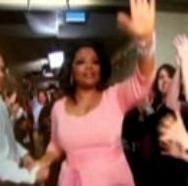
Oprah's Final Farewell; Photo Courtesy: (Screengrab from The Huffington Post video link; No Copyright Infringement Intended)I didn’t have the chance to see any of the celebrity-studded final shows of nor did I have the chance to see her actual finale. I did, however, see (the only one I’ve found of its kind), that had Oprah’s “final monologue.” There’s a 4-minute video in the article that I wanted to embed here for your viewing pleasure, but it’s un-embeddable (at least un-embeddable as far as my Internet know-how goes).

I have written out her final monologue, should you prefer reading to watching/listening:

Every single day I came down from my makeup room on our Harpo elevator I would offer a prayer of gratitude for the delight and the privilege of doing this show. Gratitude is the single greatest treasure I will take with me from this experience. The opportunity to have done this work. To be embraced by all of you who watched is one of the greatest honors any human being could have. I’ve been asked many times during this farewell season, ‘is ending the show bittersweet?’ Well I say all sweet — no bitter. And here’s why. Many of us have been together for 25 years. We have hooted and hollered together. Had our aha moments. We ugly cried together. And we did our gratitude journals. So, I thank you all for your support and your trust in me. I thank you for sharing this yellow brick road of blessings. I thank you for tuning in everyday along with your mothers and your sisters and your daughters, your partners — gay and otherwise — your friends and all the husbands who got coaxed into watchin’ Oprah. And I thank you for being as much of a sweet inspiration for me as I’ve tried to be for you. I won’t say goodbye, I’ll just say until we meet again. To God be the glory.

In watching the clip or reading this monologue, it’s hard not to see the gratitude bursting through. is grateful — through and through. She is to have had the chance to do the work that she does. It beams through in this monologue, it beams through in the clip from the article I’ve linked to, and most of what I’ve read about her general mood about and around the final season is that . And don’t we all have some room to ?

The one thing that strikes me the most from the clip, (which is not included in the monologue), but when Oprah emerges backstage and is hugging her team, is the words she uses. She isn’t crying because it’s over, no. Oprah is saying, “we did it!” We did it. She isn’t mourning the loss of her TV show, she is celebrating the opportunity to have done it. She is offering gratitude for being able to have shared in something so great. She is thankful towards her team for helping her put together 25 years of television that won’t soon be forgotten. And why shouldn’t she be grateful. She’s had an awesome run as far as TV goes and she’s been at the top of for quite some time!

A young boy asks Byron Katie what she would do , “Celebrate!” And why not, right? Sure there can be time for mourning, but there’s so much to celebrate. Katie lists a number of reasons as to why one could be happy for someone’s death (including: they can never be hurt again, they might get to be fertilizer to help something grow to help something else grow, etc.) Here’s another example in a blog post from Katie: “.”

Bring it back to Oprah and gratitude and the last 2 minutes of the clip — you can feel the emotion when she says, “Awww we did it!” There’s so much heart in that exclamation. She’s truly grateful. I am grateful to have had the chance to see the last monologue of The Oprah Winfrey Show and I am grateful to have had the opportunity to share it with all of you. What are you grateful for?

Grey’s Anatomy Season 7 Finale Adds Twists to Heinz Dilemma

The season 7 finale, from what I could tell, added a few twists and turns to a dilemma that is often used to determine one’s stage of moral development – the . The dilemma reads :

In Europe, a woman was near death from cancer.  One drug might save her, a form of radium that a druggist in the same town had recently discovered.  The druggist was charging  $2,000, ten times what the drug cost him to make.  The sick woman’s husband, Heinz, went to everyone he knew to borrow the money, but he could only get together about half of what it cost.  He told the druggist that his wife was dying and asked him to sell it cheaper or let him pay later.  But the druggist said, “No.”  The husband got desperate and broke into the man’s store to steal the drug for his wife.  Should the husband have done that?  Why or why not?

Here’s the scenario that took place on the show:

Dr. Shepherd and Dr. Grey (two surgeons who are married) decide to conduct an -approved study to determine whether a new drug aids in the reversal of . It is revealed that the wife of Dr. Webber (Chief of surgery), Adele is showing signs of Alzheimer’s. Aside: the Chief of surgery used to have an affair with Dr. Grey’s mother for quite some time. There happens to be an opening in the study being conducted by Dr. Shepherd and Dr. Grey. Dr. Webber, using his influence, persuades his two surgeons to include his wife in the trial. Later Dr. Webber has a conversation with Dr. Grey thanking her for being so vigilant about trying to help his wife (Dr. Grey was the one who noticed the signs of Alzheimer’s in Adele before anyone else did.)

It is nearly time for Adele to have surgery. Dr. Grey, having surreptitiously obtained the passcode to enter the lab where the drugs for the trial patients are being held, sneaks in to determine whether or not Adele is to receive the or the experimental drug. Dr. Grey, seeing that Adele is set to receive the placebo, attempts to switch Adele’s placebo with another patient’s experimental drug, but is caught by Dr. Karev, who, at the time, was a bit flustered with his current workload. Later, Dr. Karev, remembering what he saw Dr. Grey do, attempts to persuade Dr. Grey to tell Dr. Shepherd or Dr. Webber what she had done because if the FDA found out, there would be severe consequences not only for her, but for the hospital.

In an act of drunken stupor, Dr. Karev confesses what he saw to Dr. Hunt (a higher-level doctor), who tells Dr. Webber. Dr. Karev is then asked to tell Dr. Webber everything that he saw, which, through process of elimination, leads Dr. Webber to understand that what Dr. Grey did, was effect something having to do with Adele, his wife. Upon learning of this, Dr. Webber immediately suspends Dr. Grey and, in part, takes some of the blame for what happened, having pressured Dr.’s Grey and Shepherd.

Now, I realize that this is quite a lengthy description, but I wanted to offer a bit of background, given that the history is what adds to part of the twist. It’s hard to directly superimpose Dr. Grey onto Heinz, but I think that what they both did is similar, and as such, those who answer one way about the Heinz dilemma will likely answer similar to the dilemma created by Dr. Grey’s actions.

These are the as theorized and tested by [I’ve included the way in which each stage would answer the question regarding the Heinz Dilemma from above]:

Stage one (obedience): Heinz should not steal the medicine because he will consequently be put in prison which will mean he is a bad person. Or: Heinz should steal the medicine because it is only worth $200 and not how much the druggist wanted for it; Heinz had even offered to pay for it and was not stealing anything else.

Stage two (self-interest): Heinz should steal the medicine because he will be much happier if he saves his wife, even if he will have to serve a prison sentence. Or: Heinz should not steal the medicine because prison is an awful place, and he would more likely languish in a jail cell than over his wife’s death.

Stage three (conformity): Heinz should steal the medicine because his wife expects it; he wants to be a good husband. Or: Heinz should not steal the drug because stealing is bad and he is not a criminal; he has tried to do everything he can without breaking the law, you cannot blame him.

Stage four (law-and-order): Heinz should not steal the medicine because the law prohibits stealing, making it illegal. Or: Heinz should steal the drug for his wife but also take the prescribed punishment for the crime as well as paying the druggist what he is owed. Criminals cannot just run around without regard for the law; actions have consequences.

Stage five (human rights): Heinz should steal the medicine because everyone has a right to choose life, regardless of the law. Or: Heinz should not steal the medicine because the scientist has a right to fair compensation. Even if his wife is sick, it does not make his actions right.

Stage six (universal human ethics): Heinz should steal the medicine, because saving a human life is a more fundamental value than the property rights of another person. Or: Heinz should not steal the medicine, because others may need the medicine just as badly, and their lives are equally significant.

The important thing to remember here is that Kohlberg was not interested in what Heinz should do, instead, in how one would justify what Heinz has done. Interestingly, , claiming that it is too male-centric. Carol Gilligan argued that Kohlberg’s theories did not adequately describe concerns of women, but there has been research on both Gilligan’s model () and Kohlberg’s model and it was found that there was no significant difference in moral development between the sexes ( and ). Although, both of these studies are 20 years old, so things may be different today.

To Boldly Go Where No One Has Gone Before…

spaceship, space shuttle, discovery, hubble telescope, outer space, planet, satellite, Every so often, there will be an old episode of Star Trek (The Next Generation) on and I can’t help, but sit and watch. The show, in my opinion, was one of the better shows of its time and even to this day, lives on. There’s something about the show that isn’t really dated. Well, if you ignore the “graphics,” the show could just have easily run in the mid-2000’s (while it actually ran from the late-80’s through the early-90’s.

Let’s take a step back into history (but not so far back as to invoke a debate of evolution and creationism). Humans on the planet started somewhere. Let’s call this somewhere land F. From land F, these humans began to explore outward. They began to explore the lands of neighboring E and G. So, where there were humans in only land F, now there were humans in E, F, and G. This continued until humans had explored all the land that they could by foot. Then, being an infinitely curious species by nature, humans built vessels by which to explore the seas. Soon, humans had explored every piece of land and every inch of sea on the planet.

Cave man, cave men, scientific american, rhino, hunter, gatherer, forage, food, earth, walk, What was next? Well, obviously, the sky. Humans sent probes out into the sky. Once they figured out a way to get a human up into the sky, they did that, too. Humans have been exploring the limits of their existence for as long as there have been humans. Something I find a little strange — how come we haven’t “conquered” space, yet? Or do we think that we already have?

It would seem that we have grown, exponentially, in our ability to explore. With the whole walking across the land-thing, that took awhile. Then, the boats. Then, the planes. If you look at the dates for which these sorts of things have been discovered/invented, it would seem that we’d be due to figure out how to pilot a plane across the galaxy. And then I take a step back and read some of the headlines…

And then it makes sense.

Instead of using our abilities to create, instead of peacefully cooperating with each other, we, where we is us as a species, would rather get into various brouhahas. This is troubling. Open any newspaper and I challenge you to not find something about political unrest somewhere in the world. How the heck are we supposed to come together as a species, come together and represent the Earth, when we can’t get a long?

Some people believe (and some people don’t believe) that there are other species on other planets. Forget for a second which side of this debate you fall on and just consider that there are. astral connections: In the year 2424 man has no need for bodies nor gasoline stations but energy will still be needed for travel amongst the stars. Here the energy nozzles at an astral enery station await the space orbs to energize them.Consider that there are a species of intelligent beings out there who can look in on what’s happening in our world and see what we’re doing. Given that they are able to see what we are doing, there’s a good chance that their technology is far superior to ours. Do you think… as they watch us fight with each other constantly… do you think that they would want to help us out? Meaning, do you think that that they would willingly give us superior technology to help us send our people out beyond the galaxy? The answer is no. No, they wouldn’t. Because if they did, they know that our planet, or at least the majority of our species, would disappear in about 3 days. Humans with superior technology is not safe. Humans need to learn compassion. Humans need to learn empathy. Humans need to learn that killing each other is not a sanctionable act.

I hope that in my lifetime, if there are intelligent beings on other planets, we get to meet them.

The “Real” Purpose of Television: Entertainment, Escapism, and Employment

On one of my trips a couple of months ago, I found myself at the hotel. I wasn’t feeling at my best, so I decided to spend some time watching TV. Now, this is quite an aberration for me because I haven’t had an actual physical “TV” to watch since before my days as an undergrad. I still catch some episodes of shows, but that’s mainly online and at my own convenience. The first thing that I noticed upon watching TV is that TVs have really changed. It looks like I really missed the boat on the whole revolution thing. It really is a much different experience watching TV now than it was years ago when I used to have a steady diet of , , , and .

Now, before I even turned on the TV, like I mentioned earlier, I wasn’t feeling very well. In fact, I was feeling kind of crappy and I thought that watching a little TV would be relaxing. Boy, was I wrong! After turning the TV on, I proceeded to (flip) from channel-to-channel for nearly 3 hours. I couldn’t watch just one thing, my brain wanted to keep tabs on three, four, or five different programs that were on TV. I think part of this is because I have trained my brain to be so attuned to different tabs (on my browser) as well as applications on my computer.

When I was finally shaken free from this never-ending loop, I noticed that I was more tired than when I had started watching TV — and it was the middle of the day! Taking stock of what had just happened, I wondered: what is TV really for? Is TV really meant to be a relaxing experience at the end of the night? Is it just a tool to escape reality?

As puts it:

Call me old-fashioned, but I still like to watch television to be entertained or escape reality. . .

And why is it that we need to watch TV to escape reality? Is reality so bad that we need to supplement our experience with television? Don’t get me wrong, I’m not condemning those who would watch TV as an escape, no. Much of the way our society is structured, watching TV as an escape is part of what keeps some people ‘sane’ at the end of the day. Watching TV is part of the way they can get from the end of work to bed and then back to work again without having to think about the fact that they don’t like their job so much. But why is it that we work in jobs that we don’t like so much, to the point that we need to use TV as an escape from our reality (because reality is not enough or too painful)?

While I can’t say that I know the “real purpose of television,” I think it’s worth debating the effects of TV on society. I really think that watching TV is a mechanism that allows people to stay at jobs that they are otherwise less pleased about. Being able to tune into a created reality (or sometimes an actual reality) of a situation that they envy or can vicariously live through is something that I think allows people to feel better about themselves and by extension their life. Feeling better about one’s life makes one less likely to reflect on the things that aren’t going as well as they would have planned in life. So, like I said, I don’t proclaim to know the real purpose of TV, but I think that it can be argued that a fair majority of television is meant to entertain, allow for escapism, and sustain employment.