Canada Needs to Diversify its Export Strategy

During my last semester as an MBA student, I decided to take a class in International Relations theory. It was certainly a challenging class, especially considering I’d never had a course in political science. There was a steep learning curve in the beginning, but I learn very quickly, so I was able to stay right on track with the material. The last paper I wrote for that course had to do with Canada and NAFTA. I don’t think it’s a good idea to share the whole paper (22+ pages), but I thought I’d include pieces of the conclusion. Any hyperlinks below were added via WordPress’s “recommended links” and weren’t part of the original conclusion. Enjoy!

~

At the outset, this paper attempted to shed some light on Canada’s relationship to NAFTA. After the literature review and subsequent analysis, there certainly seems to evidence that Canada made the choice that benefitted the country the most [economically] when it signed onto NAFTA. As the [academic] literature has shown, there will continue to be calls for the three North American countries to further integrate. This certainly may help all of the countries of NAFTA, but it is hard to say that with Mexico still far behind the US and Canada, economically. In time, one would expect that Mexico could become a global economic force, but for now, there is still much work to be done. As it stands now, Canada’s main purpose for being part of NAFTA seems to be because the US is involved. As a result, one would expect that Canada would continue to be part of NAFTA and continue to strengthen its relationship with the US. If NAFTA were just an agreement between Mexico and Canada, there probably would not be a NAFTA.

After analyzing the data, one of the most important takeaways is that Canada needs to continue to diversify its exports strategy. The vast majority of Canadian exports are to the US. In the beginning, this was probably out of convenience. The US market is much larger than Canada’s and it is right there. However, as events like the global financial crisis foreshadow the possibility of similar and bigger events, it is important for countries like Canada to ensure that they are not too invested in the success of one nation. If for instance something were to happen to the US such that it pulls them [the US] down into a recession like Japan saw in the 1990s, Canada would undoubtedly be affected. Although, some may argue that if this were to happen, the whole world would probably be pulled into a recession. However, as Canada demonstrated by its resilience during the financial crisis, it is possible to mitigate the effects of a catastrophic event. This is exactly why Canada needs to continue to seek out free trade agreements with other countries. The more free trade agreements that Canada can enter into, the more insulated it will be against a possible economic collapse in the US.

Neither the Beginning nor the End — Remember the Middle: List of Biases in Judgment and Decision-Making, Part 12

It’s Monday, so you know what that means — another cognitive bias! This week, I thought I’d combine two because they’re essentially two sides of the same coin. They are: the primacy effect and the recency effect. Believe it or not, these biases are just what they sound like. The primacy effect is the idea that we overweight information we received ‘near the beginning,’ and the recency effect is the idea that we overweight information we received ‘more recently.’

These biases are usually studied in the context of memory and recall. That is, the primacy effect being that people tend to have a better likelihood of remembering information from the beginning and the recency effect being that people tend to have a better likelihood of remembering information they received more recently.

We can certainly see how this would affect our ability to make bias-free decisions. Let’s say that you’re shopping for a new television. You put in a few days worth of research. The biases we have just mentioned above tell us that we might be more likely to give undue weight to the information we found in the beginning (or the information we found most recently). While the purchase of a TV might not be an “important” decision, what if we were interviewing candidates for a job? We might be more likely to view the people in the beginning more favorably or the people towards the end more favorably. This is part of the reason companies use things like standardized questions during the interview as a way to institute some continuity from one interviewee to the next.

Ways for Avoiding the Primacy/Recency Effect(s)

How you avoid these two biases really depends on the context of the decision you’re making. For instance, if you want people to remember something, you probably don’t want to give them a long list (thereby invoking the possibility of one of these two biases to happen). There are some general ways to mitigate these biases, though.

1) Keep a record (write down the data)

One of the simplest ways that either of these biases can have an impact on a decision is when there isn’t a record of data. If you’re just making a decision based on what you remember, there will be an unnecessary weighting for the beginning or the end. As a result, keeping a record of the choices can make it easier to evaluate all choices objectively.

2) Standardized data

As I mentioned earlier in this post, it’s important that the data by which you’re evaluating a choice be standardized. As we looked at in number one, keeping data isn’t always enough. it’s important that the data be uniform across choices, so an evaluation can be made. In this way, it’s easier to look at earlier choices and later choices equally whereas if this weren’t instituted, there might be a slight bias towards the beginning or the end. This tip would work for situations similar to making a purchase (and gathering data), interviewing candidates, or something that can be analogized to either of these two.

If you liked this post, you might like one of the other posts in this series:

Tying Up Loose Ends: Food for Thought and Brief Hiatus

Since moving to the new domain (www.JeremiahStanghini.com), this has been the longest time between posts. The last post I wrote was on April 5th. The hiatus from posting will continue for a little while after this post because I’m working on the last requirements for finishing my MBA. There are about 3 weeks left until the end of exam period, so I’ve got a few papers/presentations to finish and a lot of grading of papers/exams.

Whenever I open my computer I see the list of posts that I’ve been meaning to write. In an effort to “clear out some mental space,” I thought I’d do what I’ve done a couple of times in the past and flush out my list of posts to write. In this way, the list will be fresh for when I come back (save for the few cognitive biases that I still want to write about). So, without further adieu, here are some of the things that I had planned on expanding upon. I hope you enjoy!

Cars and Transportation — It’d be really cool if they could *feasibly* develop a car that could transform. A car that could be a single-passenger when commuting, but it could expand/transform into 2, 3, or 4 seats when it necessary.

Political Ideology — What if a given political ideology’s thoughts/plans don’t work unless they can be fully implemented? And because there’s a split in Parliament/Congress, it’s worse. But what if when either party had total control, it’d be worse than this middle-ground between the two ideas?

LeBron James vs. Michael Jordan — A few weeks before the conversation about LeBron vs. Jordan started, I’d had it on my to do list to write about it. I was a bit peeved when the conversation started (without me), but there were some interesting (and some not) things written about it. I think it’s extremely difficult to compare players across decades. It’s akin to comparing players across sports! I remember a few years ago when there was talk that Alex Rodriguez would be the greatest baseball player ever. I think it’s safe to say that conversation has died down a little.

Fear of Public Speaking — I was thinking back to one of the first times I had to stand up in front of a group of people and give a speech. I don’t even remember what I spoke about — but I do remember one of the speeches from my classmates who did quite well (it was about the NBA dunk contest). As I watch some folks present in front of rooms, I can empathize with their nervousness. Heck, even I still get a bit nervous sometimes. One thing I’ve learned — it’s really about repetition. The more times I’ve spoke in front of groups of people, the less nervous I get the next time I go up there. (On a slightly related note: I’d say another key factor in minimizing fear of public speaking is the extent to which you’re prepared to speak on the topic. Read: know your stuff!)

Focus on Labor — I’ve never been the CEO or a highly placed Vice President of a company, but from an outsider’s perspective, I always have a hard time understanding the lack of focus on the labor force. At times, it really looks like labor is the key to success. If the labor force is well taken care of, production and profits tend to do well. It reminds me of that post I did about sustainability and pitchers. The relation here is that when management takes care of the labor force, it is with an eye towards long-term sustainability.

Life, Liberty, and Property? — Why is property so valued? What about nomads or North Americans who show us that land isn’t to be owned? What about animals? They don’t seem to own land.

Star Trek: Inheritance — This is an episode from the final season of Star Trek: The Next Generation. The gist of is that Data has to decide whether or not he’s going to tell his mother that she is an android (when she believes she’s a human). In thinking about this episode, I wondered about the ethics of telling someone they aren’t who they think they are. What about an adopted child?

Social EntrepreneurshipGeorge Mason University‘s Center For Social Entrepreneurship has a massive open online course (MOOC) in social entrepreneurship. If you wanna learn about social entrepreneurship, this is a great place to start!

“I AM” — I saw the movie I AM quite some time ago and there were some cool things that stood out to me. I’ll be brief:

  • The HeartMath Institute — check them out! They’re doing some fascinating work.
  • Animals are more likely to cooperate than we may have first thought. There was a reference to a journal article about how a herd of deer decided to go in a given direction after hydrating at a water hole.
  • Rumi poetry is medicine for the soul.
  • I am continually amazed at the kinds of things that are correlated with Random Number Generators.
  • Did you know that the word “Love” appears 95 times in Darwin’s “The Descent of Man?”
  • A great quote that Desmond Tutu read: “God looked at me and said, all I have is you.”

And so that clears off most of my list. Look for a new post sometime in the next month, but probably not for the next 3 weeks. Happy end of April and early May!

WRAP — An Acronym from Decisive: List of Biases in Judgment and Decision-Making, Part 10

I recently came across a post from Farnam Street that seems like it would make a great addition to the series we’ve been exploring over the last 10 weeks (biases in judgment and decision-making). So, instead of going over another bias today, I thought I’d share the information I found and tie it back into our series. Check back next week for a new bias (it could be functional fixedness, the hindsight bias, the status quo bias, or maybe the recency/primacy effect(s)…)

The author of the Farnam Street blog summarized some of the work in Chip and Dan Heath’s new book: Decisive: How to Make Better Choices in Life and Work. Given that our series is about decision-making, this book seems like it would be absolutely on-point, with regard to the closing of each post (How to avoid *blank*).

I haven’t yet read the book, but I did want to include a brief excerpt (courtesy of Farnam Street), along with a lead-in from Farnam Street:

The Heaths came up with a process to help us overcome these villains and make better choices. “We can’t deactivate our biases, but … we can counteract them with the right discipline.” The nature of each of the four decision-making villains suggests a strategy for how to defeat it.

1. You encounter a choice. But narrow framing makes you miss options. So … Widen Your Options. How can you expand your sent of choices? …

2. You analyze your options. But the confirmation bias leads you to gather self-serving information. So … Reality-Test Your Assumptions. How can you get outside your head and collect information you can trust? …

3. You make a choice. But short-term emotion will often tempt you to make the wrong one. So … Attain Distance Before Deciding. How can you overcome short-term emotion and conflicted feelings to make better choices? …

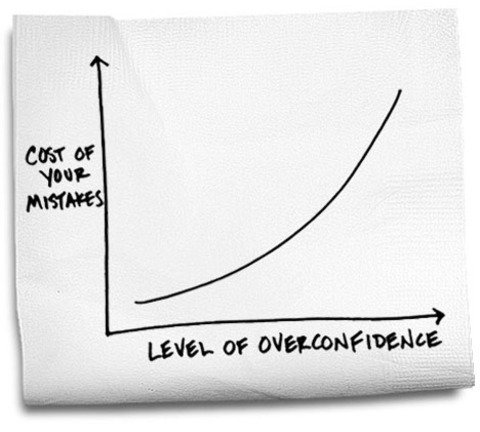
4. Then you live with it. But you’ll often be overconfident about how the future will unfold. So … Prepare to Be Wrong. How can we plan for an uncertain future so that we give our decisions the best chance to succeed? …

There’s also a handy picture that’s included (again, courtesy of Farnam Street):

As we can see, the Heaths have offered four universal ways for avoiding biases in judgment and decision-making. If we recall some of the different ways for avoiding biases that we’ve discussed over the last 9 weeks, many of them can be collapsed into one of the categories listed above. In case you’re a bit hazy, here are some of the biases that we’ve talked about before that have a “way for avoiding” that falls into one of the categories above:

So, if you’re having trouble remembering the different ways for avoiding the biases we’ve talked about, all you have to do is remember “W-R-A-P!”

Room for Innovation in Wind Energy Industry

I was driving down the 401 in Toronto and I noticed a wind turbine setback from the highway. As I looked at it, I remembered seeing it when I used to live in Toronto over 10 years ago. That’s a long time. On one of my first trips across the USA, I drove north through the California desert. As you’d expect, there were lots of wind turbines. When I traveled through New Zealand, there were lots of wind turbines there, too.

The extent of my knowledge (at this point) of wind energy is that the energy is captured through the use of a wind turbine. And because of the structure of the turbines, there are lots of folks who oppose wind turbines. There concerns are understandable and shouldn’t easily be dismissed. That being said, I think about the abundance of wind on the planet I think that there’s gotta be room for innovation in this industry, right?

If I had to choose, my guess is that solar energy is going to be what revolutionizes energy on our planet, but while we’re still trying to perfect energy storage (batteries just won’t cut it), I have a hunch that there’s something we can do about the wind energy industry. I don’t have a grand idea to propose in this post, but there are many inventions or discoveries that come from people who weren’t working inside that industry. My guess is that I don’t have many readers who work in the wind energy industry, so it might be people like you and I who come up with an idea that revolutionizes the wind energy industry.

The next time you get a few minutes, think about the abundance of wind on the planet and how we might capture and store that energy. It just might be a million dollar idea…

When 99% Confident Leads to Wrongness 40% of the Time: List of Biases in Judgment and Decision-Making, Part 9

This week, we’re looking at one of my ‘favorite’ biases, in that it’s one that once you know, it can be quite comical to spot it in others (and yourself, if you still fall for it, from time to time). From Wikipedia: the overconfidence effect “is a well-established bias in which someone’s subjective confidence in their judgments is reliably greater than their objective accuracy, especially when confidence is relatively high.” That’s a bit jargon-y, so let me illustrate with a simple example.

In fact, this example comes from a lecture I heard about negotiation and talked about in one of my previous posts. In case you were wondering, the lecture comes from Professor Margaret Neale at Stanford. It was a brilliant! There was so much information packed into the lecture. I remember listening to it a few different times and still pulling out nuggets of wisdom. Anyway, I digress. The example that Prof. Neale uses is particularly on point for illustrating the overconfidence effect.

She has an empty pop bottle filled with paper clips (but not to the top). She says to the crowd that she wants them to guess how many paper clips are in the bottle. She walks up and down the aisles, so they can get a closer look, too. She instructs the crowd to write down their answer. Then, she asks them to write down a range where they could be 100% (she may say 99%, I don’t remember) sure that the number of paper clips fell in the range. Essentially, she was asking for a confidence interval. I think she also told them that she was sure there weren’t more than 1,000,000 paper clips in there. After some time, she then tells the audience how many were in there. She asks if anyone got it right (no one raises their hand). She then says something to the effect of, “For how many of you did the number of paper clips fall within the range?” There may have been about 35% of the room who raised their hand. 35%! She exclaims that this is terrible given that all of these people were 100% (or 99%) sure that the number would fall in the range. In fact, she said that in a room that size, there should have only been a handful of people who’s range wasn’t met (if the 99% figure was being used, rather than 100%). Prof. Neale then goes on to explain that this is the overconfidence effect. The audience was being asked to make an estimate of something about which they knew nothing, and then asked to rate their confidence. Knowing that they knew nothing about the topic, it would have been logical for the audience to have a large confidence interval (between 10 paper clips and 20,000 paper clips) — or even bigger!

This happens in more ways than just simply estimating the number of paper clips in a bottle. We also see this with investors. When asked, fund manager typically report having performed above-average service. In fact, 74% report having delivered above-average service, while the remaining 26% report having rendered average service.

Another place that we see the overconfidence effect show up is with the planning fallacy: “Oh yeah, I can finish that in two weeks…”

Ways for Avoiding the Overconfidence Effect

1) Know what you know (and don’t know)

The fastest way to slip into the trap of the overconfidence effect is to start making “confident” predictions about things that you don’t know about. Guessing the number of paper clips in a bottle is something that most of us have little to no expertise in. So, list a large confidence interval. If you have no experience in managing a project, it might be in your best interest not to make a prediction about how long it will take to complete the project (planning fallacy).

2) Is this person really an expert?

Sometimes, you’ll hear someone displaying a level of confidence in a given situation that makes you think they know what they’re talking about. As a result, it might bias you into believing what they are saying. It’s important to know if this person is an expert in this field, or if maybe they’re succumbing to the overconfidence effect.

From Scott Plous‘ book called The Psychology of Judgment and Decision Making: “Overconfidence has been called the most ‘pervasive and potentially catastrophic’ of all the cognitive biases to which human beings fall victim. It has been blamed for lawsuits, strikes, wars, and stock market bubbles and crashes.”

If you liked this post, you might like one of the other posts in this series:

I’d Love to Get Inside Marissa Mayer’s Head: The End of Telecommuting at Yahoo

By now, you’ve no doubt heard that Marissa Mayer is ending telecommuting at Yahoo. There’s been lots of opinion written about why what she’s doing is wrong and lots written about why what she’s doing is right. In general, I think that the research supports the plethora of pros to working from home, but of course, a blanket generalization across all situations stating that working from home is better than being in the office would be near-sighted. There are two articles that I want to highlight.

The first doesn’t specifically state that what Mayer’s doing is “right,” but does lend credence to her decision:

So when Mayer decrees seven months into the job that she wants people to, you know, physically show up at work instead of telecommuting — or else — I’m pretty confident this reflects a data-driven decision more than a cavalier command. In all likelihood, Mayer has taken good, hard looks at Yahoo’s top 250 performers and top 20 projects and come to her own conclusions about who’s creating real value — and how — in her company. She knows who her best people are.

Certainly, this makes sense. It’s unlikely that the executive team of Yahoo woke up one day and said that we need to bring those telecommuters into the office because they’re not working hard enough!

The second is of the opinion that Mayer and Yahoo might be erring in their decision:

The working-from-home ban also reveals that Mayer doesn’t know how to measure her workers’ performance. Swisher quotes a source who says that Mayer has been “irked about Yahoo parking lots that are slow to fill in the morning and quick to empty by 5 p.m.” This is a classic bad-manager misconception—that a full parking lot means people are getting stuff done. And it’s easy for employees to game that system. If my boss makes it clear that she’s looking for my car in the parking lot in the evenings and on weekends, all I’ve got to do to get noticed is spend a lot of time at the office. Sure, this will ruin the rest of my life, but otherwise it’s easy—as long as I’m in the office, even if I’m just playing solitaire, I know I’ll be making a good impression.

An important point, indeed.

As I said earlier, in looking specifically at this situation at Yahoo, I don’t know which side I come down on. In fact, it’s really impossible to know, unless I could get a hold of the data that Mayer used to make this decision. That being said, based on the research that supports working from home, part of me wonders if the data that Mayer used to make this decision isn’t accurately capturing what Yahoo thinks that it is.

Perspective and the Framing Effect: List of Biases in Judgment and Decision-Making, Part 5

Since I was going to talk about the framing effect last week (and opted for the planning fallacy instead because of circumstances), I thought I’d get into the framing effect this week. The framing effect is a very easy bias to understand, in that it’s not as complicated in its description as some of the other biases are. In short, the framing effect is how people can react differently to choices depending on whether the circumstances are presented as gains or losses.

The famous example of the framing effect comes from a paper by Kahneman (who I’ve mentioned before) and Tversky in 1981:

Problem 1: Imagine that the U.S. is preparing for the outbreak of an unusual Asian disease, which is expected to kill 600 people. Two alternative programs to combat the disease have been proposed. Assume that the exact scientific estimate of the consequences of the programs are as follows: If Program A is adopted, 200 people will be saved. [72 percent]

If Program B is adopted, there is 1/3 probability that 600 people will be saved, and 2/3 probability that no people will be saved. [28 percent]

As you can see from the percentages in brackets, people opted for the sure thing. Now, let’s look at the second part of this study:

If Program C is adopted 400 people will die. [22 percent]

If Program D is adopted there is 1/3 probability that nobody will die, and 2/3 probability that 600 people will die. [78 percent]

Did you notice something? Program C is identical to Program A, and yet the percentage of people who were opting for Program C dropped tremendously! Similarly, notice that Program D’s percentage went way up — even though it’s the same thing as Program B. This is the framing effect in action. Is it frightening to you that we’re so susceptible to changing our mind based simply on how a choice is framed? If it’s not, it certainly should be.

Ways for Avoiding the Framing Effect

1) Reframe the question

It may seem obvious, but you’d be surprised how many people don’t consider “reframing” the frame with which they are looking at a situation. For instance, in the example from earlier, instead of looking at it as a choice between Program A and Program B, someone could reframe Program A so that it looks like Program C and do the same with Program B, so that it looks like Program D. As a result, one would then be getting a “fuller” picture of their choice.

2) Empathy — assume someone else’s perspective

Many choices implicate another in a situation. As a result, it might be worth it to put yourself in the shoes of that other person to see how they would view a given situation. This is similar to the reframe, but is more specific in that it might serve to help the person remove themselves a little bit from the decision. That is, when we’re faced with a choice, our personal biases can have a big impact on the decision we make. When we imagine how someone else might make this decision, we’re less likely to succumb to our personal biases.

3) Parse the question

Some questions present us with a dichotomous choice: are apples good or bad? Should we exercise in the morning or the evening? Are gap years helpful or harmful? When faced with a question like this, I would highly recommend parsing the question. That is, are we sure that apples can only be good or bad? Are we sure that exercising in the morning or the evening are our only options? Often times, answers to questions aren’t simply this or that. In fact, more times than not, there is a great deal of grey area. Unfortunately, when the question is framed in such a way, it makes it very difficult to see the possibility of the grey area.

If you liked this post, you might like one of the other posts in this series:

Get a Second Opinion Before You Succumb to the Planning Fallacy: List of Biases in Judgment and Decision-Making, Part 4

I know that I said that I was going to be talking about a new bias in judgment and decision-making every Monday and I know that today is Tuesday. To be honest — I underestimated how long it would take me to prepare for my seminar in International Relations. Aside: if you want to challenge yourself, take a course in a subject which you know very little about and be amazed at how much you feel like you’ve been dropped into the ocean and told to swim! It can be a little unnerving at first, but if you’re into exploring and open to new experiences, it can be quite satisfying. Anyway, so today yesterday I’d planned to talk about the framing effect, but since I so conveniently demonstrated the planning fallacy, I thought I’d talk about it.

The consequence of this post being written/published today is directly related to my falling into the trap of the planning fallacy. I planned for the preparation for my International Relations class to take a certain amount of time. When that time lasted longer than I had anticipated, I had no time left to write about a bias in judgment and decision-making. The planning fallacy is our tendency to underestimate how long we’ll need to complete a task — especially when we’ve had experiences where we’ve underestimated similar tasks.

This is something that even the best of us fall prey to. In fact, one of the biggest names in cognitive biases Daniel Kahneman (Nobel Prize in economics, but a PhD in psychology!) has said that even he still has a hard time with the planning fallacy. Of course, this doesn’t make it permissible for us not to try to prevent the effects of the planning fallacy.

Before we get into ways for avoiding the planning fallacy, I want to share an excerpt from an oft-cited study when discussing the planning fallacy [emphasis added]:

Participants were provided with a series of specific confidence levels and were asked to indicate the completion time corresponding to each confidence level. In this manner, the participants indicated times by which they were 50% certain they would finish their projects (and 50% certain they would not), 75% certain they would finish, and 99% certain they would finish. When we examined the proportion of subjects who finished by each of these forecasted times, we found evidence of overconfidence. Consider the academic projects: only 12.8% of the subjects finished their academic projects by the time they reported as their 50% probability level, only 19.2% finished by the time of their 75% probability level, and only 44.7% finished by the time of their 99% probability level. The results for the 99% probability level are especially striking: even when they make a highly conservative forecast, a prediction that they feel virtually certain that they will fulfill, people’s confidence far exceeds their accomplishments.

There were a lot of numbers/percentages offered in the excerpt, so I’ve also included a visual representation of the data in a graph below. This graph comes from a book chapter by a couple of the same authors, but it is about the data in the preceding excerpt.


Ways for Avoiding the Planning Fallacy

With the first three biases I talked about, awareness was a key step in overcoming the bias. While you could make that argument for the planning fallacy, one of the hallmarks of [the fallacy] is that people know they’ve erred in the past and still make the mistake of underestimating. So, we’ll need to move beyond awareness to help us defend against this bias.

1) Data is your friend

No, I don’t mean Data from Star Trek (though Data would probably be quite helpful in planning), but now that I think about it, Data (the character) might be a good way to position this ‘way for avoiding the planning fallacy.’ For those of you not familiar, Data is a human-like android. In thinking about this way for avoiding the planning fallacy, think about how Data might estimate the length of time it would take to complete a project. It would be very precise and data-driven. Data would likely look at past projects and how long it took for those to be finished to decide the length of time needed for this new project. To put it more broadly, if you have statistics on past projects (that were similar) absolutely use them in estimating the completion time of the new project.

2) Get a second opinion

When we think about the project completion time of one project in relation to another project, we often think about the nuances that make this project different from that project — and by extension — why this project won’t take as long as that project. Planning fallacy. If you can, ask someone who has experience in project completion in the area for which you’re estimating. When you ask this person, be sure not to tell them all the “various ways why this project is different,” because it probably isn’t and it’s only going to cloud the predictive ability of the person you’re asking. You’re probably going to hear an estimate that’s larger than you thought, but I bet you that it’s probably a lot closer to the real project completion time than the estimate you made based on thinking about the ways that this project was going to be different than all the other projects like it.

If you liked this post, you might like the first three posts in this series:

Statistics Without Context Are Useless

In preparing for the classes that I teach on Tuesday, I was re-reading the assigned chapters in the textbook yesterday. This week, we’re covering cross-cultural management. A few pages into the chapter, I was dismayed to read the following:

“Here are a couple of positive signs: 2008 saw record numbers of foreign students (623,805) studying in the United States and US students (241,791) studying abroad.”

Does anyone know what’s wrong with this? After reading this paragraph, I took to Twitter to respond. Let’s go to the tweets!


To summarize: statistics without context are useless.

To better contextualize the numbers offered in the textbook, the author would need to tell offer some numbers on the recent number of foreign students studying in the US and likewise, US students studying abroad. That is, are the numbers trending up? Downward? Was this year an anomaly?

More importantly than earlier years, would be to fully contextualize it by offering percentages. Is the percentage of foreign-born students studying in the US higher than it was last year? What about for US student studying abroad?

Simply offering these absolute values is, in a sense, misleading. It conveys to the reader that foreign study is trending up, when in fact, it could be on the decline. By having more students studying (in general) there is a higher number of students who could study abroad. And that’s why it’s important to have percentages (in this case). In some cases, percentages won’t be helpful. It really all depends on the question you’re trying to answer or the information you’re trying to convey.

Note: for those interested, the quote comes from Organizational Behavior, 9th edition, page 103.