Grey’s Anatomy Season 7 Finale Adds Twists to Heinz Dilemma

The season 7 finale, from what I could tell, added a few twists and turns to a dilemma that is often used to determine one’s stage of moral development – the . The dilemma reads :

In Europe, a woman was near death from cancer.  One drug might save her, a form of radium that a druggist in the same town had recently discovered.  The druggist was charging  $2,000, ten times what the drug cost him to make.  The sick woman’s husband, Heinz, went to everyone he knew to borrow the money, but he could only get together about half of what it cost.  He told the druggist that his wife was dying and asked him to sell it cheaper or let him pay later.  But the druggist said, “No.”  The husband got desperate and broke into the man’s store to steal the drug for his wife.  Should the husband have done that?  Why or why not?

Here’s the scenario that took place on the show:

Dr. Shepherd and Dr. Grey (two surgeons who are married) decide to conduct an -approved study to determine whether a new drug aids in the reversal of . It is revealed that the wife of Dr. Webber (Chief of surgery), Adele is showing signs of Alzheimer’s. Aside: the Chief of surgery used to have an affair with Dr. Grey’s mother for quite some time. There happens to be an opening in the study being conducted by Dr. Shepherd and Dr. Grey. Dr. Webber, using his influence, persuades his two surgeons to include his wife in the trial. Later Dr. Webber has a conversation with Dr. Grey thanking her for being so vigilant about trying to help his wife (Dr. Grey was the one who noticed the signs of Alzheimer’s in Adele before anyone else did.)

It is nearly time for Adele to have surgery. Dr. Grey, having surreptitiously obtained the passcode to enter the lab where the drugs for the trial patients are being held, sneaks in to determine whether or not Adele is to receive the or the experimental drug. Dr. Grey, seeing that Adele is set to receive the placebo, attempts to switch Adele’s placebo with another patient’s experimental drug, but is caught by Dr. Karev, who, at the time, was a bit flustered with his current workload. Later, Dr. Karev, remembering what he saw Dr. Grey do, attempts to persuade Dr. Grey to tell Dr. Shepherd or Dr. Webber what she had done because if the FDA found out, there would be severe consequences not only for her, but for the hospital.

In an act of drunken stupor, Dr. Karev confesses what he saw to Dr. Hunt (a higher-level doctor), who tells Dr. Webber. Dr. Karev is then asked to tell Dr. Webber everything that he saw, which, through process of elimination, leads Dr. Webber to understand that what Dr. Grey did, was effect something having to do with Adele, his wife. Upon learning of this, Dr. Webber immediately suspends Dr. Grey and, in part, takes some of the blame for what happened, having pressured Dr.’s Grey and Shepherd.

Now, I realize that this is quite a lengthy description, but I wanted to offer a bit of background, given that the history is what adds to part of the twist. It’s hard to directly superimpose Dr. Grey onto Heinz, but I think that what they both did is similar, and as such, those who answer one way about the Heinz dilemma will likely answer similar to the dilemma created by Dr. Grey’s actions.

These are the as theorized and tested by [I’ve included the way in which each stage would answer the question regarding the Heinz Dilemma from above]:

Stage one (obedience): Heinz should not steal the medicine because he will consequently be put in prison which will mean he is a bad person. Or: Heinz should steal the medicine because it is only worth $200 and not how much the druggist wanted for it; Heinz had even offered to pay for it and was not stealing anything else.

Stage two (self-interest): Heinz should steal the medicine because he will be much happier if he saves his wife, even if he will have to serve a prison sentence. Or: Heinz should not steal the medicine because prison is an awful place, and he would more likely languish in a jail cell than over his wife’s death.

Stage three (conformity): Heinz should steal the medicine because his wife expects it; he wants to be a good husband. Or: Heinz should not steal the drug because stealing is bad and he is not a criminal; he has tried to do everything he can without breaking the law, you cannot blame him.

Stage four (law-and-order): Heinz should not steal the medicine because the law prohibits stealing, making it illegal. Or: Heinz should steal the drug for his wife but also take the prescribed punishment for the crime as well as paying the druggist what he is owed. Criminals cannot just run around without regard for the law; actions have consequences.

Stage five (human rights): Heinz should steal the medicine because everyone has a right to choose life, regardless of the law. Or: Heinz should not steal the medicine because the scientist has a right to fair compensation. Even if his wife is sick, it does not make his actions right.

Stage six (universal human ethics): Heinz should steal the medicine, because saving a human life is a more fundamental value than the property rights of another person. Or: Heinz should not steal the medicine, because others may need the medicine just as badly, and their lives are equally significant.

The important thing to remember here is that Kohlberg was not interested in what Heinz should do, instead, in how one would justify what Heinz has done. Interestingly, , claiming that it is too male-centric. Carol Gilligan argued that Kohlberg’s theories did not adequately describe concerns of women, but there has been research on both Gilligan’s model () and Kohlberg’s model and it was found that there was no significant difference in moral development between the sexes ( and ). Although, both of these studies are 20 years old, so things may be different today.

Integrity, Please: Campaign Finance and Elections & American Public Policy, Part 2

In of this series, I wrote about public policy in America as it relates to economics. As I said quite clearly in the 1000 words or so, it’s difficult to surmise such a vast topic in such a short space, but I think I made an important connection between altruism and economic policy. While this series is aimed at American Public Policy, the first post in this series on economic policy is relevant to most countries in the . In Part 2, I’ll talk about two things: campaign finance and elections. First, elections.

The has been recently and likely will be for the next couple of days after an FEC official told a New York Times reporter, “,” (after having learned that something they [FEC] were told may not have been true). The FEC will also, undoubtedly be in the news anytime anyone decides to . For anyone that enjoys political satirist Stephen Colbert, you’ll know that he has spoken at length about his trials and tribulations to create a PAC and (then a Super PAC) on his show. While what he is doing is initially intended as humor, there is also a .

Earlier last year, the heard and ruled on what is a rather famous case, . There are so many different interpretations of what this means for elections in the US. Keith Olbermann had a rather . Rachel Maddow was a little , but she shares a similar viewpoint to Olbermann. Much of what you’ll find on YouTube are videos not in favor of this decision, but I was able to find one video from Congressman of California . I like the use of animation and moving picture, so another good video to check out is the one by .

When I first made a point of wanting to write a post about campaign finance, my initial thoughts were to have candidates donate all of the money they receive. Maybe that’s too idealistic? Really though, shouldn’t it be that money plays little to no role in who is elected? I understand how difficult it would be to sell Barack Obama on of his campaign contributions to charity, or whomever the Republican candidate happens . I think that . I think the problem that elections have become so “difficult” is that the citizens doing the electing don’t trust their elected officials. While we could bring in any number of psychological theories to help us understand, I think the bottom line is there should be an inherent honor (in the elected official) and, maybe, a covenant between elected officials and citizens.

There’s one more thing I want to say about campaign finance that is a nice segue into elections. I found a video of a professor at Harvard (who also happens to be the same guy that founded ) offering on the decision rendered by the Supreme Court on Citizens United [I’ve added emphasis]:

Many people will see this decision as a decision they should fight because they think corporations should be silenced. I don’t think the point here is that corporations should be silenced. I think the point is we need a political system where people can trust that the decisions Congress makes are decisions based on the merits; on what makes sense or what the people in their district want and not what the funders demand. This decision will only exacerbate the current problems with the system. And the way we should respond is by pushing for an alternative that gets us a system for funding elections that doesn’t lead people to wonder whether it’s money rather than sense that is producing a political result.

Elections can be a fickle thing, not just in the US, but around the world. I would think in a society that is so developed, elections fraud would not be something so rampant through its politics, but that seems not to be the case. A search for United States Elections Controversy on Google returns nearly 10,000,000 hits. One interesting article I found was one author’s view of the most significant (in the US). As I furthered my search, it wasn’t difficult to start turning up articles about controversy in US elections. In fact, there’s more than I can really talk about in the bit of space remaining for this post. There’s one about a , one about , and who could forget the ? In case you did forget, there was even a made about it.

For anyone who follows Wisconsin politics, there’s the by Waukesha County clerk, Kathy Nickolaus, . I don’t work in elections, so I don’t know how hard it is to organize these kinds of events, but I would think someone who has made so many errors that have been made public would probably not be hired (nor should she apply?) for jobs that require such finite detail.

Anyway, the more I read about elections in America (and the world), the more I wonder about integrity. I would expect that people involved in creating these laws and upholding these laws would operate with a sense of high moral integrity. Wouldn’t you? These people are being put in some of the more important (but undervalued) positions a country can have, and it seems that they just don’t see it that way. Maybe they do, but it’s not showing. Campaign finance and elections needn’t be dirty words. The people who create laws around these issues shouldn’t look for (or intentionally leave open) loopholes. In an upcoming post, I’ll talk about how inequality within a nation is bad for everyone in the nation (including the rich).

Who Are The Good Guys? Does It Matter?

Who are the good guys? Who are the bad guys? Do you know? I often don’t. The attribution of good and bad is directly related to the narrative in which you consume. If you consume the narrative of X, then X will be the good guys and Y will be the bad guys. If you consume the narrative of Y, then Y will be the good guys and X will be the bad guys. Some may argue that it’s not as simple as all that, but isn’t it? Isn’t it as simple as someone (friend, parent, or media outlet), telling you that something is happening and how it affects you, enough to shape your opinion even without your knowing?

In doing a quick search of “” on Google, it returns nearly 7,000,000 hits — and that’s with the quotations! This question of “who are the good guys” is not something new. Some search for more ‘trivial’ good guys as in the . Others are looking for more historical accounts of . There are even searches for the (and this was back in 1998)! More recently, it’s been inquiry into the and the . Although, there are still people curious about .

A , infinitely quotable, once said: “” And isn’t that the truth? Once the victors move on from the dispute, don’t they then get to write the “textbooks”? In the past, it would have been the stories they told around the fire, but as humans have grown and evolved to include the written word, what often is passed on from generation to generation is the story as told from the “good guys” perspective. That is, the “good guys” being the ones who won. And isn’t that how it always eventually happens? The “good guys” always seem to win, no matter what.

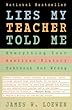
In reading a few history textbooks, I doubt you’ll find stories of the “bad guys” winning. In fact, I doubt you’ll even find many textbooks that offer the perspective of the “bad guys” in much detail, least of all, objectively. The “bad guys” will be painted as “bad guys” who wanted something from the “good guys.” The good guys, being the good guys, of course, triumph! And more history is written where the good guys succeed. There’s a very interesting read on this subject by called: “” I’m not saying that what Loewen has written is the “right” view of history, but it provides a perspective that you may not have otherwise considered.

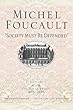
I wanted to close this post with a couple more quotes. The first, from “:

The history of some is not the history of others. It will be discovered, or at least asserted, that the history of the Saxons after their defeat at the Battle of Hastings is not the same history as the history of the Normans who were the victors in the same battle. It will be learned that one man’s victory is another man’s defeat. . . What looks like right, law, or obligation from the point of view of power looks like the abuse of power, violence, and exaction when it is seen from the viewpoint of the new discourse, just as it does when we go over to the other side. . . the triumph of some means the submission of others.

And finally, a from : “He who controls the present, controls the past. He who controls the past, controls the future.

~

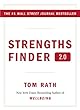
StrengthsFinder 2.0: Are You Using Your Talents Effectively?

In the last couple of months, I have been reading oodles of books. One of the books that I’ve come across is . There really isn’t much to the book on the inside, except for the first 30 pages or so, but there is a tear away code that you can use to take the test online. Unfortunately, I had borrowed this book from the library, so I was at a loss. However, I did some digging around on the internet and came across , which offered an access code (for a price) without the book. While buying the code from this site is more than buying a new book from Amazon ($20 vs. $15), I wasn’t interested in keeping a copy of StrengthsFinder (and, wasting more paper in the process), so I reasoned that just buying the code was satisfactory.

I would imagine that most people inclined to take a test like this (or any test, voluntarily), are probably the kind of people who have already taken tests, so they would have some idea of where their strengths would lie. This was the case with me, but it’s always nice to have your strengths/talents validated in another survey/test. In the first 30 pages of the book, the author makes the claim with data from research, that it has been discovered that working on one’s weaknesses is actually counterproductive. He offers the formula that one’s talents plus one’s investment (time spent practicing/developing skills) equals a strength. He argues that spending time developing one’s talent into a strength is a much better usage of one’s time (where most developmental tools argue that one should work on their weaknesses). The author isn’t advocating a total write-off of one’s weaknesses, it is still important to know where one’s weaknesses are.

This online test is meant to isolate your talents, and then give you ways that you can develop these talents into your strengths. Upon taking the test, the participant is given their top 5 themes [talents], along with personalized strengths insights and potential ways to enhance these talents. After taking the test, I was not surprised with the 5 themes that were scored as my highest (I’ve included the shared theme description):

Learner

“People who are especially talented in the Learner theme have a great desire to learn and want to continuously improve. In particular, the process of learning, rather than the outcome,excites them.”

Ideation

“People who are especially talented in the Ideation theme are fascinated by ideas. They are able to find connections between seemingly disparate phenomena.”

Achiever

“People who are especially talented in the Achiever theme have a great deal of stamina and work hard. They take great satisfaction from being busy and productive.”

Competition

“People who are especially talented in the Competition theme measure their progress against the performance of others. They strive to win first place and revel in contests.”

Positivity

“People who are especially talented in the Positivity theme have an enthusiasm that is contagious. They are upbeat and can get others excited about what they are going to do.”

I can very much identify with the five themes that I was assessed as having. In fact, you could probably even further group these a little more. Competition and Achiever go together (people who compete also, I would think, often achieve), and then these two also fit together nicely with Learner (as you learn, you achieve, yes?).

The one thing that I think would have been cool about this that wasn’t available (or maybe it is for a fee?) is to have a readout of who else (famous or otherwise?) has a similar make-up to you. They say that they’ve polled over 10 million people, so I have to think that someone out there has had these 5 themes. In fact, I can be nearly certain using the . There are 501,942 different combinations of the 34 themes (choosing 5 each time), and if we want to take it a step farther, there are 45,435,424 different combinations (when we account for the order of the themes). So, while there may not have been someone who had the same 5 themes as me in this order, there is a very good chance that there is at least 1 other person who has had these 5 themes on their score.

I understand that supplying information like this would need permission from all of the people who have taken the test and getting permission after the fact is a difficult thing to do. And as I take a step back from this idea, I realize that I’m merely confirming one of my strengths (Ideation).

The Scientific Evidence for Clairvoyance: Psi Phenomena, Part 2

In , I talked about the scientific evidence for telepathy. From my perspective, there is so much evidence for the presence of such a phenomena that those who deny its existence are doing so for reasons outside of science. In this post, I will discuss the scientific evidence for clairvoyance, which is often closely associated with remote viewing. Let’s start off with some definitions.

Clairvoyance is often confused with other parapsychological terms, sometimes telepathy and other times precognition. We learned in Part 1 that telepathy is akin to reading someone’s mind. Loosely, precognition is being able to predict the future. An aspect of clairvoyance known as remote viewing, is when someone is able to perceive a distant geographical location. , however, is when a person is able to acquire information about an object (person or place included) or event that cannot be perceived by other means (5 senses). One could see how this might be confused with telepathy as telepathy is a means of acquiring information from someone’s mind (which could, theoretically, contain information about an event or object). As well, remote viewing is like a specific kind of clairvoyance. Some mistake clairvoyance for being able to see the future, but this is really precognition, not to be confused with retrocognition, which is being able to see acquire information about the past through means other than “normal.” Is your head spinning from parapsychological terms, yet? All you need to know is that we’re talking about clairvoyance today and clairvoyance is being able to acquire information about something without the five senses.

Some of the earliest tests for clairvoyance were in . One person draws an image and then a distant partner is supposed to draw the same image. These sorts of tests wouldn’t pass for science with today’s standards as the images selected by the participants weren’t “random” and the inherent shared biases between people in these experiments allowed for a certain sense of similarity to their image selection. Meaning, if two people had just been to the beach, there would obviously be a higher probability of a selection of water in the image drawn. Keeping this in mind, there were still some rather amazing studies written about by . The book’s preface was written by Albert Einstein who wrote: “I have read the book of Upton Sinclair. . . and am convinced that the same deserves the most earnest consideration, not only of the laity [public], but also of the psychologists by profession.” Another book on the picture-drawing experiments to check is by .

In 2003, researchers and published an article in the that summarized 25 years of research on remote viewing at the called: “.” The article had four purposes:

1) to present for the first time in archival form all results of some 25 years of remote perception research at this laboratory; 2) to describe all of the analytical scoring methods developed over the course of this program to quantify the amount of anomalous information acquired in the experiments; 3) to display a remarkable anti-correlation between the objective specificity of those methods and the anomalous yield of the experiments; and 4) to discuss the phenomenological and pragmatic implications of this complementarity.

The meta-analysis of the article concluded that (from page 219):

The overall results of these analyses leave little doubt, by any criterion, that the PRP perceptions [remote viewing data] contain considerably more information about the designated targets than can be attributed to chance guessing.

As Radin quotes in , the results of these studies are at odds against chance of 33 million to 1. The meta-analysis by Dunne and Jahn is more than enough evidence that clairvoyance/remote viewing exists. When people unfamiliar with the terms in this area talk about ESP, they are often referring to remote viewing.

Remote viewing is probably one of the more popular of and I would bet that this is attributable to the US government getting involved in this research. From the ‘s website:

In the 1970s and 1980s SRI was contracted by a U.S. government agency to research some aspects of remote viewing. As this work was performed for clients, SRI no longer has the records relating to the research. All such records were returned to the clients.

Some of the research has been published, but interestingly, as said by :

Some of the results from RV [remote viewing] are not yet publicly accessible.

There has been a lot written about remote viewing and clairvoyance both in the scientific community and for the public. One of the more interesting depictions of this research was in a recent film called: . The film had some heavy hitters (in terms of actors): George Clooney, Kevin Spacey, Jeff Bridges, and Ewan McGregor. The movie was adapted from a by the same name.

Friggatriskaidekaphobia and Other Quirky Calendar Events

Given the , I thought it would be a good time to do a post on the ‘silliness’ of Friday the 13th. The absurdity of Friday the 13th has always puzzled me. It really is just a day and the only reason that it garners “power” over anything is because of Friday the 13th by perpetuating the myth. The title of this post includes the phobia: friggatriskaidekaphobia. One can ‘learn’ from Wikipedia that this is a compound of , the name of the Norse goddess who gave us the name “Friday,” and , fear of the number 13. I happen to like words, but a word like friggatriskaidekaphobia — when, outside of days like today, would you use that? Maybe more importantly, who would use that word? Maybe psychiatrists or psychologists?

Some people like to say that Friday the 13th doesn’t occur very often, so that’s what makes it special. Really? Over the next three years (up to and including 2015), there will be 9 Friday the 13th’s. In fact, of the days of the week that could happen to be the 13th, . Meaning, Friday the 13th happens more than (Monday the 13th, Tuesday the 13th, Wednesday the 13th, etc.)

There is no clear evidence as to exactly where the myth of Friday the 13th started. Some say it started with the (which happened on Friday the 13th).  Others of a Norse myth of a 13th dinner party guest arriving and causing havoc and a similar event occurring as cited in the Bible. The fact that this myth has no definite traceable history further convinces me that “” in it causes it to continue.

One more note about the 13th comes to us from Spanish-speaking countries who believe that it is that needs to be feared. This all stems from the fact that Martes is the Spanish word for Tuesday and the word Martes is derived from Mars, the Roman God of war.

And war, accordingly, signifies death.

Other Calendar Quirks

In July of 2011, there will be 5 Fridays, 5 Saturdays, and 5 Sundays? Bring on the parties during those weekends, right? More importantly, ! Buyer beware, huh?

Did you know that this (2011) December, there will be 5 Thursdays, 5 Fridays, and 5 Saturdays?

Or, how about in 2012, there will be 3 Friday the 13th’s?

This coming Monday (the 16th), is !

and *gasp* the Roman numerals signifying the year will be MMXX.

, Canadians [if they’re still called that] in Toronto [if it’s still called that] will open a time capsule that was buried in 1997.

, unless there is to the religious calendar, Easter will be on March 22 for the first time since 1818. This is also the earliest possible day that Easter can occur.

And my personal favorite: the aptly named Longplayer, that started on January 1st, 2000 and will end on December 31st, 2999. From :

“Longplayer” is based on an existing piece of music, 20 minutes and 20 seconds in length, which is processed by computer using a simple algorithm. This gives a large number of variations, which, when played consecutively, gives a total runtime of 1000 years. It uses Tibetan singing bowls and gongs, , which are able to create a range of sounds by either striking or rolling pieces of wood around the rims. This source music was recorded in December 1999.

Should Influential Athletes Be Doing More With Their Celebrity?

released their list of the a few days ago and to my surprise, topped the list. Johnson, a athlete, along with two others from the sport, made the list: and . Admittedly, I’m quite shocked to see so many NASCAR drivers in the . Truth be told, I’m not one who follows NASCAR, but I understand that it has . Given the , I would have assumed athletes from the would have filled the list. As I read the article, it was easier to understand why the lack of big 4 athletes was the case.

The author explains that the list only includes active athletes (so the likes of and other Winter Olympics athletes like and ) have fallen off of the list. More than that, with the decline of and no singular identifiable face of or the , the picture of more NASCAR athletes seems to make sense. Another reason cited by the article is the potential or (in-progress) labor strifes, which understandably, would limit the viewership of certain athletes. Although, I’m still surprised by the total make-up of the list. There were three NASCAR drivers that I already mentioned, four NFL athletes (, , , and ), two NBA players ( and ), and one Olympic Athlete ().

At first blush, Shaq isn’t someone I would expect to see in the top 10, especially so late in his career, but then when I go and look at some of the things that he has done off the court (music, acting, TV, etc.) I’m reminded that he has quite a lot of exposure. Another athlete that surprised me was Troy Polamalu, but I suppose those have really escalated him to a household name. I wouldn’t expect Tim Tebow to be on this list, but I guess with his , that can also be explained.

The most important takeaway from this article for me is the potential for these athletes to really make a difference in the lives of people. Most athletes do some and I think that’s great! With the influential power that the athletes from this list have, I think it’d be pretty cool if one of them decided to do something on the . She was as saying, “As much as I would love to never have to visit Washington, that’s the way to move the ball.” Maybe it’s a little too much to ask athletes to put time and energy into “moving the ball” in Washington.

I understand, from my own brief stint as an NCAA athlete, that to be a professional athlete takes a lot of hard work. Many fans think that athletes just play the game and collect their paycheck. There are hours and hours of work that go into strength & conditioning, not to mention the hours and hours (10,000+ hours?) of work that go into perfecting one’s skills at their given sport. I’m not saying they deserve the money they get for what they do, but I’m also not saying that they don’t deserve that money, either.

Most importantly, I want to make a difference in the world. A very positive and noticeable difference in the world. So, when I see a list like this that come out identifying influential athletes, I can’t help but vicariously live through one of them and imagine the enormous good that I could create.

Note: I couldn’t find a way to access the dataset compiled by E-Poll and Nielsen Media Research that help to populate this list (if you can, please post it in the comments), but it seems to me that they only interviewed American adults. I would say that this contributes to there being very little international flavor on the list with the likes  (or even a famous cricket player like ).

McDonald’s Aims for Fidelity Mirage

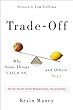
McDonald's, Mickey Dees, Mickey D's, McDonald's sign, Las Vegas,A couple of weeks ago, I read a book called Trade-Off: Why Some Things Catch On, and Others Don’t. I rather enjoyed it so much that I recommend it to businesses/organizations. The book was written by Kevin Maney who has a knack for predicting the success and failures of business based on their initiatives in what he calls “fidelity and convenience.” Here is the snippet I wrote that you can find through resources page of this website:

In Trade-OffKevin Maney thoroughly explains the successes and failures of businesses who have took aim at what he calls, “the fidelity mirage.” This ‘fidelity mirage,’ is when a company believes that they can create a product (or service) that is simultaneously of high fidelity and of high convenience. Maney defines fidelity as “the total experience of something.” Another way of looking at fidelity is quality. The higher the quality of experience,the higher the fidelity. Overall,  Trade-Off is an essential book for anyone looking to gain a better understanding of why some products or services succeed and others don’t. More importantly, for those aspiring entrepreneurs out there, Maney illustrates, by example, some sure-fire ways for your product to NOT make it off the ground. His advice is sound and based on years of experience.

Trade off, kevin maney, One of the cover-stories this morning of the USA Today is titled: “McDonald’s revamps stores to look more upscale.” The gist of the article can be gleaned from the title, too. McDonald’s, known for its super-convenience, is trying to buy their way into the ‘quality market.’ As Maney may put it, ‘they are attempting to break their way into the fidelity-game.’ At first glance, this may seem like a great idea for McDonald’s. They’ve had a stranglehold on the convenience market for quite some time, and now, they figure, why not expand our horizons and try to get a piece of the ‘fidelity’ pie.

I’m not Kevin Maney, but using his idea of the “fidelity mirage,” I think that McDonald’s is headed down a road that could lead to some major losses. In the book, Maney cites the examples of Coach bags and RAZR cell phones as trying to bridge the gap from fidelity, orMotorola RAZR, flip phone, razr, motorola, black phone, quality, to convenience, or quantity. In the Coach example, the handbag maker had been at the top of the luxury market with the likes of Louis Vuitton. Between 2004 and 2008, Coach opened nearly 100 new stores and lots of outlet shops. In doing so, one of the reasons their bags were selling so well [allure] quickly faded as the bags became more and more accessible, available, and prevalent. It was no longer unique to have a Coach bag. This same thing happened with RAZRs. Motorola took their sleek and fashionable phone, lowered the price (from $400), and flooded the market. Like Coach, RAZR had ruined the product that was based on fidelity.

With what was announced today, I think that McDonald’s is trying to make the leap from convenience to fidelity. The examples I’ve cited are of companies trying to make the leap from fidelity to convenience, but I still think that we can learn from those companies misfirings. For as long as McDonald’s has been serving Big Mac’s, they have been known as the super-convenient place to get food. This will be quite a paradigm shift for a company that has made their money on turning food production into an assembly-line-like process.

I don’t think that McDonald’s will draw customers that would have otherwise not gone to McDonald’s, but I think that this is what they are trying to do. Instead, I think that they may just enhance the ‘experience’ for those customers who already go to McDonald’s. Slow food, slow food cookout, buy slow food, farmer, tractor, slow food nation, farmer's market, friday farmer's market, That is, I don’t think we’ll find a sudden increase of people courting potential high-priced business clients at the local McDonald’s. I also don’t think that McDonald’s will lose any of their customers seeking super-convenience, although, it’s worth mentioning that those customers who are uncomfortable in “luxurious” environments might find it difficult to be in these newly designed McDonald’s.

I don’t know that it’s reasonable for McDonald’s to do so, but I’d like to see them make the leap into Slow Food. I understand that this kind of movement could not happen overnight and maybe not even under the same brand, but I really don’t like the state of health fostered by people eating at McDonald’s. Bringing it back to the issue of today, I think that this attempt to pair fidelity with convenience will not succeed as much as McDonald’s hopes it will.

To Boldly Go Where No One Has Gone Before…

spaceship, space shuttle, discovery, hubble telescope, outer space, planet, satellite, Every so often, there will be an old episode of Star Trek (The Next Generation) on and I can’t help, but sit and watch. The show, in my opinion, was one of the better shows of its time and even to this day, lives on. There’s something about the show that isn’t really dated. Well, if you ignore the “graphics,” the show could just have easily run in the mid-2000’s (while it actually ran from the late-80’s through the early-90’s.

Let’s take a step back into history (but not so far back as to invoke a debate of evolution and creationism). Humans on the planet started somewhere. Let’s call this somewhere land F. From land F, these humans began to explore outward. They began to explore the lands of neighboring E and G. So, where there were humans in only land F, now there were humans in E, F, and G. This continued until humans had explored all the land that they could by foot. Then, being an infinitely curious species by nature, humans built vessels by which to explore the seas. Soon, humans had explored every piece of land and every inch of sea on the planet.

Cave man, cave men, scientific american, rhino, hunter, gatherer, forage, food, earth, walk, What was next? Well, obviously, the sky. Humans sent probes out into the sky. Once they figured out a way to get a human up into the sky, they did that, too. Humans have been exploring the limits of their existence for as long as there have been humans. Something I find a little strange — how come we haven’t “conquered” space, yet? Or do we think that we already have?

It would seem that we have grown, exponentially, in our ability to explore. With the whole walking across the land-thing, that took awhile. Then, the boats. Then, the planes. If you look at the dates for which these sorts of things have been discovered/invented, it would seem that we’d be due to figure out how to pilot a plane across the galaxy. And then I take a step back and read some of the headlines…

And then it makes sense.

Instead of using our abilities to create, instead of peacefully cooperating with each other, we, where we is us as a species, would rather get into various brouhahas. This is troubling. Open any newspaper and I challenge you to not find something about political unrest somewhere in the world. How the heck are we supposed to come together as a species, come together and represent the Earth, when we can’t get a long?

Some people believe (and some people don’t believe) that there are other species on other planets. Forget for a second which side of this debate you fall on and just consider that there are. astral connections: In the year 2424 man has no need for bodies nor gasoline stations but energy will still be needed for travel amongst the stars. Here the energy nozzles at an astral enery station await the space orbs to energize them.Consider that there are a species of intelligent beings out there who can look in on what’s happening in our world and see what we’re doing. Given that they are able to see what we are doing, there’s a good chance that their technology is far superior to ours. Do you think… as they watch us fight with each other constantly… do you think that they would want to help us out? Meaning, do you think that that they would willingly give us superior technology to help us send our people out beyond the galaxy? The answer is no. No, they wouldn’t. Because if they did, they know that our planet, or at least the majority of our species, would disappear in about 3 days. Humans with superior technology is not safe. Humans need to learn compassion. Humans need to learn empathy. Humans need to learn that killing each other is not a sanctionable act.

I hope that in my lifetime, if there are intelligent beings on other planets, we get to meet them.

Altruism, To Give or To Take: Economics & American Public Policy, Part 1

Give, open hand, giving, world, earth, give a gift, gift giving, A couple of weeks ago, I mentioned that I wanted to do a series of posts on American Public Policy. This first post will be about America’s economic policy. As a disclaimer, I should say, economics can be a very academic field, in that there are hundreds of programs around the world that offer doctoral study in economics, so anything that I can say about economics in 1000 words or less is going to pale in comparison. However, I do think I’ve stumbled upon a possible explanation as to the economic “mess” that American economics finds itself in…

I was watching some of the older videos posted by the RSA, (I’ve mentioned them before), and I came across one by a couple of author’s whose blog is rated quite highly. I’ve read Freakonomics, but I haven’t read Superfreakonomics, so if the connection I’m going to make is made in the book (but not in this 10-minute video), you’ll have to forgive me. Anyways, in the video, they are talking about altruism as it relates to economics, but not necessarily to economic policy. Take a look:

The most interesting parts are the last 2 and a half minutes. The speaker is explaining studies done by John List where he has participants, in this case, called dictators, who have the ability to give up to $10 to an unwitting stranger (who won’t know the person who is giving them the money and therefore, is unable to thank them afterwards). Give, open hand, giving, money, cash, give a gift, gift giving, On average, people gave around $3. List then altered the experiment to allow ‘dictators’ to also be allowed to take up to $1 from the stranger (again, the stranger would not know the person who is taking the money from them). So, on a range, the dictators could give the stranger anywhere from $10 to ($1) [brackets implying that the stranger is losing a dollar]. List found that the most common choice was $0 (but the average giving was around $1.50). One more alteration… dictators could now give up to $10 or take up to $10 from the stranger. On average, under these conditions, people steal about $1.30, as opposed to giving.

When I first watched this video, I couldn’t help but make the leap to ‘real-world’ examples of these findings at play. I think about what happened leading up to the events of 2008 and I see parallels. I think back to the movie Inside Job and the ‘simple’ way that is explained as to what happened (of course, this is just one perspective as to what happened leading up to the collapse). People of the financial services industry, in my opinion, are not inherently bad. Give, open hand, giving, world, earth, give a gift, gift giving, love, share, sharingIn fact, just the opposite. As I argued that politicians are inherently good, I think the same case could be made for those who were, in part, responsible for the collapse of the financial system.

To make it explicit: people who work in the financial services industry, like the “dictators” in the studies done above, were, in a sense, given the opportunity to take money from strangers without having to face these strangers. On a range of giving money from $10 to taking $10, the people who work in this industry, in my opinion, were able to freely take money from people without having to face any repercussions. It’s not that they were malicious and they wanted to hurt people. I think it’s more that they were given the opportunity (and as the study above shows), given the opportunity, people usually take it. [As an aside: in the video, they talk specifically about students of economics as it relates to the ultimatum game and how they would take 2 cents because 2 cents is better than none. I think this economics-mentality of some money is better than no money is what sways the amount of money that the financial industry took from citizens who were otherwise clueless as to what was happening.]

Moreover, in the dictator game described above, the range was from giving $10 to taking $10. In this real-world example, I think we could “hold” the giving $10 side of the scale, but the taking side of the scale could be moved to “infinity.” Give, open hand, giving, world, earth, give a gift, gift giving, Meaning, sure, there is a set number of dollars that they are able to give to citizens, but they are unlimited in what they can take from citizens. As this scale is tipped into the ‘taking side,’ I think we would find that people, on average, are more likely to take a greater number of dollars. I haven’t read any of List’s studies, but it’d be interesting to see if he has done any work where the scale is tipped in the other direction (give up to $1 and take up to $10) to see if that average of taking $1.30 from a stranger changes. My guess is that it would.

I think there are a couple of great documentaries (and hoards of books) that I’ve found rather enlightening on the topic with regard to economic policy. I mentioned Inside Job above and would recommend it to get a different perspective on what happened in the late-2000’s. I also think that Capitalism: A Love Story was educational. I understand that Michael Moore is very liberal and as such, his movies come across that way, but I still think it’s important to take in viewpoints that are different from one’s own. Additionally, and maybe my favo[u]rite on this topic, is The Corporation. It was a Canadian documentary done almost 10 years ago now about the pathological disorders of “corporations” as they are, legally, persons.

Give, open hand, giving, world, earth, give a gift, gift giving, love, share, sharingOverall, given the information in these documentaries and various books, and the results of the studies done by List, I think that this speaks to a broader issue with regard to economic policy. We can’t necessarily fault those who, when given the chance to take money, do so. Instead, I think we need to put regulations (read: public policy) in place. These regulations would limit the scope of people’s ability to take money. To put it in terms of the dictator game, instead of having people able to give or take up to $10 from a stranger, I’d like to see the limit be that they can’t take anything from the stranger. Let’s limit their ability to be able to give up to $10 and take nothing. As List found, on average, given these conditions, people are more likely to give around $3 — to complete strangers.