The Perfect Diet – *Guaranteed!

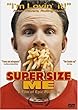
StrawberriesIn my two most recent posts in the public policy series, I’ve addressed food and healthcare. Clearly, these are both very intricately connected to diet. The food one consumes is directly related to their diet and one’s healthcare is also affected (positively/negatively) as a result of their diet. Meaning, if I eat McDonald’s for the next 30 days like Morgan Spurlock, my health will seriously deteriorate. Today, I thought I’d talk about “the perfect diet.”

With quotations, did you know, that there are over 1,000,000 returns for “the perfect diet?” I think that’s incredible. For the phrase, “the best diet,” there are over 26,000,000 returns. Diet by itself will give you nearly 600,000,000 returns. From my estimation, it would seem that this is a pretty important issue to people and rightfully so. Did you know that most cells in the human body renew themselves? Meaning, the cells that make up the skin on your arm will not be the same cells that make up the skin on your arm in 2 or 3 months (give or take). So what does that mean? Where do we get more cells? Or more accurately, where do we get the means with which to make new cells?

Food.

Food is the “fuel” of the body. Some believe they don’t even need food, only sunlight, but I won’t go into detail about that.Utilizing two Christmas gifts (the Real Food Daily Cookbook and a stellar Williams Sonoma loaf pan) I made this tempeh loaf and I'm very excited to say that it was great. Tempeh is one of those foods that I feel I should eat more of, but it can be a challenge because on the whole, I'm not super into it though I know it's a highly nutritious food that would be a good thing to work into my diet more. I think this loaf will do the trick. Yum. And with garlic green beans and mashed potatoes...a perfect meal for a cold New England winter night...except that it's been in the mid and upper 60s here. Oh well, perfect comfort meal for anytime of year.  Again, food is the fuel of the body. However, this ‘energy source’ for the body isn’t always presented and consumed in its simplest form. Meaning, the body usually needs to break down the food into parts, such that the energy can be harvested from the food and directed to the appropriate cells. It’s said that there are three main groups of food: carbohydrates (starch or sugar), fat, and protein [of course we could quibble over just how many groups there are, but this is what was written in the previous reference, so I’m going with it.] It’s these different groups of food, (and the way our body processes food), where the discussion about diets usually diverges.

Some people think you should have a low-carbohydrate diet, while others think you should have a no-carbohydrate diet. Some advocate for veganism. Some advocate for what could be seen as a “less stringent” form of veganism — vegatarianism — which has many degrees to it. Some advocate a slow-carb diet. I could go on and on with the various types of diets that are out there. I’m sure you’ve probably tried or heard about a diet that I haven’t listed.

~

I’m here to tell you today that there is a perfect diet out there for you — I promise. You may be here in search of it. I’ve been blessed with “good genes” and the motivation to stay relatively fit, which has allowed me to eat pretty much whatever I’ve wanted with gaining weight. I don’tI've been following Tim Ferriss' slow-carb diet as outlined in his book The Four Hour Body. Usually I eat chicken or fish, and occasionally steak. Always black beans or lentils, and always nutrient rich vegetables. This is a typical lunch, exactly three weeks and one day after starting (here's the corresponding blog post).  Today was one of those days when I completely forgot to take a photo specifically for Project 365. I meant to, but it slipped my mind. When I woke up on Wednesday, I realized I had forgotten. There was exactly one photo I took the entire day, and this is it. I've been sending photos of my meals to my girlfriend (who is also doing the Fit Challenge with me, although using a different diet) and that's what this photo was intended for. But... it now gets to do double-duty as my Project 365 photo of the day. mean to sound boastful and at the same time, some may be jealous of this. I think there are a number of reasons as to why my level of health (as gauged through body fat % and weight) is as good as it is, but I’ll save that for another day.

Holding my physical health constant, I’ve been able to try a number of different diets. Growing up, I was fortunate enough to have a mother who cooked a variety of cuisines (from Chinese to Indian to Mexican to Italian, etc.). As an adult, I’ve also had the good fortune of trying a couple of different diets. As you’ll note from our Sport & Performance Psychology Resources, we recommend Brendan Brazier’s books — The Thrive Diet being his book on diet, of course. For a time, I ate exclusively what was mandated through the The Thrive Diet. You’ll note that Brazier is a vegan, so all of his recipes are vegan. More recently, I experimented with Tim Ferriss’ diet from the 4-hour body. Ferriss advocates a slow-carb diet, which I mentioned in listing off diets earlier in this post.

In my experimenting with these diets, (and weighing it against how I felt when not on these diets), and then reading reports of how people (fared) with these diets, I came to realize that there’s something that I haven’t read with regard to diets (or maybe I have and just don’t remember seeing it) — it’s personal. Literally, it’s personal. One could read and try thousands of diets from Alicia Silverstone’s to Suzanne Somers’ and still never find the perfect diet. I think that this is the case because there is no perfect diet for everyone. I think Ayurveda is on the right track when they talk about one’s Dosha (or body type). Meaning, we can group certain The largest QOTSA headline crowd to date  7300 people at Queens Of The Stone Age, Lotto Arena, Antwerp, Belgium  2 March 2008  This image is CC so you can view the full size and find yourself  it also happens to be one of the largest group portraits I've ever taken, although i have larger crowdsbody types together and give them a constitution for what people with these body types should typically eat (and not eat). Of course, there are blends of the doshas, and exceptions.

The main takeaway is that there are almost 7 billion people on the Earth. To my wisdom, I would argue that there are just as many “perfect” diets out there. No one can tell you what the perfect diet is for you — only you can assess that. I would encourage you to try things out. Try diet-x or diet-y, but if you don’t feel good after trying it (giving it the appropriate amount of time, of course), then maybe that diet’s not for you. And maybe you don’t find the “perfect” diet with regard to someone else’s plan. Maybe you blend diet-j and diet-w to your new diet — and you write a book about it. When it comes to your body, you are one of the most qualified.

*Disclaimer: Because America is known for being a society of litigation, I thought it necessary to say that I, and Genuine Thriving, cannot be held responsible for your decisions based on reading this post. I am not a physician, nor do I hold any degrees in nutrition, so before making any changes to your diet, I would be remiss if I didn’t recommend you consult a physician or educated professional.

Complementary and Preventive Medicine: Healthcare & American Public Policy, Part 5

: Economics
: Campaign Finance & Elections
: Education
: Food

On March 23, 2010, you may have seen many Facebook profiles switch over to the picture on the right. This is a picture of President Obama signing the into law. Most of the people of these Facebook profiles who displayed this picture would be supporters of the movement to improve healthcare in the United States. In fact, the bill that President Obama signed into law was intended to do just that.

Truth be told, I haven’t read the entire bill, but . While you can never ‘absolutely’ trust Wikipedia, it is still good for gaining an overview. In skimming over the Wikipedia article for this bill, we learn a number of things that this bill has done that could be perceived as steps in the right direction for American Healthcare:

  • Medicaid eligibility is expanded to include all individuals and families with incomes up to 133% of the poverty level.
  • Improved benefits for Medicare prescription drug coverage are to be implemented.
  • Changes are enacted which allow a restructuring of Medicare reimbursement from “fee-for-service” to “bundled payments.”
  • Low income persons and families above the Medicaid level and up to 400% of the poverty level will receive subsidies on a sliding scale if they choose to purchase insurance via an exchange (persons at 150% of the poverty level would be subsidized such that their premium cost would be of 2% of income or $50 a month for a family of 4).
  • Additional support is provided for medical research and the National Institutes of Health.
  • The law will introduce minimum standards for health insurance policies and remove all annual and lifetime coverage caps.
  • The law mandates that some health care insurance benefits will be “essential” coverage for which there will be no co-pays.

These are only some of the things that the bill changes with regard to healthcare law, not to say that this isn’t already a huge number of changes all by themselves. Michael Moore did a documentary on healthcare in the United States a few years back. The movie was called . While some of the things that Moore is lambasting have changed as a result of this legislation, I’m pretty sure that this bill doesn’t address all of the concerns that Moore raised in his movie.

~

The one thing I would have liked to have seen more of in the bill that President Obama signed into law over a year ago, is more . Being a in what could be classified as CAM, I’ve seen the benefits of this important part of healthcare. And the modality that is not nearly as much of a household name as say, , , or (which includes ). In 2002, 36% of adults said that they had used some form of CAM in the last 12 months. .  That’s nearly 4 in 10 Americans who use CAM. [All of these statistics are from the , which is one of the many centers that make up the (a government agency).]

For comparison’s sake, in 2006, 54% of Canadians reported having used CAM within the last 12 months, which was up 4% (from 50%) in 1997 (). In looking closer at the profiles of  and as rated by the World Health Organization (WHO), I wasn’t completely surprised to find differences. There was one major statistic that stood out to me: obesity. Some argue as to whether or not , but as it stands, . In the WHO health profiles of Canada and the US, Canada’s obesity percentage is significantly lower than the US. The percentage of adults 20+ years of age, in 2008, that were classified as obese by the WHO: . Holding all variables the same (20+, 2008), but for Americans: . I’m not necessarily trying to say that Canadians are healthier because they are more likely to use CAM, but the correlation does seem to be there. Of course, to truly measure this, we’d need to do a study of health measures (before and after) of CAM users (and non-CAM users).

~

I’ve given you some statistics about CAM, but haven’t yet explained it completely:

as a group of diverse medical and health care systems, practices, and products that are not generally considered part of conventional medicine. Conventional medicine (also called Western or allopathic medicine) is medicine as practiced by holders of M.D. (medical doctor) and D.O. (doctor of osteopathic medicine;) degrees and by allied health professionals, such as physical therapists, psychologists, and registered nurses. The boundaries between CAM and conventional medicine are not absolute, and specific CAM practices may, over time, become widely accepted.

There’s one other bit of information that I want to cite from a :

This report demonstrates that there is significant underuse of effective preventive care in the United States, resulting in lost lives, unnecessary poor health, and inefficient use of health care dollars. All of the services examined in this report are extremely cost effective: they all provide an excellent return on investment. It is a national imperative to make these and other cost-effective preventive services affordable and accessible for all Americans. [emphasis added]

Much has been written in the past few months about America’s “.” As of 2008, the those of other countries relative to their [the healthcare costs in the US are nearly 16% of the total GDP, which is nearly 5% more than the “second place” country, Switzerland. For comparison’s sake, Canada is at 10%.] It takes a bit of foresight, but as the study above describes, it is imperative that the US (and other countries) significantly incorporate the effective use of preventive care into healthcare. Moreover, I think the diligent use of CAM (in conjunction with conventional medicine), paired with the idea of preventive care would dramatically reduce healthcare costs (for the government) and for its citizens.

The Scientific Evidence for Distant Healing: Psi Phenomena, Part 5

: The Scientific Evidence for Telepathy
: The Scientific Evidence for Clairvoyance
: The Scientific Evidence for Precognition
: The Scientific Evidence for Psychokinesis

Finally, we’ve reached the last of the “.” Today’s post will be about the scientific evidence for distant healing. I struggled with what to title this post. Within the context of the “Big 5” as coined by , he refers to this psi phenomenon as “.” I think the word psychic can be a bit of a misnomer sometimes, confuse people, or even conjure up images of a psychic (who aren’t necessarily doing the healing at a distance [that is, “regular” people can do it, too]). I think this is a disservice to the phenomenon as there’s nothing “spooky” about it. Others refer to it as “.” While this is completely accurate (nonlocal meaning that the healing is taking place because of something that isn’t “present”), it could be considered too science-y and may not be as accessible as possible. This is why I’ve settled on distant healing.

The has a great . I like it so much that I’m going to use their explanation for :

Distant healing encompasses a broad range of healing practices, many of which are based in ancient spiritual traditions. Virtually all major religions, including Buddhism, Christianity, Islam, and Hinduism, endorse and encourage the use of distant healing among their adherents.

Two of the most common distant healing practices are offering prayers for those who are ill and using forms of meditation where the practitioner holds a compassionate intention to relieve the suffering of another. Some practices focus on curing a very specific disease state while others emphasize creating a compassionate environment that can have a healing effect. Virtually all distant healing practices are concerned with alleviating the suffering and increasing the well being of others.

As part of my master’s program, I read many of the studies (on healing prayer) that this quotation is referring to. In preparing to write this post, I was initially going to cite a number of them individually, until I found an , that reviews all of the studies that I had known about (and then some). It isn’t a meta-analysis per se, like I had been able to find for some of the other posts in this , but it’s the next best thing (an aggregation).

The first two studies that Benor addresses are what he calls the ‘two best studies’ that address distant healing for human physical problems. The first is a study that was conducted to .The concluding sentence of the abstract: “These data suggest that intercessory prayer to the Judeo-Christian God has a beneficial therapeutic effect in patients admitted to a CCU [coronary care unit].” The second study that Benor addresses is a follow-up the first study called: “.” The concluding sentence from that summary: “Remote, intercessory prayer was associated with lower CCU course scores. This result suggests that prayer may be an effective adjunct to standard medical care.”

Both of these studies are more than 10 years old, but one of my favorites on this subject that is just as old comes from the of famous scientist . Elisabeth did a study in conjunction with 3 others to tests the . The conclusion: “These data support the possibility of a DH [distant healing] effect in AIDS and suggest the value of further research.”

There’s no doubt that the sheer volume of studies that have been conducted on this topic should be enough to warrant more and more research. Even the studies that demonstrate the power of our words (on or on ) could be seen as support for distant healing. , along with [two of the more prominent names in the public dissemination of information on this topic], have curated a nearly 20 pages long! (It’s nearly 30 pages, if you include their introduction and answers to some questions about the research. IONS has also compiled a that’s over 10 pages. Daniel Benor has also published a that have compiled a number of resources on this topic.

One more quote I want to share from the Benor article I mentioned earlier in this post. I think it’s a very important point and I will expand upon this when I address healthcare in my . I really implore you to take some time to ponder the implications of this quote:

One would hope that the benefits of such an inexpensive intervention would appeal to those who are concerned over the high costs of medical care.

~

If you liked this paper/series, you might want to check out some of the other papers/series I’ve posted.

The Timeless Wisdom of Commencement Speeches

It’s that time of year again (or maybe just after that time) where thousands of students across the world prepare to ‘graduate’ from college/university/high school and move on into a new place in their lives. Invariably, coupled with this rite of passage is some sort of speech given to them by an elder. Someone with wisdom and knowledge. Someone who is charged with the task of (motivating?) these wide-eyed youngsters into an assortment of possibility. I have yet to give a commencement speech (although I can see it happening at some point in the distant future), but I can’t imagine it’s a very easy speech to write/give.

Let me explain. In the audience you have a wide array of people. There are people who are conservative, people who are liberal. There are people who are (older), there are people who are young (some still have yet to full mature into themselves). There are parents, sometimes grandparents. There are siblings. There are people of varying intelligence. There are people at different stages of development and there are people with varying degrees of religiosity. There are people don’t care what you say and there are people who will hang on your every word. I understand that many will say that the characteristics I have described are not that much different from any other audience, but to me, it feels like there’s something different about a commencement audience. Maybe I haven’t quite captured the feeling that I’m trying to describe.

So, even though you might be communicating (specifically) to the graduates, their varying degrees of development, motivation, and aspiration, could make it hard to settle on a singular focus. I think that’s what makes speeches like so good. The wisdom he conveyed was timeless. It’s probably part of the reason why Time ranked it second on their .

Then there are speeches that are more aimed at humor. I found particularly amusing. There are also those (like Poehler’s) that are intended to be humorous and insightful. Some say could have been the best ever (I think that’s a tad overstatement). Even more recently, Stephen Colbert gave what some are calling .

Like the TIME article, you’ll find a variety of sites that have lists of some of the best (or just the ones that year) commencement speeches. There’s this from The Huffington Post and there’s also a list of from ‘Online College Degrees.’ I’m a little surprised to see Jobs’ 2005 speech at the top of this list, but maybe he wasn’t thought to be the speaker that he is today back in 2005.

It seems that this time of year also motivates people (or bloggers) to talk about their favorite commencement speeches of all-time. liked Bono’s speech at UPenn and JK Rowling’s speech at Harvard.

There are also the sites that seem to collect graduation speeches. There’s a of graduation speeches. I’ve also seen sites like that actually have a storehouse of commencement speeches that can be broken down by speaker (politics, business, technology, science, media, arts, sports, and entertainment). I’ve seen some “off-the-beaten path” commencement addresses that I thought were pretty good, but were not talked about by journalists or bloggers (at least that I had seen).

What are some of your favorite commencement speeches? How would you prepare and craft a commencement speech? I think before I sat down to write, I’d want to get some statistics on the class I was speaking to (not just their majors), but if there were a way, I’d want to know where they were going after school (do they already have jobs?) and if possible, maybe see if I could have an assessment of them based on . That might be asking a bit much (AQAL), but it would sure help to set the tone of the language of the speech.

Charting The Unknown: What’s It Like To Explore

A few weeks ago, I had the chance to see a . This particular luau was a little different from most luaus. Most have the traditional Hawaiian food, Hula dancers, Poi spinners/twirlers, and music. This particular luau that I saw was a cross between that and a retelling of the story of some of the first voyages from Tahiti to Hawaii. From the luaus website:

It is during the time of epic voyages between Hawaii and Tahiti, along one of the longest sea roads of Polynesia, that our journey takes place. Through laughter, fear, seduction and fire, a new legacy is created, born from the cherished seeds of their ancestors.

As the show concluded, I couldn’t help but wonder… what was it like for those early explorers of the world?

Outside of astronauts, I really can’t think of anything that compares to what these early explorers might have been feeling before beginning their journeys. And these astronauts would only have relatable experiences to those explorers that set sail after the ones that had already gone “first.”

Just stopping for a moment… to consider what it’s like to leave everything you know – everything you’ve ever known – to get on a boat to set sail for the new land. Not knowing what kind of topsy-turvy experience the ocean will gift them with. Not knowing what kind of experience the new land will bring them. Will their be food? Will we be able to make shelter? Will there be predators? But maybe most of all, will we make it?

It’s a reasonable question, yes? You’re venturing out into the unknown. Venturing out into uncharted territory. For those initial explorers, for the ones who left their land before anyone else had done so, they were venturing out into the water before anyone else had. They didn’t know that they would eventually find . I just can’t imagine what it was like for these early families to voluntarily leave everything they’ve known.

~

History wasn’t a . Nonetheless, I understand the importance of having an understanding of where we (as a species) have been to understand the possibility of where we may be going. As I reflect on some of these early experiences of our species, I wonder if, in my lifetime, we will again get to have this feeling of . I suppose we could say that scientists get to have this feeling when they conduct research. They are, in a sense, charting the unknown. Beyond that, we could even stretch the metaphor to include psychologists/psychiatrists who offer counseling where they help the client “plunge the depths of their psyche.”While these experiences may be similar, they don’t give me the impression that they would compare to making humans feel “small” in the sense that an experience like setting sail on the ocean might. Leaving the edge of the shore and being out in the open water without land as far as the eye can see — it’s quite an extraordinary sight! In fact, I’m told there’s nothing like it. To see stars stretch from one end of the horizon all the way to the other. Remarkable.

It can also be humbling, can’t it? To see a sight like this and realize that the Earth, that humans, are just a tiny spec in the universe. I really hope that in my lifetime (or very nearly after), humans again get to have that feeling. That humans will pilot spaceships and attempt to physically chart the depth and the expansiveness of the universe. I think we can do it. I feel we can do it.

Twitter: Who I’m Following, Part 2

Twitter, new logo twitter, twitter logo, twitter emblem, blue twitter bird, In a continuation from , I am listing the people that I am following on Twitter along with a mini-description of who/what they are/have done.

: While I may not always agree with what the UN does (or doesn’t do), I think that the work they do is very important to fostering a global climate of peace. Moreover, I think an organization like the UN would likely be involved in any .

: I am not from Ohio nor do I think that I will ever live in Ohio (long-term), but if Kucinich’s idea of a is ever realized, I will happily submit my resume to be part of that government agency.

: : “Bernie Sanders is the longest serving independent member of Congress in American history.” It just goes to show that it is possible for independents to be elected to the US Congress and stay there and make a difference.

: We can chalk this one up to smart people. If of Al Gore and Joe Lieberman in 2000, the political landscape may look very different — same goes for the scientific landscape. We may not have had the documentary .

: This is the Twitter feed of the complementary healthcare modality of which I am to use.

: A comedian (from Canada) who has some of the funniest bits on race that I have ever seen. For some of his funniest jokes, check out what I wrote about him .

: The current president of the . I’m looking forward to updates from her about new studies connecting consciousness, science, spirituality, and wisdom.

: The founder of “.” I have no doubt that there will be some pleasant reminders from her about “believing your thoughts.”

: I saw Paul give a presentation to a group of students during my sophomore year as an undergrad. I liked his positive message and am glad that he continues to share it with the world.

: I like to think of Louise as the “Queen of Self-Help.” She has helped change so many lives with the principles from “.”

: I wish were on Twitter. is the organization that continues to see the world through the eyes of .

: He has been talking about spirituality for nearly 20 years, but he didn’t get “famous” until he went on Oprah and nearly “broke the internet.” Footage from the ten sessions can be found .

: I recently had the good fortune to read . Of course, there was a to the ideas put forth in the book, but the authors of The Spirit Level have published an updated edition and continue to provide updated information on their blog. My favorite bit in this ongoing debate is a video of the 4 of them (two in favor and two opposed) .

: I don’t remember where I first saw , but I continue to be amazed at how breaks down the issues in a way that can be accessible to many people.

: I first saw Eboo give a lecture during my undergrad called: “” This guy is really smart and like Rachel Maddow, he, too, is a Rhodes Scholar.

: Christiane Amanpour is probably one of the better journalists of the last 30 years. I don’t often watch , but I think she is very smart.

: “Institute of HeartMath is dedicated to conducting research and providing programs for schools and families to facilitate heart-based living.” Some of the research that happens here is incredible. Check out the under “Most Popular Research.”

: The of the . Layton led the to , more than double its previous high. It’s quite possible that he’ll be the first Canadian Prime Minister not affiliated with the (kind of like the ) or (kind of like the ) in history.

: ThreeHundredEight is the Canadian equivalent for FiveThirtyEight. refres to the number of seats in the Canadian House of Commons.

: Elizabeth May is the first member of the to be elected to serve as a .

: Another very smart person. Rifkin wrote . I highly recommend reading it.

: While Robinson has done a number of things, I first learned of him through his TEDTalk called ““. From there I got a hold of his — another great read. I also like the .

: I was first introduced to Hans Rolling through his TEDTalk, “.” I have since learned that he does a number of cool things with statistics on his site, .

: Another really, really smart person. My introduction to was through his book, . He’s the Director of the and, interesting fact: at the age of 29, he became one of the youngest economic professors in the history of Harvard.

: Like I talked about with Ezra Klein yesterday, my first introduction to was through . He seems like a really smart guy that knows his stuff, especially when it comes to politics.

: He is sometimes credited with “.” I can’t say I’m a fan of some of the things he says, especially segments like ‘,’ but he’s smart. I may not continue following him throughout my time on Twitter, but at least initially, I’m going to give it a go.

~~~

So this is the rest of the list that I have chosen to initially follow. There’s no doubt that the list of people I follow will expand and as it does, I may do a Part 3 (and Part 4) of this series. Is there anyone I’ve missed? Is there someone you might suggest? Who are you following and why?

Twitter: Who I’m Following, Part 1

So I did it. I finally did it. I joined the . I’m not sure how or why, but I had the strange idea that Twitter was mainly for cell phones and seeing as though , I never joined. A few months ago, I decided that I might dip my toe in the water and I signed up for an . I never used it, but it was there. Over the last couple of weeks, (off and on) I’ve done a bunch of reading about Twitter – what is its purpose, what it can be used for, how not to use it, how to use it, etc. What’s clear to me, there is an abundance of opinions about the “right” and wrong way to use .

Once I made the decision to join Twitter, I had to then decide who it was that I was going to follow. A good place for me to start was the list of “pages” I’ve liked on Facebook. Since I didn’t want my Twitter feed to just be about (information), I thought it would also be appropriate to add comedy as well as major sports teams that I’m fans of. Without further adieu, I give you, the list of people who I am following (at least after the first 24 hours of being on Twitter):

: Rachel Maddow is the host of “” weeknights at 9pm on MSNBC. I try to catch the show when it’s posted to the web a couple of hours after it’s over. : she earned her PhD in Politics at Oxford University on a Rhodes Scholarship.

: I’m not sure what I can say about Oprah that most people wouldn’t already know. I have a sneaky suspicion that now she’s not hosting her TV show every afternoon, she may use Twitter more often. Pure speculation.

: The current President of the United States. Say what you want about his policies, he is most definitely among the greatest orators of our time. His speeches are a treat to listen to. If you haven’t, I’d go back and watch one and remember, at the time he gave it, he was a still a State Senator for Illinois. (An interesting tidbit: after the speech showed that some people, in 2004, were already calling Barack Obama the 1st black President of the United States.)

: “Top Tweets algorithmically selects and retweets some of the most interesting tweets spreading across Twitter. Enjoy!” As a ‘lurker’ of Twitter, I often checked out the @toptweets feed to see what was being bandied about. Now that I’m on Twitter, of course I’d follow @toptweets.

: I really like smart people. I think Naomi Klein is brilliant. She’s quite well-known as the author of two books: and The Shock Doctrine. I’ve only supplied links to the Wiki articles for both these books, which is a nice introduction into the book. I’d still advise spending some time reading the actual book.

: George Stroumboulopoulos is the host of a Canadian talk show that covers everything from politics to celebrities spliced with pop culture and news. I see it as a hybrid between and The Rachel Maddow Show (without all of the analysis that Maddow and her team do).

: Nate Silver and the are the best place to get forecasts of presidential, Congressional, and gubernatorial elections in the United States. Not only does he forecast elections, but he also addresses things like March Madness and other questions of science.

: I was first introduced to Ezra Klein on an “episode” of The Rachel Maddow Show. Again, my affinity for smart people has me following Ezra Klein. On a side note, I was surprised to see someone (my age) on TV as a commentator. I’m sure most people at some point have that (s/he’s my age!) moment when watching TV — seeing Ezra Klein was that for me.

: I like to learn and the tweets from this account are supposedly factual. Assuming that is in fact the case, most of what I’ve seen come from the feed so far has made me think, “well that’s interesting.”

: I’ve been a fan of the Toronto Blue Jays for as long as I can remember. This is a great way to stay up to date with Blue Jays information. In fact, since I follow the Blue Jays feed, I learned that they were (temporarily, of course).

: Like the Blue Jays, I’ve been a fan of the Toronto Maple Leafs for as long as I can remember. Just like with the Jays’ feed, I’m able to keep abreast of the latest Leafs’ information. For instance, today, I learned the Leafs’ .

: As with the Blue Jays and the Maple Leafs, I’ve been a fan of the Cowboys for quite some time, too. I don’t have any random signing or demotion to mention for the Cowboys, but I am hopeful that there will be a .

: When I was younger, I used to watch a lot of CNN and got used to seeing Anderson Cooper. I always liked how he seemed to ask some of the tougher questions of the people he interviewed. I don’t watch him very much anymore (only in the airports where there always seems to be a TV tuned to CNN), but I thought he might be an interesting person to follow.

: I really, really like Jon Stewart. . I’m a little sad that he doesn’t have his own Twitter account, so I thought I’d follow the next best thing: his TV show’s Twitter account.

: Like Jon Stewart, I think that Stephen Colbert is really smart. I think it takes a smart person to be able to satirize the news in the way that Colbert does. Most recently, I’ve enjoyed .

~~~

I try to make a point of having posts no longer than 1000 words (or very near to that), so look for the rest of this list in tomorrow’s post.

What is Transpersonal Psychology: A Contextual Understanding

I was looking at my for this site a couple of days ago and I noticed that my explanation of transpersonal psychology might not be entirely clear for those not already familiar with the field of transpersonal psychology. It seems that the field itself has debated about a definition for some time, leading to an assortment of definitions. That’s why the definition that I’ve included in my bio is as follows ():

An approach to psychology that a) studies phenomena beyond the ego as context for b) an integrative/holistic psychology; which provides a framework for c) understanding and cultivating human transformation.

That’s a very succinct definition. And to most people who are familiar with transpersonal psychology, that makes sense. In today’s post, I thought I would explain transpersonal psychology in the context of the ‘rest’ of psychology.

~

When , they think of professional counselors and clinical psychologists. “Are you analyzing me?” This is a question that psychology students around the world hear when they tell someone they are majoring in psychology. The thing is – there are within the American Psychological Association.These divisions span from to to to and to, yes, . So, to say that psychologists are always (or only) “analyze” people is like saying doctors are always diagnosing strangers.

The assumption that psychology is all about analyzing people stems from some of the early psychologists, namely, . Freud helped create what we will call the “first force.” This first force is better known as . This particular brand of psychology uses things like and to plunge the depths of one’s psyche by way of their unconscious. Through this ‘force’ of psychology, we, as humans, were taught that we have little to no control over ourselves and that we are merely the manifestation of our unconscious hopes and desires.

The next force, the “second force” of psychology, is . This is where we have the famous experiments where the researchers rings the bell and the dog salivates – . Classical conditioning is when an unconditioned stimulus (say a bell) is paired with a conditioned stimulus (say food) such that the unconditioned stimulus can produce the response one would expect to see with the conditioned stimulus. If I ring the bell every time I feed my dog, I would expect that the dog would begin to salivate when I ring the bell (and don’t feed him because he’s conditioned to expect food after the bell).

Building upon Pavlov’s research is , from . The difference between operant conditioning and classical conditioning is that in operant conditioning, the behavior is said to be voluntary whereas in classical conditioning, thebehavior is said to be reflexive. So, the “second force” of psychology tells us that humans are just like dogs in that we are just a grouping of conditioned responses.

The “third force” of psychology is . The emergence of this field of psychology, not coincidentally, was the same time that came to prominence, which gave rise to such social and political movements as the and . Humanistic psychology brought into focus a more holistic (more holistic than had been previously thought) perspective of the human. This “force” of psychology is where we saw the birth of ‘s . Humanistic psychology is where we see the emergence of Carl Rogers’ as a therapeutic technique. So, this ‘force’ of psychology, builds upon the two that came before it, in that it believes that humans are more than their unconscious motives and that they are more than a jumble of conditioned responses. This ‘force’ would say that it takes a more holistic view of the human by including its emotions, too.

The “fourth force” of psychology, and the purpose of this post, is . The easiest way to understand transpersonal psychology is in the context of the other three forces. Where the first three forces are about unconscious drives, conditioned responses, and an addition of emotions, transpersonal psychology includes that — and beyond. Transpersonal, (like the name implies), goes beyond the person. So, in effect, transpersonal psychology includes spirituality, , and various states of consciousness. From the :

Transpersonal Psychology is a full spectrum psychology that . . . [adds] a serious scholarly interest in the immanent and transcendent dimensions of human experience: exceptional human functioning, experiences, performances and achievements, true genius, the nature and meaning of deep religious and mystical experiences, non-ordinary states of consciousness, and how we might foster the fulfillment of our highest potentials as human beings.

So, contextually, we could say that transpersonal psychology is a more complete “holistic” view of the person (through the lens of psychology). People from transpersonal psychology wouldn’t say that the other forces of psychology are less important than transpersonal psychology. In fact, from my experience, most people within the field of transpersonal psychology are grateful to those that have gone before (and developed the other forces) to have allowed room for transpersonal psychology to fill a voice. Transpersonal psychology builds upon the various areas of psychology before it and treads into some of the areas of the human experience that had not previously been studied in academia.

New Zealand Grows No GMOs: Food & American Public Policy, Part 4

: Economics
: Campaign Finance & Elections
: Education

The US recently unveiled their new version of the and have called it: . I think this food plate is much better than the pyramid, but I won’t get into that in this post. I’ll talk about my opinion about “diets” in an upcoming post. In this post, I’ll be talking about food policy.

One of the main clues that there is something not completely right about the food policy in the US is some of the alarming documentaries. In 2004, there was . An alarming look at what it’s like to eat strictly a diet for 30 days, with little exercise (less than 2.5 miles of movement a day). At the time, McDonald’s did not have as many healthy choices as they have on the menu today, but as is pointed out in the film, salads can actually have more calories than the burgers (if cheese and dressing are added).

In 2005, there was . This was a difficult film for me to watch. It illustrates some of the unsightly practices of industries that use animals, but since this post is about food policy, I will direct you to the part of the film that explains the unnecessary harm that humans inflict upon animals for food production. While the film advocates veganism, I’m not suggesting you take up this practice, but after watching the movie, I’d be surprised if you didn’t at least consider it.

In 2008, there was . This is probably the most poignant movie with regard to food policy. This movie breaks down the unsustainable (both economically and environmentally) practices of food corporations like , , , and . If you eat meat (and don’t buy organic), there’s a good chance that it’s from one of these companies. Most effectively, the documentary explains that the reason food production has become what it is today, is due in large part to the boom of fast food in the 1950s. An increased demand  for food put pressure on companies to make more food — faster. And so this is what we have today.

One of the things that frightens me the most about the information found in documentaries like these have to do with (or any biological patent, for that matter). Companies like Monsanto, seeds in the lab and then patent the seed they’ve created. From there, they then sue (usually, successfully) farmers who use seeds that are similar to the ones that they’ve now patented. So, these farmers who know nothing of Monsanto and their created seed are going about their business doing what they do and are then, all of a sudden, told they have to stop using the seeds they use (because they are infringing on the patent rights of Monsanto).

~

I think there’s something wrong with food policy when a company that creates a seed can legally sue (and win) against a farmer who uses the original and natural seed. The seed that came from the environment. Doesn’t that seem a little strange to you?

Like in my previous posts in this series, I don’t think there needs to be any grandiose solution to fix the problem. While the problem may be widespread (as in the other posts), the solution needn’t be overly complicated. Of course, these simple solutions aren’t necessarily as easy to implement as they are to envision. With regard to food policy, a simple solution I see is to . It may sound a bit extreme and unfeasible, but is it really feasible to continue to ingest these scientifically engineered foods? Do we really think that there are nearly as many nutrients in lab-created food as there are in “naturally-occurring” food?

European Countries that Have Banned Genetically Modified Foods in at Least One Part of the Country

Albania, Austria, Belgium, Bulgaria, Croatia, Cyprus, Czech Republic, Denmark, Estonia, Finland, France, Georgia, Germany, Greece, Hungary, Iceland, Ireland, Italy, Latvia, Lithuania, Luxembourg, Netherlands, Macedonia, Malta, Montenegro, Norway, Poland, Portugal, Romania, Russia, Serbia, Slovakia, Slovenia, Spain, Sweden, Switzerland, UK: England, UK: Scotland, and UK: Wales. (As of September 2010: )

In all, there are nearly 40 countries on that list. The site where I got that information from also has a of Europe that are at least partially GMO-free.

~

Europe is often touted as being ahead of the North America when it comes to things like these, but how about New Zealand? From :

No genetically modified crops are grown commercially in New Zealand. No fresh fruit, vegetables or meat sold in New Zealand is genetically modified.

That’s right! No genetically modified food in New Zealand! It’s possible. It’s possible to have an entire country that does not produce food that has been genetically modified. Granted, New Zealand is smaller in terms of population than much of the rest of the world ( countries ranked by population based on country’s estimates and the UN), but this is still quite an accomplishment and dare I say, example, for the rest of the world. If New Zealand can do it, we can, too!

Quotes: Passion, Produce, and Production

I’ve recently started using “” as one of my tags for posts I write. Most of the times I’ve got a quote in a post, I’ll tag it with “Quotes,” so it’ll be easy for you to find all the posts where I’ve used famous quotes. On that same note, I thought it was time for me to do a post of quotes.

Throughout high school and most (okay, all) of my undergrad, I was semi-obsessed with quotes. I thoroughly enjoyed finding concise bits of wisdom from a famous person to express myself clearly. After undergrad though, quotes just seemed to fade as a priority for me. They became less and less a focus of the things I did. Maybe that was because I was in the midst of a PhD program and found myself reading oodles of academic journal articles. Regardless of the reason why, recently, I’ve remembered the value of a short sentence that can speak “volumes.” Today, I thought I’d recount some of the quotes that I’ve come across recently that have made an impact.

One of my current favorite quotes is one that is often and maybe that’s partly why I like it so. It’s not as famous as the misattribution of , nor is it as famous as the to a Martin Luther King, Jr. quote, but I’ve seen it written many times to the wrong name. I don’t remember where I first saw the quote, but I know that I like it. From :

Do not ask yourself what the world needs. Ask yourself what makes you come alive, and then go do that. Because what the world needs is people who have come alive.

It feels like it speaks to the heart of what I think we should be doing on the planet.People should be passionate about what they do. Find your passion — fulfill your passion. I understand that sometimes people think this is not an option for them (doing their life’s passion), but I believe, there is room for us all to be doing our true passion.

Another good one that I found was at a restaurant that my partner and I were eating at this past winter. It was written on a chalkboard in pretty big letters (and the restaurant is , as they have a farm on the property). When I saw it, I thought, of course! From :

“If organic farming is the natural way, shouldn’t organic produce just be called ‘produce’ and make the pesticide-laden stuff take the burden of an adjective?” – Ymber Delecto

Doesn’t that just make sense? Too often we have a word for something and then we have to develop a modifying word to better understand the initial word. Produce was originally just produce — why do we need to call it organic produce? Another strange one on this topic, specifically in the food category, is the way we talk about sugar. Refined sugar equals bad, but unrefined sugar equals good. We have sugar to begin, but then we add the word refined (to explain that it’s been worked over), but then we need to add the prefix ‘un’ to tell us that the sugar has in fact, not been worked over. Shouldn’t it just be sugar?

One last one that I had found for a presentation I had to give recently. From :

In a truly great company, profits and cash flow become like blood and water to a healthy body: They are absolutely essential for life, but they are not the very point of life.

This comes from Collins’ book, . I think it speaks to a fundamental (pathology, if we want to invoke the documentary, ), with the way the majority of business operates today. Clearly, does not think business should be pathological. He’s been lecturing on sustainability for quite some time now.

So what about you. What are some of your favorite quotes?