More Lessons from “The Art of War”

A litte less than a week ago, I detailing some of the lessons (or quotes) that I pulled from The Art of War. At that point, I had only read through a little more than half of the 13 chapters. Today, I’ve only got about 3 more chapters to go, but I thought I’d add a post with some of the other lessons I thought were worth repeating.

From pages 126, 127 and 128 of Samuel Griffith’s translation (in 1963):

“When troops are strong and officers weak the army is insubordinate.”

“When the officers are valiant and the troops ineffective the army is in distress.”

“When the general is morally weak and his discipline not strict, when his instructions and guidance are not enlightened when there are no consistent rules to guide the officers and men when the formations are slovenly the army is in disorder.”

“When a commander is unable to estimate his enemy uses a small force to engage a large one, or weak troops to strike the strong, or when he fails to select shock troops for the van, the result is rout.”

“Conformation of the ground is of the greatest assistance in battle. Therefore, to estimate the enemy situation and to calculate distances and the degree of difficulty of the terrain so as to control victory are virtues of the superior general. He who fights with full knowledge of these factors is certain to win; he who does not will surely be defeated.”

Lessons from “The Art of War”

At the end of August, I thought I was going to be going on a road trip from DC to Newfoundland. In preparation for said road trip, I borrowed 9 books from the library. I’ll be talking about one of those books () when I write about The Stockdale Paradox, (which I teased in a post ).

One of the other books that I borrowed: “.”

It’s a book that has been around for ages and from what I understand, is often revered as scripture for some in the business world. As a result, I thought it would be good to read through it. Of course, to really savor its contents, it’ll be necessary to read it more than once.

I’m about two-thirds through it and I made a note of some interesting quotes that I thought would be worth sharing.

From page 73 of Samuel Griffith’s translation (in 1963):

“Thus, while we have heard of blundering swiftness in war, we have not yet seen a clever operation that was prolonged.”

“For there has never been a protracted war from which a country has benefited.”

From page 74:

“Where the army is, prices are high; when prices rise the wealth of the people is exhausted. When wealth is exhausted the peasantry will be afflicted with urgent exactions.”

“With strength thus depleted and wealth consumed the households in the central plains will be utterly impoverished and seven-tenths of their wealth dissipated.”

“As to government expenditures, those due to broken-down chariots, worn-out horses, armour and helmets, arrows and crossbows, lances, hand and body shields, draft animals and supply wagons will amount to sixty per cent. of the total.”

I could most certainly attempt to draw comparisons between the US and quotes from page 74, but I don’t think that level of detail is necessary for the point I’m trying to make. I will say this, though: it is most certainly “” to consider the shape of war in 2012 in the context of these 5 quotes, which come from writings that are over 2000 years old.

There is No Such Thing As “Left-Brain” and “Right-Brain”

Let me just begin by saying that before I knew better, I often referred to the “left-brain” and the “right-brain.” When I got old enough (and studied the brain a little bit), I learned that those are just colloquial terms that referred to the functions most commonly found in the left hemisphere and the functions most commonly found in the right hemisphere. While I understand the importance of using labels to effectively communicate what could be perceived as complicated theories, I think it’s important that we don’t talk about the ‘left-brain’ and the ‘right-brain.’

The primary reason for this — there is only “one” brain, for which there are two hemispheres. When we begin to talk about the ‘left-brain’ and the ‘right-brain,’ it severs us from reality (even slightly). The secondary reason — we’re now learning a great deal about . This is the idea that — essentially — the brain can change. Through environmental, behavioral, or other changes, the actual structure of the brain can change. I recently came across a great RSA talk by on “The Divided Brain.” I’ve included a few quotes that I found worth repeating. Below, you’ll find the video embedded.

On empathy:

“If you can stand back & see that the other individual is an individual like me, who might have interests & values & feelings like mine, then you can make a bond.”

On imagination being in the right hemisphere and reason being in the left hemisphere:

“Let me make it very clear: for imagination you need both hemispheres. Let me make it very clear: for reason you need both hemispheres.”

In case you don’t watch the video the whole way through, he closes with a :

“The intuitive mind is a sacred gift. The rational mind is a faithful servant. We have created a society that honors the servant, but has forgotten the gift.”

The Theory of Relativity and the 2012 London Olympics

A few hours ago, I was in the for the mid Atlantic watching  in Women’s Soccer in the quarterfinals. The reason I mention that it’s the flagship Whole Foods is because they have an area where there’s 12 (maybe more?) big screen TV’s playing an assortment of sports. As the are currently “the thing” right now, that’s what was on almost every TV. (Aside: I was actually surprised not to see them on every single TV.)

Anyway, as I was watching Canada salt away the second half, I was also keeping tabs on a few other events. There was , , , and . It was really cool seeing badminton because, well, for one, I haven’t seen it since the and for two, it was ! While it was a bit dizzying to keep tabs on all these sports, I started to notice something — tennis started to look veeeerrrrryyy sloooowwww. This seemed odd to me because tennis players 180+ km/h. For those of you reading this in the US, that’s approximately 112 mph. So — not slow.

Why did it look slow? The badminton players could hit the birdie (or ) back and forth over the net 4 or 5 times before the second tennis player can hit the first tennis player’s shot. Incredible!

As you’ll note from the title of this post, I mentioned the . Why? Because the Theory of Relativity can explain why the  gameplay of tennis looked slow in relation to the gameplay of badminton. There’s a that sums up the theory of relativity quite nicely:

When a man sits with a pretty girl for an hour, it seems like a minute. But let him sit on a hot stove for a minute and it’s longer than any hour. That’s relativity.

You Are Exactly Where You’re Supposed To Be

By being a good listener, people often come to me for advice. Maybe this is why I decided to get into (or maybe I got into psychology because I’m such a good listener?) One of the common themes I recall has to do with people asking about some iteration of “.” I’d be lying if, I, myself, never considered that I took “the wrong road.”

The advice that stems from this title is simple: you are exactly where you are supposed to be.

In short: if “here” weren’t where you were supposed to be, you’d be somewhere else.

After I continually repeat some iteration of these two phrases (the title and the one in the previous sentence), the advice-seeker’s demeanor begins to soften in a way that lets me know that they’ve taken ‘it’ in. It’s one of my favorite pieces of advice (along with ““) Why? Because it gives the advice-seeker the permission to stop second-guessing themselves, something that our culture is rife with. It lets the person be okay with where they are and in another way, gives them permission to stop wishing they were somewhere else.

Of course, someone may choose to continue to wish they were somewhere else, but this philosophy can be — at least a little bit — liberating.

~

An extension of this phrase can be used when someone is still in the ‘before’ stage of their decision. That is, I just described how it can be used ‘after’ someone’s made a decision, but it can also be offered before a decision is made. When someone is trying to decide between two paths, again, it can be kind of freeing when you realize that no matter which way you choose, it will be the ‘right’ way.

I also want to make it clear that I’m not offering this phrase/post as a “tweet-worthy” canned piece of advice. There’s a whole philosophy (see either or ) behind this way of thinking and some folks subscribe to it. I’m not advocating one subscribe to it in some or all instances, but I would suggest one take the time to consider it.

If You Can’t Explain It Simply, You Don’t Understand It Well Enough

The title of this post comes from one of my favorite historical figures: Albert Einstein. Although, there is some as to whether or not he actually said it. In today’s fast-paced internet climate, it’s important to be mindful of attribution. Remember the one that made the rounds during ? I’m sure you’ve seen attributed to Mandela. And one of the lesser known misquotes, H. Whitman when . I’ve read a lot of Einstein’s work (more than the average person, that is), and I would say that it sounds like something he would say.

I’ve had and as a result, have been exposed to quite a bit of jargon. The psychological literature has a fair bit of jargon. Part of that is necessary because researchers of psychology are — at times — creating new ways of understanding human behavior. Through this new understanding, new language is sometimes necessary.

In the business degree I’m currently working on (nearly halfway done!), I’ve been exposed to quite a few disciplines: economics, finance, marketing, operations, etc. All with their own unique set of jargon. Sometimes, it can be difficult to keep the jargon straight as some words used in one discipline are the same words used in another discipline — but in a different context or with a different meaning.

Jargon can be quite useful when communicating with people who understand the jargon. The “in-group,” as it were. However, jargon has a tendency to severely exclude the “out-group.” Sometimes this is intentional, but I’d rather talk about the unintentional exclusionary nature of jargon. And that’s why I chose the Einstein quote as the title of this post.

“If you can’t explain something simply, then you don’t understand it well enough.” As I said, jargon can be useful — at times — but at other times, it can be really painful. That is, it can be quite demeaning to be in a group of people who are speaking in what may seem like a foreign language, while you sit there trying to make sense of it. Part of the problem is that, sometimes, people using the jargon really don’t understand the material well enough to explain it to you in analogous terms. There’s also just the habit of using certain words when talking about certain concepts and as a result, it can take a concerted effort to not use jargon.

Don’t get me wrong, I like jargon. I enjoy expanding my understanding of language and the different words we have to describe things. (Today, I just learned what eleemosynary means: charitable or philanthropic.) Although, I think it is important to take note of one’s company. If you’re working on a project and not everyone is of the same understanding of the topic, it is of paramount importance that the language used be accessible to all (or most) parties involved.

For anyone that has been on the receiving end of jargon-filled discussion, there is likely greater compassion when noticing that someone else is experiencing a sense of , with regard to jargon. Maybe this all stems from a person’s . This is one of the personality traits from the “.”

~

It’s ironic that in a post about jargon, I find myself slipping into the habit of using some jargon to explain things. That’s how easy it can be to not notice that you’re doing it. The next time you’re in a conversation with someone or in a group-setting, take notice of the reactions of those people around you, particularly, when you hear a piece of jargon spoken. I bet you could use it as an opportunity to quietly explain the concept in more accessible terms and you just might make someone’s day.

Martin Luther King, Jr. Day: Wisdom for Today from the Past

Today is . I wrote about MLK day and suggest taking a look at that post, too.

There isn’t a lot I want to say today, but I do want to point to a speech by Dr. King. I couldn’t find this speech on YouTube, but there is some audio of the speech (but it’s only the final paragraph). Nonetheless, I thought the speech, especially in its context (, , etc.), is quite powerful. Moreover, I think the words that Dr. King spoke are applicable to some of the issues that are facing the world today. I’m speaking particularly to the all-time lows in and the continued .

This was given in November of 1967 to the National Labor Leadership Assembly for Peace on the subject of the “Domestic Impact of War.”

As I move to my conclusion, let me ask you to indulge a personal reference. When I first decided to take a firm stand against the war in Vietnam, I was subjected to the most bitter criticism, by the press, by individuals, and even by some fellow civil rights leaders. There were those who said that I should stay in my place, that these two issues did not mix and I should stick with civil rights. Well I had only one answer for that and it was simply the fact that I have struggled too long and too hard now to get rid of segregation in public accommodations to end up at this point in my life segregating my moral concerns. [Applause]

And I made it very clear that I recognized that justice was indivisible. Injustice anywhere is a threat to justice everywhere. And then there are those who said ‘You’re hurting the civil right movement.’ One spoke to me one day and said, ‘Now Dr. King, don’t you think you’re going to have to agree more with the Administration’s policy. I understand that your position on Vietnam has hurt the budget of your organization. And many people who respected you in civil rights have lost that respect and don’t you think that you’re going to have to agree more with the Administration’s policy to regain this.’ And I had to answer by looking that person into the eye, and say ‘I’m sorry sir but you don’t know me. I’m not a consensus leader.’ [Laughter – Applause] I do not determine what is right and wrong by looking at the budget of my organization or by taking a Gallup poll of the majority opinion. Ultimately a genuine leader is not a searcher for consensus but a molder of consensus. [Applause]

On some positions a coward has asked the question is it safe? Expediency asks the question, is it politic? Vanity asks the question, is it popular? But conscience asks the question is it right? And there come a time when one must take a position that is neither safe nor politic nor popular but he must take it because conscience tells him it is right. [Applause] ()

Want an Idea of What Really Happened During the Financial Crisis: Watch “Margin Call”

At the , an independent film by the name of made its debut. It was released in theatres a couple of weeks ago, while simultaneously being released on and . Meaning, instead of having to drive out to the theatre, you could watch the movie from the comfort of your comfortable couch. I had seen a few bits about the movie in the news that piqued my curiosity, so I took the time to watch it. I was pleasantly (or maybe unpleasantly?) surprised.

The film covers the actions of an investment bank over a 24-hour period. It focuses on the events leading up the . In essence, the movie is one possibility for some of the events that precipitated the crisis. I want to make it clear that I am not saying that the events from Margin Call are what happened, but I think it presents a perspective that hadn’t been adequately articulated in any of the other articles, books, or movies that I’d seen on the subject.

I’ve written about economics here before (most notably in the series), but after nearing completion of a course through business school, I have a different perspective on the economy. Maybe more importantly, I have a more nuanced understanding of why things happen the way they do in the economy. Pairing that with some of the things I’ve read/heard outside of business school make for an interesting take on the state of the global economy.

There are a couple of lines from the movie that I think are worth noting. This first bit of lines is between two of the firm’s employees. One of them is relatively low in the firm and one is somewhere near the middle to top. The conversation takes place (towards the end of the film) as the two of them are headed back to the office a couple of hours before they are about to sell as much of the firm’s holdings as they possibly can:

“If you really wanna do this with your life, you have to believe you’re necessary, and you are. People wanna live like this in their cars and their big houses that they can’t even pay for — then you’re necessary. The only reason that they all get to continue living like kings is because we’ve got our fingers on the scales in their favor. I take my hand  off, and then the whole world gets really fair really quickly and nobody actually wants that. They say they do but they don’t. They want what we have to give them, but they also wanna, ya know, play innocent and pretend like they have no idea where it came from. Well that’s more hypocrisy than I’m willing to swallow.”

The next scene I wanted to highlight is right near the end of the film. The CEO is having a bite to eat in the restaurant on one of the . The Director of Trading walks in and a conversation ensues. In particular, there’s a monologue by the CEO:

“When did you start feeling so sorry for yourself? It’s unbearable. What, so you think we might’ve put a few people out of business today? That it’s all for nought? You’ve been doing this everyday for almost 40 years, Sam. And if this is all for nought, so is everything out there.

It’s just money. It’s made up. Pieces of paper with pictures on it so we don’t have to kill each other just to get something to eat. It’s not wrong. And it’s certainly no different today than it’s ever been. 1637, 1797, 1819, 37, 57, 84, 1901, 07, 29, 1937, 1974, 1987, 92, 97, 2000 and whatever we want to call this. It’s all just the same thing over and over. We can’t help ourselves. And you and I can’t, control it or, stop it, or even slow it. Or even ever so slightly alter it. We just react.

We make a lot of money if we get it right. We get left by the side of the road if we get it wrong.  And there’ve always been and there always will be the same percentage of winners and losers. Happy farts and sad sacks.  Fat cats and starving dogs in this world. Yeah. There may be more of us today than there’ve ever been, but the percentages, they stay exactly the same.”

As I said, this is only one perspective on what happened, but I found it quite interesting to see a depiction of what it might have been like to be on the inside of a firm grappling with what to do prior to the financial collapse. I hope you take the time to check out this movie.

Quotes: Pensiveness, Presaging, and Perception

As I a couple of weeks ago, I started tagging posts where I used quotes with the tag “,” so it’s easier for you to find other posts with quotes in them. I also decided (a couple of weeks ago), to every once and awhile, do a post with just quotes. The first post of quotes contained famous words in passion, produce, and production. Today’s post of quotes covers the topics of pensiveness, presaging, and perception. (I don’t have some sort of preoccupation or propensity for the letter ‘P,’ it just happened this way.) The first, from :

“Whenever you find yourself on the side of the majority, it’s time to pause and reflect.”

I first saw/heard this quote on an episode of The West Wing (or so I thought — in trying to find the episode it was in, I’m at a loss). I could see saying something like this given his character (no pun intended). This seems to be a poignant quote, especially for politics, with regard to debating ideas and bills. I’ve seen a number of articles explaining the and I think it’s true. Dissent is a way of preventing  from taking hold. More than this, dissent allows for a diversity of opinion and thus, a diversity of ideas. When there is more than one opinion bandied about, it would seem (and is) more likely that new ideas can emerge.

An important piece that comes to mind is or what I was explained to me as dialectics. I’ve been reading the wiki article, so that I could more accurately describe the concept that was explained to me and I now see that maybe what I was told was dialectics is not actually dialectics (or maybe is a form of dialectics). Anyway, the exercise that was explained to me was for when two people have differing opinions (and want to settle an argument or come to a resolution of ideas). They begin to have a discussion, but instead of arguing for their own points of view, they argue against their point of view. So, in effect, they find support for their compatriot’s point of view. It can be a very different experience. The next quote we have is from :

“A good hockey player plays where the puck is. A great hockey player plays where the puck is going to be.” – Wayne Gretzky

Personally, I haven’t been a very big “fan” of Wayne Gretzky, but that’s more because I grew up watching the Toronto Maple Leafs in the 1990s and Wayne Gretzky played for the rival Los Angeles Kings. Nonetheless, it’s hard to debate the ‘‘ without including Gretzky in the argument. This quote above is one I’ve found in some of the unlikeliest of places (business, for one). It’s a different way of re-focusing one’s attention on what’s to come rather than what is. It seems especially important when talking about . I wouldn’t advocate living “in the future,” but in most instances, it’s important to have foresight. And the last quote we have is from :

“I know what I have given you. I do not know what you have received.” – Antonio Porchia

This is a great “” quote that can almost come across as arrogant or condescending, depending upon how you receive it (ha!) It kind of lends credence to the idea that “we only hear what we want to hear.” It’s probably not reasonable for everyone to engage in “” all the time, but I bet there’d be a whole let less misunderstandings in the world. really are just a sophisticated set of symbols that help us communicate with one another. It is but a means to an end. It’s like telephones. It’s not that we like/need/want telephones, but we want the ability to communicate with people who are not nearby. The next time you’re talking with someone, think about how much of what you’re saying is actually being received. Better yet, the next time you’re listening to someone, think about how much of what they’re saying to you is actually being received.

Quotes: Passion, Produce, and Production

I’ve recently started using “” as one of my tags for posts I write. Most of the times I’ve got a quote in a post, I’ll tag it with “Quotes,” so it’ll be easy for you to find all the posts where I’ve used famous quotes. On that same note, I thought it was time for me to do a post of quotes.

Throughout high school and most (okay, all) of my undergrad, I was semi-obsessed with quotes. I thoroughly enjoyed finding concise bits of wisdom from a famous person to express myself clearly. After undergrad though, quotes just seemed to fade as a priority for me. They became less and less a focus of the things I did. Maybe that was because I was in the midst of a PhD program and found myself reading oodles of academic journal articles. Regardless of the reason why, recently, I’ve remembered the value of a short sentence that can speak “volumes.” Today, I thought I’d recount some of the quotes that I’ve come across recently that have made an impact.

One of my current favorite quotes is one that is often and maybe that’s partly why I like it so. It’s not as famous as the misattribution of , nor is it as famous as the to a Martin Luther King, Jr. quote, but I’ve seen it written many times to the wrong name. I don’t remember where I first saw the quote, but I know that I like it. From :

Do not ask yourself what the world needs. Ask yourself what makes you come alive, and then go do that. Because what the world needs is people who have come alive.

It feels like it speaks to the heart of what I think we should be doing on the planet.People should be passionate about what they do. Find your passion — fulfill your passion. I understand that sometimes people think this is not an option for them (doing their life’s passion), but I believe, there is room for us all to be doing our true passion.

Another good one that I found was at a restaurant that my partner and I were eating at this past winter. It was written on a chalkboard in pretty big letters (and the restaurant is , as they have a farm on the property). When I saw it, I thought, of course! From :

“If organic farming is the natural way, shouldn’t organic produce just be called ‘produce’ and make the pesticide-laden stuff take the burden of an adjective?” – Ymber Delecto

Doesn’t that just make sense? Too often we have a word for something and then we have to develop a modifying word to better understand the initial word. Produce was originally just produce — why do we need to call it organic produce? Another strange one on this topic, specifically in the food category, is the way we talk about sugar. Refined sugar equals bad, but unrefined sugar equals good. We have sugar to begin, but then we add the word refined (to explain that it’s been worked over), but then we need to add the prefix ‘un’ to tell us that the sugar has in fact, not been worked over. Shouldn’t it just be sugar?

One last one that I had found for a presentation I had to give recently. From :

In a truly great company, profits and cash flow become like blood and water to a healthy body: They are absolutely essential for life, but they are not the very point of life.
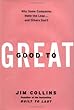
This comes from Collins’ book, . I think it speaks to a fundamental (pathology, if we want to invoke the documentary, ), with the way the majority of business operates today. Clearly, does not think business should be pathological. He’s been lecturing on sustainability for quite some time now.

So what about you. What are some of your favorite quotes?