The Timeless Wisdom of Commencement Speeches

It’s that time of year again (or maybe just after that time) where thousands of students across the world prepare to ‘graduate’ from college/university/high school and move on into a new place in their lives. Invariably, coupled with this rite of passage is some sort of speech given to them by an elder. Someone with wisdom and knowledge. Someone who is charged with the task of (motivating?) these wide-eyed youngsters into an assortment of possibility. I have yet to give a commencement speech (although I can see it happening at some point in the distant future), but I can’t imagine it’s a very easy speech to write/give.

Let me explain. In the audience you have a wide array of people. There are people who are conservative, people who are liberal. There are people who are (older), there are people who are young (some still have yet to full mature into themselves). There are parents, sometimes grandparents. There are siblings. There are people of varying intelligence. There are people at different stages of development and there are people with varying degrees of religiosity. There are people don’t care what you say and there are people who will hang on your every word. I understand that many will say that the characteristics I have described are not that much different from any other audience, but to me, it feels like there’s something different about a commencement audience. Maybe I haven’t quite captured the feeling that I’m trying to describe.

So, even though you might be communicating (specifically) to the graduates, their varying degrees of development, motivation, and aspiration, could make it hard to settle on a singular focus. I think that’s what makes speeches like so good. The wisdom he conveyed was timeless. It’s probably part of the reason why Time ranked it second on their .

Then there are speeches that are more aimed at humor. I found particularly amusing. There are also those (like Poehler’s) that are intended to be humorous and insightful. Some say could have been the best ever (I think that’s a tad overstatement). Even more recently, Stephen Colbert gave what some are calling .

Like the TIME article, you’ll find a variety of sites that have lists of some of the best (or just the ones that year) commencement speeches. There’s this from The Huffington Post and there’s also a list of from ‘Online College Degrees.’ I’m a little surprised to see Jobs’ 2005 speech at the top of this list, but maybe he wasn’t thought to be the speaker that he is today back in 2005.

It seems that this time of year also motivates people (or bloggers) to talk about their favorite commencement speeches of all-time. liked Bono’s speech at UPenn and JK Rowling’s speech at Harvard.

There are also the sites that seem to collect graduation speeches. There’s a of graduation speeches. I’ve also seen sites like that actually have a storehouse of commencement speeches that can be broken down by speaker (politics, business, technology, science, media, arts, sports, and entertainment). I’ve seen some “off-the-beaten path” commencement addresses that I thought were pretty good, but were not talked about by journalists or bloggers (at least that I had seen).

What are some of your favorite commencement speeches? How would you prepare and craft a commencement speech? I think before I sat down to write, I’d want to get some statistics on the class I was speaking to (not just their majors), but if there were a way, I’d want to know where they were going after school (do they already have jobs?) and if possible, maybe see if I could have an assessment of them based on . That might be asking a bit much (AQAL), but it would sure help to set the tone of the language of the speech.

What is Transpersonal Psychology: A Contextual Understanding

I was looking at my for this site a couple of days ago and I noticed that my explanation of transpersonal psychology might not be entirely clear for those not already familiar with the field of transpersonal psychology. It seems that the field itself has debated about a definition for some time, leading to an assortment of definitions. That’s why the definition that I’ve included in my bio is as follows ():

An approach to psychology that a) studies phenomena beyond the ego as context for b) an integrative/holistic psychology; which provides a framework for c) understanding and cultivating human transformation.

That’s a very succinct definition. And to most people who are familiar with transpersonal psychology, that makes sense. In today’s post, I thought I would explain transpersonal psychology in the context of the ‘rest’ of psychology.

~

When , they think of professional counselors and clinical psychologists. “Are you analyzing me?” This is a question that psychology students around the world hear when they tell someone they are majoring in psychology. The thing is – there are within the American Psychological Association.These divisions span from to to to and to, yes, . So, to say that psychologists are always (or only) “analyze” people is like saying doctors are always diagnosing strangers.

The assumption that psychology is all about analyzing people stems from some of the early psychologists, namely, . Freud helped create what we will call the “first force.” This first force is better known as . This particular brand of psychology uses things like and to plunge the depths of one’s psyche by way of their unconscious. Through this ‘force’ of psychology, we, as humans, were taught that we have little to no control over ourselves and that we are merely the manifestation of our unconscious hopes and desires.

The next force, the “second force” of psychology, is . This is where we have the famous experiments where the researchers rings the bell and the dog salivates – . Classical conditioning is when an unconditioned stimulus (say a bell) is paired with a conditioned stimulus (say food) such that the unconditioned stimulus can produce the response one would expect to see with the conditioned stimulus. If I ring the bell every time I feed my dog, I would expect that the dog would begin to salivate when I ring the bell (and don’t feed him because he’s conditioned to expect food after the bell).

Building upon Pavlov’s research is , from . The difference between operant conditioning and classical conditioning is that in operant conditioning, the behavior is said to be voluntary whereas in classical conditioning, thebehavior is said to be reflexive. So, the “second force” of psychology tells us that humans are just like dogs in that we are just a grouping of conditioned responses.

The “third force” of psychology is . The emergence of this field of psychology, not coincidentally, was the same time that came to prominence, which gave rise to such social and political movements as the and . Humanistic psychology brought into focus a more holistic (more holistic than had been previously thought) perspective of the human. This “force” of psychology is where we saw the birth of ‘s . Humanistic psychology is where we see the emergence of Carl Rogers’ as a therapeutic technique. So, this ‘force’ of psychology, builds upon the two that came before it, in that it believes that humans are more than their unconscious motives and that they are more than a jumble of conditioned responses. This ‘force’ would say that it takes a more holistic view of the human by including its emotions, too.

The “fourth force” of psychology, and the purpose of this post, is . The easiest way to understand transpersonal psychology is in the context of the other three forces. Where the first three forces are about unconscious drives, conditioned responses, and an addition of emotions, transpersonal psychology includes that — and beyond. Transpersonal, (like the name implies), goes beyond the person. So, in effect, transpersonal psychology includes spirituality, , and various states of consciousness. From the :

Transpersonal Psychology is a full spectrum psychology that . . . [adds] a serious scholarly interest in the immanent and transcendent dimensions of human experience: exceptional human functioning, experiences, performances and achievements, true genius, the nature and meaning of deep religious and mystical experiences, non-ordinary states of consciousness, and how we might foster the fulfillment of our highest potentials as human beings.

So, contextually, we could say that transpersonal psychology is a more complete “holistic” view of the person (through the lens of psychology). People from transpersonal psychology wouldn’t say that the other forces of psychology are less important than transpersonal psychology. In fact, from my experience, most people within the field of transpersonal psychology are grateful to those that have gone before (and developed the other forces) to have allowed room for transpersonal psychology to fill a voice. Transpersonal psychology builds upon the various areas of psychology before it and treads into some of the areas of the human experience that had not previously been studied in academia.

What’s Your Jung Typology: The Answer May Surprise You!

After having majored in psychology during my undergrad and then specialized in transpersonal psychology during grad school, it’s fair to say that I’m curious about the make-up of humans from a psychological perspective. A few weeks back, I wrote a post about how I scored on . In light of this post, I thought I would continue to write posts about how I scored on other tests.

For today’s post, I thought I would do some tests that claim to be able to accurately assess one’s :

These tests are based on the work of Carl Jung, David Kiersey, Isabel Myers and Katherine Briggs. They are similar in underlying theory to the Myers-Briggs Type Indicator (MBTI) and the Kiersey Temperament Sorter. They measure four bipolar factors, Introversion/Extroversion, Thinking/Feeling, Intuition/Sensing, and Judging/Perceiving.

Having been a psychology student for as long as I have, I’m familiar with the MBTI and have taken the actual test on a couple of different occasions enough to know where I usually score on the four bipolar factors. In fact, part of my interest in taking the few tests with this was to see if the assessment was accurate.

The first test I took was a . Initially, you enter your gender and then you are taken to a page with 36 pairs of words wherein you are asked to select the position between the words (5 spaces) where you exist between the words. I thought that this was rather interesting. I’d never taken a paired word test to assess my before.

At the conclusion of the test, I was a little surprised by the results. The system assessed me as an ENTJ. Extroverted, iNtuitve, Thinking, Judging. I found this surprising because I’m almost always an ENFJ when I take tests like these (Feeling instead of Thinking). The mini-description for ENTJ:

ENTJ – “Field Marshall”. The basic driving force and need is to lead. Tend to seek a position of responsibility and enjoys being an executive. 1.8% of total population.

After reading the “quick” description, I’d say that’s a fair assessment of who I am (or who I want to be). Then, I read the :

decisive, fearless, planner, thrill seeker, engaged, social, self-centered, comfortable around others, image conscious, likes to be center of attention, adventurous,outgoing, manipulative, emotionally stable, leader, ambitious, hard-working, dominant, prepared, hates to be bored, confident, opinionated, analytical, prepares for worst case scenarios, organized, orderly, clean, driven, resourceful, finishes most things they start, achieving, risk taker, desires fame/acclaim, image focused, narcissistic, arrogant, perfectionist, driven, academic, scientific, critical, avoids giving in to others, does not like to compromise, skeptical. [Emphasis added]

I’ve bold-faced the words that I do feel strongly about (in that they do describe me) and I’ve italicized some of the negative adjectives that I’ve heard used to describe some of the things I’ve done in the past. When I inquired with those who thought I was arrogant, I learned that this had more to do with the way I conveyed information. With regard to manipulative — this is a word I remember being tossed around when I was a kid. I was told that I was quite good at getting my way (I don’t remember, really!) And lastly, “avoids giving in to others” – translation: stubborn; yes, I can agree to this one. I know that I can be, at times, stubborn.

I then proceeded to look for some other tests that were meant to assess the same measure. . This test, like the first, had the participant enter in their gender. Then, there was a page of 48 statements that the participant was to rate on a scale from very inaccurate to very accurate (5 choices). At the conclusion of this test, I was greeted by familiar results:

ENFJ – “Persuader”. Outstanding leader of groups. Can be aggressive at helping others to be the best that they can be. 2.5% of total population.

I then went onto read the long-description of the ENFJ:

outgoing, social, attention seeking, emotional, loving, organized, comfortable around othersinvolved, open, hyperactive, complimentary, punctual, considerate, altruistic, easily hurt, religious, neat, content, positive, affectionate, image conscious, good at getting people to have fun, easily excited, perfectionist, assertive, ambitious, leader, hard-working, seductive, touchy, group oriented, anti-tattoos. [Emphasis added]

With the ENTJ description, I highlighted 10 adjectives that I agreed with (and 3 adjectives that I have heard people refer to me in the past) for a total of 13. With this ENFJ description, I’ve highlighted 17 adjectives that I feel accurately describe me at the present moment.

So, I decided to take one more . This test was very different from any other Jung typology test I had seen. On this test, (you had to select your gender, of course), there were 48 adjectives. Under each adjective were two rating scales (each with 5 spaces) where the participant is asked to rate their ideal selves and their real selves. In effect, the test is trying to gauge where you are and where you wish (or want) to be. I thought that this could be interesting, so I took the test. My results: ideal type – ENTJ; real type – ENFJ.

How interesting. So, maybe the first test I took wasn’t off like I thought it was. Maybe it was just a better measure of my “ideal” self. Either way, I thought it was pretty cool to take this last test and get a result that validated my first two results. In the end, I am glad that I found this site with these tests because it gave me a different window into my Jung Typology. For as long as I can remember, I’ve always scored as an ENFJ on these sorts of tests, but it’s interesting to now have a different perspective in that maybe I really wish I were an ENTJ. If you only have time to take one test, I’d advise taking the . The results may surprise you!

Who Are The Good Guys? Does It Matter?

Who are the good guys? Who are the bad guys? Do you know? I often don’t. The attribution of good and bad is directly related to the narrative in which you consume. If you consume the narrative of X, then X will be the good guys and Y will be the bad guys. If you consume the narrative of Y, then Y will be the good guys and X will be the bad guys. Some may argue that it’s not as simple as all that, but isn’t it? Isn’t it as simple as someone (friend, parent, or media outlet), telling you that something is happening and how it affects you, enough to shape your opinion even without your knowing?

In doing a quick search of “” on Google, it returns nearly 7,000,000 hits — and that’s with the quotations! This question of “who are the good guys” is not something new. Some search for more ‘trivial’ good guys as in the . Others are looking for more historical accounts of . There are even searches for the (and this was back in 1998)! More recently, it’s been inquiry into the and the . Although, there are still people curious about .

A , infinitely quotable, once said: “” And isn’t that the truth? Once the victors move on from the dispute, don’t they then get to write the “textbooks”? In the past, it would have been the stories they told around the fire, but as humans have grown and evolved to include the written word, what often is passed on from generation to generation is the story as told from the “good guys” perspective. That is, the “good guys” being the ones who won. And isn’t that how it always eventually happens? The “good guys” always seem to win, no matter what.

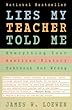
In reading a few history textbooks, I doubt you’ll find stories of the “bad guys” winning. In fact, I doubt you’ll even find many textbooks that offer the perspective of the “bad guys” in much detail, least of all, objectively. The “bad guys” will be painted as “bad guys” who wanted something from the “good guys.” The good guys, being the good guys, of course, triumph! And more history is written where the good guys succeed. There’s a very interesting read on this subject by called: “” I’m not saying that what Loewen has written is the “right” view of history, but it provides a perspective that you may not have otherwise considered.

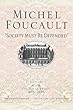
I wanted to close this post with a couple more quotes. The first, from “:

The history of some is not the history of others. It will be discovered, or at least asserted, that the history of the Saxons after their defeat at the Battle of Hastings is not the same history as the history of the Normans who were the victors in the same battle. It will be learned that one man’s victory is another man’s defeat. . . What looks like right, law, or obligation from the point of view of power looks like the abuse of power, violence, and exaction when it is seen from the viewpoint of the new discourse, just as it does when we go over to the other side. . . the triumph of some means the submission of others.

And finally, a from : “He who controls the present, controls the past. He who controls the past, controls the future.

~

StrengthsFinder 2.0: Are You Using Your Talents Effectively?

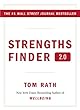
In the last couple of months, I have been reading oodles of books. One of the books that I’ve come across is . There really isn’t much to the book on the inside, except for the first 30 pages or so, but there is a tear away code that you can use to take the test online. Unfortunately, I had borrowed this book from the library, so I was at a loss. However, I did some digging around on the internet and came across , which offered an access code (for a price) without the book. While buying the code from this site is more than buying a new book from Amazon ($20 vs. $15), I wasn’t interested in keeping a copy of StrengthsFinder (and, wasting more paper in the process), so I reasoned that just buying the code was satisfactory.

I would imagine that most people inclined to take a test like this (or any test, voluntarily), are probably the kind of people who have already taken tests, so they would have some idea of where their strengths would lie. This was the case with me, but it’s always nice to have your strengths/talents validated in another survey/test. In the first 30 pages of the book, the author makes the claim with data from research, that it has been discovered that working on one’s weaknesses is actually counterproductive. He offers the formula that one’s talents plus one’s investment (time spent practicing/developing skills) equals a strength. He argues that spending time developing one’s talent into a strength is a much better usage of one’s time (where most developmental tools argue that one should work on their weaknesses). The author isn’t advocating a total write-off of one’s weaknesses, it is still important to know where one’s weaknesses are.

This online test is meant to isolate your talents, and then give you ways that you can develop these talents into your strengths. Upon taking the test, the participant is given their top 5 themes [talents], along with personalized strengths insights and potential ways to enhance these talents. After taking the test, I was not surprised with the 5 themes that were scored as my highest (I’ve included the shared theme description):

Learner

“People who are especially talented in the Learner theme have a great desire to learn and want to continuously improve. In particular, the process of learning, rather than the outcome,excites them.”

Ideation

“People who are especially talented in the Ideation theme are fascinated by ideas. They are able to find connections between seemingly disparate phenomena.”

Achiever

“People who are especially talented in the Achiever theme have a great deal of stamina and work hard. They take great satisfaction from being busy and productive.”

Competition

“People who are especially talented in the Competition theme measure their progress against the performance of others. They strive to win first place and revel in contests.”

Positivity

“People who are especially talented in the Positivity theme have an enthusiasm that is contagious. They are upbeat and can get others excited about what they are going to do.”

I can very much identify with the five themes that I was assessed as having. In fact, you could probably even further group these a little more. Competition and Achiever go together (people who compete also, I would think, often achieve), and then these two also fit together nicely with Learner (as you learn, you achieve, yes?).

The one thing that I think would have been cool about this that wasn’t available (or maybe it is for a fee?) is to have a readout of who else (famous or otherwise?) has a similar make-up to you. They say that they’ve polled over 10 million people, so I have to think that someone out there has had these 5 themes. In fact, I can be nearly certain using the . There are 501,942 different combinations of the 34 themes (choosing 5 each time), and if we want to take it a step farther, there are 45,435,424 different combinations (when we account for the order of the themes). So, while there may not have been someone who had the same 5 themes as me in this order, there is a very good chance that there is at least 1 other person who has had these 5 themes on their score.

I understand that supplying information like this would need permission from all of the people who have taken the test and getting permission after the fact is a difficult thing to do. And as I take a step back from this idea, I realize that I’m merely confirming one of my strengths (Ideation).

With Love and Gratitude

Dr. Emoto, love and gratitude, water crystal, healing intention, power of wordsAnytime I write something to another person, I nearly always end the message with: With Love and Gratitude. I’ve been asked on a number of occasions why it is that I do this. I usually give people the abridged version (spreading joy) or something like that. I thought it would be good to have a post here explaining why it is that I use these four words to sign off on what I’ve said. Initially, I will refer you to two posts I have already written here having to do with the importance of our words & thoughts (for ourselves and for others).

Sometime during the summer of 2005, I had the chance to see the documentary, What The Bleep Do We Know!? Much of what was offered in the film was not new to me (given my unique exposure to many esoteric influences while growing up), but there was something that I found uniquely interesting about one of the clips from the movie that I’ve included here.

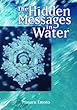
Dr. Emoto, Masaru Emoto, Hidden messages in water, water messages, healing intentionAfter watching the documentary, I was so happy that there was science being done to “back-up” the sorts of things that I already thought to be true. During the Fall of that same year, I was able to get a copy of Dr. Emoto‘s book: “The Hidden Messages in Water.” I didn’t want to take what the movie was telling me at face value, so I wanted to read his book. After reading his book, I was confident that there had to be something to the experiments he was doing. So this is half the story. The other half involves a piece of synchronicity.

At the same time I was reading about Emoto’s work, I happened upon an email (or maybe I stumbled onto the site, I really don’t remember exactly how it happened) regarding “The Go Gratitude Experiment.”Go Gratitude Logo The ‘experiment’ was all about Gratitude. I really enjoyed getting the “42 knew views on Gratitude” [spelling intended] and I still have the emails they came in. Some of the work by the Go Gratitude folks has shifted over to a new website (Blooming Humans), but from what I can tell, it’s essentially the same message: Gratitude matters.

After reading Emoto’s book and pairing it with the knowledge from the “Gratitude Experiment,” I was so pleased that I printed off a document containing the words “Love & Gratitude” filling the page in size 80 font and taped the words in different parts of my room. I put one on each wall, I put one on the face of the shelf just above where my computer monitor was and I even put some in my closet and drawers (why shouldn’t my clothes radiate Love & Gratitude, right?)

At first, I was a little shy signing off emails to people “With Love and Gratitude.” It didn’t necessarily feel appropriate to have the word “love” in certain kinds of emails. That word can be quite ‘charged’ for some folks, and I didn’t necessarily want to invoke those sorts of feelings when they were reading my email. Eventually, as I got into the habit of signing off emails “With Love and Gratitude” to people, it would sometimes just slip out when signing off emails that were of a more business-like nature. As this started to happen more and more,Emoto, Masaru Emoto, hidden messages in water, water crystals, love and gratitude I began to realize that my initial trepidation was unnecessary. In fact, I began to relish sending emails to people as it allowed me the chance to say what I needed to say, with love and gratitude.

Since Emoto’s work was published, there have been a number of critics, which I suppose is to be expected, and some of them even raise important points. The clincher for me is Dean Radin. I’ve spoken about Dean Radin before a number of times on here. He is a Senior Scientist at the Institute of Noetic Sciences and is the “author or coauthor of over 200 technical and popular articles, a dozen book chapters, and several books.” In 2006, Dean Radin (along with Emoto and other researchers) sought out to test the effects if distant intention on water crystal formation. They used a double-blind method (an experiment in which the experimenters and the participants both do not know which group is experimental and which is the control) and their results:

Results indicated that crystals from the treated water were given higher scores for aesthetic appeal than those from the control water (P = .001, one-tailed), lending support to the hypothesis.

A couple of years later, Radin set out to replicate the findings — again. This time, it was a triple-blind study. A triple-blind study is when the experimenters, the participants, and the evaluators, all, do not know who is receiving treatment and who is not receiving treatment. And again, their results:

Results suggested that crystal images in the intentionally treated condition were rated as aesthetically more beautiful than proximal control crystals (p = 0.03, one-tailed).

I had already believed the water crystal experiments to be true, but after reading the papers published by Radin, now I can be much more sure that they are true. So there you have it. Now you know why I sign-off my emails and comments with:

With Love and Gratitude


Dr. Emoto, love and gratitude, water crystal, healing intention, power of words