The Scientific Evidence for Psychokinesis: Psi Phenomena, Part 4

Psychokinesis, telekinesis, move things with your mind, mind over matter, Part 1: The Scientific Evidence for Telepathy
Part 2: The Scientific Evidence for Clairvoyance
Part 3: The Scientific Evidence for Precognition

In today’s post, Part 4 of the series, I will recount the scientific evidence for psychokinesis, which is also referred to as telekinesis. These terms refer to one being able to move a physical object with one’s mind. In short, this particular term accounts for the “mind over matter” that people often refer to.

Much of the early research on psychokinesis involved one’s ability to influence the roll of a die. In these studies, a die face is chosen in advance, then the participant wishes for that face to land up. It’s probably one of the simpler studies one can conduct with regard to parapsychological research. Dean Radin and Diane Ferrari conducted a meta-analysis of all the experiments that had been done on die research from 1935 to 1987 and came to this conclusion:

The estimated effect  size for the full database lies more than 19 standard deviations from chance while the effect size for the subset of balanced, homogeneous studies lies 2.6 standard deviations from chance. We conclude that this database provides weak cumulative evidence for a genuine relationship between mental intention and the fall of dice.

Psychokinesis, telekinesis, move things with your mind, mind over matter, While the evidence from these earlier studies are not overwhelming, they at least lean towards support for the evidence and possibility of psychokinesis. Nowadays, the majority of research in this area is done with random-number generators (RNGs). These RNGs do exactly what it sounds like they do – generate a sequence of random numbers. In these RNG experiments, participants are usually asked to attempt to influence the outcome of the RNG to be higher than expected or lower than expected. With a random set of numbers, you can accurately predict what the dataset should look like, if there were no influences on it. The participants try to alter this by intending that the numbers are higher or intending that the numbers are lower. If you’ve read most of my posts in this series, then you know I have an affinity for meta-analyses.

In a meta-analysis conducted by Dean Radin and Roger Nelson of all of the RNG experiments conducted between 1959 (the first RNG experiment) and the mid-2000s:

Meta-analysis of 515 RNG experiments conducted by 91 researchers over a span of 41 years indicates the presence of a small magnitude, but statistically highly significant and repeatable mind-matter interaction effect.  The overall results cannot be attributed to chance, or selective reporting problems, or variations in design quality.  These studies indicate that there are ways in which mind and matter interact that support the plausibility of distant intentional healing.  Because modern RNG experiments can be conducted under tightly controlled laboratory conditions at relatively low cost, they may serve as a convenient model to help us better understand the relevant conditions and mechanisms of distant healing. [emphasis added]

Most research studies I’ve read about psychokinesis come to the same conclusion – it’s possible and it happens. While you won’t often see many accounts like this one, it seems that psychokinesis is a very real and present phenomenon. As I wrote in other The Intention Experiment: Using Your Thoughts to Change Your Life and the Worldposts about the power of words (Your words and thoughts have powerWords are more important than you may have thought; With love and gratitude), it seems that intention really has an effect on our reality. Since the body is made up of “physical” things, we could say that the evidence for the power of words could be used to support the evidence of psychokinesis. I understand that the studies I cited in those posts weren’t directly measure psychokinesis, but in a way, I think they were. More than that, there’s the work of Lynne McTaggart and her accompanying book The Intention Experiment.
A Shift Towards Waldorf & Montessori: Education & American Public Policy, Part 3

In , I spoke about American public policy in the context of economics. Specifically, I tied in the concept of altruism and showed how given the opportunity, people are more likely to take money from a complete stranger than give money to a complete stranger. In , I wrote about campaign finance and elections in America. I understand that no system is perfect, but I felt that if there were more integrity in campaign finance & elections, people may have a little more faith in the system. In Part 3, today, I will talk about education in American public policy.

Everywhere you turn, there seems to be another story about the poor statistics of education in the United States. The Chicago-Sun Times is reporting that . And that’s an article that was published today! This past December (2010), the US slipped farther down the rankings on the ‘, which compares the knowledge and skills of 15-year-olds in 70 countries around the world.’ (The data can be found .) On these rankings, the US is now considered “average” on the overall reading scale and on the science scale. They fell below average on the mathematics scale. Shanghai-China, Korea-South, Finland, Hong Kong-China, Singapore, Canada, New Zealand, Japan, Australia, the Netherlands, Belgium, Estonia, Switzerland, and Poland, all out-performed the US on all three scales.

If you’re interested in the history of education in the United States, I’ve found a couple of great resources that highlight significant events through history with regard to education in the United States (; and .)

I had the chance to see earlier this year and I thought it was quite an eye-opening experience. While I don’t know that I agree with everything that is put forth in the movie, I think that the fact that this movie is even possible (meaning that a documentary of this nature could be done about education in the US) shows that there are definite holes in the system. It was interesting to watch attempt to alter the structure of unions for teachers in the Washington, D.C. area. I don’t think that many would have predicted a a year later.

I am not a primary school teacher, elementary school teacher, secondary school teacher, college-level teacher, or university-level teacher. I don’t know what it’s like to be standing at the front of the classroom day after day — students looking up at me expecting me to tell them something. I believe that it takes a special kind of person to not only be willing to do this, but to want to do this. I think teachers are a vastly underappreciated population. Sure, we have “,” but that’s far from enough, given the responsibility they are charged with — education our young. Could there be a more sacred responsibility?

A former cited statistics in an article published in association with (a libertarian public policy think tank) claiming that . While this may be true, I wonder if maybe the funding is going to the “wrong” places in education and if this may be a case of ‘.’ Put more bluntly — maybe the system is faulty. I think more funding for education can be a positive thing, if used in the right way and if given to the right places.

Maybe the US education system needs a . I was fortunate enough to have had an experience in the . I was far too young to really remember much of my experience there, (I was there from before kindergarten to just before the start of the second grade). It may not be feasible at this point, but I’d really like to see what a nation could do if all of their schools were taught in the Montessori-way or the . There are many different forms of across the world, but I am most familiar with Montessori and Waldorf.

I wonder what a nation of kids raised and educated through Waldorf Education would look like. Would we have ? Would we be ? Would there be less ? I don’t know the answer to any of these questions, but I’d like to think that a system of education like Waldorf’s (given to us by Rudolph Steiner), would dramatically shift a fair bit of the way we interact with each other, especially with regard to education. As I said earlier, the responsibility of teaching our youth is sacred. We should treat this task and those who do it, with the highest regard, just as those who do it, should treat our youth with the highest regard.

The Scientific Evidence for Precognition: Psi Phenomena, Part 3

In the of this series of posts on the scientific evidence for psi phenomena, I discussed the myriad proof for telepathy. In , I talked about the evidence of clairvoyance (and remote viewing) and also mentioned that there are probably still lots of studies that were done by the government that have yet to see the light of day (and may never see the light of day). In this, part 3 of the series, I will talk about the evidence for .

Precognition is knowledge of an event that has yet to occur that can’t be deduced from ‘normally known data’ to be present. In short, precognition is an ability to know the future. Writing, in short-hand, about the scientific evidence of psi phenomena has become easier because in the last 20-30 years, there have been researchers who have done a lot of hard work. More accurately, they’ve summarized much of the data up to the point of their study and some have even written brilliant meta-analyses either critiquing or in support of the data. For precognition, there was a meta-analysis published in 1989 in the Journal of Parapsychology called: “‘.”

A forced-choice precognition experiment is where the experimenter gives the participant a number of options (for a future event) where the participant has to select from those options. This can be contrasted with those studies that were done called free-response studies. A free-response study is one in which the range of options/targets for the participant are seemingly unlimited. A good meta-analysis of free-response studies (). There is one other kind of methodology that is used in testing for precognition: unconscious perception. In this method, the participant’s precognitive ability is being tested, in a sense, without their knowledge. The precognitive abilities are tested through skin conductance and EEG activity. I’ll talk about that a little later on in the post. Let’s talk about the results from the forced-choice experiments.

In the forced-choice meta-analysis, Honorton and Ferrari were able to gather 2,000,000 individual trials by more than 50,000 participants. Most of these studies involved participants guessing Zener cards after the deck was thoroughly shuffled (and some obscure randomized factor done through computers or by cutting the deck to the temperature of a distant city). . Yes, a septillion. That’s 10 with 24 zeros after it. To purport that the results do not support the evidence for precognition would be preposterous.

One of the critiques of precognition studies (and parapsychology in general) is that the . However, in the study I was just referencing, the one about forced-choice, the researchers took a closer look at the methodologies used by the studies they reviewed. Stunningly, what they found, when the quality of the methodology improved, so too, did the precognition results. Meaning, as the methodology got better, so did the results for precognition.

Earlier, I mentioned that I was going to talk about skin conductance and EEG tests of precognition. Some of the research that is coming out of tests of these nature can be simply — mind-boggling. Rollin McCraty and researchers at the Institute of HeartMath were attempting to find evidence for intuition through electrophysiological means. Meaning, they wanted to see if the body had foreknowledge of an event before the mind did. To do this, they used skin conductance, EEG, and ECG, to measure the response in various areas of the body before an image was shown to the participant. These images would either be emotionally arousing or not. The participant had no conscious foreknowledge of what image was to be shown to them.

The researchers found that participants’ body knew when the participant was to see an image that was emotionally arousing. The reactions of the participants’ body prior to seeing an emotionally arousing image versus the reactions prior to seeing a calm image were significantly different. In fact, they found that this information was received by the heart before it was received by the brain. You can read the papers written by the researchers:


As was stated in the conclusions of these articles: “Overall, we have independently replicated and extended previous research documenting prestimulus responses.” Meaning, these studies are not the only studies of its kind — offering evidence for precognition. There are other studies () that claim the same.

I have a hard time differentiating my favorite from my non-favorites with regard to psi phenomena and the Big 5, but there’s a special place in my heart for precognition. Particularly because of what it means for us as humans and our interpretation of time. There’s a fantastic two-part episode of Star Trek called that does a wonderful job of depicting a possibility when it comes to the directionality of time.

Of course, we think that time moves from the past to the present to the future — but what if this were not true? Albert Einstein is , “. . . for us physicist believe the separation between past, present, and future is only an illusion, although a convincing one.” Another good on this matter: “Reality is merely an illusion, albeit a very persistent one.” And one more from : “The only reason for time is so that everything doesn’t happen at once.” Whether or not you believe in the possibility of or the inherent direction of the , it is clear that from our (movies and books), there is some part of humanity that is fascinated by the idea.

The Scientific Evidence for Clairvoyance: Psi Phenomena, Part 2

In , I talked about the scientific evidence for telepathy. From my perspective, there is so much evidence for the presence of such a phenomena that those who deny its existence are doing so for reasons outside of science. In this post, I will discuss the scientific evidence for clairvoyance, which is often closely associated with remote viewing. Let’s start off with some definitions.

Clairvoyance is often confused with other parapsychological terms, sometimes telepathy and other times precognition. We learned in Part 1 that telepathy is akin to reading someone’s mind. Loosely, precognition is being able to predict the future. An aspect of clairvoyance known as remote viewing, is when someone is able to perceive a distant geographical location. , however, is when a person is able to acquire information about an object (person or place included) or event that cannot be perceived by other means (5 senses). One could see how this might be confused with telepathy as telepathy is a means of acquiring information from someone’s mind (which could, theoretically, contain information about an event or object). As well, remote viewing is like a specific kind of clairvoyance. Some mistake clairvoyance for being able to see the future, but this is really precognition, not to be confused with retrocognition, which is being able to see acquire information about the past through means other than “normal.” Is your head spinning from parapsychological terms, yet? All you need to know is that we’re talking about clairvoyance today and clairvoyance is being able to acquire information about something without the five senses.

Some of the earliest tests for clairvoyance were in . One person draws an image and then a distant partner is supposed to draw the same image. These sorts of tests wouldn’t pass for science with today’s standards as the images selected by the participants weren’t “random” and the inherent shared biases between people in these experiments allowed for a certain sense of similarity to their image selection. Meaning, if two people had just been to the beach, there would obviously be a higher probability of a selection of water in the image drawn. Keeping this in mind, there were still some rather amazing studies written about by . The book’s preface was written by Albert Einstein who wrote: “I have read the book of Upton Sinclair. . . and am convinced that the same deserves the most earnest consideration, not only of the laity [public], but also of the psychologists by profession.” Another book on the picture-drawing experiments to check is by .

In 2003, researchers and published an article in the that summarized 25 years of research on remote viewing at the called: “.” The article had four purposes:

1) to present for the first time in archival form all results of some 25 years of remote perception research at this laboratory; 2) to describe all of the analytical scoring methods developed over the course of this program to quantify the amount of anomalous information acquired in the experiments; 3) to display a remarkable anti-correlation between the objective specificity of those methods and the anomalous yield of the experiments; and 4) to discuss the phenomenological and pragmatic implications of this complementarity.

The meta-analysis of the article concluded that (from page 219):

The overall results of these analyses leave little doubt, by any criterion, that the PRP perceptions [remote viewing data] contain considerably more information about the designated targets than can be attributed to chance guessing.

As Radin quotes in , the results of these studies are at odds against chance of 33 million to 1. The meta-analysis by Dunne and Jahn is more than enough evidence that clairvoyance/remote viewing exists. When people unfamiliar with the terms in this area talk about ESP, they are often referring to remote viewing.

Remote viewing is probably one of the more popular of and I would bet that this is attributable to the US government getting involved in this research. From the ‘s website:

In the 1970s and 1980s SRI was contracted by a U.S. government agency to research some aspects of remote viewing. As this work was performed for clients, SRI no longer has the records relating to the research. All such records were returned to the clients.

Some of the research has been published, but interestingly, as said by :

Some of the results from RV [remote viewing] are not yet publicly accessible.

There has been a lot written about remote viewing and clairvoyance both in the scientific community and for the public. One of the more interesting depictions of this research was in a recent film called: . The film had some heavy hitters (in terms of actors): George Clooney, Kevin Spacey, Jeff Bridges, and Ewan McGregor. The movie was adapted from a by the same name.

With Love and Gratitude

Dr. Emoto, love and gratitude, water crystal, healing intention, power of wordsAnytime I write something to another person, I nearly always end the message with: With Love and Gratitude. I’ve been asked on a number of occasions why it is that I do this. I usually give people the abridged version (spreading joy) or something like that. I thought it would be good to have a post here explaining why it is that I use these four words to sign off on what I’ve said. Initially, I will refer you to two posts I have already written here having to do with the importance of our words & thoughts (for ourselves and for others).

Sometime during the summer of 2005, I had the chance to see the documentary, What The Bleep Do We Know!? Much of what was offered in the film was not new to me (given my unique exposure to many esoteric influences while growing up), but there was something that I found uniquely interesting about one of the clips from the movie that I’ve included here.

Dr. Emoto, Masaru Emoto, Hidden messages in water, water messages, healing intentionAfter watching the documentary, I was so happy that there was science being done to “back-up” the sorts of things that I already thought to be true. During the Fall of that same year, I was able to get a copy of Dr. Emoto‘s book: “The Hidden Messages in Water.” I didn’t want to take what the movie was telling me at face value, so I wanted to read his book. After reading his book, I was confident that there had to be something to the experiments he was doing. So this is half the story. The other half involves a piece of synchronicity.

At the same time I was reading about Emoto’s work, I happened upon an email (or maybe I stumbled onto the site, I really don’t remember exactly how it happened) regarding “The Go Gratitude Experiment.”Go Gratitude Logo The ‘experiment’ was all about Gratitude. I really enjoyed getting the “42 knew views on Gratitude” [spelling intended] and I still have the emails they came in. Some of the work by the Go Gratitude folks has shifted over to a new website (Blooming Humans), but from what I can tell, it’s essentially the same message: Gratitude matters.

After reading Emoto’s book and pairing it with the knowledge from the “Gratitude Experiment,” I was so pleased that I printed off a document containing the words “Love & Gratitude” filling the page in size 80 font and taped the words in different parts of my room. I put one on each wall, I put one on the face of the shelf just above where my computer monitor was and I even put some in my closet and drawers (why shouldn’t my clothes radiate Love & Gratitude, right?)

At first, I was a little shy signing off emails to people “With Love and Gratitude.” It didn’t necessarily feel appropriate to have the word “love” in certain kinds of emails. That word can be quite ‘charged’ for some folks, and I didn’t necessarily want to invoke those sorts of feelings when they were reading my email. Eventually, as I got into the habit of signing off emails “With Love and Gratitude” to people, it would sometimes just slip out when signing off emails that were of a more business-like nature. As this started to happen more and more,Emoto, Masaru Emoto, hidden messages in water, water crystals, love and gratitude I began to realize that my initial trepidation was unnecessary. In fact, I began to relish sending emails to people as it allowed me the chance to say what I needed to say, with love and gratitude.

Since Emoto’s work was published, there have been a number of critics, which I suppose is to be expected, and some of them even raise important points. The clincher for me is Dean Radin. I’ve spoken about Dean Radin before a number of times on here. He is a Senior Scientist at the Institute of Noetic Sciences and is the “author or coauthor of over 200 technical and popular articles, a dozen book chapters, and several books.” In 2006, Dean Radin (along with Emoto and other researchers) sought out to test the effects if distant intention on water crystal formation. They used a double-blind method (an experiment in which the experimenters and the participants both do not know which group is experimental and which is the control) and their results:

Results indicated that crystals from the treated water were given higher scores for aesthetic appeal than those from the control water (P = .001, one-tailed), lending support to the hypothesis.

A couple of years later, Radin set out to replicate the findings — again. This time, it was a triple-blind study. A triple-blind study is when the experimenters, the participants, and the evaluators, all, do not know who is receiving treatment and who is not receiving treatment. And again, their results:

Results suggested that crystal images in the intentionally treated condition were rated as aesthetically more beautiful than proximal control crystals (p = 0.03, one-tailed).

I had already believed the water crystal experiments to be true, but after reading the papers published by Radin, now I can be much more sure that they are true. So there you have it. Now you know why I sign-off my emails and comments with:

With Love and Gratitude


Dr. Emoto, love and gratitude, water crystal, healing intention, power of words

The Scientific Evidence for Telepathy: Psi Phenomena, Part 1

telepathy, esp, psychic, fortune teller, psi, I’ve touched on psi phenomena in a couple of other posts (What if we were all telepathic? and Would you take a pill to make you smarter?), but I didn’t really go into the details of what Charles Tart calls, “The Big Five.” In doing research for an upcoming series of posts on my thoughts of American public policy (which I briefly touched on here), I thought it might be good to also do a series of posts covering ‘the big 5,’ which are: telepathy, clairvoyance or remote viewing, precognition, psychokinesis, and psychic healing. I thought because I’d already touched on telepathy back in January, it would be best to start with it.

Let’s start with a definition. Telepathy is the scientific term for what some may call “mind-reading.” It is being able to pick up information from someone else’s mind. Some of the first scientific studies done in order to measure telepathy (in the 1930s) were done by J.B. Rhine, who is considered to be the father of modern parapsychology. He would have participants “read his mind” and guess the shape that was on the card he was holding (known as Zener cards). Rhine’s studies produced statistically significant results, time and time again. The one downfall to this method of experimenting is that it’s hard to know whether or not Rhine was measuring telepathy or clairvoyance (it is possible that the participants were divining the future [what card will turn up next?])

The second set of experiments conducted (starting in the mid-70s and still going on today) to test for telepathy are known as the Ganzfeld experiments. In these experiments, the participant would be subjected to sensory deprivation. To do this, the participant sits in a relaxing chair in a sound-proof room. The participant wears ping-pong balls that have been halved (and there is a red light that is shone on them). Ganzfeld Experiment, sensory deprivation, The participant also puts on a pair of headphones that play white noise. While in this state of sensory deprivation, another participant (the sender), will be shown random images that they will then try to mentally send to said participant. During the sensory deprivation period, the (receiver) speaks out loud and describes what they see. At the conclusion of the experiment, the participant is removed from the  sensory deprivation state and is then shown a number of random images and asked to identify the image that they were being sent. To insure internal validity, the two participants have no way of physically contacting each other during the experiment. Meaning, the sender can’t hear what the receiver is saying out loud. The results from these Ganzfeld experiments have, like the Zener cards before them, produced statistically significant results.

One of the more recent (and different) studies being conducted on telepathy is being done by Rupert Sheldrake. It is affectionately known as telephone telepathy. A common lay-person example of telepathy is knowing who is on the phone before you answer the phone. Sheldrake took this idea and made it into an experiment. In fact, you can even sign-up and do this experiment yourself! The experiment works like this:

  1. Register as an experimenter.
  2. Add friends.
  3. Call to initiate the experiment.
  4. A random friend is selected.
  5. Friend calls the experiment system.
  6. System calls the experimenter.
  7. Experimenter enters a guess.
  8. Call is connected.

Sheldrake says that the average success rate is 42%, “which is hugely significant statistically.” And he’s right. By sheer chance, in the way that Sheldrake has organized the experiment, you’d expect a success rate of 25%.

Sheldrake on Telepathy:

My research on telepathy in animals (summarized in my book Dogs That Know When Their Owners are Coming Home and published in detail in a series of papers (listed here) led me to see telepathy as a normal. . . aspect of communication between members of animal social groups. The same principles apply to human telepathy.

Rupert SheldrakeSheldrake also provides links to opportunities to contribute to the research of telepathy with both online and offline experiments (one of the offline experiments I mentioned above, telephone telepathy).

Because of the sheer volume of skepticism towards the field of parapsychology, the field has been subjected to extremely high standards. In all that I have read about telepathy (both from supporters and skeptics), it is clear to me that telepathy is not a fluke or a one-time event. Telepathy is a very real phenomenon. More than that, I believe, we all possess the ability to be telepathic.

Your Words and Thoughts Affect Others – Believe It!

A week ago, I did a post on how our and mentioned that I would be doing a post about how our words not only affect our reality, but the reality of others. In pulling together some outside resources for this post, I was quickly overwhelmed. There is an abundance of material that supports the fact that our words have contribute to the lives of those around us.

In 1993, came out with a book called “.” In it, Dossey explains prayer and healing, describes factors that influence the efficacy of prayer, and cites evidence that support the conclusions.

In 1998, Elisabeth Targ, daughter of famous American physicist, author, and ESP Researcher, , was part of a research team that did a study called: “.” The conclusion of the study:

These data support the possibility of a DH effect in AIDS and suggest the value of further research.

In 2000, researchers conducted a systematic review of the available data on the efficacy of all forms of distant healing in the . The article was called: “.” The conclusion of the study:

Given that approximately 57% of trials showed a positive treatment effect, the evidence thus far merits further study.

In 2003, researches from the published an article in called: “.” The conclusion of the article [emphasis added]:

Previous laboratory research in this domain suggests that DHI [Distant Healing Intention] effects warrant serious study, but most scientists and funding agencies are unaware of the evidence or the relevant literature. By following these evolving guidelines, researchers’ designs and their ultimate publications will conform more closely to the quality of standards expected by scientific journals, and such publications will in turn attract the attention of a broader range of scientists. This seems especially important for alternative healing research in general and for distant healing in particular;  both realms enjoy broad public support but have largely eluded serious attention by mainstream science.

There are even books that have been published that claim to teach the reader . One more study I wanted to mention was one done by the on the to work at a distance.

This pilot study shows that healing intent can be directed at distance, and suggests that healing by prayer is measurable.

Each year, more and more evidence is published to support the effect that our words and thoughts have on those around us. The is a good place to keep an eye on, especially their yearly conferences. Researchers come from all over the globe to talk about their findings with their colleagues. The that I mentioned earlier always has fascinating research that is relevant in this arena. These particular studies are focused on the effect that our words and thoughts have on the healing of others (at a distance). However, in the book I mentioned by Dossey, there’s a chapter called: “When Prayer Hurts: An Inquiry into ‘Black Prayer.'”

To close, I’ll share a first-person experience I had that demonstrates exactly what I’m talking about. During some sort of group bonding or orientation process, the facilitator had us all stand in a circle. He told us we were going to do a little experiment. He picked the smallest girl and put her in the middle of the circle and picked me (one of the stronger males of the group) to go outside and wait in the hall. While I was gone, he told the group that he was going to bring me back into the room and have me try and lift the girl in the middle of the circle and that they were to send positive thoughts and energy towards me. After a few minutes, he called me back in and asked me to lift the girl in the middle of the circle — swoosh! I lifted her with ease! It felt like I could have lifted her with one hand and swung her around like a rag doll.

The facilitator then said that was enough and asked me to put her down and go back out into the hall. While I was there, he asked the group to now send me negative thoughts and energy, while I was trying to lift the girl. He called me back into the room and I went to lift her. Nothing. I thought maybe I was just a little tired from lifting her before, so I steeled myself and got set… lift… and nothing. I couldn’t even get her heels off of the ground. The facilitator then went on to explain what had just happened. He explained to us the power of our thoughts and energy on those around us and more importantly, the power of a group of thoughts on one individual (or to extrapolate, on other groups).

Your thoughts and words have an impact on your life and your thoughts and words have an impact on the lives of those around you. Next time you catch yourself thinking something negative, will you replace it with a positive thought?

Words Are More Important Than You May Have Thought

“Every thought, word, or deed, either purifies or pollutes the body.” –

“Thoughts become things, choose the good ones!” –

“You are not a helpless victim of your own thoughts,but rather a master of your own mind.” –

“Thoughts are boomerangs, returning with precision to their source. Choose wisely which ones you throw.” – Author Unknown

“Keep your thoughts positive, because your thoughts become your words.
Keep your words positive, because your words become your behaviours.
Keep your behaviours positive, because your behaviours become your habits.
Keep your habits positive, because your habits become your values.
Keep your values positive, because your values become your destiny.” –

~

I could continue repeating quotes that support the idea that our thoughts have an effect on our reality. There are even theories put forth by scientists that explain how this works. I’ve embedded a video at the end of this post of talking about synchronicity and in the context, explains how/why our thoughts affect our reality. While there is much evidence that supports the idea that our thoughts have an influence on the outcome of our lives, there is just as much evidence to the contrary. In fact, a simple Google search for “” returns almost 3,000,000 results. I wonder what it is about this topic that is so polarizing for people?

I wonder why there are those people who feel adamant about our thoughts having an effect on us and there are those that feel, just as strongly, that the idea that our thoughts affect us is hogwash. To be honest, I was initially a skeptic. While I grew up in an environment that fostered the development of the idea that our thoughts have an influence on us, I had never seen any tangible evidence of this. Going through my early schooling, I still held the idea of this as a possibility, but I also learned about the scientific method. In doing so, I wondered if there would ever be a way to scientifically measure whether or not our thoughts can have an effect on our lives.

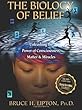
Well, in 2005, , came out with his first book, . In this book, Lipton takes the reader on his journey as a student, professor, and researcher, until his discovery about the cell. For years and years, biologists thought that the cell was controlled by something inside itself — the nucleus. Lipton, however, discovered that this is not the case.

Lipton learned through his research that the cell was actually governed by processes outside the cell. More accurately put, there are processes inside the cell that respond to things happening in the environment outside of the cell. Meaning, as the environment that the cell is in, changes, so too does the cell. There is a dynamic relationship between the cell and its environment. Lipton has gone on to extrapolate these results to other areas of our life beyond the cell. Namely, thoughts and by extension, actions. You’ll find many videos of Lipton talking about the importance of ‘,’ and even some .

Something that I find fascinating about one of the conclusions that Lipton came to from his work is that when cells are presented with nutrients, the cells move openly and towards it. When cells are presented with toxins, the cell closes and moves away. Lipton found that a cell could not simultaneously be in a state of growth (opening and moving forward towards the nutrients) and in a state of protection (closing and moving away from the toxin). I think that this applies directly to the first quote I have provided for this post: “Every thought, word, or deed, either purifies or pollutes the body.” So, we are either thinking positive, warm, and loving thoughts that help our body grow, or we are thinking negative, degrading, and unnecessary thoughts that our body must defend against. Which kind are you thinking?

~

Would You Take a Pill to Make You Smarter?

I had the chance to see the recent film, , and I must say, the premise makes for a good conversation. The protagonist is a failed writer who stumbles into a secret drug that allows him to harness his intelligence prowess. I won’t go into any further detail of the film, but I do want to talk about this perceived ‘super-human’ ability that the movie is based on.

Let’s say that you’re given the opportunity to take a pill. This pill will allow you to use your own ability to its full extent. Meaning, the pill won’t add anything to what you have, but will merely allow you to access all of it more readily. This pill, also, will not have any side effects. The drug has been tested up the wazoo for any potential “negative” side effects and there aren’t any. Would you take it?

This, to me, is a very interesting dilemma. Initially, one would think that it’s only a as there isn’t currently a drug on the market that has these capabilities, side effects or not, or is there? Part of me thinks that if someone can make a movie about it, there is probably some truth to the premise. So, maybe there is a secret drug that enhances one’s abilities. Maybe this secret drug doesn’t enhance one’s abilities as much as the movie portrays and maybe the side effects are worse than what they talk about in the film.

Either way, it’s something interesting to consider. I think, for me, it would be a very tough decision. Thankfully, I do not currently possess a drug with these capabilities, so I am not faced with this moral dilemma. And isn’t it partially a moral dilemma? Taking this kind of drug would, at least partially, change the person who took it. The argument could be made that the person is really just a better version of themselves, but then the counter-argument says that changing one’s self (even for the better) is changing who you are.

Let’s face it — it would be really cool to be able to ‘access’ all of one’s abilities just by taking a pill. Something tells me that we probably can access all of our abilities (like the protagonist after ingesting the pill) and not have the ill-effects from the drug. Many people would consider , (the act of describing targets [people, places, etc.] at a distance) to be a somewhat super-human capability, but we, as humans, have already been able to do this (without the use of drugs). In the 1970s, the. Heck, you can even to see if you can “remotely view.”

There really is so much already written about this topic that a post like this could turn into a thesis or a dissertation. These ‘special powers’ have been part of some of the world’s religion for thousands of years. buddha tibet buddhismIn Buddhism, they have what is known as a . The Sanskrit word, Siddhi, translates to perfection, but what it is referring to is psychic powers. So, in this sense, some religions already believe that humans possess the capacity to attain these abilities without the use of drugs.

Overall, the idea of increased intelligence is fascinating. For me, it would be important that to whom this ability was bestowed (or earned or however it happened) be to someone who was highly ethical and moral. I really wouldn’t want a super-human trying to swindle money from people. From my perspective, increased intelligence or (enhanced ability to access one’s intelligence) could come in very handy for engineering peace between nations.

What if we were all Telepathic?

Consider for a moment that everyone on the planet is . No, really, I want you to consider what it would be like living in a planet where everyone was able to know everyone else’s thoughts. Walking down a crowded street, people no longer have the feeling of anonymity. Every other person walking near them would be able to ‘hear’ their thoughts. Having a conversation with a significant other and ‘leaving out’ details would no longer work as the significant other would just ‘hear’ those miscellaneous details that weren’t mentioned.

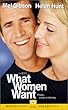
If we think about how this human ability has been reflected in film, we needn’t look any farther than the 2000 film, . In it, our protagonist, played by Mel Gibson, is electrocuted and as a result, has the ability to hear the thoughts of women around him. Initially, he uses this skill to his advantage. He unwittingly manipulates his co-worker and boss, in an effort to get ahead at work. Eventually, he gets what he thought he wanted – a promotion. When he does get what he thought he wanted, the promotion, he realized that he had been treating his co-worker very poorly and he regretted his actions.

While this is just a film, I think that it shows an interesting perspective on what it might be like if we were all telepathic. Yes, in the movie, Mel Gibson’s character was the only one that was telepathic, so he could use it to his advantage, but I think initially, that’s what many of us would attempt to do if we were telepathic. We would use this skill, just as we would any other skill, to help us get what we want. It’s not that we’re not thinking about other people, it’s just in our nature to be concerned with the well-being of ourselves.

So, if you could read my thoughts and I could read your thoughts, that would change some things on the planet, don’t you think? No longer would there be ‘idle’ chit-chat among people. Awkward hello’s and goodbye’s could be infinitely more awkward. Keeping secrets from people would become increasingly difficult. Business transactions would have a whole other minefield to navigate. It’s an interesting possibility to think about, isn’t it?

Telepathy isn’t really a skill that’s altogether ‘out there’ either. I’m sure you or someone you know has had an experience where they were talking to someone and they had a thought, an impression, or an idea about what the person they were talking to was thinking. Quickly revealing this to the other person, they confirm that their inkling was true. I know I’ve had more than a couple of these instances and I’m sure you have, too. These instances are not random.

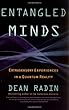
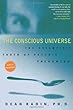
Statistically speaking, skeptics will tell you that these times in your life where you had ‘telepathic experiences’ are random. They’ll tell you that, by chance, eventually, one will be able to ‘fluke’ their way into having a telepathic experience. While at some point, yes, there are times when these experiences are fluky, I can’t help but be persuaded by the overwhelming evidence presented by Dean Radin in and . In these books, Dean Radin addresses many parapsychological phenomena from an objective standpoint – presenting the research from both sides – and leaving the reader left to decide for themselves. After picking up one of these books and seeing the countless studies conducted that support the evidence for telepathy, it’s hard to disagree with him.