What’s On My iPod: Lectures/Podcasts From A Road Trip, Ottawa to DC, Part 4

: Songs, LA to DC
: Lectures, LA to DC
: Podcasts, LA to DC

In the first three parts of this series, I wrote about what was on my iPod for the trip from LA to DC (by car). More recently, I drove from Ottawa to DC, which allowed me to listen to a number of new podcasts and lectures. In this post, I’ll go over the lectures/podcasts and some of the knowledge I gleaned from them.

I had two podcasts. One of them was from the :

Chicago Booth Podcast: Should Executive Pay Be Regulated? (12/02/2009) – I thought I would start with one of the most interesting tracks I listened to on the trip. Given that I’m about to start an MBA, I thought it would be prudent of me to learn about this topic (executive pay). I will say, I was quite surprised to hear the statistics that the speaker, , offered on the topic. While he raised the point about athletes who make (equal or more) money than the CEOs, the surprising fact was that executive pay (now) is actually down in relation to executive pay from the ’80s. And maybe more poignant, executives make less money than athletes and entertainers.

The second podcast was from :

Nassim Taleb on Living with Black Swans (04/13/2011)  has written a number of articles and books, and is affiliated with some very prestigious institutions. He has so many important things to say, but I think the thing that I found the most transferable was the problem with specialization. He didn’t actually put it this way, but this is how I’m interpreting it. In particular, he talks about how important it is to — in an effort to account for randomness and variability — diversify. If you’re investing, don’t invest in just one company. Don’t invest in just one industry. Don’t invest in just one kind of investment. Or… we could relate it to business, specifically, I’m reminded of the book , by Kevin Maney. In Maney’s book, among other things, he talks about those times within an industry where companies are “blind-sided” by some sort of innovation (example: think about cameras 20 years ago and now how cell phones have revolutionized the way we take pictures). Taleb would argue the importance of guarding against a , which from our example, would be cell phones with cameras.

The remaining 6 tracks were all lectures I downloaded through . If you haven’t checked it out, I highly recommend it! The first lecture I listened to came courtesy of the  called:

What’s the Point of Economics? – The text from the website: “Evan Davis, BBC Today presenter, outlines five things everyone should know about economics, Mike Kitson looks at the relevance of economics to everyday life and Professor Willy Brown describes the growing impact of the minimum wage over its first ten years.”

There were two lectures I listened to that came from a class at  on Game Theory. I didn’t have the time to listen to every lecture from the course, so I picked two of the higher rated lectures:

02 – Putting Yourselves Into Other People’s Shoes and 03 – Iterative Deletion and the Median-Voter Theorem – I found these lectures highly informative. The first (or should I say second?) lecture gave a really good example of how important it is to put yourself into other people’s shoes. This example is related to how another person would approach a game (the same one that you’re playing) and exemplifies the importance of knowing your “opponent.” Like in one of the podcast, this lesson is very transferable to other parts of life. In the second (or third) lecture,  does a great job of explaining the median-voter theorem, and more importantly, uses the example of political positions to make the theorem more accessible to the students.

The last three lectures I listened to all came from :

Hire the Right People, Carlos Brito – This was an interesting talk, especially because it came from someone I usually wouldn’t necessarily voluntarily hear from. is the CEO of Anheuser-Busch and he has some intriguing ideas that he has put into practice in many of his offices. He thinks that separate offices foster LESS work. In fact, he talks about how, in his experience, having no walls has actually made work easier and motivated people to do more work. It’s his opinion that offices are for people who want to hide and do no work. With the open concept office, he explains how meetings are much “shorter;” 2- or 5-minute meetings can happen much quicker without having to “schedule” everything.

Dave Blakely on Fostering Innovation – From the description of this lecture’s : “In this talk, Dave Blakely presents a set of principles for successful innovation, regardless of an organization’s size, type or location. The heart of any innovation agenda is a carefully chosen interdisciplinary team, typically including members with backgrounds in technology, business, and other relevant industry-specific knowledge. Creative leaps can be inspired by empathetic human research, and insights are distilled in synthesis sessions. Techniques such as brainstorming can help teams to direct their creativity, and prototypes can be used to improve visualization and mitigate risk.”

Changing Behavior and Changing Policies –  runs the Persuasive Technology Lab at Stanford University. To get a better idea of Fogg’s perspective on behavior, I would say (listen to this talk, as it’s only 20 minutes or so), or check out his site: .

~~

I don’t have any “planned” long trips on the horizon, but I am considering integrating podcasts and iTunes U lectures to daily life. If you have suggestions, I’d love to hear them in the comments, via email, or even on .

What’s On My iPod: Lectures From A Road Trip, LA to DC, Part 2

This post is a bit overdue as the lectures/podcasts I listened happened during the last week of June, but I thought it would still be nice to go over some of the things that I learned from the lectures/podcasts. As you’ll see, this is a “Part 2” where the first part was dedicated to the I had on my iPod (). (Look for Part 3 in the coming week, which will list the Podcasts I included from this trip.)

As I mentioned in , I was in the midst of a long haul of a drive — 4o hours of driving time. Initially, I thought I’d be listening to more music than other things, but it didn’t turn out that way. Prior to leaving LA, I went through  and picked out a number of different lectures that I thought would be interesting. Part way through the trip, I discovered what Podcasts were and that allowed me to add a number of other “lecture”-type tracks along with the latest from a few shows that I like to watch to stay ‘informed.’ Without further adieu, here are the lectures along with a little snippet about them (note: partway through the trip, I erased some of the lectures I had heard to make room for others and I’ve forgotten which ones they were, so you won’t find them in this list):

The Authentic Leader: Interview with Bill George – From what I remember of this, it was quite short (about 10 minutes) and the interviewer asks a few questions of Bill George about some of the key findings of his book, .

Preventing Future Financial Failures – This was another short track (about 20 minutes). The interview is with , a professor of Business Administration at Harvard. Moss references his working paper called, “.”

Fiscal Policy in an Emerging Market – This was one of my favorite lectures. It was by the former Chilean Minister of Finance, . He had some fascinating ideas and examples of the success that Chile observed in managing its fiscal policy (and how that could be applied to other countries). The most important takeaway: use the surplus from the “up times” as stimulus during the “down times.” (This is different in that most countries tend to borrow more money in the “up times.”)

Winners Don’t Take All – This probably was my favorite lecture. I learned so much from listening to try to cram her regular (30-hour course) into 90 minutes. There were so many important takeaways from her lecture that I listened to it on three different occasions just to try to retain it all. In fact, I even mentioned her work on negotiation in a (read: plea) to Democrats with regard to negotiation a few weeks ago (on the subject of the debt ceiling negotiations).

The last 4 lectures I have were all from a series from the University of Chicago aimed at educating the educators about “Understanding the Global Economy.” The four titles were:

Econ 101: What are Markets?
Markets, Trade, and Globalization
Teaching Economics and Trying to Step Outside the Bubble of Capitalism
Globalization: The Great Debate

The last lecture (Globalization: The Great Debate) was probably my favorite in this series. The speaker, , had the audience do a mock debate on the pros and cons to globalization. I learned some interesting points about (both) sides of this debate.

As I mentioned earlier, there were some more lectures I listened to, but I deleted them to make room for some new ones. If I recall correctly, one of them was a series by . In about a weeks times, I will be getting back in the car and driving from Ottawa to DC and I will have about 9-11 hours of time to listen to more lectures. If you can think of any that I might find interesting, please let me know with a comment (or email) or even a tweet! ()

The Best Piece of Advice: We’ll See…

One of the best pieces of advice I’ve ever come across is one with regard to . I’ve written about perspective and having a in posts before, but I think that this particular post, or more accurately, the content of this post, is the best summary of my “perspective” when it comes to perspective.

The I’m quoting this from says the story is Taoist, but I’ve heard other people say it’s from different traditions:

[There was] an old farmer who had worked his crops for many years. One day his horse ran away. Upon hearing the news, his neighbors came to visit.

“Such bad luck,” they said sympathetically.

“We’ll see,” the farmer replied.

The next morning the horse returned, bringing with it three other wild horses.

“How wonderful,” the neighbors exclaimed.

“We’ll see,” replied the old man.

The following day, his son tried to ride one of the untamed horses, was thrown, and broke his leg. The neighbors again came to offer their sympathy on his misfortune.

“We’ll see,” answered the farmer.

The day after, military officials came to the village to draft young men into the army. Seeing that the son’s leg was broken, they passed him by. The neighbors congratulated the farmer on how well things had turned out.

“We’ll see” said the farmer.

This kind of story could keep going on and on and on — and it has relevance to every subject (you’ll notice that I’ve placed it in every category that I currently have for the posts I write). While there are some things that I categorically disagree with (the death penalty being one), I could see this story or as the answer to many hardships in people’s lives. Having lived through *some* hardships so far, I can understand how hearing these words are not necessarily comforting with regard to certain instances, but well after the fact (in my experience), the perspective created by these words can illuminate some unexpected insights.

~

I thought I’d present some examples from the news where we could apply this wisdom:

– Many Toronto Blue Jays’ fans are pleased (myself included) that they acquired Colby Rasmus (via trade). He may turn out to be a great player for the Jays, or he may not. We’ll see.

– Most economists (and people) following the “” will tell you that the US needs to raise its debt ceiling or there will be ramifications of epic proportions. Most of what I’ve heard/read on the issue seems to be a whole lot of politicking. If the US defaults on its loans will that be the worst thing in the world? If the US averts this “disaster,” will that be a good thing? We’ll see. (This particular We’ll See might not have a concrete answer for another 30 years).

– As Borders’ stores continue to close their doors for the final time, many speculate on what this may mean for other businesses similar to Borders. The outlook isn’t usually positive, but maybe this will free up time for other endeavors. We’ll see.

– (An odd bit of news, to say the least). This particular example is quite similar to the farmer’s son falling off the horse and breaking his leg. While I don’t expect Alex Trebek to be drafted to the military, who knows what this injury will do for his “perspective” on life. And the answer is: We’ll see.

As you can see, these “three” words can apply to pretty much anything you can come up with. I’d like to invite you to share with us in the comments some situations that you initially thought were poor (or great) that turned out to be great (or not so great) with us in the comments section.

For the folks who are visual learners:

Complementary and Preventive Medicine: Healthcare & American Public Policy, Part 5

: Economics
: Campaign Finance & Elections
: Education
: Food

On March 23, 2010, you may have seen many Facebook profiles switch over to the picture on the right. This is a picture of President Obama signing the into law. Most of the people of these Facebook profiles who displayed this picture would be supporters of the movement to improve healthcare in the United States. In fact, the bill that President Obama signed into law was intended to do just that.

Truth be told, I haven’t read the entire bill, but . While you can never ‘absolutely’ trust Wikipedia, it is still good for gaining an overview. In skimming over the Wikipedia article for this bill, we learn a number of things that this bill has done that could be perceived as steps in the right direction for American Healthcare:

  • Medicaid eligibility is expanded to include all individuals and families with incomes up to 133% of the poverty level.
  • Improved benefits for Medicare prescription drug coverage are to be implemented.
  • Changes are enacted which allow a restructuring of Medicare reimbursement from “fee-for-service” to “bundled payments.”
  • Low income persons and families above the Medicaid level and up to 400% of the poverty level will receive subsidies on a sliding scale if they choose to purchase insurance via an exchange (persons at 150% of the poverty level would be subsidized such that their premium cost would be of 2% of income or $50 a month for a family of 4).
  • Additional support is provided for medical research and the National Institutes of Health.
  • The law will introduce minimum standards for health insurance policies and remove all annual and lifetime coverage caps.
  • The law mandates that some health care insurance benefits will be “essential” coverage for which there will be no co-pays.

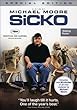
These are only some of the things that the bill changes with regard to healthcare law, not to say that this isn’t already a huge number of changes all by themselves. Michael Moore did a documentary on healthcare in the United States a few years back. The movie was called . While some of the things that Moore is lambasting have changed as a result of this legislation, I’m pretty sure that this bill doesn’t address all of the concerns that Moore raised in his movie.

~

The one thing I would have liked to have seen more of in the bill that President Obama signed into law over a year ago, is more . Being a in what could be classified as CAM, I’ve seen the benefits of this important part of healthcare. And the modality that is not nearly as much of a household name as say, , , or (which includes ). In 2002, 36% of adults said that they had used some form of CAM in the last 12 months. .  That’s nearly 4 in 10 Americans who use CAM. [All of these statistics are from the , which is one of the many centers that make up the (a government agency).]

For comparison’s sake, in 2006, 54% of Canadians reported having used CAM within the last 12 months, which was up 4% (from 50%) in 1997 (). In looking closer at the profiles of  and as rated by the World Health Organization (WHO), I wasn’t completely surprised to find differences. There was one major statistic that stood out to me: obesity. Some argue as to whether or not , but as it stands, . In the WHO health profiles of Canada and the US, Canada’s obesity percentage is significantly lower than the US. The percentage of adults 20+ years of age, in 2008, that were classified as obese by the WHO: . Holding all variables the same (20+, 2008), but for Americans: . I’m not necessarily trying to say that Canadians are healthier because they are more likely to use CAM, but the correlation does seem to be there. Of course, to truly measure this, we’d need to do a study of health measures (before and after) of CAM users (and non-CAM users).

~

I’ve given you some statistics about CAM, but haven’t yet explained it completely:

as a group of diverse medical and health care systems, practices, and products that are not generally considered part of conventional medicine. Conventional medicine (also called Western or allopathic medicine) is medicine as practiced by holders of M.D. (medical doctor) and D.O. (doctor of osteopathic medicine;) degrees and by allied health professionals, such as physical therapists, psychologists, and registered nurses. The boundaries between CAM and conventional medicine are not absolute, and specific CAM practices may, over time, become widely accepted.

There’s one other bit of information that I want to cite from a :

This report demonstrates that there is significant underuse of effective preventive care in the United States, resulting in lost lives, unnecessary poor health, and inefficient use of health care dollars. All of the services examined in this report are extremely cost effective: they all provide an excellent return on investment. It is a national imperative to make these and other cost-effective preventive services affordable and accessible for all Americans. [emphasis added]

Much has been written in the past few months about America’s “.” As of 2008, the those of other countries relative to their [the healthcare costs in the US are nearly 16% of the total GDP, which is nearly 5% more than the “second place” country, Switzerland. For comparison’s sake, Canada is at 10%.] It takes a bit of foresight, but as the study above describes, it is imperative that the US (and other countries) significantly incorporate the effective use of preventive care into healthcare. Moreover, I think the diligent use of CAM (in conjunction with conventional medicine), paired with the idea of preventive care would dramatically reduce healthcare costs (for the government) and for its citizens.

New Zealand Grows No GMOs: Food & American Public Policy, Part 4

: Economics
: Campaign Finance & Elections
: Education

The US recently unveiled their new version of the and have called it: . I think this food plate is much better than the pyramid, but I won’t get into that in this post. I’ll talk about my opinion about “diets” in an upcoming post. In this post, I’ll be talking about food policy.

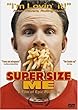
One of the main clues that there is something not completely right about the food policy in the US is some of the alarming documentaries. In 2004, there was . An alarming look at what it’s like to eat strictly a diet for 30 days, with little exercise (less than 2.5 miles of movement a day). At the time, McDonald’s did not have as many healthy choices as they have on the menu today, but as is pointed out in the film, salads can actually have more calories than the burgers (if cheese and dressing are added).

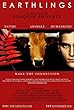
In 2005, there was . This was a difficult film for me to watch. It illustrates some of the unsightly practices of industries that use animals, but since this post is about food policy, I will direct you to the part of the film that explains the unnecessary harm that humans inflict upon animals for food production. While the film advocates veganism, I’m not suggesting you take up this practice, but after watching the movie, I’d be surprised if you didn’t at least consider it.

In 2008, there was . This is probably the most poignant movie with regard to food policy. This movie breaks down the unsustainable (both economically and environmentally) practices of food corporations like , , , and . If you eat meat (and don’t buy organic), there’s a good chance that it’s from one of these companies. Most effectively, the documentary explains that the reason food production has become what it is today, is due in large part to the boom of fast food in the 1950s. An increased demand  for food put pressure on companies to make more food — faster. And so this is what we have today.

One of the things that frightens me the most about the information found in documentaries like these have to do with (or any biological patent, for that matter). Companies like Monsanto, seeds in the lab and then patent the seed they’ve created. From there, they then sue (usually, successfully) farmers who use seeds that are similar to the ones that they’ve now patented. So, these farmers who know nothing of Monsanto and their created seed are going about their business doing what they do and are then, all of a sudden, told they have to stop using the seeds they use (because they are infringing on the patent rights of Monsanto).

~

I think there’s something wrong with food policy when a company that creates a seed can legally sue (and win) against a farmer who uses the original and natural seed. The seed that came from the environment. Doesn’t that seem a little strange to you?

Like in my previous posts in this series, I don’t think there needs to be any grandiose solution to fix the problem. While the problem may be widespread (as in the other posts), the solution needn’t be overly complicated. Of course, these simple solutions aren’t necessarily as easy to implement as they are to envision. With regard to food policy, a simple solution I see is to . It may sound a bit extreme and unfeasible, but is it really feasible to continue to ingest these scientifically engineered foods? Do we really think that there are nearly as many nutrients in lab-created food as there are in “naturally-occurring” food?

European Countries that Have Banned Genetically Modified Foods in at Least One Part of the Country

Albania, Austria, Belgium, Bulgaria, Croatia, Cyprus, Czech Republic, Denmark, Estonia, Finland, France, Georgia, Germany, Greece, Hungary, Iceland, Ireland, Italy, Latvia, Lithuania, Luxembourg, Netherlands, Macedonia, Malta, Montenegro, Norway, Poland, Portugal, Romania, Russia, Serbia, Slovakia, Slovenia, Spain, Sweden, Switzerland, UK: England, UK: Scotland, and UK: Wales. (As of September 2010: )

In all, there are nearly 40 countries on that list. The site where I got that information from also has a of Europe that are at least partially GMO-free.

~

Europe is often touted as being ahead of the North America when it comes to things like these, but how about New Zealand? From :

No genetically modified crops are grown commercially in New Zealand. No fresh fruit, vegetables or meat sold in New Zealand is genetically modified.

That’s right! No genetically modified food in New Zealand! It’s possible. It’s possible to have an entire country that does not produce food that has been genetically modified. Granted, New Zealand is smaller in terms of population than much of the rest of the world ( countries ranked by population based on country’s estimates and the UN), but this is still quite an accomplishment and dare I say, example, for the rest of the world. If New Zealand can do it, we can, too!

Proof That Grassroots CAN Work: Germany Closing ALL Nuclear Plants by 2022

Germany has a history of being anti-nuclear. Put more accurately: the citizens of Germany have a history of being anti-nuclear. :

The anti-nuclear movement in Germany has a long history dating back to the early 1970s, when large demonstrations prevented the construction of a nuclear plant. . . an example of a local community challenging the nuclear industry through a strategy of direct action and civil disobedience. . . Anti-nuclear success at [here] inspired nuclear opposition throughout Germany, in other parts of Europe, and in North America. . . Germany’s anti-nuclear stance was strengthened [from the Chernobyl incident]. . . In September 2010, German government policy shifted back toward nuclear energy, and this generated some new anti-nuclear sentiment in Berlin and beyond. On September 18, 2010, tens of thousands of Germans surrounded Chancellor Angela Merkel’s office. In October 2010, tens of thousands of people protested in Munich. In November 2010, there were violent protests against a train carrying reprocessed nuclear waste.

The people of Germany do not want nuclear energy — they’ve made this abundantly clear in their recent history. An interesting (and somewhat inspiring) bit of protesting that wasn’t included in the introduction of this Wikipedia entry happened

A Human Chain along the Elbe River: Approximately 120,000 people formed a 120 kilometer-long chain between the nuclear power plants in Krummel and Brunsbuttel to take a stand against the federal government’s nuclear policy. At the same time around 20,000 people demonstrated in front of the Biblis Power plant in southern Hesse. Another 7,000 protesters gathered in front of an interim nuclear waste storage facility in North Rhine-Westphalia.

That is incredible. Seeing pictures of protests/marches at the National Mall can be kind of exhilarating, but a 120km chain of people — that’s quite a political statement. Forget political, that’s quite a statement in general. To be able to gather that many people together (not just in one place), but to span across a distance so great — that’s just inspiring. Moving forward to this year, after the , the Germans resolve for a nuclear-free country was reignited.

On Saturday [March 12th, the day after the Tsunami struck Japan], anti-nuclear protesters formed a 45-km (27 mile) human chain from the Baden-Wuerttemberg capital of Stuttgart to Neckarwestheim I. Between 50,000 and 60,000 demonstrators took part, according to police and organisers. [sic]

Three days after the disaster started in Japan, Chancellor Merkel announced a , during which the initial plans to extend the life of some of the older nuclear plants in the country . The next day, the Chancellor took it one step further by off the grid (temporarily). Some noted that this with the upcoming state elections.

While I’m sure that these decisions made the German citizens happy, it clearly was not enough for them. On March 26th, just two short weeks after the event in Japan, to “demand the irreversible phase out [of] nuclear power.” (Here’s a link to an , in case you don’t use Google Chrome/Translate to read the German article.) The protesting , with pockets of people protesting in different areas of the country totaling over 10,000.

… And now finally, the German citizens are getting what they asked for — . A country whose energy department will never again have to create plans and procedures for dealing with new radioactive waste. By the year 2022, Germany will have . How awesome is that? Forget for a second where you stand on nuclear energy and just take in the effect that the citizens of the country had on the policymakers of the country. The citizens of Germany did not want nuclear energy. Period. The policymakers thought that this position (of the people) may have softened and tried to open up the possibility for more nuclear power. Upon learning of this, the citizens revolted. Heeding the word of the people, the policymakers had to go back on their plans to increase nuclear energy in the country.

This is quite an amazing feat (to me). The people wanted something – desperately – and now they’re getting it. It seems similar in a way to some of the other things that have happened this year. There were the for union rights and more noteworthy, there was (and still is) the overwhelming number of . It has been quite a year for “small groups” of people, hasn’t it? It may seem a bit clichéd, (but it is most definitely not contrived); I wanted to end this post with a quote from a :

Never doubt that a small group of thoughtful, committed citizens can change the world. Indeed, it is the only thing that ever has.

A Shift Towards Waldorf & Montessori: Education & American Public Policy, Part 3

In , I spoke about American public policy in the context of economics. Specifically, I tied in the concept of altruism and showed how given the opportunity, people are more likely to take money from a complete stranger than give money to a complete stranger. In , I wrote about campaign finance and elections in America. I understand that no system is perfect, but I felt that if there were more integrity in campaign finance & elections, people may have a little more faith in the system. In Part 3, today, I will talk about education in American public policy.

Everywhere you turn, there seems to be another story about the poor statistics of education in the United States. The Chicago-Sun Times is reporting that . And that’s an article that was published today! This past December (2010), the US slipped farther down the rankings on the ‘, which compares the knowledge and skills of 15-year-olds in 70 countries around the world.’ (The data can be found .) On these rankings, the US is now considered “average” on the overall reading scale and on the science scale. They fell below average on the mathematics scale. Shanghai-China, Korea-South, Finland, Hong Kong-China, Singapore, Canada, New Zealand, Japan, Australia, the Netherlands, Belgium, Estonia, Switzerland, and Poland, all out-performed the US on all three scales.

If you’re interested in the history of education in the United States, I’ve found a couple of great resources that highlight significant events through history with regard to education in the United States (; and .)

I had the chance to see earlier this year and I thought it was quite an eye-opening experience. While I don’t know that I agree with everything that is put forth in the movie, I think that the fact that this movie is even possible (meaning that a documentary of this nature could be done about education in the US) shows that there are definite holes in the system. It was interesting to watch attempt to alter the structure of unions for teachers in the Washington, D.C. area. I don’t think that many would have predicted a a year later.

I am not a primary school teacher, elementary school teacher, secondary school teacher, college-level teacher, or university-level teacher. I don’t know what it’s like to be standing at the front of the classroom day after day — students looking up at me expecting me to tell them something. I believe that it takes a special kind of person to not only be willing to do this, but to want to do this. I think teachers are a vastly underappreciated population. Sure, we have “,” but that’s far from enough, given the responsibility they are charged with — education our young. Could there be a more sacred responsibility?

A former cited statistics in an article published in association with (a libertarian public policy think tank) claiming that . While this may be true, I wonder if maybe the funding is going to the “wrong” places in education and if this may be a case of ‘.’ Put more bluntly — maybe the system is faulty. I think more funding for education can be a positive thing, if used in the right way and if given to the right places.

Maybe the US education system needs a . I was fortunate enough to have had an experience in the . I was far too young to really remember much of my experience there, (I was there from before kindergarten to just before the start of the second grade). It may not be feasible at this point, but I’d really like to see what a nation could do if all of their schools were taught in the Montessori-way or the . There are many different forms of across the world, but I am most familiar with Montessori and Waldorf.

I wonder what a nation of kids raised and educated through Waldorf Education would look like. Would we have ? Would we be ? Would there be less ? I don’t know the answer to any of these questions, but I’d like to think that a system of education like Waldorf’s (given to us by Rudolph Steiner), would dramatically shift a fair bit of the way we interact with each other, especially with regard to education. As I said earlier, the responsibility of teaching our youth is sacred. We should treat this task and those who do it, with the highest regard, just as those who do it, should treat our youth with the highest regard.

A Rose By Any Other Name: Labels for Political Ideologies and Parties

I was watching some old episodes of on the weekend and I came across two scenes that I think epitomize part of the problem with politics today. Both scenes are from and the first one is of a Republican lawyer, Ainsley Hayes, speaking with two other Republicans about how the White House offered Ainsley a job. The two Republicans talking to Ainsley aren’t speaking too kindly of their Democratic counterparts.

In the second clip, Ainsley Hayes has accompanied Sam Seaborn to a meeting on Capitol Hill that Sam is to have with Congressional aides. Seaborn is trying to convince these aides (to convince their bosses who are Senators), to vote for a bill.

In the first clip, we see Ainsley have an epiphany of sorts about the people she had met on her interview/tour of the White House. After listening to her fellow Republicans speak negatively about the people she’d met, she stands in their defense. In the second clip, Ainsley, speaking to Republican aides, identifies their true intent — “beat the White House.” Instead of coming together for what was right or for what was good, these aides (and by extension, the Senators), were more interested in finding a way to best the White House (and by extension, the party in power — the Democrats).

One of my favorite clips on the issue of “dueling political ideologies” comes from a comedian, of all places. Chris Rock, while a little vulgar in his description, makes an extremely important point. (.) Because of the vulgarity, I have chosen to link to the clip. I can assure that the only vulgarity in the clip is Rock’s swearing.

In the clip, Rock purports that people can get too tied down to a political position based on their affiliation to a party (or an ideology). People who call themselves , before even hearing the issue, sometimes, decide that they are going to fall on the more liberal side of the argument. Likewise, people who call themselves , before even hearing the issue, sometimes, decide they are going to fall on the more conservative side of the argument. I have no issue with people choosing to be view an issue from one slant or the other, but what irks me (and Chris Rock) is when people make up their mind about something before they hear the issue!

For example, I can’t possibly think that I’ve received the full scope of an issue if I just watch MSNBC (). Likewise, I can’t expect to have received the full scope of an issue if I just watch FOX News (). As well, it is important that people who watch these networks understand that in the news they receive from them, they are consuming a particular slant.

I understand that there is a compulsion by some to label everything in the visible (and non-visible) parts of the universe and that in doing so, of course, there needs to be names for political ideologies. Moreover, having names for political parties makes it easier to group together people who are behind a certain cause, but is it really necessary? Do we really have to have a “” of people who call themselves the Democrats or the Republicans? Can’t we just have a full of ? Can’t we just elect people , not their particular stance on when a ?

Again, I understand how difficult this is to imagine — electing a politician not based on issues, but on judgment. And I understand that the way that the current structure of the political landscape (of most countries) is such that politicians are forced into joining party X or party Y, if they want to work to have their issues (that aren’t necessarily mainstream) championed. However, I would like to point out the likes of of the Green Party of Canada and Independent Senator of Vermont as two outliers that show that it is possible to get elected without being affiliated with one of the mainstream parties of a country.

Integrity, Please: Campaign Finance and Elections & American Public Policy, Part 2

In of this series, I wrote about public policy in America as it relates to economics. As I said quite clearly in the 1000 words or so, it’s difficult to surmise such a vast topic in such a short space, but I think I made an important connection between altruism and economic policy. While this series is aimed at American Public Policy, the first post in this series on economic policy is relevant to most countries in the . In Part 2, I’ll talk about two things: campaign finance and elections. First, elections.

The has been recently and likely will be for the next couple of days after an FEC official told a New York Times reporter, “,” (after having learned that something they [FEC] were told may not have been true). The FEC will also, undoubtedly be in the news anytime anyone decides to . For anyone that enjoys political satirist Stephen Colbert, you’ll know that he has spoken at length about his trials and tribulations to create a PAC and (then a Super PAC) on his show. While what he is doing is initially intended as humor, there is also a .

Earlier last year, the heard and ruled on what is a rather famous case, . There are so many different interpretations of what this means for elections in the US. Keith Olbermann had a rather . Rachel Maddow was a little , but she shares a similar viewpoint to Olbermann. Much of what you’ll find on YouTube are videos not in favor of this decision, but I was able to find one video from Congressman of California . I like the use of animation and moving picture, so another good video to check out is the one by .

When I first made a point of wanting to write a post about campaign finance, my initial thoughts were to have candidates donate all of the money they receive. Maybe that’s too idealistic? Really though, shouldn’t it be that money plays little to no role in who is elected? I understand how difficult it would be to sell Barack Obama on of his campaign contributions to charity, or whomever the Republican candidate happens . I think that . I think the problem that elections have become so “difficult” is that the citizens doing the electing don’t trust their elected officials. While we could bring in any number of psychological theories to help us understand, I think the bottom line is there should be an inherent honor (in the elected official) and, maybe, a covenant between elected officials and citizens.

There’s one more thing I want to say about campaign finance that is a nice segue into elections. I found a video of a professor at Harvard (who also happens to be the same guy that founded ) offering on the decision rendered by the Supreme Court on Citizens United [I’ve added emphasis]:

Many people will see this decision as a decision they should fight because they think corporations should be silenced. I don’t think the point here is that corporations should be silenced. I think the point is we need a political system where people can trust that the decisions Congress makes are decisions based on the merits; on what makes sense or what the people in their district want and not what the funders demand. This decision will only exacerbate the current problems with the system. And the way we should respond is by pushing for an alternative that gets us a system for funding elections that doesn’t lead people to wonder whether it’s money rather than sense that is producing a political result.

Elections can be a fickle thing, not just in the US, but around the world. I would think in a society that is so developed, elections fraud would not be something so rampant through its politics, but that seems not to be the case. A search for United States Elections Controversy on Google returns nearly 10,000,000 hits. One interesting article I found was one author’s view of the most significant (in the US). As I furthered my search, it wasn’t difficult to start turning up articles about controversy in US elections. In fact, there’s more than I can really talk about in the bit of space remaining for this post. There’s one about a , one about , and who could forget the ? In case you did forget, there was even a made about it.

For anyone who follows Wisconsin politics, there’s the by Waukesha County clerk, Kathy Nickolaus, . I don’t work in elections, so I don’t know how hard it is to organize these kinds of events, but I would think someone who has made so many errors that have been made public would probably not be hired (nor should she apply?) for jobs that require such finite detail.

Anyway, the more I read about elections in America (and the world), the more I wonder about integrity. I would expect that people involved in creating these laws and upholding these laws would operate with a sense of high moral integrity. Wouldn’t you? These people are being put in some of the more important (but undervalued) positions a country can have, and it seems that they just don’t see it that way. Maybe they do, but it’s not showing. Campaign finance and elections needn’t be dirty words. The people who create laws around these issues shouldn’t look for (or intentionally leave open) loopholes. In an upcoming post, I’ll talk about how inequality within a nation is bad for everyone in the nation (including the rich).

Altruism, To Give or To Take: Economics & American Public Policy, Part 1

Give, open hand, giving, world, earth, give a gift, gift giving, A couple of weeks ago, I mentioned that I wanted to do a series of posts on American Public Policy. This first post will be about America’s economic policy. As a disclaimer, I should say, economics can be a very academic field, in that there are hundreds of programs around the world that offer doctoral study in economics, so anything that I can say about economics in 1000 words or less is going to pale in comparison. However, I do think I’ve stumbled upon a possible explanation as to the economic “mess” that American economics finds itself in…

I was watching some of the older videos posted by the RSA, (I’ve mentioned them before), and I came across one by a couple of author’s whose blog is rated quite highly. I’ve read Freakonomics, but I haven’t read Superfreakonomics, so if the connection I’m going to make is made in the book (but not in this 10-minute video), you’ll have to forgive me. Anyways, in the video, they are talking about altruism as it relates to economics, but not necessarily to economic policy. Take a look:

The most interesting parts are the last 2 and a half minutes. The speaker is explaining studies done by John List where he has participants, in this case, called dictators, who have the ability to give up to $10 to an unwitting stranger (who won’t know the person who is giving them the money and therefore, is unable to thank them afterwards). Give, open hand, giving, money, cash, give a gift, gift giving, On average, people gave around $3. List then altered the experiment to allow ‘dictators’ to also be allowed to take up to $1 from the stranger (again, the stranger would not know the person who is taking the money from them). So, on a range, the dictators could give the stranger anywhere from $10 to ($1) [brackets implying that the stranger is losing a dollar]. List found that the most common choice was $0 (but the average giving was around $1.50). One more alteration… dictators could now give up to $10 or take up to $10 from the stranger. On average, under these conditions, people steal about $1.30, as opposed to giving.

When I first watched this video, I couldn’t help but make the leap to ‘real-world’ examples of these findings at play. I think about what happened leading up to the events of 2008 and I see parallels. I think back to the movie Inside Job and the ‘simple’ way that is explained as to what happened (of course, this is just one perspective as to what happened leading up to the collapse). People of the financial services industry, in my opinion, are not inherently bad. Give, open hand, giving, world, earth, give a gift, gift giving, love, share, sharingIn fact, just the opposite. As I argued that politicians are inherently good, I think the same case could be made for those who were, in part, responsible for the collapse of the financial system.

To make it explicit: people who work in the financial services industry, like the “dictators” in the studies done above, were, in a sense, given the opportunity to take money from strangers without having to face these strangers. On a range of giving money from $10 to taking $10, the people who work in this industry, in my opinion, were able to freely take money from people without having to face any repercussions. It’s not that they were malicious and they wanted to hurt people. I think it’s more that they were given the opportunity (and as the study above shows), given the opportunity, people usually take it. [As an aside: in the video, they talk specifically about students of economics as it relates to the ultimatum game and how they would take 2 cents because 2 cents is better than none. I think this economics-mentality of some money is better than no money is what sways the amount of money that the financial industry took from citizens who were otherwise clueless as to what was happening.]

Moreover, in the dictator game described above, the range was from giving $10 to taking $10. In this real-world example, I think we could “hold” the giving $10 side of the scale, but the taking side of the scale could be moved to “infinity.” Give, open hand, giving, world, earth, give a gift, gift giving, Meaning, sure, there is a set number of dollars that they are able to give to citizens, but they are unlimited in what they can take from citizens. As this scale is tipped into the ‘taking side,’ I think we would find that people, on average, are more likely to take a greater number of dollars. I haven’t read any of List’s studies, but it’d be interesting to see if he has done any work where the scale is tipped in the other direction (give up to $1 and take up to $10) to see if that average of taking $1.30 from a stranger changes. My guess is that it would.

I think there are a couple of great documentaries (and hoards of books) that I’ve found rather enlightening on the topic with regard to economic policy. I mentioned Inside Job above and would recommend it to get a different perspective on what happened in the late-2000’s. I also think that Capitalism: A Love Story was educational. I understand that Michael Moore is very liberal and as such, his movies come across that way, but I still think it’s important to take in viewpoints that are different from one’s own. Additionally, and maybe my favo[u]rite on this topic, is The Corporation. It was a Canadian documentary done almost 10 years ago now about the pathological disorders of “corporations” as they are, legally, persons.

Give, open hand, giving, world, earth, give a gift, gift giving, love, share, sharingOverall, given the information in these documentaries and various books, and the results of the studies done by List, I think that this speaks to a broader issue with regard to economic policy. We can’t necessarily fault those who, when given the chance to take money, do so. Instead, I think we need to put regulations (read: public policy) in place. These regulations would limit the scope of people’s ability to take money. To put it in terms of the dictator game, instead of having people able to give or take up to $10 from a stranger, I’d like to see the limit be that they can’t take anything from the stranger. Let’s limit their ability to be able to give up to $10 and take nothing. As List found, on average, given these conditions, people are more likely to give around $3 — to complete strangers.