Politicians Are Inherently Good

I believe that people are inherently good and because I believe that politicians are people, too, I also believe that politicians are inherently good. [.] You’ll find many about the topic as to whether people are good and you’ll also find many people in general debating this topic (, , and ). Some people think it’s clear that . You’ll even find academic articles written on the subject of humans inherent goodness ( and ). While I acknowledge the religious component to this debate, from everything I’ve seen of people, I think they are inherently good.

Yes, there are heinous acts committed everyday around the world, but I don’t think that people are doing these things in their “right mind.” That is, I think that there is some form of . I think that people couldn’t do some of the things that they do without being, in some way, detached from what they are doing. While the human condition encompasses a wide variety of human behavior, I don’t think that humans, without being (unaware) to some extent, of what they are doing, that they could do what they do (when they harm other humans).

I am in the process of working on a series of posts where I make the claim that is way behind and while this implicates the politicians who, by the very nature of the system, are directly involved with the writing and publishing of American public policy, I do not think that politicians are deliberately (and maliciously, that’s key) making it this way. I think that because of the way that the system of the American government is set up and the system of the American media, it’s much easier for American politicians to get away with the kinds of things they get away with, but I don’t think there is harmful intent.

Some may call me idealistic, but I believe that (most) humans on the planet, given an opportunity to help a fellow human, would do so. When presented with an , I think that most humans will do what they can to help someone out. More importantly, I think that those who wouldn’t help out are still human, but are expressing what would call, “.”

We can understand this a little easier by looking at some of the things that  has to say: “The thoughts that go through your mind, of course, are linked to the collective mind of the culture you live in – humanity as a whole. They are not your thoughts as such, but you pick them up from the collective… You believe in every thought that arises and you derive your sense of who you are from what your mind is telling you who you are.”

And then pair them with the lens of : “…when I believed my thoughts, I suffered, but that when I didn’t believe them, I didn’t suffer…”

Inherently people are good. While I understand that some people my disagree, this is a topic that I have a hard time honestly taking a step back and hearing both sides. I think that people always, always mean well. Like I said earlier, yes, there are some “bad” things that happen in the world, but I do not think that its intentionally harmful (and I really hope not, too). I think that psychology’s perspective on the shadow, along with viewpoints from spiritual teachers like Eckhart Tolle and Byron Katie help us to understand why some people may do “bad things,” and still, inherently, be good people.

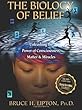
Lastly, I wanted to offer a perspective from someone who I think has something important to say on this topic. wrote, what I think, is one of the more important books of this generation. It came out in 2010 and it has already been translated into more than 30 languages. He gave (50 minutes), which was then turned into a . The implications are profound and I have included the animated speech below for your viewing pleasure.

Health & Beauty Products May Not Be So Healthy and Beautiful

When was the last time you looked at the label of the deodorant, face cream, shampoo, or soap you use? For some time, this was something that I was not concerned about and it was more out of sheer ignorance. I didn’t know any better. When I learned about the world of “natural” skin products, I was — without a doubt — appalled! I couldn’t believe the sorts of things that companies would put into products. I really hope that the intention was never malicious. Anyway, let me walk you through some of my logic.

Take a clove of garlic and peel it down to a piece about the size of your thumbnail. Now, take off your shoe (and your sock) and Wait between 2 and 3 minutes, and I’m fairly certain, you will taste garlic. Yes, taste garlic. The garlic will not have moved from between your toes, but in your mouth, you will taste garlic. Why? Simple. For one, the body is infinitely connected. Two, humans don’t just breathe through the nose/mouth, . [Here are two other articles that support the idea that oxygen is absorbed through skin: and .]

Really, I implore you to take 5 minutes to experience this viscerally. It may really have an effect on the way you think about your body. Interesting fact: the integumentary system (the organ that makes up your skin and appendages []) . So now that we know that our skin is so important to the function of our body, what do we do with that information?

Well, consider that “” Wouldn’t you want to think twice about the kind of deodorants/antiperspirants you put under your arms? I recently came across an older (February of 2010) post by recently who had collected some of the information about regarding the kinds of requirements that companies must follow in order to have their products approved. It’s a little scary the lack of transparency in this area. You’d think that it being the kind of things that we put on our body, daily, that there’d be more oversight.

Luckily, there are , just like there are organic fruit and vegetables. And just like with organic fruit and veggies, organic may not always mean what we think it means. I learned this the hard way with the word “natural.” Intuitively, you’d think that something that said “natural” contained nothing ‘harmful’ in the product or in the making of the product, but (legally) speaking, something harmful (like poison for instance), can still be natural and included in a product, theoretically speaking, of course. If you’re curious about whether or not the product you’re considering purchasing meets some ‘higher standards,’ I’d advise you check out . They have quite a number of products rated in this department.

Words Are More Important Than You May Have Thought

“Every thought, word, or deed, either purifies or pollutes the body.” –

“Thoughts become things, choose the good ones!” –

“You are not a helpless victim of your own thoughts,but rather a master of your own mind.” –

“Thoughts are boomerangs, returning with precision to their source. Choose wisely which ones you throw.” – Author Unknown

“Keep your thoughts positive, because your thoughts become your words.
Keep your words positive, because your words become your behaviours.
Keep your behaviours positive, because your behaviours become your habits.
Keep your habits positive, because your habits become your values.
Keep your values positive, because your values become your destiny.” –

~

I could continue repeating quotes that support the idea that our thoughts have an effect on our reality. There are even theories put forth by scientists that explain how this works. I’ve embedded a video at the end of this post of talking about synchronicity and in the context, explains how/why our thoughts affect our reality. While there is much evidence that supports the idea that our thoughts have an influence on the outcome of our lives, there is just as much evidence to the contrary. In fact, a simple Google search for “” returns almost 3,000,000 results. I wonder what it is about this topic that is so polarizing for people?

I wonder why there are those people who feel adamant about our thoughts having an effect on us and there are those that feel, just as strongly, that the idea that our thoughts affect us is hogwash. To be honest, I was initially a skeptic. While I grew up in an environment that fostered the development of the idea that our thoughts have an influence on us, I had never seen any tangible evidence of this. Going through my early schooling, I still held the idea of this as a possibility, but I also learned about the scientific method. In doing so, I wondered if there would ever be a way to scientifically measure whether or not our thoughts can have an effect on our lives.

Well, in 2005, , came out with his first book, . In this book, Lipton takes the reader on his journey as a student, professor, and researcher, until his discovery about the cell. For years and years, biologists thought that the cell was controlled by something inside itself — the nucleus. Lipton, however, discovered that this is not the case.

Lipton learned through his research that the cell was actually governed by processes outside the cell. More accurately put, there are processes inside the cell that respond to things happening in the environment outside of the cell. Meaning, as the environment that the cell is in, changes, so too does the cell. There is a dynamic relationship between the cell and its environment. Lipton has gone on to extrapolate these results to other areas of our life beyond the cell. Namely, thoughts and by extension, actions. You’ll find many videos of Lipton talking about the importance of ‘,’ and even some .

Something that I find fascinating about one of the conclusions that Lipton came to from his work is that when cells are presented with nutrients, the cells move openly and towards it. When cells are presented with toxins, the cell closes and moves away. Lipton found that a cell could not simultaneously be in a state of growth (opening and moving forward towards the nutrients) and in a state of protection (closing and moving away from the toxin). I think that this applies directly to the first quote I have provided for this post: “Every thought, word, or deed, either purifies or pollutes the body.” So, we are either thinking positive, warm, and loving thoughts that help our body grow, or we are thinking negative, degrading, and unnecessary thoughts that our body must defend against. Which kind are you thinking?

~

Elect Effective Decision-Makers, Not Politicians Catering to Sects

Why do some people get elected and others don’t? Outside of the obvious answer of (more votes), there are oodles of books, articles, and dissertations, trying to answer that question. In fact, some people’s entire career is spent being hired as a because they are an ‘expert’ on getting people elected. They will usually have a very good track record as evidenced by the other candidates they’ve helped to elect. Even though there is so much information on how to get people elected, some people still decide to check one candidate’s box over the other or maybe .

Once the politician becomes an elected member of government (at any level), they are then faced with decisions, decisions, and more decisions. Depending on how high they are in the pecking order of the government, they may have more decisions or less decisions. Most of these decisions that I’m talking about refer to voting, specifically on pieces of legislation. As politicians vote on pieces of legislation, members of the press will inform the general public as to how certain politicians have voted on certain issues. Because of this cycle where the information is disseminated to the public, .

While many people will understand a politician’s desire to get reelected, I wonder if they maybe aren’t doing the public a disservice by going against their conscience and I think this stems all the way back to how it is that politicians are elected. Because candidates are all fancied up by their consultants (mostly because this is what the consultants think the public wants to see), rarely do candidates ever really talk about how they actually feel about one issue or another. So, once they get elected and have to vote on something, instead of having the confidence to vote on what they believe, instead, they vote in a way that they know will make them favorable for reelection.

I think that part of the problem here is that in the cycle of disseminating the information from vote to the people, the information is disseminated in such a way that can paint a particular politician in a certain light. I doubt that this is done in a malicious intent (at least not intentionally), but even still, the public viewing/reading said report would then regard the politician negatively even though they might actually agree with how the politician voted. More than that, when the politicians vote a certain way on a bill because they’re worried about reelection, I think that they may really be catering to a smaller minority of people (based on sets of poll numbers fed to them by consultants).

There are many different reasons to elect one person to an office over another, but somewhere high (if not at the top) of that list should be about their decision-making ability. I don’t mean whether they can pick apples or oranges from the supermarket, rather, how it is that said person comes to a decision. I think it is impossible to know the sorts of issues that will arise during one’s term in an office, so instead of electing someone based on their views of long-standing issues, I think it’s better to elect someone because one trusts in the inherent ability of the candidate to make effective decisions.

The “Real” Purpose of Television: Entertainment, Escapism, and Employment

On one of my trips a couple of months ago, I found myself at the hotel. I wasn’t feeling at my best, so I decided to spend some time watching TV. Now, this is quite an aberration for me because I haven’t had an actual physical “TV” to watch since before my days as an undergrad. I still catch some episodes of shows, but that’s mainly online and at my own convenience. The first thing that I noticed upon watching TV is that TVs have really changed. It looks like I really missed the boat on the whole revolution thing. It really is a much different experience watching TV now than it was years ago when I used to have a steady diet of , , , and .

Now, before I even turned on the TV, like I mentioned earlier, I wasn’t feeling very well. In fact, I was feeling kind of crappy and I thought that watching a little TV would be relaxing. Boy, was I wrong! After turning the TV on, I proceeded to (flip) from channel-to-channel for nearly 3 hours. I couldn’t watch just one thing, my brain wanted to keep tabs on three, four, or five different programs that were on TV. I think part of this is because I have trained my brain to be so attuned to different tabs (on my browser) as well as applications on my computer.

When I was finally shaken free from this never-ending loop, I noticed that I was more tired than when I had started watching TV — and it was the middle of the day! Taking stock of what had just happened, I wondered: what is TV really for? Is TV really meant to be a relaxing experience at the end of the night? Is it just a tool to escape reality?

As puts it:

Call me old-fashioned, but I still like to watch television to be entertained or escape reality. . .

And why is it that we need to watch TV to escape reality? Is reality so bad that we need to supplement our experience with television? Don’t get me wrong, I’m not condemning those who would watch TV as an escape, no. Much of the way our society is structured, watching TV as an escape is part of what keeps some people ‘sane’ at the end of the day. Watching TV is part of the way they can get from the end of work to bed and then back to work again without having to think about the fact that they don’t like their job so much. But why is it that we work in jobs that we don’t like so much, to the point that we need to use TV as an escape from our reality (because reality is not enough or too painful)?

While I can’t say that I know the “real purpose of television,” I think it’s worth debating the effects of TV on society. I really think that watching TV is a mechanism that allows people to stay at jobs that they are otherwise less pleased about. Being able to tune into a created reality (or sometimes an actual reality) of a situation that they envy or can vicariously live through is something that I think allows people to feel better about themselves and by extension their life. Feeling better about one’s life makes one less likely to reflect on the things that aren’t going as well as they would have planned in life. So, like I said, I don’t proclaim to know the real purpose of TV, but I think that it can be argued that a fair majority of television is meant to entertain, allow for escapism, and sustain employment.

Could This Have Happened in Any Other Country: Only In America

A few years ago in a coffee shop “,” there was a man who was so desperate, we’ll call him , that he decided he was going to steal the money out of the tip jar, (which contained less than $5.00 — thus, Desperado). Another man, we’ll call him , saw what Desperado was trying to do and chased after him. Hero and Desperado struggled outside until Desperado was able to break free. Desperado raced to his car and tried to make a quick getaway. In doing so, he ‘accidentally’ backed over Hero. Hero was rushed to the hospital, but succumbed to his head injuries and passed away.

Now, given that this happened in “far, far away,” Hero’s estate decided it would be most appropriate to file a lawsuit claiming that the coffee shop was at fault! Only in “far, far away,” would Hero’s family sue the coffee shop (because they’re actually part of a larger corporation with oodles of money) and not Desperado. It is clear that “far, far away’s” legal system needs some adjusting.

While I have introduced this as a fictitious scenario that took place in a fictitious land, — in the USA — recently! In 2008, a Desperado-character really did try to steal money from the tip jar and a Hero-character really did try to stop him. The Desperado-character really did “accidentally” run over the Hero-character who later succumbed to the head trauma. And, the Hero-character’s family really is suing the coffee shop (Starbucks), and !

I think that there are a number of noteworthy things here and I’ll try to summarize them briefly.

  1. How can you accidentally run someone over? I don’t mean to be funny, but if you’re engaged in criminal activity, isn’t your intent somewhat, say, criminal, so in trying to get away from the scene of the crime, wouldn’t that just be lumped in with the criminality of it all? I can understand the semantics in that the Desperado-character was maybe backing his car out of a parking space and the Hero-character just happened to be on the ground behind his car, but still — it seems a bit strange that in every article I’ve read about this, it’s bluntly stated that the running over of the Hero-character was accidental.
    ~
  2. I’m not going to talk about the absurdity that some lawyer actually thinks that they can make a case against Starbucks in this scenario (they’re really just doing their job, right?), but more importantly, I think it’s absurd that the legal system is set-up such that this is even a possible outcome! I’ve heard of a number of , but this one seems to go beyond the bounds of frivolousness. Why? Because they’re not even suing the human directly responsible for the death! It’s clear that the prime directive is to gain retribution (in the form of money, of course), for the death of the Hero-character.
    ~
  3. Is our society in that much trouble, really? I realize that this happened in 2008 and some may attribute this happening to the , but this scenario played out in March of 2008. At that point, and statistically, was similar to where it had been for the last few months. The tip jar apparently had less than $5. I suppose stealing from a tip jar at Starbucks is infinitely easier than , (unless you’re interested in stealing the pen attached to the counter?), but is that really what we’re coming to as a society?

Let’s Treat All Cars Like School Buses: Drive Safe!

According to the , “Fatalities per 100 million Vehicle Miles Traveled” has been trending down since 2005. In 2005, there were 1.46 fatalities per 100 million vehicle miles traveled. This means that for every 100 million miles traveled by car in the United States, there were 1.46 fatalities. That may sound like a rather low number, but consider that since this particular statistic has been kept, the highest this number has ever been was back in the first year it was kept, 1994, when the number was 1.73. In the years following 2005’s number of 1.46, we’ve seen the number go to 1.42 in 2006, to 1.36 in 2007, to 1.26 in 2008, and to 1.13 in 2009 (numbers for 2010 were not reported as of the writing of this post).

Looking merely at the statistics, this number seems to be trending downwards more than in any other 5-year period since 1994. While on the face of the statistical trend, it’s great, but really, should this number be above zero?

As I was driving home the other day, I saw a school bus van. Immediately, even before I could read ‘school bus’ on the side of the van, I was able to recognize the color of the van and know that it must have been a school bus. Typically, when I see a school bus, I tend to slow down (even a little bit). I would guess that the fair majority of the population would do the same. Why do we do this? Well, in part, . More than that, I slow down when I see a school bus because usually, there are kids on-board, and who wants to cause an accident that harms children?

As a nation, and maybe a species in general, we tend to look more favorably upon our young. That is, when faced with a moral dilemma upon saving people, we almost always save the child over ourselves (or other older people in the group). There are many different theories as to why this is, but I won’t get into them. I’m more interested in our behavior in the car around school vehicles. We slow down when we see school vehicles, but why don’t we slow down when we see other vehicles?

Shouldn’t we drive with the same care and caution, all the time, that we do when we see a school vehicle? When we see a school vehicle, something about the vehicle stands out (), and we immediately are more cautious with our driving. I think we should be just as cautious around other cars as we are around school buses. What if all cars were painted the same color as school buses? Do you think we’d be just as cautious around other cars as we are around school buses? My guess is that the attention-grabbing feature of the color would soon fade as we all became accustomed to seeing that color on every car.

But shouldn’t we still drive as if every car is a school bus? Every car on the road carries “precious cargo” — another human being. All life, old, young, middle-aged — is precious. All life is worth preserving and caring for. There needn’t be any fatalities when one is trying to go from point A to point B. It’s just unnecessary. Wouldn’t you want someone who makes a turn down a windy country road, who sees the light blue color of your car to slow down a little, because you’re approaching from the other direction? I certainly would.

Spirituality From an Unlikely Source: Will Smith

I was on YouTube like I had been a and on the sidebar, I noticed a video under the suggestion heading by the title of: . I’ve always subscribed to the theory that our words and thoughts have an effect on the world around us (check out our or , and you’ll see some of the kinds of books that I recommend discuss these principles in their books), but I didn’t expect this kind of wisdom from a famous actor.

It’s not that I don’t think that Will Smith has the capacity to understand or even believe these kinds of things, it’ s just that with entertainers, it’s harder to imagine them outside of some of the roles they’ve played. After watching the almost 10-minute video of many clips spliced together where Will advocates the theory that our thoughts have a decided effect on the outcome of our lives, I couldn’t help but write a post here about it. In fact, I’ve even included the video at the end because I really think it’s worth the 10 minutes it takes to watch it.

One of the interesting perspectives that he offers is on talent and skill. He says:

Talent you have naturally. Skill is only developed by hours and hours and hours of beating on your craft.

I think that there is definitely truth to this and it is backed up by the work of in his book . In it, Gladwell purports that to be over-the-top successful at something, you need to spend upwards of 10,000 hours doing that something. Gladwell cites an example of , explaining to the reader that for 4 straight years, The Beatles were able to perform live in Germany. In this time, Gladwell claims that The Beatles accumulated over 10,000 hours of (practice) at their craft and that when they came back to England, they were an instant-hit. Gladwell also cites the example of Bill Gates who, when in high school, gained access to a computer. Gates spent nearly all of his free-time on this computer, accumulating hours and hours of (practice), which eventually led to .

Another interesting quote from the video:

You don’t try to build a wall. You don’t set out to build a wall. You don’t say I’m gonna build the biggest, baddest, greatest wall that’s ever been built. You don’t start there. You say, I’m gonna lay this brick, as perfectly as a brick can be laid. And, you do that every single day, and soon you have a wall.

I’m sure this concept is not new to anyone, about “,” but it’s something that I think is worth repeating, and I think it’s also adds a different level of authority to hear someone like Will Smith say it.

I want to do good. I want the world to be better because I was here.

Wouldn’t it just be fabulous if we all walked around with this attitude: wanting the world to be better because we were here. Performing acts, volunteering, making a difference – making the world a better place.

I just believe that. I believe that I can create whatever I want to create.

Around of the video, he begins talking about how our thoughts are physical things in the universe.

Our thoughts, our feelings, our dreams, our ideas — are physical in the universe. That, if we dream something, if we picture something, if we commit ourselves to it, that is a physical thrust towards realization that we can put into the universe. That the universe is not a thing that’s gonna push us around. That the world and people and situations are not something that’s gonna push us around. That we are gonna bend the universe and command and demand that the universe become what we want it to be.

Celebrities can be a mixed bag. They can run the spectrum from those that are having a hard go of things, like , to those like Will Smith who use their celebrity for other means. Whenever I learn that a celebrity is involved in the kinds of thinking that Will Smith is, I can’t help but smile just a little bit, knowing that maybe our world really is changing faster than we know.

The Next Facebook: We’re Asking The Wrong Question

I wonder what it is about humans that make us so eager to find the next something. Awhile after eBay made it big with their online auction site, there were articles that popped up in newspapers, magazines, and other writing outlets, positing what would be the next eBay. Even though eBay has been around for nearly 15 years, there are still articles written about what will be the next eBay (a sampling: , , and ). The confusing thing for me is, why are we looking for the next eBay, shouldn’t we be looking for the next big thing — in general?

The same question that was asked when eBay made it big is being asked about Facebook now that it has gotten so big. “What’s going to be the next Facebook?” (Again, a sampling: , , and .) I can even remember an article about how one of the original investors in Facebook, , thinks that . How, or maybe more accurately, why are these people trying to figure out what the next Facebook is going to be? I wonder if it’s more a stature thing. They are asking about what is going to be the next big thing rather than what will bump these internet companies from atop the food chain.

Some of the articles I’ve read about this area really trying to figure out what is going to usurp eBay or Facebook from their status as an online auction site (or social networking site, in Facebook’s case). To my mind, there really won’t ever be a next eBay or a next Facebook. The technology that knocks Facebook off of its pedestal will not be seen coming as the next Facebook. It might even be something totally different. It could be something more scientific, really, that garners support and slowly starts to grow across a few industries. I think it’s ludicrous to think that there will be a next anything with regard to the kinds of technology and organizations that we have today.

Facebook is too smart (and beginning to be too powerful) to let a start-up come up with an idea that is slightly off-center of Facebook, but that could siphon off Facebook’s users. They have more than enough money to dedicate to R & D that will have the company expanding upon itself for quite some time.

Companies like Facebook and eBay succeed because they have found a ‘sweet spot.’ In the Venn diagram to the right, the ‘sweet spot’ would be characterized by the triple intersection of A, B, and C, in either the top left portion, highlighted by a bright green color, or in the bottom portion, highlighted by a mix of red, green, and blue. This triple intersection can vary from (revolution) to (revolution). I think one of the main reasons for the success of eBay was in part due to the Western world’s undeniable urge to shop. As the internet started to grow, people began seeing the internet as a legitimate place to buy things. As eBay was a place to buy things, naturally, people flocked to the site. As they learned they could also sell things to, well, then it just took off.

For eBay, and more importantly in the case of Facebook, the development of their company (or product) filled a desire in the population that the population didn’t otherwise know existed. People didn’t really know (before Facebook came) that they wanted to spend countless hours on the computer interacting with their friends. I think that articles that try to pinpoint what the next anything is going to be are a little near-sighted. If these people were really curious as to what the next big thing was going to be, they should be trying to identify desires of the population that haven’t already been satisfied. I suppose if they could do that, they’d probably not be writing articles about it.

Mass Collaboration Will Change the World

One of the benefits to being a , is that you’re able to subscribe to other users. If there is a particular user that publishes videos that you’ve liked in the past, say maybe (you may have seen one of their videos — they’re the ones who write on a whiteboard depicting the ideas from the presenter’s presentation), then when you login to YouTube, if this user has published any new videos, you’ll see it right on your homepage. Additionally, you can also get notifications of new videos via email, but who likes a cluttered inbox, right?

I recently logged into YouTube to find that one of users I’ve subscribed to, [the same user that has uploaded such popular videos as: ] had uploaded a new video called: . I like music, but I like collaboration even more, and most importantly, I was intrigued by the idea of a ‘virtual choir.’ I clicked on the video and watched the presentation by Eric Whitacre. Wow! Wow! Wow! I’ve embedded the video into this post to the right of this paragraph and strongly suggest spending the 15 minutes to watch it [Be sure to watch it in full screen mode, too!].

What struck me most about watching Eric’s presentation is the element of collaboration. In the first video [embedded in the next paragraph], , there were 185 voices in over 12 countries. In the second video [embedded at the end of this post], (which debuted quite recently, April 6th of this year to be exact), , there were 2052 voices in over 58 countries. Can you imagine singing with over 2000 people in person much less, virtually and across the world? This project reminds me a bit of , where they had people in over 156 countries join together and sing at the exact same time. Projects like these get me really excited!

Projects like these give me hope for the future of the world. It is absolutely moving that there are causes that motivate people to gather together across obscure places. The first (Lux Aurumque) of Eric’s videos was moving, but the second, was even more moving! More than two-thousand people decided that this was something that they wanted to be part of. This project was something that they wanted to contribute a piece of their creativity and flare to. This project was something that they thought was inspiring. And can you really disagree with that?

This bit of collaboration demonstrated by the people who spent hours perfecting a video to send to Eric Whitacre makes me think of the possibilities… What if we could get 10,000 people singing together? What if we could get 100,000 people singing together? What if we could get a whole country to sing together? I wonder what kind of positive emotion and inspiration we could invoke from the people of a nation, if they were all singing a song (like the ones in these videos) at the same time. I wonder what that could do for “world peace.”