 Part 1: Economics
Part 2: Campaign Finance & Elections
Part 3: Education
The US recently unveiled their new version of the food pyramid and have called it: Choose My Plate. I think this food plate is much better than the pyramid, but I won’t get into that in this post. I’ll talk about my opinion about “diets” in an upcoming post. In this post, I’ll be talking about food policy.
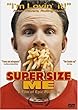 One of the main clues that there is something not completely right about the food policy in the US is some of the alarming documentaries. In 2004, there was Super Size Me. An alarming look at what it’s like to eat strictly a McDonald’s diet for 30 days, with little exercise (less than 2.5 miles of movement a day). At the time, McDonald’s did not have as many healthy choices as they have on the menu today, but as is pointed out in the film, salads can actually have more calories than the burgers (if cheese and dressing are added).
 In 2005, there was Earthlings. This was a difficult film for me to watch. It illustrates some of the unsightly practices of industries that use animals, but since this post is about food policy, I will direct you to the part of the film that explains the unnecessary harm that humans inflict upon animals for food production. While the film advocates veganism, I’m not suggesting you take up this practice, but after watching the movie, I’d be surprised if you didn’t at least consider it.
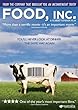 In 2008, there was Food, Inc. This is probably the most poignant movie with regard to food policy. This movie breaks down the unsustainable (both economically and environmentally) practices of food corporations like Monsanto, Tyson Foods, Perdue Farms, and Smithfield Foods. If you eat meat (and don’t buy organic), there’s a good chance that it’s from one of these companies. Most effectively, the documentary explains that the reason food production has become what it is today, is due in large part to the boom of fast food in the 1950s. An increased demand for food put pressure on companies to make more food — faster. And so this is what we have today.
One of the things that frightens me the most about the information found in documentaries like these have to do with patents for seeds (or any biological patent, for that matter). Companies like Monsanto, create seeds in the lab and then patent the seed they’ve created. From there, they then sue (usually, successfully) farmers who use seeds that are similar to the ones that they’ve now patented. So, these farmers who know nothing of Monsanto and their created seed are going about their business doing what they do and are then, all of a sudden, told they have to stop using the seeds they use (because they are infringing on the patent rights of Monsanto).
~
I think there’s something wrong with food policy when a company that creates a seed can legally sue (and win) against a farmer who uses the original and natural seed. The seed that came from the environment. Doesn’t that seem a little strange to you?
Like in my previous posts in this series, I don’t think there needs to be any grandiose solution to fix the problem. While the problem may be widespread (as in the other posts), the solution needn’t be overly complicated. Of course, these simple solutions aren’t necessarily as easy to implement as they are to envision. With regard to food policy, a simple solution I see is to BAN GMOs. It may sound a bit extreme and unfeasible, but is it really feasible to continue to ingest these scientifically engineered foods? Do we really think that there are nearly as many nutrients in lab-created food as there are in “naturally-occurring” food?
European Countries that Have Banned Genetically Modified Foods in at Least One Part of the Country
Albania, Austria, Belgium, Bulgaria, Croatia, Cyprus, Czech Republic, Denmark, Estonia, Finland, France, Georgia, Germany, Greece, Hungary, Iceland, Ireland, Italy, Latvia, Lithuania, Luxembourg, Netherlands, Macedonia, Malta, Montenegro, Norway, Poland, Portugal, Romania, Russia, Serbia, Slovakia, Slovenia, Spain, Sweden, Switzerland, UK: England, UK: Scotland, and UK: Wales. (As of September 2010: Source)
In all, there are nearly 40 countries on that list. The site where I got that information from also has a pictorial display of the regions of Europe that are at least partially GMO-free.
~
Europe is often touted as being ahead of the North America when it comes to things like these, but how about New Zealand?  From New Zealand’s Ministry of the Environment:
No genetically modified crops are grown commercially in New Zealand. No fresh fruit, vegetables or meat sold in New Zealand is genetically modified.
That’s right! No genetically modified food in New Zealand! It’s possible. It’s possible to have an entire country that does not produce food that has been genetically modified. Granted, New Zealand is smaller in terms of population than much of the rest of the world (it comes in 123rd on a list of 224 countries ranked by population based on country’s estimates and the UN), but this is still quite an accomplishment and dare I say, example, for the rest of the world. If New Zealand can do it, we can, too!
 Jeremiah Stanghini