 Part 1: The Scientific Evidence for Telepathy
Part 2: The Scientific Evidence for Clairvoyance
Part 3: The Scientific Evidence for Precognition
In today’s post, Part 4 of the series, I will recount the scientific evidence for psychokinesis, which is also referred to as telekinesis. These terms refer to one being able to move a physical object with one’s mind. In short, this particular term accounts for the “mind over matter” that people often refer to.
Much of the early research on psychokinesis involved one’s ability to influence the roll of a die. In these studies, a die face is chosen in advance, then the participant wishes for that face to land up. It’s probably one of the simpler studies one can conduct with regard to parapsychological research. Dean Radin and Diane Ferrari conducted a meta-analysis of all the experiments that had been done on die research from 1935 to 1987 and came to this conclusion:
The estimated effect size for the full database lies more than 19 standard deviations from chance while the effect size for the subset of balanced, homogeneous studies lies 2.6 standard deviations from chance. We conclude that this database provides weak cumulative evidence for a genuine relationship between mental intention and the fall of dice.
 While the evidence from these earlier studies are not overwhelming, they at least lean towards support for the evidence and possibility of psychokinesis. Nowadays, the majority of research in this area is done with random-number generators (RNGs). These RNGs do exactly what it sounds like they do – generate a sequence of random numbers. In these RNG experiments, participants are usually asked to attempt to influence the outcome of the RNG to be higher than expected or lower than expected. With a random set of numbers, you can accurately predict what the dataset should look like, if there were no influences on it. The participants try to alter this by intending that the numbers are higher or intending that the numbers are lower. If you’ve read most of my posts in this series, then you know I have an affinity for meta-analyses.
In a meta-analysis conducted by Dean Radin and Roger Nelson of all of the RNG experiments conducted between 1959 (the first RNG experiment) and the mid-2000s:
Meta-analysis of 515 RNG experiments conducted by 91 researchers over a span of 41 years indicates the presence of a small magnitude, but statistically highly significant and repeatable mind-matter interaction effect. The overall results cannot be attributed to chance, or selective reporting problems, or variations in design quality. These studies indicate that there are ways in which mind and matter interact that support the plausibility of distant intentional healing. Because modern RNG experiments can be conducted under tightly controlled laboratory conditions at relatively low cost, they may serve as a convenient model to help us better understand the relevant conditions and mechanisms of distant healing. [emphasis added]
Most research studies I’ve read about psychokinesis come to the same conclusion – it’s possible and it happens. While you won’t often see many accounts like this one, it seems that psychokinesis is a very real and present phenomenon. As I wrote in other 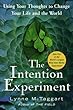 posts about the power of words (Your words and thoughts have power; Words are more important than you may have thought; With love and gratitude), it seems that intention really has an effect on our reality. Since the body is made up of “physical” things, we could say that the evidence for the power of words could be used to support the evidence of psychokinesis. I understand that the studies I cited in those posts weren’t directly measure psychokinesis, but in a way, I think they were. More than that, there’s the work of Lynne McTaggart and her accompanying book The Intention Experiment.
 Jeremiah Stanghini