That’s SO Interesting (What Does That Mean?)

The other day at , I “called out” a coworker for using a nondescript word: interesting. I don’t exactly remember the context, but I felt a little guilty about it afterwards because (who am I to say who can and can’t use these words from those words?) Nonetheless, it made me think about all the words out there that have, in a way, become perverted. When I stopped to think about it, there were other words that came to mind for which the meaning has morphed over time.

Off the top of my head, I can think of three others: nice, good, and fine. (For the record, when someone asks you how you are doing, good is not a correct grammatical response.) How often do you hear someone respond to your questions with one of these four words? How often do you use one of these words in a one-word response to someone else’s questions?

I’ve started to make a concerted effort to be more descriptive (accurate?) in my response to the questions that are asked of me. That is, when someone asks me what I thought of something, I won’t just say “interesting.” I’ve noticed that I’m starting to use the word fascinating more frequently, so I hope that it doesn’t become another “interesting” to me.

Aside: come to think of it, assuming there’s a followup when someone uses the word interesting, maybe it serves as a way to buy some time to better articulate one’s thoughts. That is, maybe it’s a .

So, as I said, I’ve started to try to eliminate these (what I call) nondescript words from my everyday use. It’s remarkable how often I catch myself about to say one of them. I wonder what other phrases or words I fall back on that I haven’t yet been able to identify.

Oprah Exudes Gratitude: “We Did It!”

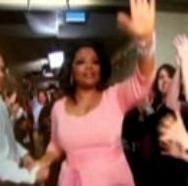
Oprah's Final Farewell; Photo Courtesy: (Screengrab from The Huffington Post video link; No Copyright Infringement Intended)I didn’t have the chance to see any of the celebrity-studded final shows of nor did I have the chance to see her actual finale. I did, however, see (the only one I’ve found of its kind), that had Oprah’s “final monologue.” There’s a 4-minute video in the article that I wanted to embed here for your viewing pleasure, but it’s un-embeddable (at least un-embeddable as far as my Internet know-how goes).

I have written out her final monologue, should you prefer reading to watching/listening:

Every single day I came down from my makeup room on our Harpo elevator I would offer a prayer of gratitude for the delight and the privilege of doing this show. Gratitude is the single greatest treasure I will take with me from this experience. The opportunity to have done this work. To be embraced by all of you who watched is one of the greatest honors any human being could have. I’ve been asked many times during this farewell season, ‘is ending the show bittersweet?’ Well I say all sweet — no bitter. And here’s why. Many of us have been together for 25 years. We have hooted and hollered together. Had our aha moments. We ugly cried together. And we did our gratitude journals. So, I thank you all for your support and your trust in me. I thank you for sharing this yellow brick road of blessings. I thank you for tuning in everyday along with your mothers and your sisters and your daughters, your partners — gay and otherwise — your friends and all the husbands who got coaxed into watchin’ Oprah. And I thank you for being as much of a sweet inspiration for me as I’ve tried to be for you. I won’t say goodbye, I’ll just say until we meet again. To God be the glory.

In watching the clip or reading this monologue, it’s hard not to see the gratitude bursting through. is grateful — through and through. She is to have had the chance to do the work that she does. It beams through in this monologue, it beams through in the clip from the article I’ve linked to, and most of what I’ve read about her general mood about and around the final season is that . And don’t we all have some room to ?

The one thing that strikes me the most from the clip, (which is not included in the monologue), but when Oprah emerges backstage and is hugging her team, is the words she uses. She isn’t crying because it’s over, no. Oprah is saying, “we did it!” We did it. She isn’t mourning the loss of her TV show, she is celebrating the opportunity to have done it. She is offering gratitude for being able to have shared in something so great. She is thankful towards her team for helping her put together 25 years of television that won’t soon be forgotten. And why shouldn’t she be grateful. She’s had an awesome run as far as TV goes and she’s been at the top of for quite some time!

A young boy asks Byron Katie what she would do , “Celebrate!” And why not, right? Sure there can be time for mourning, but there’s so much to celebrate. Katie lists a number of reasons as to why one could be happy for someone’s death (including: they can never be hurt again, they might get to be fertilizer to help something grow to help something else grow, etc.) Here’s another example in a blog post from Katie: “.”

Bring it back to Oprah and gratitude and the last 2 minutes of the clip — you can feel the emotion when she says, “Awww we did it!” There’s so much heart in that exclamation. She’s truly grateful. I am grateful to have had the chance to see the last monologue of The Oprah Winfrey Show and I am grateful to have had the opportunity to share it with all of you. What are you grateful for?

We Have To Do This! No, We Don’t. We Have to Take In Nourishment…

I was talking to my partner about still having to write a post today and she looked at me kind of funny. When she did, I noticed the error in my speech and proceeded to say, “I want to write a post today.”

A few years ago, there was a character () from that had a great line (from , for all you fans), which I think exemplifies the point I’m emphasizing:


Leonard
: Shut up Howard! Sheldon, we have to do this.

Sheldon
: No we don’t. We have to take in nourishment, expel waste, and inhale enough oxygen to keep our cells from dying. Everything else is optional.

While Sheldon is making an argument for getting out of going to give a presentation, he also makes a valid point that there really isn’t anything we have to do.

I often find the people I speak with tell me they (have) to do this or they have to do that, without realizing what it is that they’re saying – without realizing what it is that they’re committing themselves to. Remember I wrote about the importance of our words and . Think about the way your biology would respond to feeling required to do something, when it really wasn’t as dire as all that.

Really, do you really have to go to the next concert, concert, concert, or concert? Will your life be if you don’t go? I can understand really wanting to do something, but we now know the importance of our words on our biology, why would we unnecessarily over-stress the body with this over-the-top language?

I can understand that nobody’s perfect and from time-to-time, (like today), even I slip up and use language that I have been socialized into using. I’d like to think that most times, I catch it, but I’m fairly certain that there are times when I don’t. Even though I’ve read all that I’ve read on this subject, I still flub simple things like (having) to do something versus (wanting) to do something. I know that I may sound trivial, but while this difference seems minute, the subtle shift for your biology is tremendous.

Let’s think of it this way… Your are superior to [directly above] your kidneys. One of the main functions of your adrenals is to secrete hormones in response to stress. So, when your body is stressed (as interpreted by your brain), the sends a message to the adrenals to produce cortisol [] and epinephrine [] also known as adrenaline. As from Bruce Lipton’s “,” when our cells are ‘preparing for battle,’ they can’t be simultaneously taking in nutrients and growing.

So, the next time you think you have to do something, remember what that will do to your adrenals and the overall health of your body.

With Love and Gratitude

Dr. Emoto, love and gratitude, water crystal, healing intention, power of wordsAnytime I write something to another person, I nearly always end the message with: With Love and Gratitude. I’ve been asked on a number of occasions why it is that I do this. I usually give people the abridged version (spreading joy) or something like that. I thought it would be good to have a post here explaining why it is that I use these four words to sign off on what I’ve said. Initially, I will refer you to two posts I have already written here having to do with the importance of our words & thoughts (for ourselves and for others).

Sometime during the summer of 2005, I had the chance to see the documentary, What The Bleep Do We Know!? Much of what was offered in the film was not new to me (given my unique exposure to many esoteric influences while growing up), but there was something that I found uniquely interesting about one of the clips from the movie that I’ve included here.

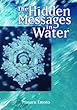
Dr. Emoto, Masaru Emoto, Hidden messages in water, water messages, healing intentionAfter watching the documentary, I was so happy that there was science being done to “back-up” the sorts of things that I already thought to be true. During the Fall of that same year, I was able to get a copy of Dr. Emoto‘s book: “The Hidden Messages in Water.” I didn’t want to take what the movie was telling me at face value, so I wanted to read his book. After reading his book, I was confident that there had to be something to the experiments he was doing. So this is half the story. The other half involves a piece of synchronicity.

At the same time I was reading about Emoto’s work, I happened upon an email (or maybe I stumbled onto the site, I really don’t remember exactly how it happened) regarding “The Go Gratitude Experiment.”Go Gratitude Logo The ‘experiment’ was all about Gratitude. I really enjoyed getting the “42 knew views on Gratitude” [spelling intended] and I still have the emails they came in. Some of the work by the Go Gratitude folks has shifted over to a new website (Blooming Humans), but from what I can tell, it’s essentially the same message: Gratitude matters.

After reading Emoto’s book and pairing it with the knowledge from the “Gratitude Experiment,” I was so pleased that I printed off a document containing the words “Love & Gratitude” filling the page in size 80 font and taped the words in different parts of my room. I put one on each wall, I put one on the face of the shelf just above where my computer monitor was and I even put some in my closet and drawers (why shouldn’t my clothes radiate Love & Gratitude, right?)

At first, I was a little shy signing off emails to people “With Love and Gratitude.” It didn’t necessarily feel appropriate to have the word “love” in certain kinds of emails. That word can be quite ‘charged’ for some folks, and I didn’t necessarily want to invoke those sorts of feelings when they were reading my email. Eventually, as I got into the habit of signing off emails “With Love and Gratitude” to people, it would sometimes just slip out when signing off emails that were of a more business-like nature. As this started to happen more and more,Emoto, Masaru Emoto, hidden messages in water, water crystals, love and gratitude I began to realize that my initial trepidation was unnecessary. In fact, I began to relish sending emails to people as it allowed me the chance to say what I needed to say, with love and gratitude.

Since Emoto’s work was published, there have been a number of critics, which I suppose is to be expected, and some of them even raise important points. The clincher for me is Dean Radin. I’ve spoken about Dean Radin before a number of times on here. He is a Senior Scientist at the Institute of Noetic Sciences and is the “author or coauthor of over 200 technical and popular articles, a dozen book chapters, and several books.” In 2006, Dean Radin (along with Emoto and other researchers) sought out to test the effects if distant intention on water crystal formation. They used a double-blind method (an experiment in which the experimenters and the participants both do not know which group is experimental and which is the control) and their results:

Results indicated that crystals from the treated water were given higher scores for aesthetic appeal than those from the control water (P = .001, one-tailed), lending support to the hypothesis.

A couple of years later, Radin set out to replicate the findings — again. This time, it was a triple-blind study. A triple-blind study is when the experimenters, the participants, and the evaluators, all, do not know who is receiving treatment and who is not receiving treatment. And again, their results:

Results suggested that crystal images in the intentionally treated condition were rated as aesthetically more beautiful than proximal control crystals (p = 0.03, one-tailed).

I had already believed the water crystal experiments to be true, but after reading the papers published by Radin, now I can be much more sure that they are true. So there you have it. Now you know why I sign-off my emails and comments with:

With Love and Gratitude


Dr. Emoto, love and gratitude, water crystal, healing intention, power of words

Your Words and Thoughts Affect Others – Believe It!

A week ago, I did a post on how our and mentioned that I would be doing a post about how our words not only affect our reality, but the reality of others. In pulling together some outside resources for this post, I was quickly overwhelmed. There is an abundance of material that supports the fact that our words have contribute to the lives of those around us.

In 1993, came out with a book called “.” In it, Dossey explains prayer and healing, describes factors that influence the efficacy of prayer, and cites evidence that support the conclusions.

In 1998, Elisabeth Targ, daughter of famous American physicist, author, and ESP Researcher, , was part of a research team that did a study called: “.” The conclusion of the study:

These data support the possibility of a DH effect in AIDS and suggest the value of further research.

In 2000, researchers conducted a systematic review of the available data on the efficacy of all forms of distant healing in the . The article was called: “.” The conclusion of the study:

Given that approximately 57% of trials showed a positive treatment effect, the evidence thus far merits further study.

In 2003, researches from the published an article in called: “.” The conclusion of the article [emphasis added]:

Previous laboratory research in this domain suggests that DHI [Distant Healing Intention] effects warrant serious study, but most scientists and funding agencies are unaware of the evidence or the relevant literature. By following these evolving guidelines, researchers’ designs and their ultimate publications will conform more closely to the quality of standards expected by scientific journals, and such publications will in turn attract the attention of a broader range of scientists. This seems especially important for alternative healing research in general and for distant healing in particular;  both realms enjoy broad public support but have largely eluded serious attention by mainstream science.

There are even books that have been published that claim to teach the reader . One more study I wanted to mention was one done by the on the to work at a distance.

This pilot study shows that healing intent can be directed at distance, and suggests that healing by prayer is measurable.

Each year, more and more evidence is published to support the effect that our words and thoughts have on those around us. The is a good place to keep an eye on, especially their yearly conferences. Researchers come from all over the globe to talk about their findings with their colleagues. The that I mentioned earlier always has fascinating research that is relevant in this arena. These particular studies are focused on the effect that our words and thoughts have on the healing of others (at a distance). However, in the book I mentioned by Dossey, there’s a chapter called: “When Prayer Hurts: An Inquiry into ‘Black Prayer.'”

To close, I’ll share a first-person experience I had that demonstrates exactly what I’m talking about. During some sort of group bonding or orientation process, the facilitator had us all stand in a circle. He told us we were going to do a little experiment. He picked the smallest girl and put her in the middle of the circle and picked me (one of the stronger males of the group) to go outside and wait in the hall. While I was gone, he told the group that he was going to bring me back into the room and have me try and lift the girl in the middle of the circle and that they were to send positive thoughts and energy towards me. After a few minutes, he called me back in and asked me to lift the girl in the middle of the circle — swoosh! I lifted her with ease! It felt like I could have lifted her with one hand and swung her around like a rag doll.

The facilitator then said that was enough and asked me to put her down and go back out into the hall. While I was there, he asked the group to now send me negative thoughts and energy, while I was trying to lift the girl. He called me back into the room and I went to lift her. Nothing. I thought maybe I was just a little tired from lifting her before, so I steeled myself and got set… lift… and nothing. I couldn’t even get her heels off of the ground. The facilitator then went on to explain what had just happened. He explained to us the power of our thoughts and energy on those around us and more importantly, the power of a group of thoughts on one individual (or to extrapolate, on other groups).

Your thoughts and words have an impact on your life and your thoughts and words have an impact on the lives of those around you. Next time you catch yourself thinking something negative, will you replace it with a positive thought?

Pets Are So Much More Than Just “Pets”

dog standing, dog, smiling, happy, joy, joyfulThe value of having pets far outweighs any of the negatives associated with having a pet. Humans and animals have coexisted for quite some time. Beyond the time of when humans (hunted) animals, someone must have decided that it was going to be a good idea to make one of those animals part of their family. In doing so, the idea of “owning” pets and animals was born. While I understand the word “own” and contextually it might be easier to use this word, but do you really think you own your pet?

Yes, with certain animals, convention tells us that we need to ‘train’ our animals to respond to our commands. And yes, I will admit, I issue commands that I expect my dog to follow, but that doesn’t mean I don’t think there is a better way to do it. Let’s take a look at the language piece of this, first.

According to the [emphasis added]:

  • There are approximately 77.5 million owned dogs
  • Thirty-nine percent of households own at least one dog
  • There are approximately 93.6 million owned cats
  • Thirty-three percent of households own at least one cat

Using these statistics, it is accurate to say that 1 in 3 households has a pet (and it wouldn’t be a stretch to say that 1 in 2 households has a pet). Notice that when I referred to these statistics, I said has a pet rather than owns a pet. About 10 years ago, there was an interesting movement in Boulder, Colorado, that advocated the In its place, guardianship. Humans are the ‘guardian’ of their pet, rather than the owner of their pet. This quickly picked up steam and similar in the following year. As of April of this year, “

As I’ve written about before, . In the near future, I will do a post about how our words can affect others (which will cat, cat sleeping, cuddly cat, cute cat, tabby cat, playfulbe more relevant to this post). The subtle difference between ownership and guardianship may really be enough to change the attitude of the “owner” such that they care just a little bit more for their animals. I’d like to think so.

Beyond the ownership vs. guardianship debate, having a pet can prove wonders to the health of the ‘carers.’ There have been scientific studies done (and many books written) on the topic of the many positive benefits to having a pet (a sampling:  and ). Two more things I want to touch on before I wrap this post up. The first has to do with animals and their consciousness and the second has to do with animals and our workspace.

I think one of the main draws to having an animal around is the pure joy that can be seen in them. That is, animals do not hold grudges, they’re not vindictive, they’re ever-present to the moment at handI think that part of their infinite joy stems from their lack of ‘stuff.’ As humans, we have lots of ‘stuff’ that we deal with. We have our stress from work, stress from news, stress from family, stress from kids, stress from friends, stress, stress, stress! Animals — none of it. They live for the moment they are in. When your dog whines at the door, it’s moment-specific. S/he wants to go out and play (or relieve themselves). They’re not thinking three steps ahead that when you let them out, they can run around the tree, sniff over by the bush, and then drink some water. It’s specifically in that moment that they want to go out. I think that because of this, they are much closer to a state of pure joy, more often. When I look at animals, I can feel this warming sensation in my heart. I think this is from that infinite joy they have that my heart is connecting with.

The second thing I wanted to talk about is actually quite practical. Did you ever notice being at your computer that your cat may come and sit on your keyboard or distract away from your monitor? Or maybe as you were moving your mouse to click on something, your dog came and pushed your hand off the mouse with your snout? It is my belief that our animals do this as a service to us. That’s right, a service. They can see the “bigger picture” around us and can tell that we’re in some sort of funk with what we’re doing at the computer and that we may need a break. Or, maybe that specific time that we were spending working on that project or idea would be better done at a later date. The next time your dog/cat (or salamander!) disrupts your computer time, think twice before you push ’em away.

Words Are More Important Than You May Have Thought

“Every thought, word, or deed, either purifies or pollutes the body.” –

“Thoughts become things, choose the good ones!” –

“You are not a helpless victim of your own thoughts,but rather a master of your own mind.” –

“Thoughts are boomerangs, returning with precision to their source. Choose wisely which ones you throw.” – Author Unknown

“Keep your thoughts positive, because your thoughts become your words.
Keep your words positive, because your words become your behaviours.
Keep your behaviours positive, because your behaviours become your habits.
Keep your habits positive, because your habits become your values.
Keep your values positive, because your values become your destiny.” –

~

I could continue repeating quotes that support the idea that our thoughts have an effect on our reality. There are even theories put forth by scientists that explain how this works. I’ve embedded a video at the end of this post of talking about synchronicity and in the context, explains how/why our thoughts affect our reality. While there is much evidence that supports the idea that our thoughts have an influence on the outcome of our lives, there is just as much evidence to the contrary. In fact, a simple Google search for “” returns almost 3,000,000 results. I wonder what it is about this topic that is so polarizing for people?

I wonder why there are those people who feel adamant about our thoughts having an effect on us and there are those that feel, just as strongly, that the idea that our thoughts affect us is hogwash. To be honest, I was initially a skeptic. While I grew up in an environment that fostered the development of the idea that our thoughts have an influence on us, I had never seen any tangible evidence of this. Going through my early schooling, I still held the idea of this as a possibility, but I also learned about the scientific method. In doing so, I wondered if there would ever be a way to scientifically measure whether or not our thoughts can have an effect on our lives.
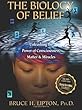
Well, in 2005, , came out with his first book, . In this book, Lipton takes the reader on his journey as a student, professor, and researcher, until his discovery about the cell. For years and years, biologists thought that the cell was controlled by something inside itself — the nucleus. Lipton, however, discovered that this is not the case.

Lipton learned through his research that the cell was actually governed by processes outside the cell. More accurately put, there are processes inside the cell that respond to things happening in the environment outside of the cell. Meaning, as the environment that the cell is in, changes, so too does the cell. There is a dynamic relationship between the cell and its environment. Lipton has gone on to extrapolate these results to other areas of our life beyond the cell. Namely, thoughts and by extension, actions. You’ll find many videos of Lipton talking about the importance of ‘,’ and even some .

Something that I find fascinating about one of the conclusions that Lipton came to from his work is that when cells are presented with nutrients, the cells move openly and towards it. When cells are presented with toxins, the cell closes and moves away. Lipton found that a cell could not simultaneously be in a state of growth (opening and moving forward towards the nutrients) and in a state of protection (closing and moving away from the toxin). I think that this applies directly to the first quote I have provided for this post: “Every thought, word, or deed, either purifies or pollutes the body.” So, we are either thinking positive, warm, and loving thoughts that help our body grow, or we are thinking negative, degrading, and unnecessary thoughts that our body must defend against. Which kind are you thinking?

~

Spirituality From an Unlikely Source: Will Smith

I was on YouTube like I had been a and on the sidebar, I noticed a video under the suggestion heading by the title of: . I’ve always subscribed to the theory that our words and thoughts have an effect on the world around us (check out our or , and you’ll see some of the kinds of books that I recommend discuss these principles in their books), but I didn’t expect this kind of wisdom from a famous actor.

It’s not that I don’t think that Will Smith has the capacity to understand or even believe these kinds of things, it’ s just that with entertainers, it’s harder to imagine them outside of some of the roles they’ve played. After watching the almost 10-minute video of many clips spliced together where Will advocates the theory that our thoughts have a decided effect on the outcome of our lives, I couldn’t help but write a post here about it. In fact, I’ve even included the video at the end because I really think it’s worth the 10 minutes it takes to watch it.

One of the interesting perspectives that he offers is on talent and skill. He says:

Talent you have naturally. Skill is only developed by hours and hours and hours of beating on your craft.

I think that there is definitely truth to this and it is backed up by the work of in his book . In it, Gladwell purports that to be over-the-top successful at something, you need to spend upwards of 10,000 hours doing that something. Gladwell cites an example of , explaining to the reader that for 4 straight years, The Beatles were able to perform live in Germany. In this time, Gladwell claims that The Beatles accumulated over 10,000 hours of (practice) at their craft and that when they came back to England, they were an instant-hit. Gladwell also cites the example of Bill Gates who, when in high school, gained access to a computer. Gates spent nearly all of his free-time on this computer, accumulating hours and hours of (practice), which eventually led to .

Another interesting quote from the video:

You don’t try to build a wall. You don’t set out to build a wall. You don’t say I’m gonna build the biggest, baddest, greatest wall that’s ever been built. You don’t start there. You say, I’m gonna lay this brick, as perfectly as a brick can be laid. And, you do that every single day, and soon you have a wall.

I’m sure this concept is not new to anyone, about “,” but it’s something that I think is worth repeating, and I think it’s also adds a different level of authority to hear someone like Will Smith say it.

I want to do good. I want the world to be better because I was here.

Wouldn’t it just be fabulous if we all walked around with this attitude: wanting the world to be better because we were here. Performing acts, volunteering, making a difference – making the world a better place.

I just believe that. I believe that I can create whatever I want to create.

Around of the video, he begins talking about how our thoughts are physical things in the universe.

Our thoughts, our feelings, our dreams, our ideas — are physical in the universe. That, if we dream something, if we picture something, if we commit ourselves to it, that is a physical thrust towards realization that we can put into the universe. That the universe is not a thing that’s gonna push us around. That the world and people and situations are not something that’s gonna push us around. That we are gonna bend the universe and command and demand that the universe become what we want it to be.

Celebrities can be a mixed bag. They can run the spectrum from those that are having a hard go of things, like , to those like Will Smith who use their celebrity for other means. Whenever I learn that a celebrity is involved in the kinds of thinking that Will Smith is, I can’t help but smile just a little bit, knowing that maybe our world really is changing faster than we know.