A Collection of Scriptures for Guidance: Hinduism, Part 7

Note: the first two paragraphs are introductory and are derived from the first post in this series. I’ll continue to repost them, in case this is your first time reading a post from this series.

When I was still a doctoral candidate at Sofia University, one of the courses I completed was “World Religions.” This was one of the classes I enjoyed the most during my time at Sofia University. I’d never had such broad exposure to the world’s religions before and this class really allowed me to gain a better understanding of them.

One of the papers I wrote for that class really tied in the fact that I was in a clinical psychology PhD program. The purpose of the paper was to collect quotes from scriptures of the various world religions that I could use with clients/patients when I became a therapist. While I’m no longer pursuing a PhD in clinical psychology, the quotes I collected could certainly be of use, so I thought I’d share them here.

Today’s collection of scriptures for guidance comes courtesy of Hinduism. Enjoy!

Anxiety

Those who surrender to God all selfish attachments are like the leaf of a lotus floating clean and dry in water. Sin cannot touch them. Renouncing their selfish attachments, those who follow the path of service work with body, senses, and mind for the sake of self-purification. Those whose consciousness is unified abandon all attachment to the results of action and attain supreme peace. (Bhagvad Gita 5.10-12)

Anger

Why, sir, do you get angry at someone
Who is angry with you?
What are you going to gain by it?
How is he going to lose by it?
Your physical anger brings dishonor on yourself;
Your mental anger disturbs your thinking.
How can the fire in your house burn the neighbor’s house
Without engulfing your own? (Basavanna Vachana, 248)

Addiction

Excessive eating is prejudicial to health, to fame, and to bliss in Heaven; it prevents the acquisition of spiritual merit and is odious among men; one ought, for these reasons, to avoid it carefully. (Laws of Manu, 2.57)

Death

Now my breath and spirit goes to the Immortal,
and this body ends in ashes;
OM. O Mind! remember. Remember the deeds.
Remember the actions. (Isah Upanishad, 17, Yajur Veda, 40.15)

Guilt

All evil effects of deeds are destroyed, when He who is both personal and impersonal is realized. (Mundaka Upanishad, 2.2.9)

If we have sinned against the man who loves us, have wronged a brother, a dear friend, or a comrade, the neighbor of long standing or a stranger, remove from us this stain, O King Varuna. (Rig Veda, 5.85.7)

Though a man be soiled with the sins of a lifetime, let him but love me, rightly resolved, in utter devotion. I see no sinner, that man is holy. Holiness soon shall refashion his nature to peace eternal. O son of Kunti, of this be certain: the man who loves me shall not perish. (Bhagavad Gita, 9.30-31)

If you liked this post, you might like one of the other posts in this series:

A Collection of Scriptures for Guidance: Buddhism, Part 6

Note: the first two paragraphs are introductory and are derived from the first post in this series. I’ll continue to repost them, in case this is your first time reading a post from this series.

When I was still a doctoral candidate at Sofia University, one of the courses I completed was “World Religions.” This was one of the classes I enjoyed the most during my time at Sofia University. I’d never had such broad exposure to the world’s religions before and this class really allowed me to gain a better understanding of them.

One of the papers I wrote for that class really tied in the fact that I was in a clinical psychology PhD program. The purpose of the paper was to collect quotes from scriptures of the various world religions that I could use with clients/patients when I became a therapist. While I’m no longer pursuing a PhD in clinical psychology, the quotes I collected could certainly be of use, so I thought I’d share them here.

Today’s collection of scriptures for guidance comes courtesy of Buddhism. Enjoy!

Anxiety

One who has mastered Dharma, one much learned,
Has no such thought as, Ah! ‘tis well with me!
Look you! How tortured is he that has possessions!
One to another human folk are bound. (Udana 13)

Anger

Conquer anger by love. (Dhammapada 223)

If an evil man, on hearing of what is good, comes and creates a disturbance, you should hold your peace. You must not angrily upbraid him; then he who has come to curse you will merely harm himself. (Sutra of 42 Sections 7)

Addiction

What are the six channels for dissipating wealth? Taking intoxicants; loitering in the streets at unseemly hours; constantly visiting shows and fairs; addiction to gambling; association with evil companions; the habit of idleness….

Gambling and women, drink and dance and song,
Sleeping by day and prowling around by night,
Friendship with wicked men, hardness of heart,
These causes six bring ruin to a man.

Gambling and drinking, chasing after those
Women as dear as life to other men,
Following the fools, not the enlightened ones,
He wanes as the darker half of the moon.

The drunkard always poor and destitute;
Even while drinking, thirsty; haunting bars;
Sinks into debt as into water stone,
Soon robs his family of their good name.

One who habitually sleeps by day
And looks upon the night as time to rise
Licentious and a drunkard all the time,
He does not merit the rank of householder. (Digha Nikaya iii.182-85 Sigalovada Sutta)

Death

For death carries away the man whose mind is self-satisfied with his children and his flocks, even as a torrent carries away a sleeping village. (20 Dhammapada, 287)

Depression

We are shaped by our thoughts; we become what we think. When the mind is pure, joy follows like a shadow that never leaves. (Buddha)

Grief

My sickness comes from my ignorance and thirst for existence, and it will last as long as do the sickness of all living beings. Were all living beings to be free from sickness, I also would not be sick… As the parents will suffer as long as their only son does not recover from his sickness, just so, the bodhisattva loves all loving beings as if each were his only child. He becomes sick when they are sick and is cured when they are cured. (Holy Teaching of Vimalakirti 5)

In the perilous round of mortality,
In continuous unending misery,
Firmly tied to the passions
As a yak is to its tail;
Smothered by greed and infatuation,
Blinded and seeing nothing;
Seeking not the Buddha, the Mighty,
And the Truth that ends suffering,
But deeply sunk in heresy,
By suffering seeking riddance of suffering;
For the sake of all these creatures,
My heart is stirred with great pity. (Lotus Sutra 2)

Guilt

Though a man be soiled with the sins of a lifetime, let him but love me,
rightly resolved, in utter devotion. I see no sinner, that man is holy.
Holiness soon shall refashion his nature to peace eternal. O son of
Kunti, of this be certain: the man who loves me shall not perish. (Meditation on Buddha Amitayus 3.30)

If you liked this post, you might like one of the other posts in this series:

A Collection of Scriptures for Guidance: Judaism, Part 5

Note: the first two paragraphs are introductory and are derived from the first post in this series. I’ll continue to repost them, in case this is your first time reading a post from this series.

When I was still a doctoral candidate at Sofia University, one of the courses I completed was “World Religions.” This was one of the classes I enjoyed the most during my time at Sofia University. I’d never had such broad exposure to the world’s religions before and this class really allowed me to gain a better understanding of them.

One of the papers I wrote for that class really tied in the fact that I was in a clinical psychology PhD program. The purpose of the paper was to collect quotes from scriptures of the various world religions that I could use with clients/patients when I became a therapist. While I’m no longer pursuing a PhD in clinical psychology, the quotes I collected could certainly be of use, so I thought I’d share them here.

Today’s collection of scriptures for guidance comes courtesy of Judaism. Enjoy!

Anxiety

Whoever had bread in his basket and says, “What am I going to eat tomorrow?” only belongs to those who are little in faith. (Talmud Sota 48b)

Anger

Anger deprives a sage of his wisdom, a prophet of his vision. (Talmud Pesahim 66b)

Addiction

Rabbi Isaac said, quoting Proverbs 23.31, “Wine makes the faces of the wicked red in this world, but pale in the world to come.” Rabbi Me’ir said, “The tree of which Adam ate was a vine, for it is wine that brings lamentation to man.” (Talmud Sanhedrin 70ab)

Death

The body is the sheath of the soul. (Talmud Sanhedrin 108a)

Grief

Before He brought on the flood, God Himself kept seven days of mourning, for He was grieved at heart. (Midrash Tanhumma Shemini 11a)

Do not be daunted by the enormity of the world’s grief. Do justly, now. Love mercy, now. Walk humbly, now. You are not obligated to complete the work, but neither are you free to abandon it. (attributed to the Talmud)

Rabbi Me’ir said, “When man is sore troubled, the Shechinah says, ‘How heavy is my head, how heavy is my arm.’ If God suffers so much for the blood of the wicked, how much more for the blood of the righteous.” (Mishnah Sanhedrin 6.5)

Guilt

Forgive all guilt and accept what is good. Instead of bulls we shall pay [the offering] with our lips. (Hosea 14:3)

If you liked this post, you might like one of the other posts in this series:

A Collection of Scriptures for Guidance: Islam, Part 4

Note: the first two paragraphs are introductory and are derived from the first post in this series. I’ll continue to repost them, in case this is your first time reading a post from this series.

When I was still a doctoral candidate at Sofia University, one of the courses I completed was “World Religions.” This was one of the classes I enjoyed the most during my time at Sofia University. I’d never had such broad exposure to the world’s religions before and this class really allowed me to gain a better understanding of them.

One of the papers I wrote for that class really tied in the fact that I was in a clinical psychology PhD program. The purpose of the paper was to collect quotes from scriptures of the various world religions that I could use with clients/patients when I became a therapist. While I’m no longer pursuing a PhD in clinical psychology, the quotes I collected could certainly be of use, so I thought I’d share them here.

Today’s collection of scriptures for guidance comes courtesy of Islam. Enjoy!

Anxiety

Any who believes in his Lord has no fear, either of loss or of any injustice. (Qur’an 72.13)

Anger

Abu Huraira reported God’s Messenger as saying, “The strong man is not the good wrestler; the strong man is only he who controls himself when he is angry.” (Hadith of Bukhari and Muslim)

Addiction

You who believe! Intoxicants and gambling… are an abomination – of Satan’s handiwork: eschew such that you may prosper. Satan’s plan is to stir up enmity and hatred among you by means of liquor and gambling, and to hinder you from the remembrance of God and from prayer. Will you not abstain? (Qur’an 5.90-91)

Death

And He originated the creation of man out of clay,
then He fashioned his progeny of an extraction of mean water,
then He shaped him, and breathed His spirit in him. (Qur’an 32.8-9)

Know that the present life is but a sport and a diversion, an adornment and a cause of boasting among you, and a rivalry in wealth and children. It is as a rain whose vegetation pleases the unbelievers; then it withers, and you see it turning yellow, then it becomes straw. And in the Hereafter there is grievous punishment, and forgiveness from God and good pleasure; whereas the present life is but the joy of delusion. (Qur’an 57.20)

Depression

Who is it that Sustains you (in life) From the sky and from the earth? Or who is it that Has power over hearing And sight? And who Is it that brings out The living from the dead And the dead from the living? And who is it that Rules and regulates all affairs? They will soon say, “God.” Say, “Will ye not then Show piety (to him)?” (Surat Viunus, 10, 31)

O my Servants who have transgressed against their souls! Despair not of the Mercy of God: for God forgives All sins: for He is Oft-Forgiving, Most Merciful. (Surat al-Zumar, 39, 53)

Grief

Abu Dharr reported God’s Messenger as saying, “I see what you do not see and I hear what you do not hear; heaven has groaned, and it has a right to groan.” (Hadith of Ahmad, Tirmidhi and Ibn Majah)

Though wouldst only, perchance, Fret thyself to death, Following after them, in grief, If they believe not In this Message. (Surat al-Kahf 18, 6)

Guilt

Say, “If you love God, follow me, and God will love you, and forgive you all your sins; God is All-forgiving, All-compassionate.” (Qur’an 3.31)

Say, “O my Servants who have transgressed against their souls! Despair not of the mercy of God: for God forgives all sins: for He is Oft-forgiving, Most Merciful.” (Qur’an 39.53)

If you were not to commit sins, God would have swept you out of existence and would have replaced you with another people who have committed sin, and then asked for God’s forgiveness, that He might grant them pardon. (Hadith of Muslim)

If you liked this post, you might like one of the other posts in this series:

A Collection of Scriptures for Guidance: Confucianism, Part 3

Note: the first two paragraphs are introductory and are derived from the first post in this series. I’ll continue to repost them, in case this is your first time reading a post from this series.

When I was still a doctoral candidate at Sofia University, one of the courses I completed was “World Religions.” This was one of the classes I enjoyed the most during my time at Sofia University. I’d never had such broad exposure to the world’s religions before and this class really allowed me to gain a better understanding of them.

One of the papers I wrote for that class really tied in the fact that I was in a clinical psychology PhD program. The purpose of the paper was to collect quotes from scriptures of the various world religions that I could use with clients/patients when I became a therapist. While I’m no longer pursuing a PhD in clinical psychology, the quotes I collected could certainly be of use, so I thought I’d share them here.

Today’s collection of scriptures for guidance comes courtesy of Confucianism. Enjoy!

Anxiety

The Master said, “What need has nature of thought and care? In nature all things return to their common source and are distributed along different paths; through one action, the fruits of a hundred thoughts are realized. What need has nature of thought, of care?” (I Ching, Great Commentary, 2.5.1)

When you have faults, do not fear to abandon them. (Confucius)

Addiction

Men who are grave and wise, Though they drink, are mild and masters of themselves; But those who are benighted and ignorant Are devoted to drink, and more so daily. Be careful, each of you, of your deportment – What heaven confers, when once lost, is not regained. (Book of Songs, Ode 196)

Death

The union of seed and power produces all things; the escape of soul and brings about change. Through this we come to know the conditions of outgoing and returning spirits. (I Ching, Great Commentary, 1.4.2)

Depression

Our greatest glory is not in never falling, but in rising everytime we fall. (Confucius)

Everything has its beauty, but not everyone sees it. (Confucius)

Grief

Never give a sword to a man who can’t dance. (Confucius)

Guilt

Wheresoever you go, go with all your heart. (Confucius)

Loneliness

Respect yourself and others will respect you. (Confucius)

If you liked this post, you might like one of the other posts in this series:

A Collection of Scriptures for Guidance: Taoism, Part 2

Note: the first two paragraphs are introductory and are derived from the first post in this series. I’ll continue to repost them, in case this is your first time reading a post from this series.

When I was still a doctoral candidate at Sofia University, one of the courses I completed was “World Religions.” This was one of the classes I enjoyed the most during my time at Sofia University. I’d never had such broad exposure to the world’s religions before and this class really allowed me to gain a better understanding of them.

One of the papers I wrote for that class really tied in the fact that I was in a clinical psychology PhD program. The purpose of the paper was to collect quotes from scriptures of the various world religions that I could use with clients/patients when I became a therapist. While I’m no longer pursuing a PhD in clinical psychology, the quotes I collected could certainly be of use, so I thought I’d share them here.

Today’s collection of scriptures for guidance comes courtesy of Taoism. Enjoy!

Anxiety

The man who has had his feet cut off in punishment discards his fancy clothes – because praise and blame no longer touch him. The chained convict climbs the highest peak without fear – because he has abandoned all thought of life and death. These two are submissive and unashamed because they have forgotten other men, and by forgetting other men they have become men of Heaven. You may treat such men with respect and they will not be angry. Only because they are one with the Heavenly Harmony can they be like this. (Chuang Tzu, 23)

Anger

A person in danger should not try to escape at one stroke. He should first calmly hold his own, then be satisfied with small gains, which will come by creative adaptations. (I Ching)

Death

Look upon life as a swelling tumor, a protruding goiter, and upon death as the draining of a sore or the bursting of a boil. (Chuang Tzu, 6)

Birth is not a beginning; death is not an end. There is existence without limitation; there is continuity without a starting point. Existence without limitation is space. Continuity without a starting point is time. There is birth, there is death, there is issuing forth, there is entering in. That through which one passes in and out without seeing its form, that is the Portal of God. (Chuang Tzu, 23)

Depression

He who knows other men is discerning; he who knows himself is intelligent. He who overcomes others is strong; he who overcomes himself is mighty. He who is satisfied with his lot is rich; he who goes on acting with energy has a (firm) will.

He who does not fail in the requirements of his position, continues long; he who dies and yet does not perish, has longevity. (Tao Te Ching, 33)

Grief

The valley spirit dies not, aye the same;
The female mystery thus do we name.
Its gate, from which at first they issued forth,
Is called the root from which grew heaven and earth.
Long and unbroken does its power remain,
Used gently, and without the touch of pain. (Tao Te Ching, 6)

Guilt

The Tao in its regular course does nothing (for the sake of
doing it), and so there is nothing which it does not do.

If princes and kings were able to maintain it, all things would of
themselves be transformed by them.

If this transformation became to me an object of desire, I would
express the desire by the nameless simplicity.

Simplicity without a name
Is free from all external aim.
With no desire, at rest and still,
All things go right as of their will. (Tao Te Ching, 37)

If you liked this post, you might like one of the other posts in this series:

A Collection of Scriptures for Guidance: Primal Religions, Part 1

A couple of weeks ago, I shared something that I wrote for a paper this semester about Canada needing to diversify its export strategy. The recent news of Edward Snowden reminded me of a paper I wrote this semester for a different course. Writing both of those posts reminded me that I’ve written plenty of papers that you might find interesting, so I thought I’d dig into my old files and see what’s worth sharing.

When I was still a doctoral candidate at Sofia University, one of the courses I completed was “World Religions.” This was one of the classes I enjoyed the most during my time at Sofia University. I’d never had such broad exposure to the world’s religions before and this class really allowed me to gain a better understanding of them.

One of the papers I wrote for that class really tied in the fact that I was in a clinical psychology PhD program. The purpose of the paper was to collect quotes from scriptures of the various world religions that I could use with clients/patients when I became a therapist. While I’m no longer pursuing a PhD in clinical psychology, the quotes I collected could certainly be of use, so I thought I’d share them here.

As the title of this post suggests, the quotes in today’s post are geared towards “primal religions.” Enjoy!

Anger

The fly cannot be driven away by getting angry at it. (Idoma Proverb, Nigeria)

When a man goes to sacrifice he must remain peaceful, without a hot heart. He must stay thus for at least a day. If he quarrels on that day or is hot in his heart he becomes sick and destroys the words of the lineage and of the sacrifice. (Luhya Saying, Kenya)

Death

Onyame does not die, I will therefore not die. (Akan Proverb, Ghana)

Some day the Great Chief Above will overturn the mountains and the rocks. Then the spirits that once lived in the bones buried there will go back into them. At present those spirits live in the tops of the mountains, watching their children on earth and waiting for the great change which is to come. The voices of these spirits can be heard in the mountains at all times. Mourners who wail for their dead hear spirit voices reply, and thus they know that their lost ones are always near. (Yakima Tradition)

Grief

Abuk, mother of Deng,
Leave your home in the sky and come to work in our homes,
Make our country to become clean like this original home of Deng,
Come make our country as one: the country of Akwol
Is not as one, either by night or by day,
The child called Deng, his face has become sad,
The children of Akwol have bewildered their Chief’s mind. (Dinka Song, Sudan)

Religious Pluralism: Isaac and Ishmael

I’ve recently started re-watching The West Wing. I don’t remember what prompted it, but I’m really glad that I have. I first watched the series a couple of years ago — before I was to start business school. The show was really engaging and that made it easy to watch multiple (3, 4, and 5!) episodes at a time. Now that I find myself nearing the end of my formal business education (graduate with an MBA in a couple of months), re-watching The West Wing has been quite different. I feel like I have a better handle and understanding of the nuances to the plot. That’s not because I’ve seen it before (I hardly remember the ‘minor’ plot lines of the series), but because I’ve learned so much in the last 2 years.

I’m into Season 3 and the first episode that airs in Season 3 is one that’s not part of the plot. That is, it’s a play — with the characters of The West Wing, but it’s not part of the timeline of the show. This episode airs about a month after 9/11. Well, the actors/actresses can do it better than I, so here’s the introduction to the episode that aired:

When I was watching the series the first time, I don’t remember watching this episode — I was too eager to carry on with the plot. Since I knew what was going to happen, I thought I’d take the time to watch this episode. I thought it was very well done. I tried to imagine how I might be feeling back in October of 2001. Would I be upset? Would I be typecasting? Would I have understood the nuances of different religious beliefs? Different sects?

I’ve had a hard time finding critical reception for this particular episode, but of those articles I was able to find, there’ve been mixed reviews. From what I can tell, that has more to do with what appears to be something against Aaron Sorkin (the creator of the show). While some found the “teacher-student” paradigm a bit hokey, I thought it was a great way to convey an important message. Anyway, if you get the chance, I highly suggest watching the episode. If you’ve got Amazon Prime, here’s the link to the episode on Amazon that you can watch for free: The West Wing – Isaac and Ishmael.

~

As an aside, there was another really great episode that I saw recently. This one was part of the plot of the show, but it dealt with a really important issue: post-traumatic stress disorder. I was surprised when I clicked over to the Wiki page for this episode to find that it had only won one award (and helped Bradley Whitford win an Emmy). If I’m keeping score, this has to be one of the top 5 episodes of the series. Here’s the Amazon Prime link: The West Wing – Noël.

What if Every Major Religious Holiday Were a National Holiday?

There were a few articles (, , and ) in The Economist over the last few issues that got me thinking about religion. And not any one particular religion — all of them — and how they might be very much interrelated. At the same time, I often think about the growing . It seems the ways of balance has completely gone out the window.

There are lots of different explanations as to why people continue to overwork themselves. One from this claims that Americans mistake overwork for good work. Meaning, they think that if they work harder (they’ll be working better). by way of a calculator that lets you visually see how much time you’re spending on a variety of activities, which include: work, sleep, leisure, chores, meals, commute, etc.

Another contribution to the nature of overworking is the amount of holidays that people are ‘allowed’ to take. In some countries, it’s pretty to have 6, 7, or 8 weeks as holidays. We could also say the workweek itself is a pressure to work harder. In France, they have a . There’s also the idea that you need to work longer hours in order to .

Circling back to my initial point about religion: there are certain days in countries that are designated as . In the US, for instance, Easter and Christmas are holidays for which it is illegal to mandate that someone needs to be at work. According to , there are an assortment of religions represented across the United States.

So, my “big” idea: make all the major religious holidays national holidays.

When I say national holiday, I mean that these are days that are mandatory days off for businesses. I realize that this kind of idea would take an enormous amount of planning, that there would need to be legislation passed, that we’d need to define “major religious holidays,” and all that jazz, but just think about it (abstractly) for a moment.

Think about the extra days off to spend with family. Think about the prospect of religious acceptance for the younger generations. Instead of just “taking the day off and ,” parents could spend the day with their kids explaining to them what the major holiday means to that religion. Or, if there were no kids, the adults could take the day to learn about the culture and religion for the holiday. This could definitely foster a greater sense of compassion and empathy between people of different faiths.

What Would You Do, If You Just Bought a House and Found Money In It?

Money, cash, bag of money, money bag, garbage bag of money, full of moneySo, what would you do? You have just bought your family’s first house — excitement abound. It’s mid-week and you pick up the keys to head on over and relish your investment. After walking through the house and feeling like a King (or Queen), you walk past the garage and notice a piece of cloth hanging from the attic door. Curious, you head on up to the attic to find… bags of money! Do you keep it? Do you tell anyone? What would you do?

Well, for a couple from Utah, the answer to this question is give it back. As with the human experience, this story is not as cut and dry as I’m making it out to be. The previous owner of the house had died recently, after having lived there since 1966! That’s a long time to live in one house, especially in this day and age. One of the children of the the previous owner talked about how she knew her father had been hiding money away because she once found a bundle of cash taped beneath a drawer. Saving money was typical for people of this time. In fact, it’s logical if you think about it. People who grew up in the Great Depression, would have been socialized into believing that there “wasn’t enough,” and that survival was predicated on one saving.

Anyway, this story about the couple giving back the money, I think, is a true testament to the ‘good‘ in people. I think that most of us would expect the couple who found the money to keep the money, and that’s probably a logical inference. Most importantly, I think that what we’ve seen with this couple is context-dependent. Maybe if they didn’t know that it was an old man who had lived in the house previously, maybe then they would have kept the money. Of course, I doubt this is the case for this particular couple (from what I’ve read about them), but I think for some people, knowing that there is a person on the other end of where the money used to belong to would change things for them.

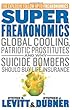
In Part 1 of my series on American Public Policy, I refer to the book Superfreakonomics and in particular, a study they cite in talking about altruism. Super Freakonomics: Global Cooling, Patriotic Prostitutes, and Why Suicide Bombers Should Buy Life InsuranceIn short, they found that when people are given the opportunity to, (on a continuum) give a complete stranger $10 right down to take $10, on average, people take about $1.30 from a complete stranger. (To better understand this, I recommend checking out Part 1.) In essence, the researchers have demonstrated that, when given the opportunity, people are likely to take from complete strangers. Maybe had the Utah couple not known who they bought the house from, they would have been more likely to keep the money.

As I stated above, I have a feeling that this is not the case. Utah is known for being a rather religious state. In fact, a 2009 Gallup poll places Utah as one of the top 15 states in the US (based on the question: Is religion an important part of your daily life?) Interesting to note: religiosity has been linked to morality since the time of Ancient Greece. Of course, there are others who think that morality without religion is possible, but could it be that Utah’s higher incidence of religiosity made it more likely that this Utah couple who found the money (is more likely to be religious), and by extension, moral?

Statue of Mother TeresaI’m not saying that you have to be religious to be moral, but there are some interesting factors at play. The first of which is the whole knowing the previous owner (as I elaborated on with the altruism study). The second would be religion/morality and the third, closely tied to this happening in Utah. This particular state is known for its residents being part of the Latter Day Saint Movement (Mormonism). One of the beliefs of this particular movement is that the people who subscribe to it, are referred to as “Saints.” This particular couple may not be of this religion/movement, but the question is still an interesting one to pose. If you thought of yourself as a “saint,” do you think that you’d keep a pile of money that you’ve found?