A Shift Towards Waldorf & Montessori: Education & American Public Policy, Part 3

In , I spoke about American public policy in the context of economics. Specifically, I tied in the concept of altruism and showed how given the opportunity, people are more likely to take money from a complete stranger than give money to a complete stranger. In , I wrote about campaign finance and elections in America. I understand that no system is perfect, but I felt that if there were more integrity in campaign finance & elections, people may have a little more faith in the system. In Part 3, today, I will talk about education in American public policy.

Everywhere you turn, there seems to be another story about the poor statistics of education in the United States. The Chicago-Sun Times is reporting that . And that’s an article that was published today! This past December (2010), the US slipped farther down the rankings on the ‘, which compares the knowledge and skills of 15-year-olds in 70 countries around the world.’ (The data can be found .) On these rankings, the US is now considered “average” on the overall reading scale and on the science scale. They fell below average on the mathematics scale. Shanghai-China, Korea-South, Finland, Hong Kong-China, Singapore, Canada, New Zealand, Japan, Australia, the Netherlands, Belgium, Estonia, Switzerland, and Poland, all out-performed the US on all three scales.

If you’re interested in the history of education in the United States, I’ve found a couple of great resources that highlight significant events through history with regard to education in the United States (; and .)

I had the chance to see earlier this year and I thought it was quite an eye-opening experience. While I don’t know that I agree with everything that is put forth in the movie, I think that the fact that this movie is even possible (meaning that a documentary of this nature could be done about education in the US) shows that there are definite holes in the system. It was interesting to watch attempt to alter the structure of unions for teachers in the Washington, D.C. area. I don’t think that many would have predicted a a year later.

I am not a primary school teacher, elementary school teacher, secondary school teacher, college-level teacher, or university-level teacher. I don’t know what it’s like to be standing at the front of the classroom day after day — students looking up at me expecting me to tell them something. I believe that it takes a special kind of person to not only be willing to do this, but to want to do this. I think teachers are a vastly underappreciated population. Sure, we have “,” but that’s far from enough, given the responsibility they are charged with — education our young. Could there be a more sacred responsibility?

A former cited statistics in an article published in association with (a libertarian public policy think tank) claiming that . While this may be true, I wonder if maybe the funding is going to the “wrong” places in education and if this may be a case of ‘.’ Put more bluntly — maybe the system is faulty. I think more funding for education can be a positive thing, if used in the right way and if given to the right places.

Maybe the US education system needs a . I was fortunate enough to have had an experience in the . I was far too young to really remember much of my experience there, (I was there from before kindergarten to just before the start of the second grade). It may not be feasible at this point, but I’d really like to see what a nation could do if all of their schools were taught in the Montessori-way or the . There are many different forms of across the world, but I am most familiar with Montessori and Waldorf.

I wonder what a nation of kids raised and educated through Waldorf Education would look like. Would we have ? Would we be ? Would there be less ? I don’t know the answer to any of these questions, but I’d like to think that a system of education like Waldorf’s (given to us by Rudolph Steiner), would dramatically shift a fair bit of the way we interact with each other, especially with regard to education. As I said earlier, the responsibility of teaching our youth is sacred. We should treat this task and those who do it, with the highest regard, just as those who do it, should treat our youth with the highest regard.

Jeremy Taylor’s Six Basic Hints for Dream Work

When I spent some time working for the , someone recommended that I read ‘s book called . Before reading Taylor’s book, I had already read about or heard of many dream theories. There’s , , ‘, , and the . After reading Taylor’s book, though, I was convinced — I had found the dream interpretation guide for me. On Taylor’s website, he offers that I’ve included below:

One
All dreams speak a universal language and come in the service of health and wholeness. There is no such thing as a “bad dream” — only dreams that sometimes take a dramatically negative form in order to grab our attention.

Two
Only the dreamer can say with any certainty what meanings his or her dream may have. This certainty usually comes in the form of a wordless “aha!” of recognition. This “aha” is a function of memory, and is the only reliable touchstone of dream work.

Three
There is no such thing as a dream with only one meaning. All dreams and dream images are “overdetermined,” and have multiple meanings and layers of significance.

Four
No dreams come just to tell you what you already know. All dreams break new ground and invite you to new understandings and insights.

Five
When talking to others about their dreams, it is both wise and polite to preface your remarks with words to the effect of “if it were my dream…,” and to keep this commentary in the first person as much as possible. This means that even relatively challenging comments can be made in such a way that the dreamer may actually be able to hear and internalize them. It also can become a profound psycho-spiritual discipline — “walking a mile in your neighbor’s moccasins.”

Six
All dream group participants should agree at the outset to maintain anonymity in all discussions of dream work. In the absence of any specific request for confidentiality, group members should be free to discuss their experiences openly outside the group, provided no other dreamer is identifiable in their stories. However, whenever any group member requests confidentiality, all members should agree to be bound automatically by such a request.

A year after reading Dreamwork, little did I know that I’d have the opportunity to take a with at the Institute of Transpersonal Psychology. During my time at ITP, I have to say, hands down, it was one of my favorite classes. For 10 weeks, 3 hours at a time, I got the opportunity to put into practice the ‘hints’ that Jeremy Taylor offers in doing dream work. I got to see these tenets in action and let me tell you — it was marvelous.

Sometimes, the class would split up into smaller groups and sometimes we would stay together as the full class. When we stayed together as a full class and worked with one person’s dream, it was quite remarkable some of the a-has that happened (not only for the dreamer, but for fellow classmates!) In fact, it wasn’t odd for classmates to gain deeper insights (than the dreamer) as a result of interpreting a fellow classmate’s dream.

The best part about Taylor’s methods for interpreting dreams is that the interpreter can never be wrong (and simultaneously, never right). The person interpreting the dream (from hint #5) should always preface their comments with, “If it were my dream…” By doing this, the interpreter is taking ownership of their onto the dream. And according to Taylor, projecting onto the dream is all we can do (as the non-dreamer). When the dreamer tells the dream, as we (the group) listen to the dream, all that we can do is project onto the dream. Referring back to (hint #2), only the dreamer can be sure of what their dreams mean or don’t mean (for them). So, when someone says, ‘if it were my dream…’ anything they say (so long as it stays in their first-person), is true, for them. However, the dreamer may not accept their projections (or resonate with their projections). Speaking in this way may seem weird at first, but trust me, it really helps — especially if the dream is sensitive.

While I’ve introduced this post and Taylor’s work specifically as it relates to dreams, these 6 hints are useful in other ways. For instance, if one were trying to broker peace within some sort of group conflict, the whole “if it were my dream…” could come in handy (if we switch out dream for a more accurate description of what’s happening). The next time someone asks you to interpret their dream, I really encourage you to use the Taylor’s method, especially the whole idea of, “if it were my dream…” I think that in using this qualifier to begin our interpretation, not only are we being more polite to the dreamer, we’re actually giving a more accurate description of our interpretation (as, of course, our interpretation can only be a projection).

After I finished writing this post, I found a recent (as of May 2011) video of Jeremy Taylor talking about his dream work. He is talking about his dream work in the context of a course offering at (Note: this university is by ‘any regional accrediting agencies recognized by the US Department of Education nor by any other national governments’), so it’s semi-promotional, but for the most part, he elaborates on the six hints for dream work that I’ve included above. If any of what I’ve said about Taylor’s dream work in this post has interested you, I really encourage you to watch Taylor talk about it. He is very articulate!

Is An Eye For An Eye Ever Justified?

As I’m sure you’ve heard/read/seen, the United States conducted a mission in which Osama bin Laden “passed away.” At first, I was quite shocked. Everything we’d been told about bin Laden was that he was . Moreover, he hadn’t been in the news in ages, and all of a sudden — boom. Then, I felt empathy. Yes, I understand that this person was seen as a security threat to the United States and in some cases, the world, but it is my belief that no matter the crime, taking life is never the solution, nor is it justifiable.

Some of the archived footage of President Obama talking about bin Laden ( and ) and just my general feelings about President Obama make me think that Obama’s original intention in this mission was not to take an eye for an eye. President Obama doesn’t seem like the kind of president who is out for ‘revenge.’ Rather, I think the initial intent was to capture. Some have already , and others think . Others still, think that for the United States (and the world). Other than some of the footage I’ve seen of Obama talking about bin Laden, and my own intuition, I have no hard evidence. There may be some out there, but I haven’t come across it. Mind you, I haven’t looked very hard, either.

The “An-eye-for-an-eye-for-an-eye-for-an-eye… ends in making everybody blind,” is often to Mahatma Gandhi. In looking at the wiki article for “,” Jesus Christ is also quoted as saying: “You have heard that it was said, ‘An eye for an eye and a tooth for a tooth’. But I say to you, do not resist an evildoer. If anyone strikes you on the right cheek, turn to him the other also.” However, there is no reference to a specific passage from the Bible (or other book), so I don’t know if that’s accurate.

Byron Katie often says, “.” When I first heard that, it took me a some time to wrap my head around what that is really saying. Defense is the first act of war. So, not the aggressor, but the defender. Sounds a bit strange, yes? She’s so eloquent that instead of trying to paraphrase her ‘thoughts’ on the topic, I decided just to include a YouTube video of her talking about the concept:

While Katie is referring to defense in a communication-sense, I think that her ideas on this topic can be extrapolated to other areas of interaction. As an example: think about a school-yard bully. On the playground, the bully pushes another kid down. In one scenario, the kid gets up, retaliates, is seen by one of the people “on-duty” for lunch and is subsequently sent to the principal’s office. Another way this first scenario could play out is the two get into some sort of brawl whereby both are left injured. In the second scenario, the kid gets up and walks away. The kid does not allow the antagonism of the bully to get to her/him. The kid just ‘brushes it off’ and leaves the situation. More times than not, the bully, who is actually seeking some sort of reaction from someone, will not follow the kid as s/he walks away, but instead, will seek out another person to bully.

Now, the two scenarios I’ve presented leave little to be desired. Many people would want the kid to retaliate or have someone reprimand the bully for what they have done — and I can understand this. But looking at this scenario systemically, the problem is much deeper. The questions that need to be asked are less about the kid and the bully, and more about the environment’s in which these two roles have grown up in. That is, what kind of things are happening in the bully’s environment such that would make the bully more likely to be a bully and what kinds of things are happening in the kid’s environment such that would make the kid more likely to be bullied? If we begin looking into the roots of the problem, we see through the veil, so to speak, and gain a better understanding of the world around us, especially as it relates to ‘unrest.’

We Have To Do This! No, We Don’t. We Have to Take In Nourishment…

I was talking to my partner about still having to write a post today and she looked at me kind of funny. When she did, I noticed the error in my speech and proceeded to say, “I want to write a post today.”

A few years ago, there was a character () from that had a great line (from , for all you fans), which I think exemplifies the point I’m emphasizing:


Leonard
: Shut up Howard! Sheldon, we have to do this.

Sheldon
: No we don’t. We have to take in nourishment, expel waste, and inhale enough oxygen to keep our cells from dying. Everything else is optional.

While Sheldon is making an argument for getting out of going to give a presentation, he also makes a valid point that there really isn’t anything we have to do.

I often find the people I speak with tell me they (have) to do this or they have to do that, without realizing what it is that they’re saying – without realizing what it is that they’re committing themselves to. Remember I wrote about the importance of our words and . Think about the way your biology would respond to feeling required to do something, when it really wasn’t as dire as all that.

Really, do you really have to go to the next concert, concert, concert, or concert? Will your life be if you don’t go? I can understand really wanting to do something, but we now know the importance of our words on our biology, why would we unnecessarily over-stress the body with this over-the-top language?

I can understand that nobody’s perfect and from time-to-time, (like today), even I slip up and use language that I have been socialized into using. I’d like to think that most times, I catch it, but I’m fairly certain that there are times when I don’t. Even though I’ve read all that I’ve read on this subject, I still flub simple things like (having) to do something versus (wanting) to do something. I know that I may sound trivial, but while this difference seems minute, the subtle shift for your biology is tremendous.

Let’s think of it this way… Your are superior to [directly above] your kidneys. One of the main functions of your adrenals is to secrete hormones in response to stress. So, when your body is stressed (as interpreted by your brain), the sends a message to the adrenals to produce cortisol [] and epinephrine [] also known as adrenaline. As from Bruce Lipton’s “,” when our cells are ‘preparing for battle,’ they can’t be simultaneously taking in nutrients and growing.

So, the next time you think you have to do something, remember what that will do to your adrenals and the overall health of your body.

With Love and Gratitude

Dr. Emoto, love and gratitude, water crystal, healing intention, power of wordsAnytime I write something to another person, I nearly always end the message with: With Love and Gratitude. I’ve been asked on a number of occasions why it is that I do this. I usually give people the abridged version (spreading joy) or something like that. I thought it would be good to have a post here explaining why it is that I use these four words to sign off on what I’ve said. Initially, I will refer you to two posts I have already written here having to do with the importance of our words & thoughts (for ourselves and for others).

Sometime during the summer of 2005, I had the chance to see the documentary, What The Bleep Do We Know!? Much of what was offered in the film was not new to me (given my unique exposure to many esoteric influences while growing up), but there was something that I found uniquely interesting about one of the clips from the movie that I’ve included here.

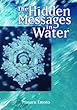
Dr. Emoto, Masaru Emoto, Hidden messages in water, water messages, healing intentionAfter watching the documentary, I was so happy that there was science being done to “back-up” the sorts of things that I already thought to be true. During the Fall of that same year, I was able to get a copy of Dr. Emoto‘s book: “The Hidden Messages in Water.” I didn’t want to take what the movie was telling me at face value, so I wanted to read his book. After reading his book, I was confident that there had to be something to the experiments he was doing. So this is half the story. The other half involves a piece of synchronicity.

At the same time I was reading about Emoto’s work, I happened upon an email (or maybe I stumbled onto the site, I really don’t remember exactly how it happened) regarding “The Go Gratitude Experiment.”Go Gratitude Logo The ‘experiment’ was all about Gratitude. I really enjoyed getting the “42 knew views on Gratitude” [spelling intended] and I still have the emails they came in. Some of the work by the Go Gratitude folks has shifted over to a new website (Blooming Humans), but from what I can tell, it’s essentially the same message: Gratitude matters.

After reading Emoto’s book and pairing it with the knowledge from the “Gratitude Experiment,” I was so pleased that I printed off a document containing the words “Love & Gratitude” filling the page in size 80 font and taped the words in different parts of my room. I put one on each wall, I put one on the face of the shelf just above where my computer monitor was and I even put some in my closet and drawers (why shouldn’t my clothes radiate Love & Gratitude, right?)

At first, I was a little shy signing off emails to people “With Love and Gratitude.” It didn’t necessarily feel appropriate to have the word “love” in certain kinds of emails. That word can be quite ‘charged’ for some folks, and I didn’t necessarily want to invoke those sorts of feelings when they were reading my email. Eventually, as I got into the habit of signing off emails “With Love and Gratitude” to people, it would sometimes just slip out when signing off emails that were of a more business-like nature. As this started to happen more and more,Emoto, Masaru Emoto, hidden messages in water, water crystals, love and gratitude I began to realize that my initial trepidation was unnecessary. In fact, I began to relish sending emails to people as it allowed me the chance to say what I needed to say, with love and gratitude.

Since Emoto’s work was published, there have been a number of critics, which I suppose is to be expected, and some of them even raise important points. The clincher for me is Dean Radin. I’ve spoken about Dean Radin before a number of times on here. He is a Senior Scientist at the Institute of Noetic Sciences and is the “author or coauthor of over 200 technical and popular articles, a dozen book chapters, and several books.” In 2006, Dean Radin (along with Emoto and other researchers) sought out to test the effects if distant intention on water crystal formation. They used a double-blind method (an experiment in which the experimenters and the participants both do not know which group is experimental and which is the control) and their results:

Results indicated that crystals from the treated water were given higher scores for aesthetic appeal than those from the control water (P = .001, one-tailed), lending support to the hypothesis.

A couple of years later, Radin set out to replicate the findings — again. This time, it was a triple-blind study. A triple-blind study is when the experimenters, the participants, and the evaluators, all, do not know who is receiving treatment and who is not receiving treatment. And again, their results:

Results suggested that crystal images in the intentionally treated condition were rated as aesthetically more beautiful than proximal control crystals (p = 0.03, one-tailed).

I had already believed the water crystal experiments to be true, but after reading the papers published by Radin, now I can be much more sure that they are true. So there you have it. Now you know why I sign-off my emails and comments with:

With Love and Gratitude


Dr. Emoto, love and gratitude, water crystal, healing intention, power of words

Your Words and Thoughts Affect Others – Believe It!

A week ago, I did a post on how our and mentioned that I would be doing a post about how our words not only affect our reality, but the reality of others. In pulling together some outside resources for this post, I was quickly overwhelmed. There is an abundance of material that supports the fact that our words have contribute to the lives of those around us.

In 1993, came out with a book called “.” In it, Dossey explains prayer and healing, describes factors that influence the efficacy of prayer, and cites evidence that support the conclusions.

In 1998, Elisabeth Targ, daughter of famous American physicist, author, and ESP Researcher, , was part of a research team that did a study called: “.” The conclusion of the study:

These data support the possibility of a DH effect in AIDS and suggest the value of further research.

In 2000, researchers conducted a systematic review of the available data on the efficacy of all forms of distant healing in the . The article was called: “.” The conclusion of the study:

Given that approximately 57% of trials showed a positive treatment effect, the evidence thus far merits further study.

In 2003, researches from the published an article in called: “.” The conclusion of the article [emphasis added]:

Previous laboratory research in this domain suggests that DHI [Distant Healing Intention] effects warrant serious study, but most scientists and funding agencies are unaware of the evidence or the relevant literature. By following these evolving guidelines, researchers’ designs and their ultimate publications will conform more closely to the quality of standards expected by scientific journals, and such publications will in turn attract the attention of a broader range of scientists. This seems especially important for alternative healing research in general and for distant healing in particular;  both realms enjoy broad public support but have largely eluded serious attention by mainstream science.

There are even books that have been published that claim to teach the reader . One more study I wanted to mention was one done by the on the to work at a distance.

This pilot study shows that healing intent can be directed at distance, and suggests that healing by prayer is measurable.

Each year, more and more evidence is published to support the effect that our words and thoughts have on those around us. The is a good place to keep an eye on, especially their yearly conferences. Researchers come from all over the globe to talk about their findings with their colleagues. The that I mentioned earlier always has fascinating research that is relevant in this arena. These particular studies are focused on the effect that our words and thoughts have on the healing of others (at a distance). However, in the book I mentioned by Dossey, there’s a chapter called: “When Prayer Hurts: An Inquiry into ‘Black Prayer.'”

To close, I’ll share a first-person experience I had that demonstrates exactly what I’m talking about. During some sort of group bonding or orientation process, the facilitator had us all stand in a circle. He told us we were going to do a little experiment. He picked the smallest girl and put her in the middle of the circle and picked me (one of the stronger males of the group) to go outside and wait in the hall. While I was gone, he told the group that he was going to bring me back into the room and have me try and lift the girl in the middle of the circle and that they were to send positive thoughts and energy towards me. After a few minutes, he called me back in and asked me to lift the girl in the middle of the circle — swoosh! I lifted her with ease! It felt like I could have lifted her with one hand and swung her around like a rag doll.

The facilitator then said that was enough and asked me to put her down and go back out into the hall. While I was there, he asked the group to now send me negative thoughts and energy, while I was trying to lift the girl. He called me back into the room and I went to lift her. Nothing. I thought maybe I was just a little tired from lifting her before, so I steeled myself and got set… lift… and nothing. I couldn’t even get her heels off of the ground. The facilitator then went on to explain what had just happened. He explained to us the power of our thoughts and energy on those around us and more importantly, the power of a group of thoughts on one individual (or to extrapolate, on other groups).

Your thoughts and words have an impact on your life and your thoughts and words have an impact on the lives of those around you. Next time you catch yourself thinking something negative, will you replace it with a positive thought?

Earth Day is Every Day

Forty some odd years ago, United States Senator from Wisconsin, called for an environmental to be held on April 22nd, 1970. During that year, over 20 million people participated. Many great things happen each year on Earth Day, most of which all have to do with the Earth in some way. It is estimated that over . I think it’s great that we have a ‘day’ dedicated to the Earth, but shouldn’t everyday be Earth Day?

In doing some research for this post, I found something rather interesting that speaks to humans being . When Earth Day was first organized in 1970, it coincided with the centenary of , who established the world’s first officially socialist state. In some of the news reports after the event, Time has a quote from a delegate from Mississippi of the Daughters of the American Revolution: “” How off-the-wall is that? “…Live in an environment that is good for them…” Oh, the humanity, right? It just goes to show that people searching for a conspiracy will always find a conspiracy.

Given that it was Earth Day, I decided to go and take the to see what my carbon footprint was like. I remember doing this several years ago in a globalization class I took during my time as an undergraduate. I was a little disappointed to see that the number of Earths it takes to live my lifestyle has gone up (even slightly) and I would rate myself on the low-end of most Americans, in part, because I live in Hawaii.

When was the last time you ? I haven’t planted a tree since I was in grade school and that’s a little embarrassing coming from someone who prides himself on “loving” the Earth. If you haven’t planted a tree, have you done something else for the Earth today? When I used to live in a city, I would often pick up trash that I saw circling the streets. I know, it’s not much, but it was my way of contributing to the health of the planet. More than that, if I saw something that was recyclable on the top of the garbage pile, I would pick it up and place it into the proper bin, (which was usually a few steps away). I’m reminded of a scene in the movie Independence Day near the beginning of the film where one of the protagonists is an environmental buff who keeps finding one of his co-worker’s coke cans in the garbage when the recycling bin was a few steps away.

Today’s post has been a bit of a potpourri of thoughts about Earth Day. I wanted to end this post with a “hat tip” of sorts to a quote that I always remember when someone tells me that “today is Earth Day.” To my knowledge, every day is Earth Day. We just happen to celebrate it this one day out of the year. I think it’s great that there is a whole day dedicated to the Earth, (there’s also , and a whole , too), but I really think we need to remember that we should “celebrate” Earth Day every day. Buy the product that has “greener” packaging; pick-up a product that is healthier for the environment; hang dry your clothes; take the bus; walk; use the dishwasher; recycle; reuse! There are so many things we can do, every day, to ‘befriend’ the earth.

Pets Are So Much More Than Just “Pets”

dog standing, dog, smiling, happy, joy, joyfulThe value of having pets far outweighs any of the negatives associated with having a pet. Humans and animals have coexisted for quite some time. Beyond the time of when humans (hunted) animals, someone must have decided that it was going to be a good idea to make one of those animals part of their family. In doing so, the idea of “owning” pets and animals was born. While I understand the word “own” and contextually it might be easier to use this word, but do you really think you own your pet?

Yes, with certain animals, convention tells us that we need to ‘train’ our animals to respond to our commands. And yes, I will admit, I issue commands that I expect my dog to follow, but that doesn’t mean I don’t think there is a better way to do it. Let’s take a look at the language piece of this, first.

According to the [emphasis added]:

  • There are approximately 77.5 million owned dogs
  • Thirty-nine percent of households own at least one dog
  • There are approximately 93.6 million owned cats
  • Thirty-three percent of households own at least one cat

Using these statistics, it is accurate to say that 1 in 3 households has a pet (and it wouldn’t be a stretch to say that 1 in 2 households has a pet). Notice that when I referred to these statistics, I said has a pet rather than owns a pet. About 10 years ago, there was an interesting movement in Boulder, Colorado, that advocated the In its place, guardianship. Humans are the ‘guardian’ of their pet, rather than the owner of their pet. This quickly picked up steam and similar in the following year. As of April of this year, “

As I’ve written about before, . In the near future, I will do a post about how our words can affect others (which will cat, cat sleeping, cuddly cat, cute cat, tabby cat, playfulbe more relevant to this post). The subtle difference between ownership and guardianship may really be enough to change the attitude of the “owner” such that they care just a little bit more for their animals. I’d like to think so.

Beyond the ownership vs. guardianship debate, having a pet can prove wonders to the health of the ‘carers.’ There have been scientific studies done (and many books written) on the topic of the many positive benefits to having a pet (a sampling:  and ). Two more things I want to touch on before I wrap this post up. The first has to do with animals and their consciousness and the second has to do with animals and our workspace.

I think one of the main draws to having an animal around is the pure joy that can be seen in them. That is, animals do not hold grudges, they’re not vindictive, they’re ever-present to the moment at handI think that part of their infinite joy stems from their lack of ‘stuff.’ As humans, we have lots of ‘stuff’ that we deal with. We have our stress from work, stress from news, stress from family, stress from kids, stress from friends, stress, stress, stress! Animals — none of it. They live for the moment they are in. When your dog whines at the door, it’s moment-specific. S/he wants to go out and play (or relieve themselves). They’re not thinking three steps ahead that when you let them out, they can run around the tree, sniff over by the bush, and then drink some water. It’s specifically in that moment that they want to go out. I think that because of this, they are much closer to a state of pure joy, more often. When I look at animals, I can feel this warming sensation in my heart. I think this is from that infinite joy they have that my heart is connecting with.

The second thing I wanted to talk about is actually quite practical. Did you ever notice being at your computer that your cat may come and sit on your keyboard or distract away from your monitor? Or maybe as you were moving your mouse to click on something, your dog came and pushed your hand off the mouse with your snout? It is my belief that our animals do this as a service to us. That’s right, a service. They can see the “bigger picture” around us and can tell that we’re in some sort of funk with what we’re doing at the computer and that we may need a break. Or, maybe that specific time that we were spending working on that project or idea would be better done at a later date. The next time your dog/cat (or salamander!) disrupts your computer time, think twice before you push ’em away.

Cell Phone Etiquette: Necessary Evil vs. “Old-Fashioned” Manners

Have you ever been out to dinner with people when suddenly you hear the (vibration) of a cell phone and then one of the people has their head buried in their phone? How about walking down the street and hearing someone talking to what looks like thin air? Or what about in the grocery store, seeing someone carrying on a conversation while deciding which box of breakfast bran to select? [] Cell phone are ubiquitous these days. In a , researchers polled over 3000 adults 18 or older and found that 85% owned a cell phone.

We know that cell phones aren’t going away anytime soon, especially because 96% the demographic between 18-29 in the survey above indicated that they had a cell phone. In doing some digging for this post, I found an talking about cell phone etiquette. As the technology has advanced, so to have the ways in which we connect with our mobile phones. To keep up with the necessary niceties, there’s an talking about some of the ‘okay’ and not-so-okay times to check your phone.

You’d think that since this issue has been around since the inception of cell phones that we’d eventually kick some of the dirty cell phone habits. This seems not to be the case. In a who polled over 2000 US adults from a nationally representative sample:

75% of US adults say mobile manners are worse now than in 2009.

The scary part about that survey to me is that 20% of people admitted to these same ‘bad manners,’ but will continue doing so because “everyone else is doing it.” The first thing I notice about this is that something is not right with the numbers. If 20% of the people are admitting to bad cell phone behavior, but 75% of the same respondents are saying that the behavior has gotten worse since 2009, ‘something’s gotta give.’ Either people are lying about their bad behavior (or maybe they don’t think when they do it that it’s bad). Given the plethora of articles written across the web about the ‘lack of cell phone etiquette’ (, , and ), I’m going to say that there is probably a little bit of at play.

I can see the reasoning and logic behind those that would advocate using their phones in social situations. In fact, this article I Will Check My Phone At Dinner And You Will Deal With It” from TechCrunch published in February has stirred quite the debate among the commenters. Even the title is a little inciting and at first glance, one may pre-suppose an air of bravado from the author. After reading it, the author makes the argument that supplementing dinner conversation with interesting facts from Wikipedia enhance the conversation rather than hinder it. Many of the comments that I read that received (high regards from other readers) seem to disagree.

As a counterpoint to this article, there was a survey done by of over 1000 Americans about their cell phone use. When asked “What is your level of tolerance when you encounter… someone interrupting a conversation to take a call?” 37% of respondents answered that was “very annoying.” There’s another interesting article (which also has ) that talks about people being so fed up with fellow cell phone users that they have turned to to keep people off of their phone.

I haven’t owned a cell phone for the last couple of years in part because I’ve been on the move (Canada, USA, and New Zealand) and in part because to keep a Canadian/American number through my travels abroad (and still be initiating/receiving “local” calls to/from Canada and the US). However, I have a feeling that I’ll be re-acquiring a cell phone in the near future and when I do, you can be sure that you won’t often find me interrupting in-person conversations for something happening on my phone.

Health & Beauty Products May Not Be So Healthy and Beautiful

When was the last time you looked at the label of the deodorant, face cream, shampoo, or soap you use? For some time, this was something that I was not concerned about and it was more out of sheer ignorance. I didn’t know any better. When I learned about the world of “natural” skin products, I was — without a doubt — appalled! I couldn’t believe the sorts of things that companies would put into products. I really hope that the intention was never malicious. Anyway, let me walk you through some of my logic.

Take a clove of garlic and peel it down to a piece about the size of your thumbnail. Now, take off your shoe (and your sock) and Wait between 2 and 3 minutes, and I’m fairly certain, you will taste garlic. Yes, taste garlic. The garlic will not have moved from between your toes, but in your mouth, you will taste garlic. Why? Simple. For one, the body is infinitely connected. Two, humans don’t just breathe through the nose/mouth, . [Here are two other articles that support the idea that oxygen is absorbed through skin: and .]

Really, I implore you to take 5 minutes to experience this viscerally. It may really have an effect on the way you think about your body. Interesting fact: the integumentary system (the organ that makes up your skin and appendages []) . So now that we know that our skin is so important to the function of our body, what do we do with that information?

Well, consider that “” Wouldn’t you want to think twice about the kind of deodorants/antiperspirants you put under your arms? I recently came across an older (February of 2010) post by recently who had collected some of the information about regarding the kinds of requirements that companies must follow in order to have their products approved. It’s a little scary the lack of transparency in this area. You’d think that it being the kind of things that we put on our body, daily, that there’d be more oversight.

Luckily, there are , just like there are organic fruit and vegetables. And just like with organic fruit and veggies, organic may not always mean what we think it means. I learned this the hard way with the word “natural.” Intuitively, you’d think that something that said “natural” contained nothing ‘harmful’ in the product or in the making of the product, but (legally) speaking, something harmful (like poison for instance), can still be natural and included in a product, theoretically speaking, of course. If you’re curious about whether or not the product you’re considering purchasing meets some ‘higher standards,’ I’d advise you check out . They have quite a number of products rated in this department.