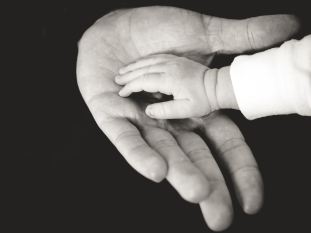
Mutual Trust or Mutual Bust

liane-metzler-B32qg6Ua34Y-unsplashWhen I’m walking on the sidewalk, I trust that the cars will drive on the road. When the cars are driving down the road, they trust that pedestrians will walk on the sidewalk. When I sit down at a restaurant to eat, I trust that the server will bring me the food as quickly as possible. When the meal is finished, the server trusts that I will pay my bill. When I board an airplane, I trust that the two people in the cockpit have completed the requisite training to pilot the aircraft safely to our destination. When the pilots sit in the cockpit, they trust that passengers will sit quietly in the cabin and not interfere with the pilots’ ability to fly the plane.

What’s the common denominator in all these circumstances? Trust. More specifically, mutual trust. Both parties trust each other. Now, you might be asking yourself – why?

Why is it that when I walk down the street that I trust cars to stay in the road? Why is it that when cars are driving on the road, they trust pedestrians to stay on the sidewalk? Well, you could argue that the trust is there because the rules (i.e. law) stipulate that that must be what happens, but that doesn’t explain the whole picture, nor does it explain most of the picture. The reason that pedestrians and cars alike trust each other is because there’s a body of evidence that suggests they should trust each other.

There’ve been numerous occasions for each where they’ve walked/driven down the road and the other has walked/driven down the road. After years and years of repetition, after years and years of reinforcement that this is how we do things, cars and pedestrians have grown to trust each other that each will continue to abide by the norms of sidewalks and roads.

So, what happens when there isn’t trust between the parties? What happens if the pedestrians and the cars didn’t trust each other to continue doing what they’ve always done? Well, there’s going to be elevated levels of stress for both the cars and the pedestrians. The people walking down the street will constantly be looking over their shoulder or gazing out into the road and wondering whether that car will swerve up onto the sidewalk. The cars driving down the road will wonder as they approach a pedestrian whether or not that pedestrian will lurch out into the road.

That doesn’t sound like a state of being in which anyone would want to exist.

Trust is foundational to this interaction. Trust is foundational to a lot of interactions. And when it comes to the workplace, trust is *it.* It is the be-all, end-all. If you want your people to do something, they need to trust you and you need to trust them. Nobody wants to work for someone they don’t trust and who could blame them. They’d never know when that “car” is going to swerve and hit them on the sidewalk.

I can respect that you might not be fully convinced – heck, I really backed into that change management tie-in, eh?

Well, here’s a better example. Life and death. Literally. Remember the Ebola outbreak from a few years ago? There was some excellent reporting on this and in fact, quite a wild story as to how the ‘world’ was able to get a handle on what was happening in West Africa. If you have the time, I highly encourage taking the time to listen to or read the story.

The key piece I wanted to highlight from the story is that there were people from the CDC (i.e. government) who were dealing with an emerging situation. A situation that could easily cost the lives of hundreds or thousands (!) of people. They were racing against time and against the norms/mores of the cultures of West Africa. There were people who were predisposed to mistrust anyone from outside their village, much less people from any sort of “government” agency. In order for the CDC to get to do what it needed to do, it had to gain trust extremely quickly. The one problem is “gaining trust” and “quickly” are usually antithetical. You usually aren’t able to gain trust quickly, but the CDC had no choice. This was life and death. In the end, the folks from the government saw a window into doing this (I won’t spoil it for you, as it’s worth it to listen or read it).

The point here is that trust is foundational. If you are trying to move people (and what is change management if it isn’t moving people?), you must – must, must, must – gain their trust – FIRST. If you haven’t done that, then anything you try and do will be twice as hard and take twice as long. Do yourself – and your people – a favour: first, earn trust.

This post originally appeared on GCconnex/GCcollab.

Quick Thoughts on the George Zimmerman Trial

Up until now, I’ve done a relatively good job of avoiding any of the coverage of the George Zimmerman trial. There are plenty of uninformed opinions flying around and plenty of partisan positions espoused. I’m not a lawyer nor am I familiar with the self-defense laws of Florida. I couldn’t possibly have an informed opinion.

Nonetheless, I happened to catch some discussion of the trial on NPR, while I was running some errands yesterday. I was a bit shocked to hear how some of the trial has progressed and some of the things that seem to be important (one of the witnesses not speaking the “Queen’s English“). My thoughts about the situation stem from some of the things I heard back when the event first transpired last winter.

I don’t remember where I heard it, (this is *kind of* important), but I remember thinking that it seemed noteworthy. It was one of the 911 tapes that were released. The conversation was between Zimmerman and the 911-operator. Zimmerman was calling in about the person he saw walking in the neighborhood (Trayvon Martin). I don’t remember if he said ‘suspect,’ but the folks on NPR today seemed to think that he did. While that would be important, it’s not the point that I’m going to make, so I’ll move past it.

On this call, after Zimmerman alerted the 911-operator about Trayvon Martin, the 911-operator said that there was someone on the way. I don’t quite remember what was said in the interceding section, but the 911-operator must have gotten the impression that Zimmerman was going to start following Trayvon Martin because she said something to the effect of, “I’m going to need you to not follow him.” Let me say that again. The nine-one-one operator said don’t follow him. Of course, we all know that Zimmerman went on to follow Martin. I haven’t even really brought into the equation that Zimmerman was a “self-appointed” neighborhood watchman.

Bear with me for a second as we just boil down to the fact that Zimmerman didn’t follow the directions of the 911-operator. Would you do that? I most certainly wouldn’t. If I’m calling in because of an emergency of someone I see outside walking down the sidewalk, I’m not going to jump out of my house and try to follow him. I might go upstairs (if I had an upstairs), to watch where he goes. I’m not a trained police officer or security guard. What would possess me to think that I’m smarter than the 911-operator and begin following someone who I’ve just labeled “suspect?”

As I said in the beginning, I am not a lawyer, but this seems like it’s an important part of this case. And not just inside the case, but outside of the case. Do other citizens make a habit of not following the direction of 911-operators?

Cell Phones and Driving: Do You Value Your Life?

A couple of days ago, I happened to be in the car when NPR’s The Kojo Nnamdi Show was playing. It just so happened that it was “Tech Tuesday,” and they were talking about new findings on distracted driving. Some of the findings would probably shock most people. For instance, would you have guessed that there is no (statistically) significant difference between talking on a cell phone with bluetooth and without bluetooth? I wouldn’t have. And, in fact, part of me thinks that the study maybe wasn’t designed optimally for testing the hypothesis, but I didn’t read the journal article.

One of the more interesting parts of the conversation was when one of the callers brought up the point about having cell phones automatically “lock” themselves when the car is in motion. One of the guests pointed out that this is already out there. She mentioned that there were apps that would “lock” the phone if the car is in motion. Then, Kojo brought up the point about passengers in the car — would they still be able to use their phones in the car? At this point, the guest then explained that getting around the “locked” phone is not too difficult.

After listening to this exchange, I realized that car safety (ala cell phones) is a choice. That is, it’s a choice by the driver. It’s probably not possible to completely legislate away a person’s ability to use their cell phone while driving (meaning: it likely wouldn’t hold up in court), so then it becomes a choice for driver. Does the driver want to increase their chances of causing an accident? Because that’s what happens when a driver decides to use their cell phone while driving. They’re increasing their chances of causing (or being in) an accident. To take this down a psychological tangent, it’s possible that they don’t value their life (as much as the next person) and so they’re willing to take this kind of risk.

As I got out of the car and began walking to my destination, my thoughts floated back to the 2009 book, Nudge (I think I’ve mentioned it on here before). I was trying to think of a way that we, as a society, could help nudge people to make better choices when behind the wheel. Is there some way we could nudge drivers away from using their cell phone?

Let’s Talk About “Gays and Lesbians”: Language Matters!

On my way back from an airport drop-off this morning, I was listening to NPR. There was a news report that the Boy Scouts of America would be deciding today whether they would allow ‘gays’ to be in the Boy Scouts of America. They then spoke about the Governor of Texas and former Republican Presidential (!) candidate Rick Perry who thinks that the Boy Scouts most certainly should not change the rules. NPR then played a clip of President Obama and his position on allowing ‘gays and lesbians‘ to serve openly in the military.

All of this is starting to get really irritating.

Right now, at this moment, (unless you know me or can infer from the title of this post), you probably think I’m going to make a plea for the status quo. Well, that’s absolutely false.

Instead, I’m going to make a plea for the reporters, pundits, politicians, talking heads, and just about anybody else that we not refer to each other by a single characteristic. Gays. Lesbians. When was the last time you turned to your friend and referred to the “straight people?”

This reminds me of my days as a doctoral student in a clinical psychology PhD program. During one of our classes, I remember one of the members of my cohort make an impassioned plea that we stop referring to people by their personality disorder. Schizophrenics. Borderlines.

I can completely understand why people do it. I’ve done it. And I’m sure I’ll do it in the future (though, not intentionally, of course). It’s easier to refer to a group by saying gays and lesbians than it is people who are gay or people who have a sexual orientation different from me (as it’s usually non-gay people who are marginalizing folks who are gay and lesbian). Not only is it “easier,” but it’s the way that everyone else does it. If there were ever a reason that needed to be almost completely banned from being a reason for doing something, that would be it.

Look, I understand that most people say it like that or that it’s easier to say it that way, but do you understand what you’re doing when you refer to the “gays and lesbians” in that way? It’s dehumanizing!

How?

Well, by dissociating any other human characteristic in your description, it’s easier to marginalize and think of people who are gay/lesbian as different. It’s also easier to be more crass, harsh, and inhumane. In particular, if you think you’re talking about someone who’s not human, this’ll make it easier to, naturally, not treat these people as human.

Making this change won’t be easy. Speaking in this way is so pervasiveIt’s in the immigration debate in the way we refer to people by their ethnicity. Though, even just invoking ‘immigrant’ for some folks makes it easier to be inhumane. Short tangent: I always find the immigration debate altogether strange in the US. A great majority of the people who live in the US today are descended from immigrants. Do they not remember? Do they not care? Don’t they realize that the people trying to immigrate to the US share so many characteristics with their ancestors who did the same many moons ago? I digress.

Marginalizing people by referring to one characteristic is pervasive. I should also say that categorizing people, at times, can be useful. “All the boys line up on this side of the classroom, all the girls on that side.” And that makes perfect sense. There’s utility in a lot of things (maybe not everything), but when it’s taken to the extreme, it can do harm. Categorizing, taken to its extreme, can look like marginalization and by extension, inhumanity.

It’s time we start recognizing that the way we speak has profound effects on the people around us. I’ve written before about the importance of the words that we choose and how they can have an effect on those around us, and I’d say that this discussion is an extension of that. We need to be mindful of the way we talk about people — because — they — are — people. It may seem trivial, but it’s important to remember. We’re talking about people.

So — my call to action — notice what you’re saying and how you’re saying it. Do you say people who are gay/lesbian or do you say gays/lesbians? The first step in making this kind of a change is noticing that you’re doing it.

Where Has All The Deference Gone: Mr. Obama vs. Obama

Seeing as though it’s Inauguration Day, I thought I’d write something about President Obama. A few days ago, I came across a note about NPR’s decision to change their style guide. Where they used to refer to President Obama as “Mister” Obama after the first mention (where he’d be referred to as President Obama), they’re now just going to drop the “Mister.” Why? So it doesn’t seem as though they’re showing favoritism. While I can understand the reasoning in this decision, I don’t think it’s a choice that I would have made. As Noah Rothman at Mediaite writes:

The vast majority of MSNBC viewers and NPR listeners, I believe, saw no evidence of conspiracy in how they referred to the president on the second reference.

This decision to change they style guide seems like it’s a bit over-the-top. Because none of the other major news organizations refer to the President simply by last name on the second reference, NPR wants to “fall in line,” so that it doesn’t seem that it’s showing favoritism. Hmm. Something doesn’t feel right about this. If NPR thought that it was right in showing deference on the second reference, then by golly, it should continue to do so. Of course, I understand if this is one of those “pick your battles,” kind of deals.

Nonetheless, it seems that the West US could do with a little more deference. In fact, I wonder if there were more deference in the American culture, would people be as disrespectful to each other? I understand that deference is part of something that America first rebelled against (British culture, titles, and all that), so it might be kind of hard for deference to succeed in American culture.

One does have to wonder: if there were more deference, would there be as much polemical writing? There probably still would be polemical writing, but my guess is there may be less of it.

When you get right down to it, though, what is deference? Respect. If we switch the word and talk about showing respect (and not offering deference), my guess is that it’s much harder to ignore. That is, if it’s a choice between respecting someone and disrespecting someone, I’d hope that we’d all choose respect.

When Was the Last Time You Listened to the Radio?

This evening I spent a little time at a friend’s house, looking in on her cat. As an aside here, cats are great! In amidst the playing with the cat, the radio was on. The radio was on when I got there and I left it on when I left (as instructed). After playing with the cat for a while, I sat down on the couch and listened to the radio for a little bit.

While usually not an experience worth noting, this one was. NPR was playing and because it was the weekend, it wasn’t the usual NPR-programming I was used to hearing during the week when I have NPR on in the car. In fact, listening the radio inside the house is an altogether different experience than listening to NPR in the car. In fact, outside of this evening, I can’t remember the last time I listened to the radio inside the house (and wasn’t doing something else at simultaneously).

Anyway, NPR was talking to bright young musicians. When I say young, these folks were still in high school, but they had some incredible stories. The thing I want to point out: I was forced to imagine the conversation between the host and the guest… and imagine the audience, too (as they were in front of an audience). This is something that I rarely have to do (because I don’t listen to the radio unless I’m in the car).

Two things I want to note about this experience:

1) It made listening the radio a much richer experience. That is, I was forced to use my imagination to fill in the holes as to the facial reactions by the guest and the host and fill in the space of what the audience might be doing, too. As I said, this is something I don’t have to do very often.

2) It made me think about what it might have been like for people before there was TV. Huddling around the radio together used to be a common family activity. It’d be hard to conduct this study, but I wonder what the data would show based on those folks who had to do more imagining (before there was TV) vs. those folks who don’t have to do imagining (because there is TV). I wonder if the “before there was TV” group might have more developed imaginations.