Quick Thoughts on Last Night’s Golden Globe Awards

Last night was the 71st Golden Globes. They’re a little behind the Academy Awards who are on their 86th taking place in about a month. Anyhow, I usually like watching these awards shows, especially if I’ve seen some of the movies that are in contention. This year, I had the chance to see a few of the movies that had garnered a number of nominations: American Hustle, Her, 12 Years a Slave, Captain Phillips, Gravity, and Dallas Buyers Club.

I really liked American Hustle, but after watching Dallas Buyers Club and 12 Years a Slave, I was torn between who I thought deserved the awards in some categories. I thought that Jennifer Lawrence had a great performance in American Hustle, but I also thought that Lupita Nyong’o had an excellent performance in 12 Years a Slave. I think they’re both talented and terrific actresses, but with the underrepresentation…

… I’m torn.

I wish that this weren’t an issue in our society. I wish we could judge/award movies/performances on their merits and not worry about whether we’ve been fair in accounting for diversity. Don’t get me wrong, I absolutely know and understand that because of our history, white people have a decided advantage when it comes to events like this (and life, in general), but I wish I could just be happy for Jennifer Lawrence and not wonder about Lupita Nyong’o. Unfortunately…

I was also torn when it came to the Best Actor in a Drama category. I’d seen three of the films for which actors were nominated in that category and in my opinion, it would be a toss up between Chiwetel Ejiofor (Choo-it-tell Edge–ee-o-for) and Matthew McConaughey. I thought they both gave excellent — excellent — performances. When Jessica Chastain announced Matthew McConaughey, I was happy, but as was the case for Jennifer Lawrence, I was a bit sad that Ejiofor didn’t win (or, for that matter Idris Elba, who I’ve read gave a great performance in Mandela).

~

I don’t have a solution to this dissonance I feel, but I wanted to express my desire for a time when feelings like these needn’t be had. Maybe it will come in 10 years, maybe it will come in 100 years. When it does, I will welcome it with open arms.
If You Want to Succeed, You Must Heed

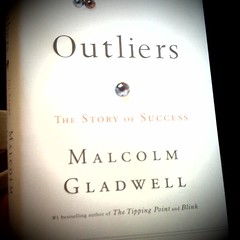
I’ve been thinking about Malcolm Gladwell and the 10,000-hour rule. This is a concept that comes from one of his books, Outliers. Recently, this idea came under fire after an article in Time earlier this year in May. After some time, Gladwell wrote a response (a few days ago) that seems to adequately account for the critiques in the Time article. Nonetheless, it got me thinking about the idea of 10,000 hours and what it represents.

In case you’re not familiar, the 10,000-hour rule is the idea that in order to be “great” at something, one has to put in 10,000 hours of deliberate practice. After the 10,000 hours (approximately), one will likely be at the pinnacle or very near to, of the field. Ten thousand hours.

That’s 20 hours a week for 10 years.

You have to really like something — a lot — or really want to do well at something, in order to remain committed to the goal of becoming an expert. Twenty hours a week. Ten years. Nowadays, people might not even spend that much time at the same job (if we compress it to 40 hours a week and 5 years)!

~

Then I got to thinking about Daniel Day-Lewis. Certainly one of the premier actors of our time. Since 1989, Day-Lewis has appeared in 11 movies. Of those 11 movies, he’s won the Academy Award for Best Actorthree times — making him the only male actor to win the award three times. He was also nominated for Best Actor two other times. So, of the 11 movies he’s been in during the last 20+ years, he’s been up for the award for Best Actor five times. From what I understand, most people are pretty happy to simply have been nominated once, much less 5 times — and then win three times!

Daniel Day-Lewis is certainly someone who is at the top of his field. He has put in the hours and done the work to become one of the best actors.

And then there’s Meryl Streep. She’s received more nominations for Academy Awards (17) and more nominations for Golden Globes (27) than anyone in the history. She’s also won 3 Academy Awards and 8 Golden Globes. Clearly, someone else who is at the top of their field.

But why have I highlighted both performers?

They continue to win awards. Daniel Day-Lewis won his first Academy Award for Best Actor back in 1989. And then again in 2007. Do you think he ‘rested on his laurels?’ No, how else would he have been able to pull off such a convincing Abraham Lincoln in Steven Spielberg’s flick last year. And Meryl Streep won her first Academy Award in 1979. Again, in 1982. She wouldn’t win again until 2011 for her portrayal of Margaret Thatcher in The Iron Lady. Between 1982 and 2011, she was nominated 12 other times. 12!

Both of these performers are stunning examples of the idea that even though you’ve won, even though you’ve made it to the top of your field, that doesn’t mean you can’t still keep working. That doesn’t mean you can’t still keep getting better. Practicing. Perfecting.

If you want to be good at something, really good at something, you’ve got to put in the work even if you think you’ve already made it. If Daniel Day-Lewis and Meryl Streep don’t rest on their laurels, what makes you think you can?

The Deepest Principle in Human Nature is the Craving to be Appreciated

At the tail end of my trip last week, I stopped in Charleston, SC. While there, I was happy to enjoy some of the local cuisine, along with the sights and sounds, but I was also pretty excited to watch the Golden Globes. I always like to watch the award shows when I’ve seen most of the movies. Having seen a number of the movies that were nominated this year (Lincoln, Silver Linings Playbook, Life of Pi, Django Unchained, Argo, etc.), I was really excited. It feels like I’m more connected to the awards, somehow.

After watching the show, I couldn’t help but reflect on society at large. In particular, I thought about the lack of appreciation we show each other. That is, how many more award shows are there? A few big ones come to mind: the Oscars, the Grammys, the AMAs, the CMAs, the VMAs, the Golden Globes, the Emmys, the Tonys… and from there I struggle to think of many award shows that are on as large a scale. Of course, we could include the sports awards ceremonies, too — so the ESPYs and the NHL awards. And some folks might argue for the All-Star games.

This might be strange coming from a Canadian. In Canada, after you win an award, the culture dictates that you go and put it in your bag, so you don’t make anyone feel bad for not winning. In the US, however, that’s not the case. Nonetheless, it still feels like the US (and the world?) could do with some more appreciating of each other.

~

Did you ever conduct a science experiment when you were in grade school about some sort of vegetable growing better to classical music? That stuff really works. Did you know that most vegetables/fruits are made up of water? And did you know… that most of the human body is made up of water? Can you see where I’m going with this. The words we use to communicate with each other matter. If something as simple as classical music can help vegetables grow, don’t you think that words of appreciation will be greatly beneficial to the people around you?

~

So, while I won’t be organizing an awards show anytime soon, there are still ways that I can be appreciative of the people around me and in my environment. For instance, whenever I ride the bus, I almost always thank the driver upon de-bussing. Do you? How about if someone holds the door open for you — do you say thank you? Do you hold the door open for other people? If you take the time to look, I’m sure you’ll find that there are infinite opportunities for you to show your appreciation.

Note: The title of this post comes courtesy a quote from William James.